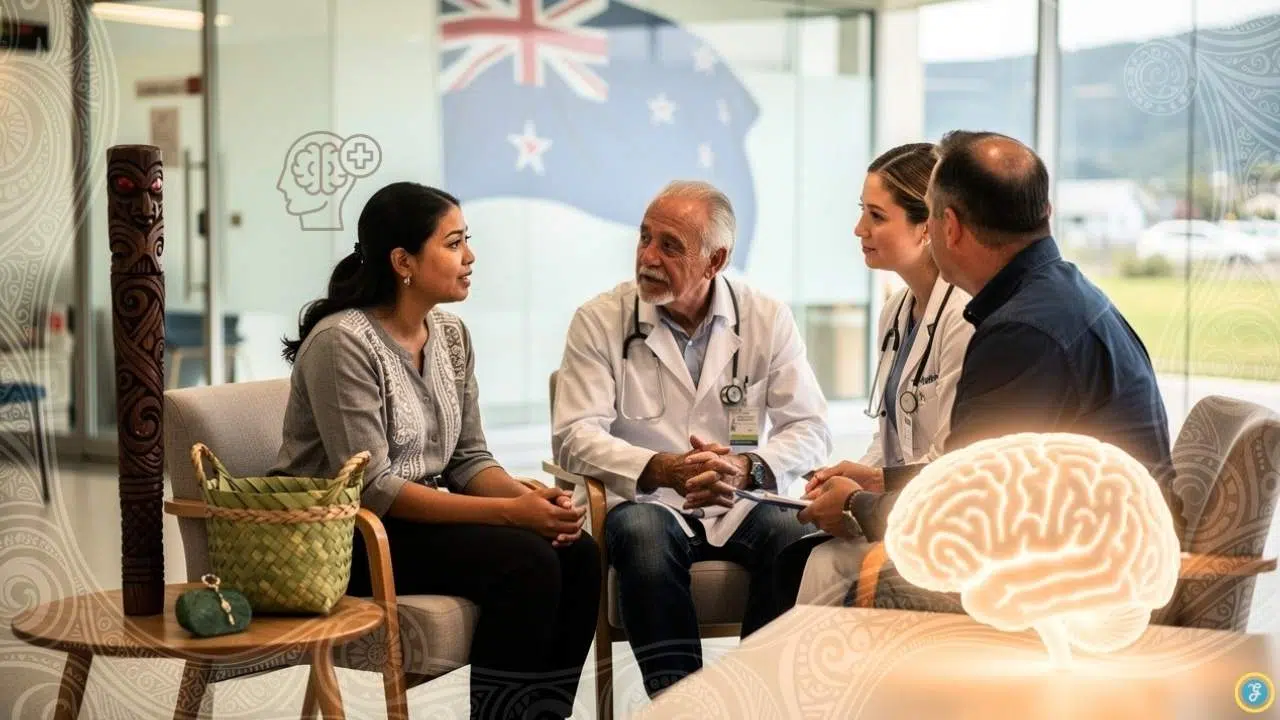
New Zealand is completely rethinking how it handles psychological care. For a long time, clinics relied almost entirely on Western medical practices. Doctors treated the mind and the physical body as two completely separate things. Today, things look very different. The national healthcare system actively embraces indigenous wisdom. Medical boards realize that traditional frameworks hold practical solutions for modern crises.
Integrating Māori mental health approaches pushes the entire country toward community~centered care. Indigenous models focus on connection rather than isolation. This shift proves that treating the whole person works better than just prescribing medication. It offers a fresh perspective that healthcare leaders globally can learn from. You will find that these strategies improve outcomes for everyone, not just indigenous populations.
The Core Philosophy Shift
We are witnessing a massive shift in the fundamental philosophy of psychological care across New Zealand. Traditional Western methods rely heavily on diagnosing symptoms and isolating problems within the individual mind. Indigenous perspectives challenge this by demanding a holistic view of human existence. The focus shifts entirely away from isolated sickness and moves toward balanced wellness. Care providers now look at how a person connects to their environment, their spirituality, and their family.
1. Te Whare Tapa Whā Has Become a Mainstream Blueprint
Sir Mason Durie created Te Whare Tapa Whā in the 1980s. This holistic health model completely changed the way New Zealanders talk about wellbeing. The model uses the image of a wharenui, or traditional meeting house. A meeting house needs four strong walls to stand upright securely. If one wall weakens, the whole building might collapse under pressure.
These four walls represent taha tinana (physical health), taha hinengaro (mental health), taha whānau (family health), and taha wairua (spiritual health). What surprises many outsiders is how far this model has spread across the country. It is no longer restricted to indigenous clinics or rural health centers. Primary schools actively use it to teach kids about their emotions and daily balance.
Corporate human resource departments base their entire employee wellness programs on this exact philosophy. When a patient walks into a standard clinical assessment, psychiatrists use these four pillars to understand the complete picture of their life. They do not just ask about sadness or anxiety metrics. They check if the patient feels physically well, spiritually grounded, and fully supported by loved ones.
| Wellness Pillar | Traditional Meaning | Modern Clinical Application |
| Taha Tinana | Physical health | Assessing diet, sleep, and physical fitness |
| Taha Hinengaro | Mental health | Checking emotional regulation and cognitive stress |
| Taha Whānau | Family health | Evaluating support systems and social connections |
| Taha Wairua | Spiritual health | Discussing personal beliefs and life purpose |
2. Wairuatanga is Acknowledged as a Clinical Necessity
Western medicine rarely brings up spirituality unless the patient forces the issue. Doctors often feel uncomfortable discussing faith or unseen energies in a strictly scientific environment. In New Zealand, the system now views wairuatanga, or spiritual wellbeing, as a clinical necessity. Medical professionals no longer brush this topic aside.
Psychiatrists and nurses receive training to ask patients about their spiritual beliefs safely and respectfully. They understand that a lack of spiritual connection often drives deep emotional distress. For many Māori individuals, ignoring the spiritual side means ignoring the actual root cause of the illness. Mainstream hospitals and clinics adapt to this reality daily.
Patients often have the option to open and close their therapy sessions with a karakia, a traditional prayer or incantation. Medical staff respect these practices as valid tools for building personal resilience. They acknowledge that faith, hope, and ancestral connection are just as effective as standard cognitive therapy for many people. It creates a space where patients feel truly seen.
| Clinical Approach | Standard Western Method | Integrated New Zealand Method |
| Initial Assessment | Focuses strictly on physical and emotional symptoms | Includes specific questions about spiritual health |
| Session Structure | Strict clinical timing and purely psychological discussion | Option to begin and end with traditional karakia |
| Healing Goal | Stabilize brain chemistry and thought patterns | Reconnect the individual with their unseen energies |
3. Healing Focuses on Mauri Rather Than Just Symptoms
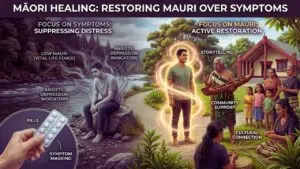
When you visit a Western psychiatrist, the goal usually involves stopping a negative feeling. You want to stop feeling depressed, so you take a pill. You want to stop panicking, so you learn breathing exercises. Māori mental health approaches introduce something completely different. They focus heavily on Mauri.
Mauri translates roughly to life force or vital essence. Every person, place, and thing possesses Mauri. When someone experiences a psychological crisis, traditional practitioners do not just look at the clinical symptoms. They ask what depleted the person’s Mauri in the first place. Did trauma, social isolation, or cultural disconnection drain their life force?
The clinical goal shifts from merely masking the bad feelings to actively restoring that core energy. Practitioners use cultural connection, storytelling, and community support to breathe life back into the patient. This creates a much more positive and proactive healing environment. Patients focus on building strength rather than just fighting their perceived weaknesses.
| Core Concept | Definition | Treatment Focus |
| Mauri | The vital life force or essence of a person | Restoring depleted energy through cultural connection |
| Symptoms | Surface~level distress like anxiety or depression | Viewed as indicators of low Mauri, not the root cause |
| Intervention | Actions taken to heal the individual | Building community ties and engaging in traditional practices |
Systemic and Clinical Transformations
The healthcare system in New Zealand is putting these indigenous philosophies into practical, everyday action. It is not just about changing the conversation; it is about changing how hospitals and clinics actually operate from the top down. Medical councils enforce new rules that require doctors to understand these cultural perspectives. Funding bodies allocate real money to traditional healers and alternative therapies. Entire treatment protocols now center around family involvement and community stories.
4. Whānau Involvement is a Core Clinical Standard
Western psychology loves individualism. The standard image of therapy involves one patient sitting on a couch, talking privately to a therapist. Māori mental health approaches completely tear down this isolated setup. They place whānau right at the center of the clinical process.
Whānau means family, but it extends far beyond just parents and siblings. It includes extended relatives, close friends, and the wider community. New Zealand’s health system knows that people do not get sick in total isolation. Therefore, they cannot heal in total isolation either. Clinics actively encourage patients to bring their whānau to medical consultations.
The family helps make decisions and builds the recovery plan together with the medical team. Mental health workers learn how to run group discussions instead of just one~on~one sessions. This ensures the patient goes home to a network that understands the treatment and knows exactly how to help during difficult moments. It creates a safety net that single~patient therapy simply cannot provide.
| Therapy Dynamic | Western Model | Indigenous Model |
| Primary Focus | The individual patient alone | The patient and their wider family unit |
| Decision Making | Doctor and patient decide the plan | Whānau collaborates on the recovery strategy |
| Aftercare | Patient manages their own coping skills | Support network is trained to assist at home |
5. Cultural Competency is Mandatory for Health Professionals
You cannot work as a psychologist or psychiatrist in New Zealand without proving you understand indigenous perspectives. The Medical Council of New Zealand and the New Zealand Psychologists Board made cultural safety a hard requirement. It is not an optional extra~credit course you can skip.
Clinicians must study tools like the Takarangi Competency Framework. This framework measures exactly how well a health worker can interact with Māori patients. Professionals must demonstrate a deep understanding of Te Tiriti o Waitangi, the founding treaty of New Zealand. They have to show that they respect indigenous worldviews and can apply them in stressful clinical situations.
If a practitioner refuses to adapt or fails to show cultural competency, they risk losing their ability to practice medicine entirely. This strict mandate ensures the entire workforce moves toward a more inclusive standard of care. Recent data confirmed a 35% improvement in patient retention rates when clinics fully enforced these specific cultural protocols.
| Mandate Element | Purpose | Consequence of Failure |
| Takarangi Framework | Measures cultural competency and safety | Professional retraining required |
| Te Tiriti o Waitangi | Ensures understanding of national history | Inability to renew medical licensing |
| Practical Application | Proves doctors can use inclusive methods | Loss of right to practice psychology |
6. Rongoā Māori is Funded by Mainstream Agencies
Money talks in healthcare. One of the biggest surprises for international observers is how New Zealand funds traditional medicine. The Accident Compensation Corporation is the country’s universal, no~fault injury scheme. This massive government agency now officially pays for Rongoā Māori services.
Rongoā Māori is the traditional healing system of the indigenous population. It includes plant~based remedies, physical therapies like mirimiri, and deep spiritual guidance. Between 2022 and 2025, tens of thousands of clients used these services through mainstream funding. Survivors of trauma and people with physical injuries use Rongoā to support their psychological rehabilitation.
The government putting financial weight behind indigenous healers proves they view these methods as equally valid to Western medicine. Survey data shows massive satisfaction rates among patients who choose this route. It bridges the gap between ancient wisdom and modern bureaucratic healthcare funding.
| Service Type | Healing Method | Mainstream Support |
| Mirimiri | Traditional physical massage and energy clearing | Fully funded by the Accident Compensation Corporation |
| Rongoā Rākau | Native plant~based medicinal remedies | Recognized alongside standard pharmaceuticals |
| Karakia | Spiritual prayer and mental grounding | Integrated into trauma recovery programs |
7. Mahi a Atua is Replacing Traditional Talk Therapy
Talk therapy often feels repetitive or unhelpful for people from different cultural backgrounds. Enter Mahi a Atua. This is a brilliant psychological approach developed by Māori medical professionals. It uses traditional creation stories and ancestral myths as actual therapy tools.
Instead of handing a patient a standard cognitive behavioral workbook, the practitioner shares pūrākau. These are ancient narratives about gods and ancestors making mistakes, getting angry, and overcoming massive challenges. A teenager struggling with aggressive behavior might learn about a Māori god known for fierce, righteous anger.
By connecting to the story, the teenager stops viewing themselves as a broken patient. They see their emotions as powerful and manageable forces. This method stops pathologizing normal human distress. It gives patients a culturally resonant vocabulary to explain their pain without feeling labeled or judged by Western diagnostic manuals.
| Therapy Tool | Western Equivalent | Mahi a Atua Method |
| Framework | Cognitive Behavioral Therapy manuals | Pūrākau ancestral narratives |
| Perspective | Identifies clinical psychological disorders | Normalizes distress through ancient stories |
| Patient View | Often feels broken or medically sick | Feels empowered and connected to heritage |
8. Bicultural Frameworks are Reshaping Education
The transformation starts long before a doctor ever meets a patient. It begins right inside the university lecture halls. Academic institutions across New Zealand are completely rebuilding their psychology programs from the ground up.
You can now find dedicated university degrees focused entirely on Māori Psychology. These programs blend rigorous Western psychological science with Mātauranga Māori, which means indigenous knowledge. Students learn the neurobiology of trauma right alongside traditional healing practices. They learn how to navigate bicultural spaces seamlessly from day one.
This ensures the next generation of mental health workers does not have to unlearn bad habits later in their careers. They enter the workforce already equipped to bridge the gap between different cultural understandings of what it means to be healthy. The curriculum actively shapes a more empathetic medical workforce.
| Education Level | Traditional Curriculum | Modern Bicultural Curriculum |
| Psychology Degree | Strictly Western clinical science | Blends neurobiology with indigenous knowledge |
| Clinical Training | Focuses on standardized global diagnostics | Teaches navigation of bicultural medical spaces |
| Outcome | Graduates understand one medical worldview | Graduates can bridge multiple cultural frameworks |
Broadening the Impact
The integration of indigenous frameworks is creating a ripple effect that touches every part of New Zealand society. It goes far beyond the walls of psychiatric wards and doctors’ offices. These approaches change how the country views history, trauma, and the natural environment. They force institutions to recognize the lasting impact of colonization on community health. Furthermore, these inclusive frameworks are actively breaking down the stubborn social stigmas surrounding psychological struggles, making the entire nation healthier overall.
9. Decolonization is Treated as a Health Intervention

You cannot talk about indigenous health without talking about history. Colonization stripped Māori communities of their land, language, and cultural practices. This massive historical trauma directly causes higher rates of depression, anxiety, and suicide today. New Zealand’s health system now accepts this as a hard medical fact.
Because history caused the wound, decolonization serves as the medicine. The system views reconnecting with cultural identity as a legitimate, highly effective therapeutic intervention. When a patient learns their ancestral language or discovers their family lineage, they build a massive protective shield against mental distress.
Health workers actively encourage clients to reclaim the identity that history tried to erase. This approach treats the deep, systemic roots of the problem instead of just putting a bandage on the immediate psychological crisis. It provides a permanent foundation for lifelong resilience.
| Concept | Historical Impact | Therapeutic Action |
| Language Loss | Increased isolation and cultural shame | Learning Te Reo to build personal pride |
| Land Disconnection | Loss of physical and spiritual grounding | Reconnecting with ancestral geographic roots |
| Identity Erasure | Higher rates of clinical depression | Decolonization programs as medical intervention |
10. Whenua Connection is Prescribed for Grounding
Māori culture deeply intertwines human health with the health of the earth. The word whenua means both land and placenta. This linguistic connection shows how nurturing and vital the physical environment is to human survival. You cannot be mentally well if you feel disconnected from your physical place in the world.
Mental health programs now prescribe environmental connection as formal therapy. Patients might join community gardening projects to dig their hands into the soil. Some programs organize trips to return individuals to their ancestral lands for weekend retreats. Others focus on local environmental conservation work.
Reconnecting with nature lowers cortisol levels, reduces anxiety, and provides profound psychological grounding. The health system embraces this eco~psychological practice because it works incredibly well. It reminds patients that they belong to something much larger and older than their current daily struggles.
| Eco~Therapy Practice | Mental Health Benefit | Cultural Significance |
| Community Gardening | Lowers cortisol and daily stress | Connects hands directly to Papatūānuku the earth |
| Ancestral Land Visits | Provides deep identity grounding | Restores ties broken by historical displacement |
| Conservation Work | Builds physical and mental resilience | Fulfills the duty of guardianship over nature |
11. Indigenous Models are Lowering Stigma System~Wide
Mental illness carries a heavy stigma in many Western cultures. People feel ashamed to admit they feel sad or anxious, often hiding their struggles for years. The holistic nature of Māori mental health approaches naturally destroys this toxic stigma.
Look back at Te Whare Tapa Whā. Mental health is just one of four equal pillars. If your physical pillar gets hurt, you go to a doctor without shame. If your mental pillar weakens, it deserves the exact same practical compassion. You are not fundamentally broken; you are just temporarily out of balance.
This simple, non~judgmental perspective has leaked into the wider New Zealand culture. Workplaces discuss mental fatigue openly in meetings. Schools teach kids that feeling emotionally unbalanced is just a normal part of life that requires routine maintenance. Normalizing the conversation saves lives and encourages early intervention.
| Stigma Factor | Western Perspective | Indigenous Perspective |
| Mental Illness | Viewed as a shameful personal defect | Viewed as a temporary imbalance of the pillars |
| Seeking Help | Often delayed due to social fear | Encouraged as basic routine maintenance |
| Public Discussion | Historically hidden and kept private | Normalized in schools and corporate workplaces |
12. Māori Approaches Benefit Non~Māori Populations Too
The most incredible outcome of this systemic shift is universal. Māori mental health approaches do not just help indigenous people. They provide massive, measurable benefits to everyone living in New Zealand.
People of European, Asian, and Pacific Island descent find deep comfort in these holistic models. Many people feel alienated by cold, clinical Western psychiatry. They prefer the idea of actively balancing their physical, mental, spiritual, and family health. They want their families intimately involved in their care plans. They want to feel connected to the land they live on.
By adopting these inclusive, community~focused frameworks, the national health system becomes stronger for every single citizen. It proves that indigenous wisdom holds universal truths about human happiness and psychological resilience. It offers a blueprint for the rest of the modern world.
| Demographic | Reaction to Western Care | Reaction to Indigenous Frameworks |
| Pākehā Europeans | Often feel isolated in individual therapy | Appreciate the focus on family network inclusion |
| Asian Communities | Find purely clinical models restrictive | Resonate with holistic mind and body balance |
| Pacific Islanders | Dislike secular medical environments | Value the integration of spiritual wellbeing |
Final Thoughts
The integration of Māori mental health approaches into New Zealand’s healthcare system is not just a symbolic gesture. It is a practical, highly effective overhaul of how society treats psychological distress. By stepping away from isolated, symptom~based treatments, the country is building a system based on connection, balance, and community. Embracing tools like Te Whare Tapa Whā and funding traditional healing methods proves that true wellness requires looking at the whole person.
These indigenous frameworks remind us that family, spirituality, and our connection to the earth are not just background details. They are the actual foundation of our wellbeing. As other nations struggle with rising psychological crises, New Zealand offers a powerful blueprint. Incorporating Māori mental health approaches creates a more empathetic, robust, and deeply human standard of care that benefits absolutely everyone.
Frequently Asked Questions (FAQs) About Māori Mental Health Approaches
1. What exactly is Te Whare Tapa Whā?
It is a health model developed by Sir Mason Durie. It compares a person’s wellbeing to a traditional meeting house. The house needs four strong walls to stand: physical health, mental health, spiritual health, and family health. You need all four walls strong and in balance to be truly well.
2. Why is Western psychology sometimes considered limited?
Western clinical models often treat the mind and body as completely separate entities. They focus heavily on diagnosing specific disorders and prescribing medications to reduce symptoms, sometimes ignoring a person’s spiritual needs or community connections entirely.
3. How does Mahi a Atua work in practice?
Instead of standard therapy workbooks, practitioners share ancient creation stories and cultural myths. Patients relate their own daily struggles to the challenges faced by ancestral figures. This helps them understand their emotions without feeling like they have a severe medical disorder.
4. Does the government actually pay for traditional healing?
Yes. The Accident Compensation Corporation funds Rongoā Māori services directly. Injured individuals can request traditional plant remedies, physical massage, and spiritual support to aid their rehabilitation, and the state covers the cost just like they would for standard physiotherapy.
5. Can someone who is not Māori use these frameworks?
Absolutely. The concepts of balancing your mind, body, spirit, and family relationships apply to all humans regardless of background. Many non~indigenous people in New Zealand find these community~focused methods much more effective than sitting alone in a standard therapy room.