Many outreach campaigns fail because of an asset problem, not a pitching problem. To earn authoritative backlinks, content must provide clear editorial value—supplying verifiable evidence, explaining complex topics, or offering practical utilities.
Linkable asset ideas are strategic, high-value content formats—such as proprietary research, interactive calculators, maintained data trackers, and free templates—designed specifically to attract editorial references and natural links from journalists and industry publications.
While original research offers high news value, evergreen tools and maintained directories often drive more sustainable, long-term backlinks. Creating assets around specific editorial needs makes your content a go-to primary source for publications across search engines and AI engines alike.
How These Linkable Asset Ideas Were Chosen
A worthwhile asset should pass five tests:
- Editorial relevance: It answers a real question for a defined audience.
- Original value: It adds information, analysis, functionality, or visuals that are hard to find elsewhere.
- Verifiability: Its sources, methods, assumptions, and limitations are visible.
- Pitch range: It supports more than one credible beat, location, or specialist angle.
- Durability: The page can stay accurate after the launch campaign.
Production quality still matters. It simply cannot compensate for a weak premise.
Before Creating an Asset, Check Whether There Is a Story
A company does not create news merely by spending money on a report. Broad survey about “the future of work” may disappear among similar studies. A project on how return-to-office policies affect disabled employees in one industry has a clearer audience and sharper questions.
Look for the editorial gap first. Check what reporters have covered, which claims still depend on old evidence, and where readers lack a practical answer. Then choose the format.
Keep the findings on a stable public page. Registration makes verification harder, and publishers may cite research without linking because editorial policies vary.
Nor should outreach become a link exchange. Google identifies payments, gifts, excessive reciprocal linking, automated links, and contractual link requirements as potential link spam when used to manipulate rankings. Sponsored placements are a separate activity and should use appropriate link attributes.
9 Linkable Asset Ideas Worth Pitching to Editors
The best assets give editors something credible they can use, not merely another page to mention. These 9 linkable asset ideas were selected for their originality, editorial usefulness, and ability to support distinct story angles. Each requires a different mix of research, production, maintenance, and outreach.
1. Original Research Built Around a Narrow Question
Original research ranks first because it can provide evidence unavailable elsewhere. One sound study may support news reports, trade coverage, newsletters, and later reference articles.
The question needs to be narrow enough to produce a useful answer. “Consumers want better service” is barely a finding. Comparing what customers expect from automated support in banking, retail, and healthcare gives an editor differences to examine.
Methodology matters more than a dramatic percentage. Depending on the design, identify the sponsor and researcher, population, recruitment method, fieldwork dates, sample size, measurement tools, weighting, exclusions, quality controls, and material limitations.
Do not present a self-selected poll as representative of an entire country or industry. If the team lacks research expertise, use credible existing data instead. Originality does not excuse weak methods.
2. Fresh Analysis of Credible Public Data
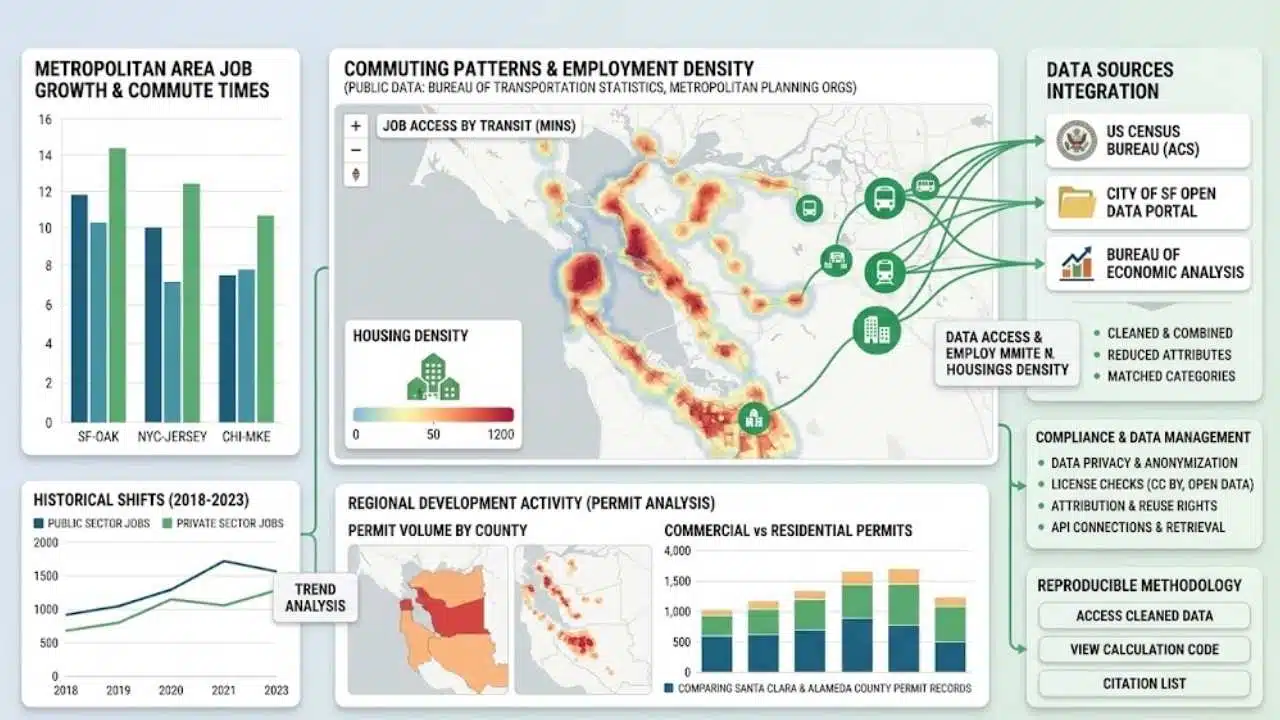
This is the list’s most underrated option. Public bodies and universities publish records that are available but difficult to compare. Cleaning and combining them can create value without commissioning a survey.
A workplace platform could examine employment and commuting patterns across metropolitan areas. A construction company might compare regional permit activity.
Public access does not mean unrestricted use. Check the licence, attribution requirements, API conditions, privacy restrictions, and commercial-reuse rules. Record the retrieval date and explain how dates, locations, currencies, or categories were matched. Where rights permit, release a cleaned table or reproducible calculation.
Simply republishing statistics is not enough. The asset needs a new comparison, historical shift, geographic pattern, or connection between sources.
3. A Benchmark Report Based on Proprietary Data
Businesses often hold information independent researchers cannot see. An invoicing platform might examine payment delays; a recruitment platform could study changes in advertised skills.
The opportunity is distinctive data; the risk is pretending it represents more than it does. Customers of one platform are not a proxy for every company or consumer. State what the dataset covers, where it is concentrated, which records were excluded, and how repeat activity was handled.
Removing names is not a complete privacy review. Small groups, unusual attributes, and outside information can still expose individuals. Aggregation and reporting thresholds may reduce risk, but sensitive analysis needs an assessment of re-identification risk and appropriate privacy or legal review.
When the sample supports it, offer cuts by industry, region, company size, or period. Those variations produce more targeted angles.
4. A Searchable Tracker or Reference Database
A tracker earns links by answering a recurring question better than a static article. Subjects might include regulatory deadlines, recalls, public grants, policy changes, or industry incidents.
Every record should carry a date, status, definition, and primary source. Add a visible change log. For allegations, disputes, or court proceedings, separate confirmed facts from unresolved claims and preserve later corrections.
The hard part comes after launch. Without an owner, the tracker will age into a liability. Use this format only with reliable sources and a realistic maintenance schedule.
5. A Calculator That Shows Its Work
Calculators are useful because they turn general rules into specific consequences. An ecommerce tool might show how transaction fees, returns, currency conversion, and fulfilment affect a sale. A travel-emissions calculator could apply published conversion factors to a journey.
The formula cannot be a black box. Show the units, source data, effective date, exclusions, assumptions, and rounding. Let people change inputs without providing an email address.
Tax, finance, medical, safety, and legal calculators require extra review. Label estimates honestly, explain material uncertainty, and avoid presenting a general calculation as personalised professional advice. Three decimal places do not make uncertain inputs more reliable.
6. A Local Map or Regional Index
Localisation can turn one dataset into several stories. City, state, provincial, or regional findings create more targeted pitching opportunities than one national result.
A useful map opens with a clear default view and lets readers find their area quickly. Interactivity should solve a navigation problem, not decorate the page. If the dataset is small, a labelled static chart may explain it faster and be easier for publishers to reuse.
Be especially careful with “best” and “worst” rankings. Publish the factors, weights, population adjustments, treatment of missing data, and uncertainty. Two places with nearly identical scores should not be sold as meaningfully different just because one ranks 12th and the other 13th.
7. A Practical Template With a Completed Example
Templates rarely produce a splashy launch, but they can earn durable links from service journalism, universities, associations, and resource pages.
Choose a consequential task: an incident-communication checklist, vendor-assessment worksheet, accessibility review, editorial brief, or measurement plan. Provide both an editable version and a completed example. The blank file supplies the structure; the example shows how much detail the work actually requires.
Heavy branding limits reuse. So does calling a resource free while putting account creation, multiple forms, or a sales call in front of it. For a smaller team, one excellent template is often a better investment than an interactive project it cannot maintain.
8. A Structured Expert Consensus Resource
Most expert roundups are overrated. They collect interchangeable quotes, reward contributors for promoting the page, and leave editors with little they can use.
A better version asks qualified contributors the same narrow questions, maps where they agree, and gives proper space to disagreement. A cybersecurity resource might ask incident-response specialists which decisions belong in the first hour of a breach and which common playbooks fail smaller organisations.
List each contributor’s credentials, organisation, conflicts, and response date. Preserve context, secure consent to publish, and clarify whether reporters may make contact.
A panel made entirely of executives selling similar products is not a credible consensus. Independent practitioners, researchers, customers, and public-interest specialists can provide the tension that makes the resource worth citing.
9. A Reusable Library of Charts and Visual Explainers
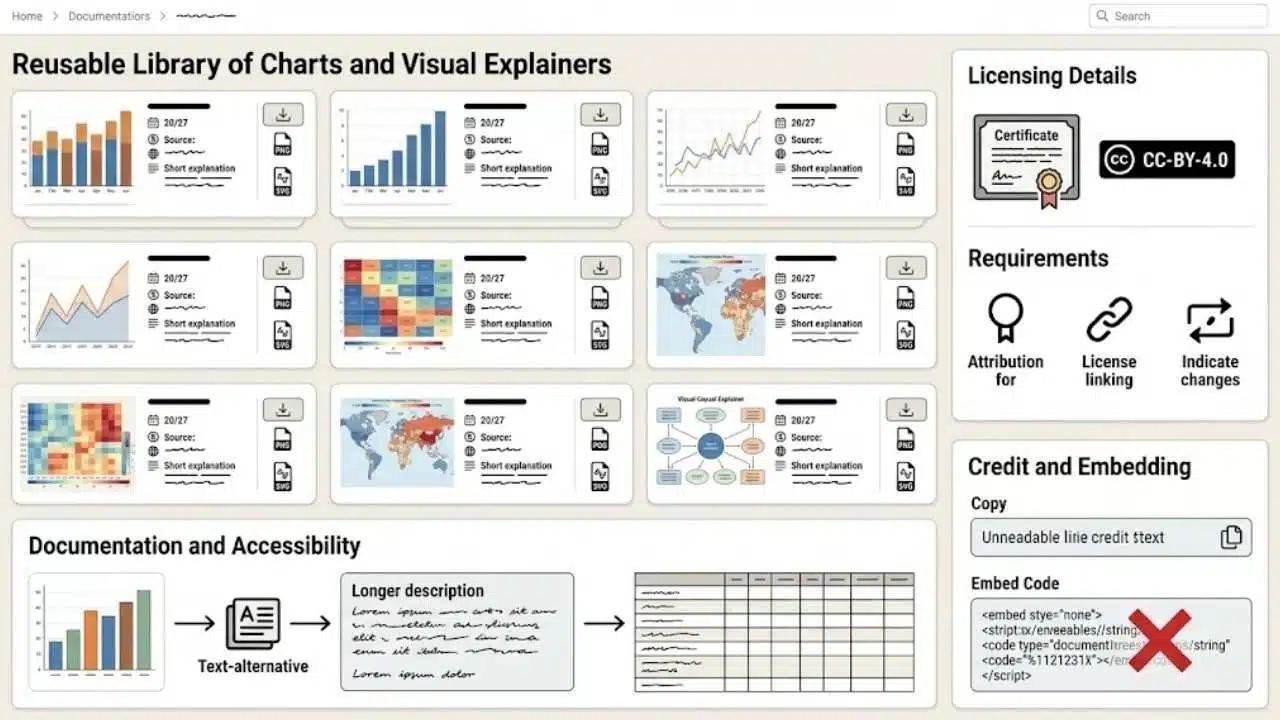
Editors sometimes need a visual faster than they can commission one. Offer high-resolution PNG files and, when editing is permitted, SVG versions.
Each visual needs a title, publication date, underlying source, short explanation, reuse terms, and suggested credit line. Complex charts and maps also need a short text alternative plus a longer description or data table conveying the essential information.
Licensing deserves care. CC BY 4.0 permits commercial sharing and adaptation, but reusers must provide appropriate attribution, link to the licence, and indicate changes. An organisation must own or control the relevant rights before applying the licence, and existing users may continue relying on it after publication.
Do not hide keyword-rich followed links in mandatory embed code. The visual should earn credit because it is useful, not act as a backlink widget in disguise.
The Boring Checks That Decide Whether Editors Use the Asset
Open the finished page as if a deadline were approaching. Can someone find the author, publication date, central finding, methodology, and contact information within a minute? If not, the campaign is not ready.
Publish an HTML landing page even when a PDF is available. Keep evidence outside registration, use a permanent URL, add version dates and corrections, and test the page on mobile and slower connections.
Accessibility and search discoverability need separate checks. A chart may be indexable yet unusable for someone who cannot see it. A visually accessible interactive may still hide its text or links behind a JavaScript rendering problem. Provide equivalent text or data, and ensure important content remains crawlable.
Pitch the Finding, Not the Format
“We made an infographic” is not a story. Lead with the strongest defensible finding, why it matters to that publication’s audience, and how the editor can verify it.
Prepare different angles for different beats and locations rather than sending identical mass emails. Include the public URL, one or two findings, a short methodology note, and access to someone who understands the work. Mention downloadable visuals and reuse terms when relevant.
Do not make a backlink a condition of access or coverage. The editor decides whether and how to cite the source. The asset should make that decision easy without turning the pitch into a negotiation.
What to Try First
Start with the advantage the organisation genuinely has. Proprietary data may justify a benchmark report. Strong research skills can uncover overlooked stories in public records. A smaller team may get more lasting value from a maintained tracker or excellent template.
Before producing any of these linkable asset ideas, draft three plausible headlines and list the publications that could realistically cover each one. Then look for newer or stronger evidence that already answers the question.
If the proposed story remains useful after removing the brand name, it has a credible foundation. Build the evidence first; design and outreach can follow.