

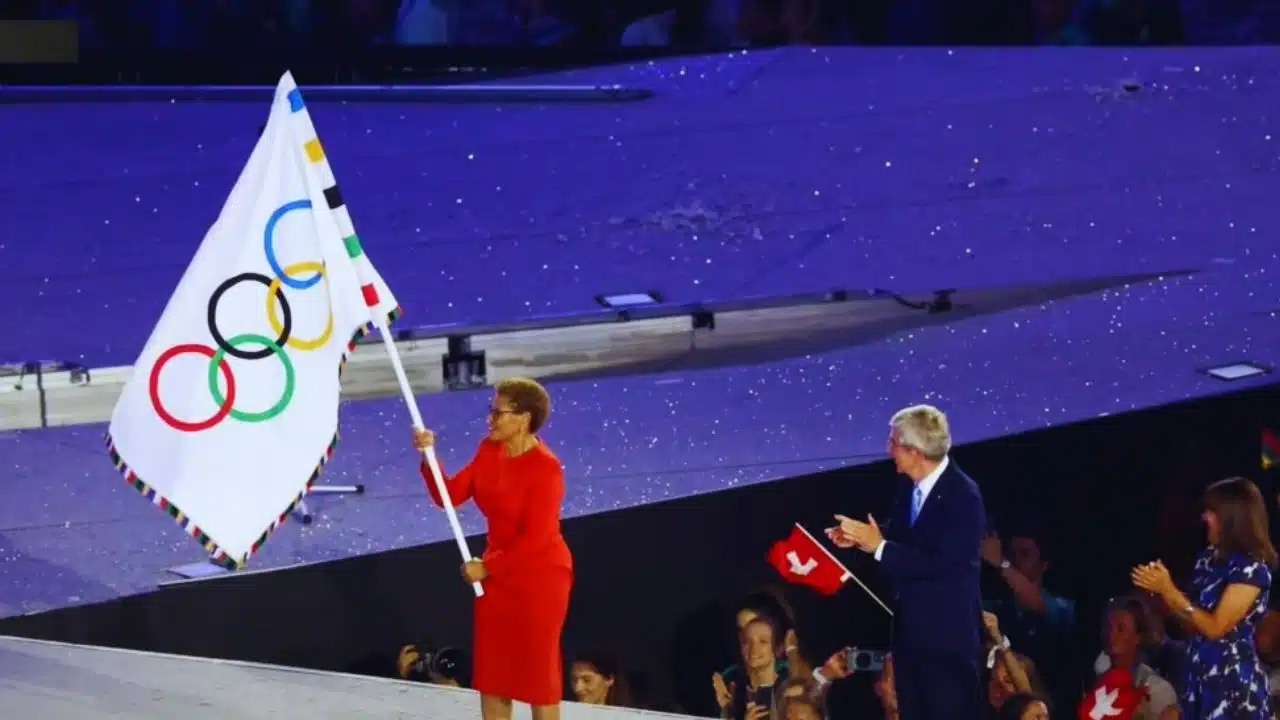
In a groundbreaking move toward gender equality in sports, the Los Angeles 2028 Summer Olympics (LA28) is poised to become the first Olympic Games in history to feature a female-majority athlete participation, according to an announcement made by the International Olympic Committee (IOC) on Wednesday. This landmark decision is a result of the IOC’s finalized competition plan, athlete quotas, and the number of medal events for the Games.
Athlete Quota and Gender Representation: 50.5% Female Participation Confirmed
The IOC has confirmed a total athlete quota of 10,500 competitors across 31 core sports, mirroring the structure of the upcoming Paris 2024 Olympics, which will be the first Games to achieve 50/50 gender parity. However, LA28 will go a step further.
Including five additional sports that will debut or return in Los Angeles—flag football, cricket, lacrosse, squash, and baseball/softball—the total number of athletes expected to participate will rise to 11,198, of which 50.5% will be women. This marks a significant milestone in Olympic history, as it will be the first time female athletes will outnumber their male counterparts.
This achievement comes after decades of advocacy, investment, and structural changes in how the Games are planned. It reflects a growing commitment to inclusion and equal opportunity for women in global sports, aligning with broader social changes and increasing popularity of women’s sports events worldwide.
IOC Cites Popularity and Demand for Women’s Sports
During a virtual media briefing, Kit McConnell, the IOC’s sports director, emphasized the strong rationale behind the move, calling the 2028 Games “a complete package” that combines merit-based inclusion and popular demand.
“This is all merit-based and reflected in both participation and popularity,” said McConnell. “We are responding to what fans, broadcasters, and national federations are demanding—more women’s sports on the biggest stage.”
The IOC pointed to multiple factors fueling this shift:
- High ticket demand for women’s events in Paris 2024.
- Equal or higher broadcast ratings for women’s sports compared to men’s.
- Increased media coverage and press interest in female athletes and teams.
- Growing global investments into women’s sports leagues and infrastructure.
The IOC has also received consistent feedback from international broadcasters and sponsors indicating that audiences are actively seeking gender-balanced representation and compelling narratives in both men’s and women’s competitions.
Expanded Competitions for Women: Soccer, Water Polo, and Boxing Lead the Way
One of the most striking updates in LA28’s competition plan is the expansion of the women’s soccer field to 16 national teams, up from 12 in previous Games. This now surpasses the men’s field, which will be reduced to 12 teams. This is a historic first for Olympic soccer, where men traditionally had the higher participation.
The women’s water polo tournament will also expand to include 12 teams, equal to the men’s competition. Previously, the women’s field was limited to 10.
In another major move, boxing will now feature seven weight classes for both men and women, marking the first time in Olympic history that both genders will have identical competition structures in this sport. These changes not only increase female participation but also ensure balanced medal opportunities and media visibility.
Record Number of Mixed-Gender Medal Events Across Multiple Sports
Continuing its commitment to inclusivity and innovation, the IOC announced that LA28 will include a record number of mixed-gender medal events, expanding opportunities for male and female athletes to compete together in team formats.
New or continued mixed-gender competitions will include:
- Mixed team event in artistic gymnastics – Final format to be announced by the International Gymnastics Federation (FIG).
- 400-meter mixed-gender relay in track and field, building on the 1,600-meter mixed relay introduced in Tokyo 2020.
- Mixed team formats in golf, archery, table tennis, and coastal rowing.
These events aim to highlight collaboration, mutual respect, and skill-sharing across genders, offering fans dynamic and engaging formats that reflect modern values in sport.
Swimming Sees Big Additions: New Sprint Events for Men and Women
The swimming schedule for LA28 will feature six new medal events with the addition of the 50-meter backstroke, breaststroke, and butterfly races for both men and women. These additions are intended to create more competitive opportunities, especially for sprinters, and bring greater variety to swimming’s sprint disciplines, which currently only feature the 50-meter freestyle.
This will bring the total number of swimming events to 43, ensuring that both endurance and sprint swimmers have equal chances at Olympic gold.
Other Sport Updates: More Climbing, Bigger Basketball Fields
The rapidly growing sport of climbing will be expanded from four to six medal events. The combined boulder and lead climbing disciplines will be separated into individual events, allowing specialists in each to compete directly for medals. Speed climbing will continue as a separate category.
Additionally, the three-on-three basketball tournament, which debuted in Tokyo, will see a field expansion from eight teams to 12 teams on both the men’s and women’s sides. This move is part of the IOC’s effort to capitalize on urban sports trends and engage younger audiences.
Venue Plans Emphasize Sustainability, But Negotiations Continue
The LA28 venue master plan was approved by the IOC Executive Board, with a focus on minimizing new construction, reusing existing facilities, and reducing environmental impact. The plan aligns with Olympic Agenda 2020+5, which prioritizes cost-efficiency and sustainability.
However, several venue discussions are ongoing. Talks to host beach volleyball in Santa Monica, particularly near the iconic Santa Monica Pier, broke down last week just ahead of the IOC submission deadline. LA28 had initially envisioned this as a cornerstone venue due to its history and scenic value.
Before presenting the revised plan to the IOC, the Los Angeles City Council gave unanimous approval to allow certain sports to be hosted outside city limits. However, this decision raised transparency concerns among council members, especially regarding the committee’s private budget.
Councilmember Tim McOsker has been pushing to move sailing from Long Beach to San Pedro, citing San Pedro’s recent success hosting the Sail Grand Prix. Despite Long Beach’s Olympic legacy from 1984 and its planned role in hosting handball, water polo, and triathlon in 2028, McOsker wants San Pedro to share the spotlight.
Equestrian Venue Still Undecided: Temecula Pushes for Galway Downs
Meanwhile, the location for equestrian events is still under debate. Initially, LA28 planned to build a new venue in the Sepulveda Basin, but alternative sites are being explored to reduce environmental impact and cost.
Six politicians from Temecula and Riverside County sent a joint letter to IOC President Thomas Bach, LA28 Chair Casey Wasserman, and LA City Council President Marqueece Harris-Dawson urging them to keep equestrian events at Galway Downs—a 242-acre facility in Temecula that already hosts major national and international equestrian competitions.
Their letter emphasized Galway Downs’ readiness, accessibility, and track record, positioning it as a more practical and community-supported venue than building a new complex from scratch.
A New Era for the Olympic Games
The 2028 Los Angeles Olympics is shaping up to be one of the most inclusive and sustainable Games in Olympic history. From female-majority athlete representation to expanded mixed-gender events and a venue plan centered on smart infrastructure, LA28 promises a bold step forward for the Olympic movement.
With strong signals from fans, athletes, broadcasters, and sponsors, the Olympic Committee appears committed to evolving the Games to reflect modern values—equity, efficiency, and entertainment.
As final plans unfold and venues are locked in, the world will be watching not just for athletic feats, but for a cultural milestone that could define the future of international sports.
The Information is Collected from CBC and AOL.






















