

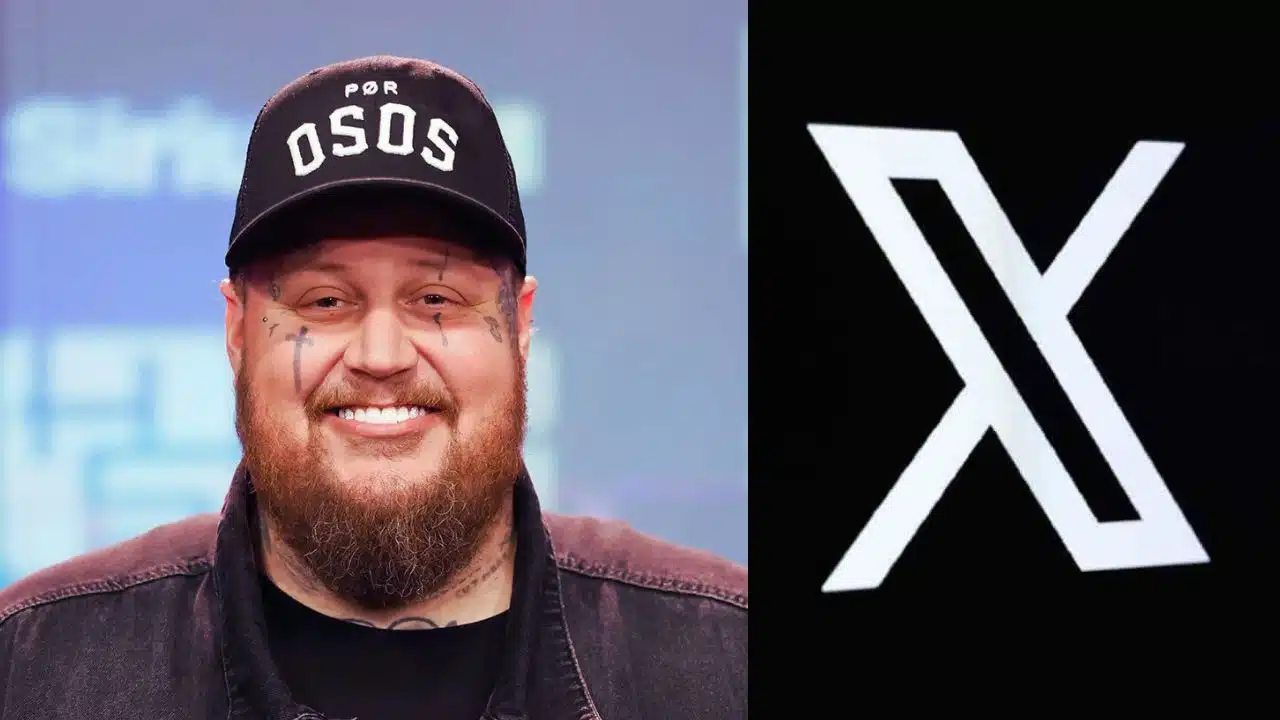
Jelly Roll, the chart-topping singer-songwriter, has officially had enough of the platform formerly known as Twitter, now called X. On Sunday, he took to the app to express his frustration, slamming X for what he describes as its increasingly toxic environment. In his post, Jelly Roll didn’t hold back, calling X “the most toxic negative app to exist ever — PERIOD.” He made it clear that the social media site is no longer the place it used to be, declaring that it has devolved into a breeding ground for negativity and hateful exchanges. As a result, he’s decided to step away from the app for the sake of his mental health.
A “Wild West” Gone Too Far
In his post, Jelly Roll elaborated on how X has changed over time. He noted that while the platform has always been known for its chaotic and unfiltered nature, it has now gone far beyond what many had come to expect. He referenced the site’s past reputation as a “Wild West” of social media, where people could say almost anything, but now he feels it has crossed a line. According to Jelly Roll, X has become more than just a place for free expression; it has turned into a safe haven for individuals looking to spread hate and spew vile comments without facing any real consequences.
The singer-songwriter pointed out that the atmosphere on X has become overwhelmingly negative, with users constantly engaging in arguments and exchanging cruel insults. “People go crazy on the app and throw horrible comments back and forth,” Jelly Roll observed, highlighting the alarming rate at which hostility has overtaken the platform. He described it as a virtual battleground where people are no longer engaging in civil discourse but are instead using the platform to tear each other down.
Jelly Roll ended his post by saying he’s done with X. He’s tired of being exposed to this toxic environment and made it clear that he’s getting out before it affects him any further. “I’m done with the app… getting the heck away from all the negativity,” he concluded, signaling his decision to take a step back and disconnect from the platform’s increasingly hostile user base.
Not Jelly Roll’s First Social Media Hiatus
Interestingly, this isn’t the first time Jelly Roll has taken a break from social media. Just a few months ago, in April, his wife, Bunnie XO, informed fans that the artist had stepped away from social media after facing relentless bullying over his weight. At the time, Jelly Roll was subjected to a barrage of cruel comments that took a toll on his mental well-being. The criticism he received about his physical appearance became unbearable, and he made the choice to distance himself from the negativity.
Some celebrities, including Flavor Flav, publicly came to Jelly Roll’s defense during this time, offering him support and urging people to be kinder online. However, despite the efforts of his supporters, Jelly Roll found it difficult to cope with the constant harassment. In an interview with Variety, Jelly Roll opened up about how the toxicity of social media affected him. He revealed that while the negativity was hurtful, there was another factor contributing to his decision to quit at the time—his growing addiction to social media.
Jelly Roll admitted that he was spending an excessive amount of time scrolling through his feed, which only worsened his mental state. The endless stream of negativity and harsh comments began to consume his days, and he realized that he needed to take a break to regain control of his mental health. “It wasn’t just the bullying that got to me; it was the time I was spending on it. It was bad for my mind, bad for my spirit,” he shared in the interview.
The Impact of Social Media on Mental Health
Jelly Roll’s departure from X once again brings attention to the ongoing issue of social media and its impact on mental health, especially for public figures. With millions of followers and constant attention, celebrities often find themselves at the center of online scrutiny. While social media can be a powerful tool for connecting with fans and promoting their work, it can also become a source of immense stress when platforms turn toxic.
For Jelly Roll, the constant barrage of hate and negativity has become too much to bear. He acknowledged that the environment on X was not only affecting his mental health but also causing him to waste valuable time and energy. By stepping away from the platform, Jelly Roll is making a conscious decision to protect his well-being, knowing that the virtual world of X is no longer a healthy space for him.
The Growing Conversation Around Social Media and Mental Health
Jelly Roll’s decision to leave X also highlights a broader conversation that is gaining more traction in recent years: the toll that social media can take on one’s mental health. More and more celebrities are speaking out about their struggles with online platforms, shedding light on the dark side of social media fame. While these platforms provide a means of staying connected and interacting with fans, they can also be breeding grounds for toxicity, especially for individuals in the public eye.
Public figures like Jelly Roll are increasingly choosing to prioritize their mental health over the pressures of maintaining an active presence on social media. In doing so, they are sending a message that mental well-being should come first, even if it means stepping away from the platforms that have helped build their careers. Jelly Roll’s decision to leave X is a reminder that while social media can offer many benefits, it is crucial to recognize when it is causing harm and to take the necessary steps to protect oneself.
Finding Balance: The Struggle Between Engagement and Well-Being
Jelly Roll’s experience is not unique, as many public figures and everyday users alike find themselves caught in the struggle between engaging with social media and maintaining their mental health. Platforms like X, Instagram, and Facebook are designed to encourage constant interaction, which can lead to addiction and unhealthy habits. The endless scroll, combined with the pressure to respond to comments, post updates, and keep up with trends, can easily take a toll on anyone’s mental state.
For Jelly Roll, the negative atmosphere on X became too overwhelming, leading him to step away from the platform entirely. He isn’t the first celebrity to make this choice, and he certainly won’t be the last. In recent years, many public figures have taken breaks from social media or quit altogether, citing similar reasons—negativity, bullying, and the strain of being constantly “on.”
By stepping away from X, Jelly Roll is setting an example for others who may be struggling with the same issues. His decision shows that it’s okay to take a break, disconnect, and focus on one’s mental health. For Jelly Roll, this is about more than just avoiding negativity—it’s about reclaiming his peace of mind and prioritizing what truly matters.
Jelly Roll’s departure from X serves as a powerful reminder of the importance of mental health in today’s digital age. Social media can be a double-edged sword, offering connection and engagement while also fostering negativity and toxic behavior. For public figures like Jelly Roll, the constant scrutiny and harsh comments can quickly become overwhelming, leading to burnout and mental strain.
As Jelly Roll takes a step back from the toxicity of X, his actions will likely resonate with many who have faced similar struggles. His decision to prioritize his well-being over the pressures of social media is a message that more people need to hear: it’s okay to step away, to disconnect, and to take care of yourself. After all, no platform is worth sacrificing your mental health.





















