
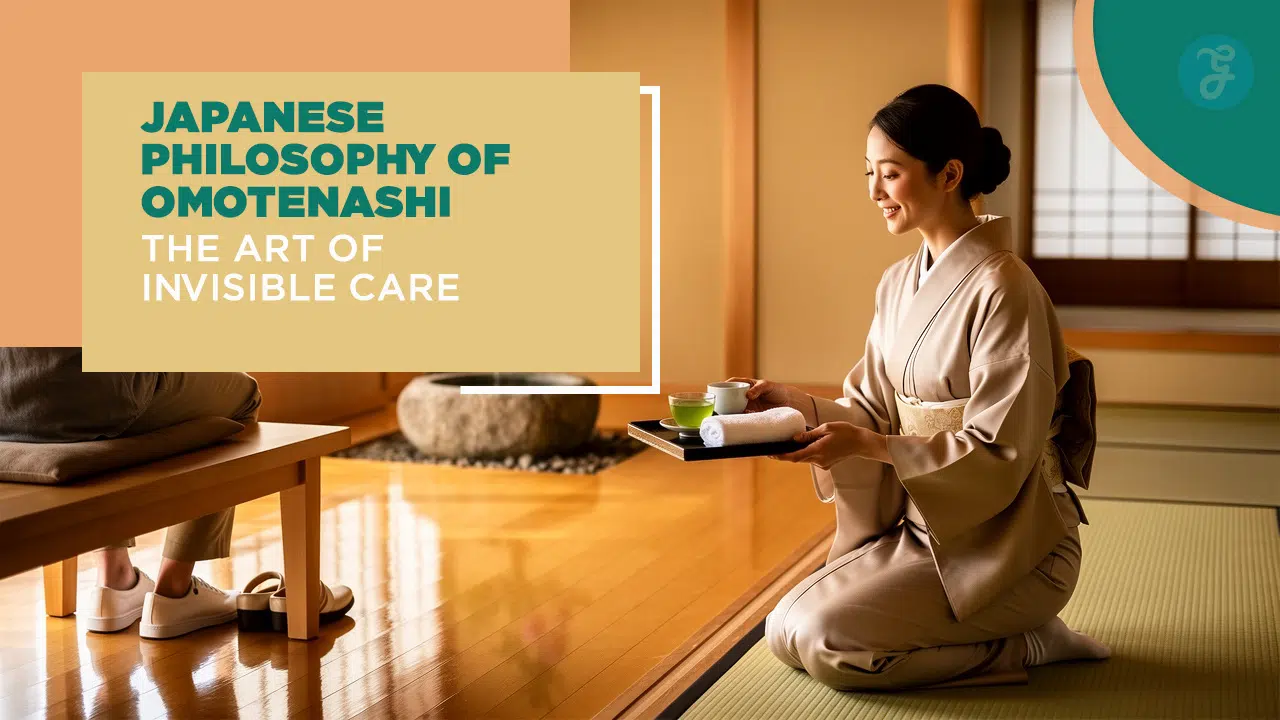
The rain in Kyoto has a certain heaviness to it. Not dramatic, just present. It darkens the moss until it almost glows and taps steadily against the cedar eaves, like it has nowhere else to be. When you step over the threshold of a small ryokan (a type of traditional Japanese inn), you notice something shift. No one has spoken yet. No grand welcome. And still, the air feels arranged around you, as if the room has quietly made space for your arrival. You haven’t said a word, but somehow you feel understood. This is the Japanese philosophy of Omotenashi in its purest form.
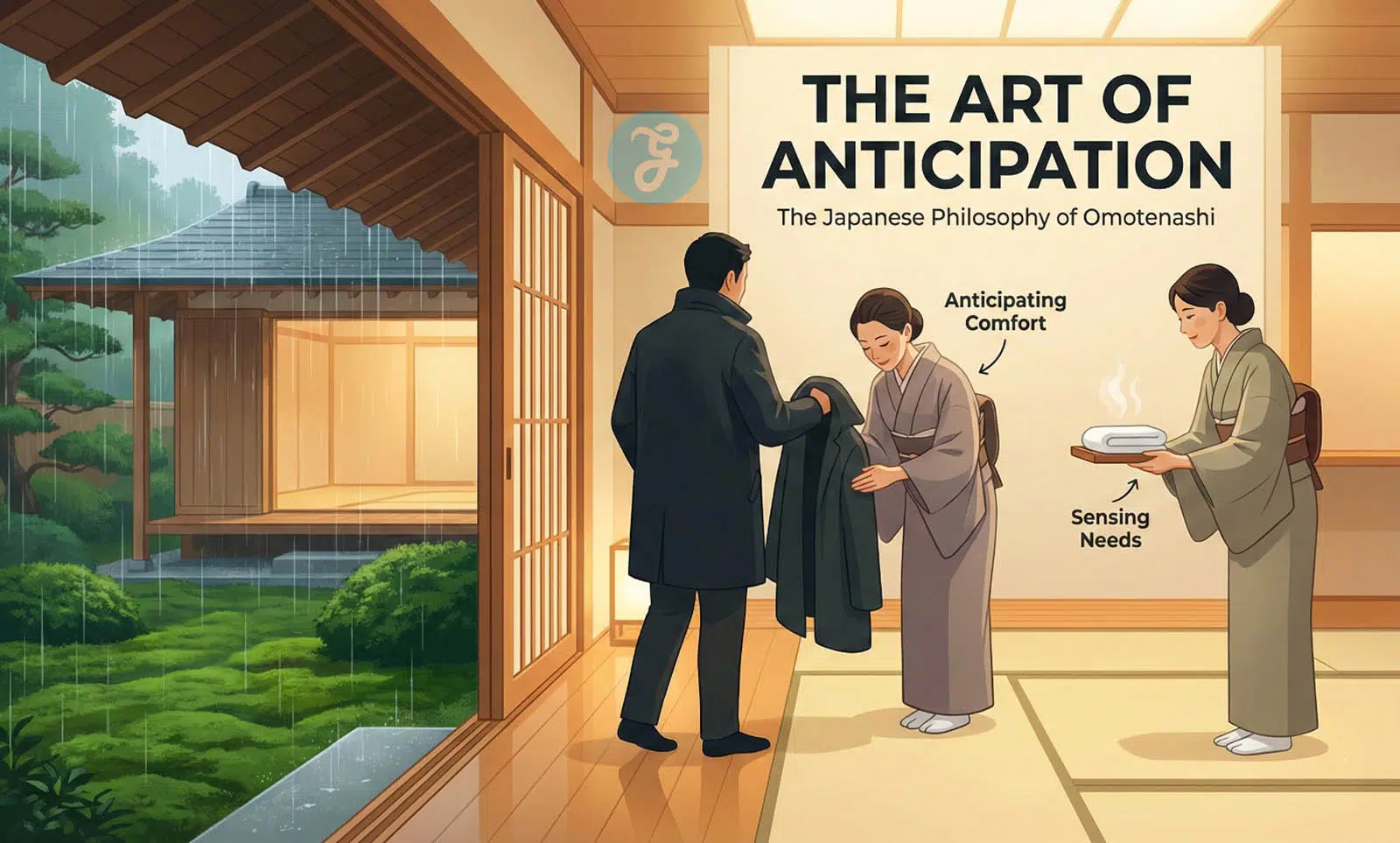
And, your heavy coat is taken with a slight bow. A steamed towel appears at the precise second your hands feel the chill. It is not magic. It is an active, living architecture of anticipation that sees your needs before you do. In the West, we are taught that good service is a reaction. You ask; the waiter brings. You have a problem; the team fixes it. But this silent architecture seeks to eliminate the need to ask at all. It is the art of seeing the invisible.
What is the Japanese Philosophy of Omotenashi?
At its heart, the Japanese philosophy of Omotenashi is far more than just being polite. It is a quiet, proactive obsession with the details that most people overlook. Imagine a host who senses you are thirsty before you even reach for a glass.
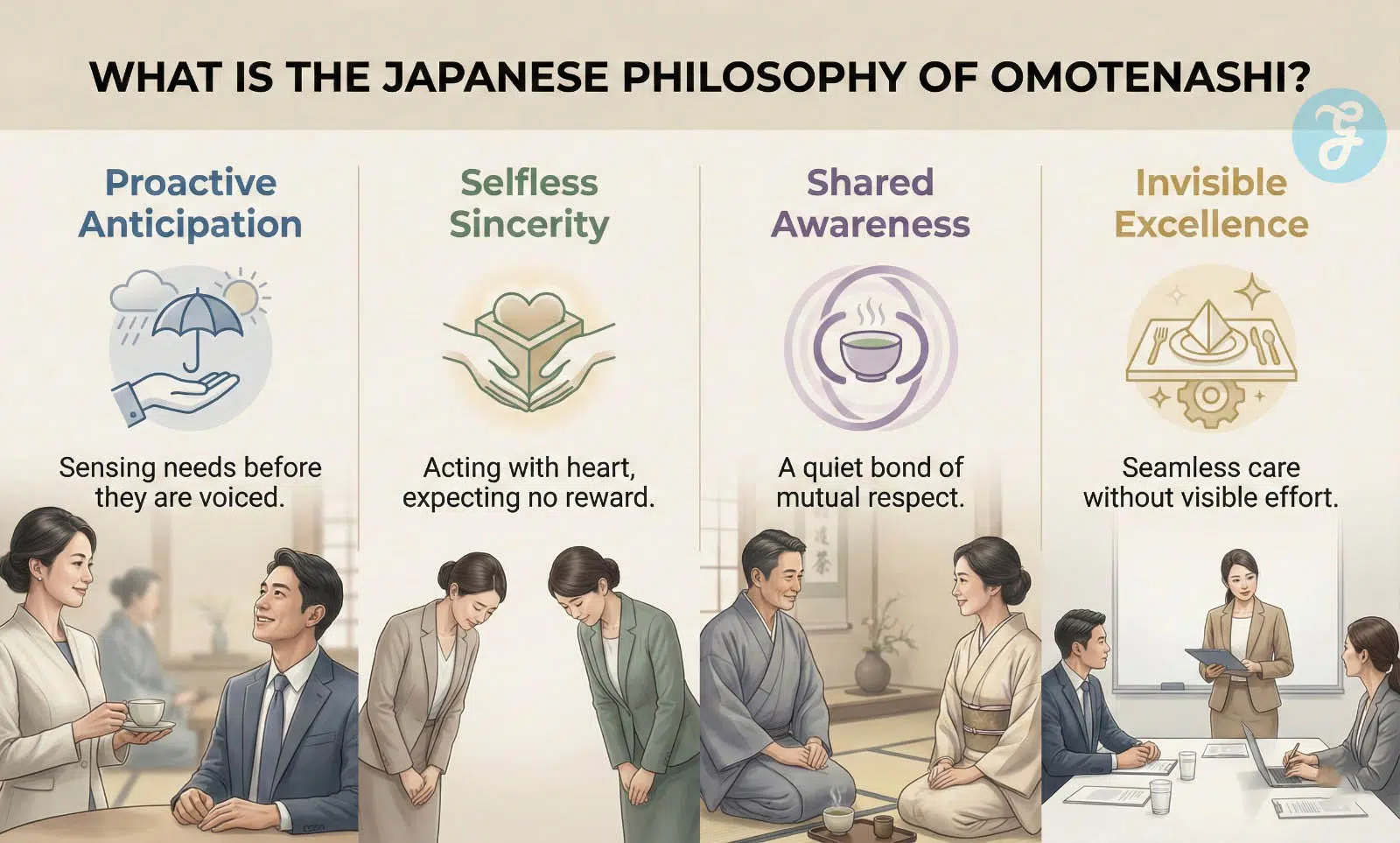
That is the essence here: a selfless approach to care where you anticipate a need before the guest even realizes it exists. It is not about a servant bowing to a master; it is a shared moment of awareness between two equals. Whether you are in a high end Tokyo boutique or a centuries old tea house, the goal is to create a sanctuary of mutual respect that feels entirely seamless.
The Heart of the Matter: No Front, No Back
To grasp this mindset, we must look at the linguistic roots. The practice centres on the concept of Omote ura nashi. In Japanese culture, Omote is your public face. Ura is what you hide behind the scenes. Nashi means none. Combined, they describe a state of being where there is no “back” to your actions. This transparency is what separates true hospitality from mere professional service.
The Transparency of Action
When you offer a gesture of kindness, there is no hidden motive. There is no expectation of a tip or a reward. You do it because the moment demands it. This creates a level of trust that is rare in our modern world. It is a transparency of the soul. By removing the “back” of the transaction, the host ensures the guest never feels manipulated or indebted.
Building Trust Through Sincerity
Trust is the byproduct of a lack of hidden agendas. In a business context, this means providing value without immediately asking for a sale. It involves showing up for a client because it is the right thing to do. When the Ura is removed, the relationship becomes authentic. It shifts from a contract to a connection.
The Architect of the Soul: Sen no Rikyu
This isn’t a modern management trend. It is a 500-year-old discipline. Its origins lie in the 16th century tea rooms of Japan, shaped by a man named Sen no Rikyu. While born a merchant, Rikyu became the most influential tea master in history. He was the personal advisor to the most powerful warlords of his era. Yet, he didn’t counsel them on battle. He embodied, and instilled in them, the principles that later came to define Omotenashi.
Mastery of the Small
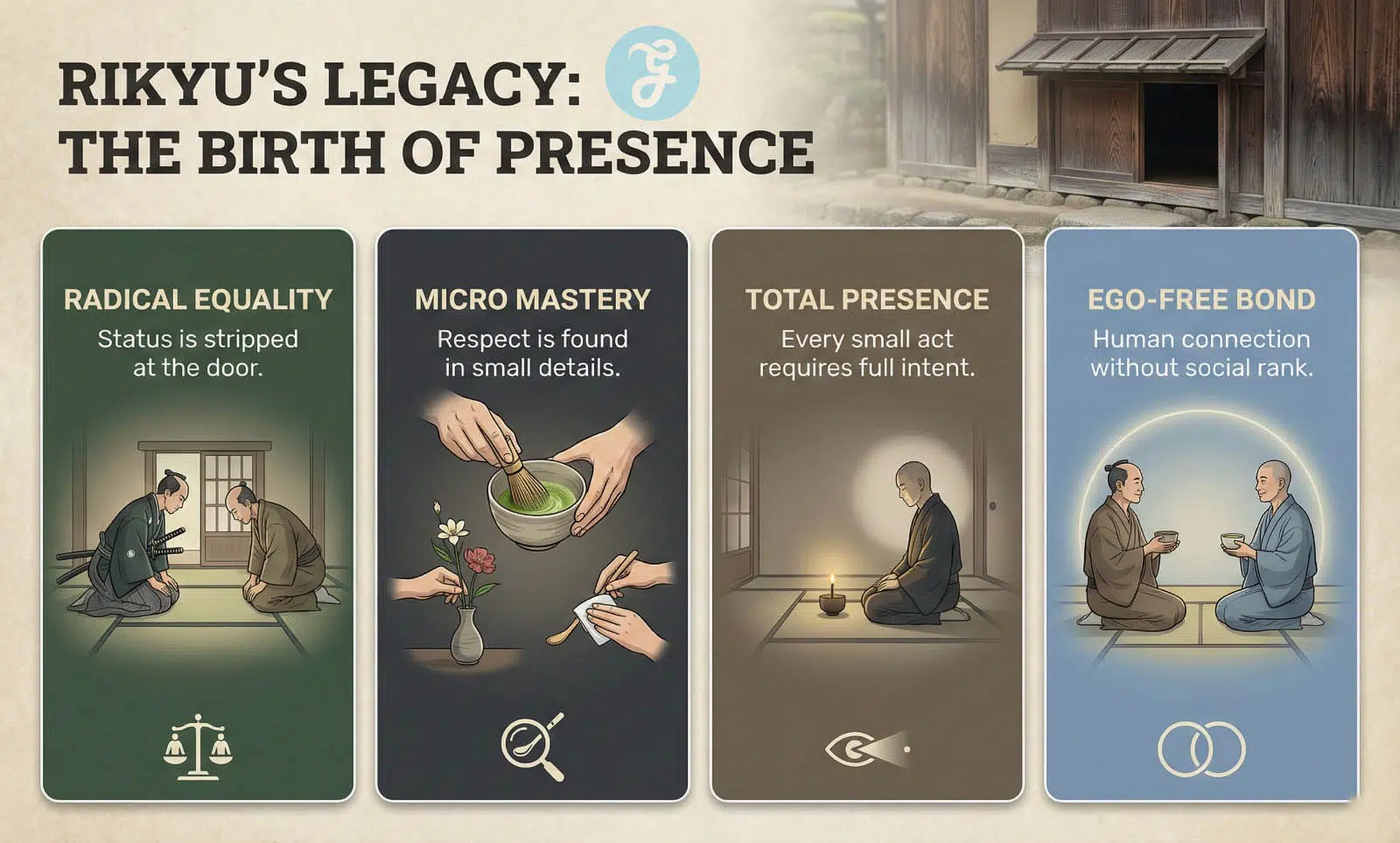
Rikyu was a master of the small. He understood that true respect is not found in grand gestures. It is found in the quiet details. The way you hold a ceramic bowl or sweep a stone path speaks volumes about your character. He believed that if you cannot be present for the smallest act, you will never be ready for the significant moments of your life.
Designing for Equality
By designing the tea house with a door so low that even a powerful Samurai had to crawl inside, Rikyu stripped away status. This was the Nijiriguchi. He created a space where the only thing that remained was an honest connection. Inside the tea room, there were no generals or peasants. There were only human beings sharing a bowl of tea.
| Aspect | The Global Service Model | The Philosophy of Omotenashi |
| The Driver | Financial incentive or tips | Internal pride and personal craft |
| The Logic | Reactive (You ask, I do) | Proactive (I see, I act) |
| The Ego | The server expects recognition | The host remains invisible |
| The Goal | Customer satisfaction scores | Harmony and shared presence |
The Legacy of Ichigo Ichie
Rikyu championed a concept known as Ichigo Ichie. Roughly translated, it means “one time, one meeting.” It is the haunting realization that this specific moment will never happen again. The light will never hit the steam of your tea in quite this way again. The person across from you will never be exactly this age or in this mood again.
Total Presence in the Moment
Even if the same two people meet in the same room every day, the encounter is a once-in-a-lifetime event. When you live with this awareness, your quality of presence changes fundamentally. You stop looking at your phone or worrying about your next meeting. You start looking at the human being in front of you. This is the ultimate form of respect.
Valuing Every Interaction
In a fast-paced world, we often rush through small talk to get to the “important” stuff. Ichigo Ichie teaches us that small talk is the important stuff. Every email, every brief call, and every passing greeting is an opportunity to practice the Japanese philosophy of Omotenashi. If you treat every meeting as a unique event, the quality of your work rises.
The Three Pillars of the Architecture
To practice the Japanese philosophy of Omotenashi, you must build your actions on three structural pillars. These are not mere rules. They are layers of awareness that transform a simple meeting into a masterpiece of human connection. When these three elements align, the guest feels a profound sense of belonging.
Shitsurae: The Art of the Invisible Stage
Shitsurae is the labour that happens while the stage is still empty. In a traditional Japanese setting, this might involve the host spending hours selecting a specific flower that reflects the current weather. The guest will only see the final result. They will never see the effort. This is the foundation of silent architecture.
The Power of Pre-Work
In your professional life, this is the art of the prepared environment. It is the deep research you do before a pitch. It is the “pre-read” where you study a client’s history so thoroughly that you never have to ask a basic question. By the time you sit down, the friction has already been removed. You have built a foundation of safety.
Ma: The Mastery of the Holy Gap
Ma is perhaps the most intellectual and difficult pillar to master. It refers to the space between things. In Western culture, we are often afraid of the void. We fill every silence with talk. We fill every minute with a notification. We crowd our clients with emails. The Japanese philosophy of Omotenashi treats silence as a gift.
The Wisdom of the Pause
Ma is the spatial and temporal awareness that allows a guest to breathe. It is knowing when to step forward and when to vanish. In a modern context, Ma is knowing when not to send that message. It is the realization that a friend often needs your quiet presence rather than your loud advice.
Kikubari: The Distribution of Care
If the first two pillars are about preparation and space, Kikubari is about active observation. It literally means the distribution of your care. To practice this, you must develop a type of peripheral vision. It is the tactical side of the architecture.
Sensory Anticipation
A master of Kikubari notices the micro-expressions. They see the slight furrow of a brow when a room is too cold. They notice a flickering candle or a water glass that is nearly empty. They act on these details without making a scene. You are fine-tuning the moment in real time.
The Paradox of Selflessness
There is a common Western fear that this level of care is a form of subservience. We worry that by being “selfless,” we are lowering our status. The reality is the exact opposite. When you remove your ego from the interaction, you actually gain authority. A master of Omotenashi is the architect of the environment. They are the ones in control.
Leadership Through Invisibility
By being “invisible,” they guide the experience. They decide the rhythm of the meal. They set the tone of the meeting. They are not waiting for instructions. They are leading with quiet confidence. When you stop looking for credit, you become remarkably effective. You are no longer distracted by how you are being perceived.
Modern Mastery: From Ryokans to Algorithms
The Japanese philosophy of Omotenashi is often associated with ancient tea rooms. However, its most potent application today is in the high-stakes world of technology and leadership. As automation accelerates, the human touch becomes the ultimate luxury. Efficiency is a commodity. Meaningful anticipation is the gold standard.
Digital Omotenashi: The UX of Respect
In software design, we often talk about user experience. But many apps are designed to be “sticky” rather than respectful. They use loud notifications and dark patterns to steal our attention. This is the opposite of silent architecture. A product built on the Japanese philosophy of Omotenashi feels different.
Anticipatory Design
It is what we call “Anticipatory Design.” It is a user interface that predicts your next move and removes the obstacle before you reach it. It doesn’t shout for your attention. It respects your time by staying out of your way until it is needed. This is the digital equivalent of the host who refills your water before you realise you are thirsty.
The Omotenashi Leader
In the modern workplace, the “command and control” style of leadership is dying. It creates friction and resentment. The most effective modern leaders are practitioners of Shitsurae. They view their role as the “Invisible Stage Manager.” A leader using this philosophy doesn’t seek the spotlight.
The Invisible Stage Manager
Instead, they focus on the preparation of the team’s environment. They read the room. They notice the “Ma” or the gaps in communication. They provide the resources their team needs before the team has to file a formal request. By removing the “Ura” or the hidden agenda, these leaders build radical trust.
The Competitive Advantage
We are surrounded by systems that process data faster than any human ever could. While AI accelerates execution, it cannot replicate lived presence or the nuance of Ichigo Ichie. It cannot feel the weight of a singular moment or sense the subtle shift in a client’s mood. That is your advantage. By mastering this ancient art, you offer what no machine can: awareness, sincerity, and the discipline of attention.
The Power of Human Connection
You offer a refined presence. You offer a connection that is transparent and sincere. Whether you are closing a deal or mentoring a colleague, the ability to anticipate needs without being asked is the highest form of professional mastery. It is a presence that speaks volumes without saying a word.
| Practice | Daily Habit | Long-term Impact |
| Shitsurae | 10 mins pre-meeting prep | Reputation for extreme reliability |
| Ma | Counting to three before speaking | Better decision making and poise |
| Kikubari | One small, silent act of help | Unshakeable team loyalty |
| Ichigo Ichie | Leaving the phone in the bag | Deeply meaningful relationships |
The Path Forward: Moving Through the World with Refined Presence
The Japanese philosophy of Omotenashi is not a destination you reach. It is a way of moving through the world. It is the steady commitment to being the most aware person in any room. By adopting this silent architecture, you are choosing to lead with your actions rather than your ego. You are deciding that the comfort and success of others is the highest measure of your own professional mastery.
Embracing the Silent Architecture
In our current era, we are often rewarded for being the loudest voice. We are told to “brand” ourselves and to constantly broadcast our value. This ancient art offers a more powerful alternative. It suggests that true influence comes from the ability to vanish into the service of the moment. When you practice this, you don’t need to tell people you are a leader. They can feel it in the harmony of the environment you create.
The Discipline Behind the Grace
Omotenashi is often mistaken for temperament. It is not personality. It is training. The composed host is not naturally serene; they are rehearsed in awareness. In the tea lineage shaped by Sen no Rikyu, discipline preceded beauty. Every gesture was practiced until it disappeared into fluidity. Grace was the visible result of invisible rigor.
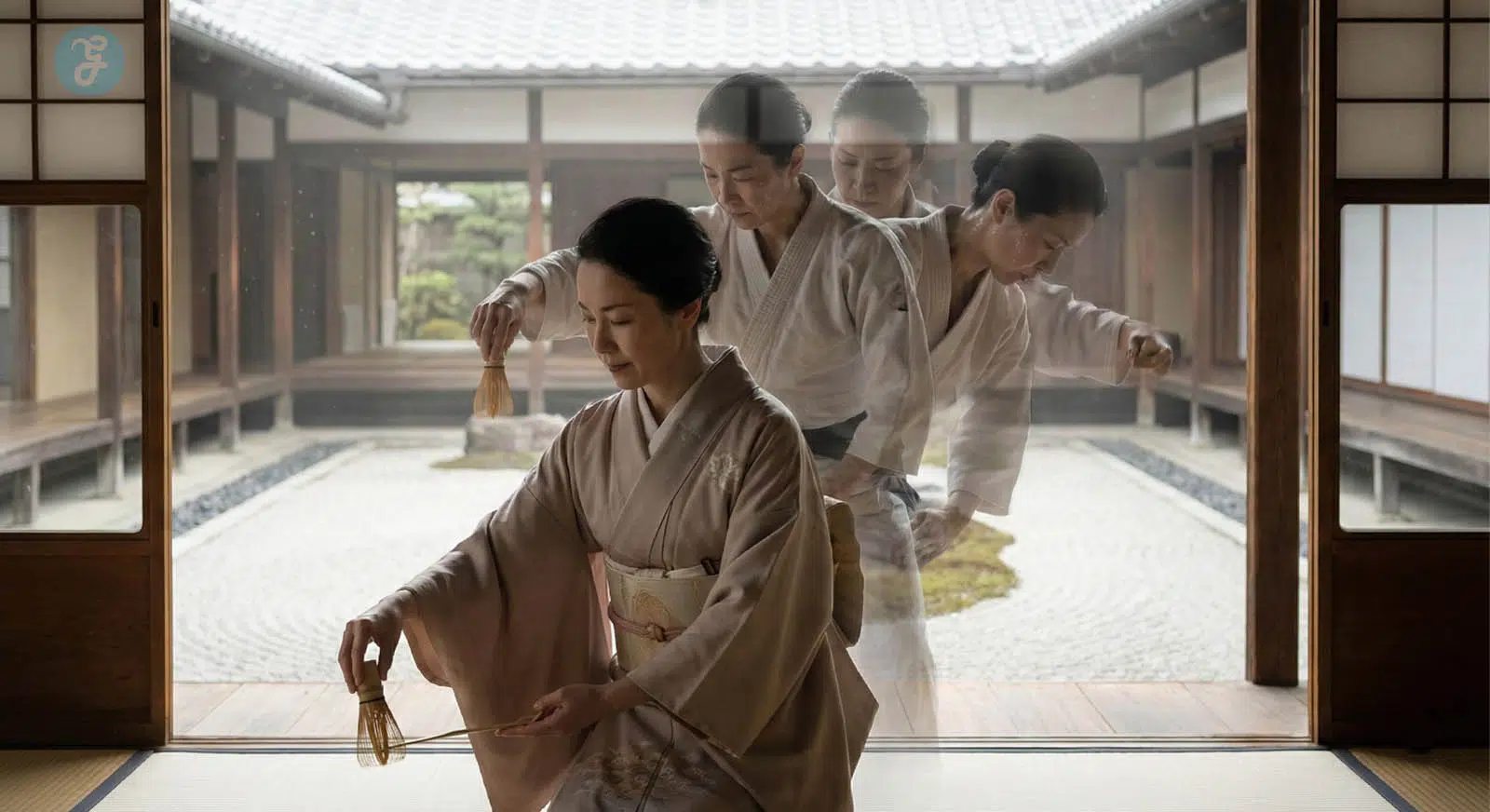 This matters in modern life. Anticipation without discipline becomes anxiety. Service without boundaries becomes exhaustion. True Omotenashi requires structure: clear standards, emotional regulation, and restraint. The host does not overextend. They prepare, observe, and act with precision. The elegance you witness is built on repetition, reflection, and correction. Mastery is quiet because it has already done the work.
The Boundary That Protects the Host
Selflessness without boundaries erodes dignity. Omotenashi is not self-erasure; it is an intentional offering. The host chooses the frame of the experience. That choice preserves authority. When motives are transparent, manipulation disappears, but so does martyrdom. The practitioner decides what they will give and what they will not.
In professional life, this means clarity of role. You anticipate needs within your craft, not beyond it. You do not rescue; you support. You do not absorb chaos; you organize it. This boundary is what prevents burnout. Care distributed with discernment strengthens both parties. Care given without structure weakens both.
Integration Into Daily Practice
Philosophy must convert into behaviour. Begin with observation. Enter rooms scanning for friction rather than attention. Prepare environments before meetings begin. Remove one obstacle before it is named. Then practice restraint. Pause before responding. Let silence surface what urgency hides.
Finally, refine feedback loops. After each interaction, ask: What tension did I miss? What comfort did I create? Small corrections compound. Over time, your presence changes texture. People relax faster. Conversations deepen sooner. Results improve without force. Omotenashi becomes less something you perform and more the atmosphere you carry.
Living the Japanese Philosophy of Omotenashi
As you move through your personal and professional life, let this silent spirit be your guide. Treat every encounter as Ichigo Ichie. Treat every person with the transparency of Omote ura nashi. When you do this, you move with a refined presence that changes the world around you. You don’t just provide a service. You provide a sanctuary. This is the art of respect. It is a legacy that remains as relevant today as it was five centuries ago. By mastering the Japanese philosophy of Omotenashi, you transform your work from a job into a craft, and your life from a series of events into a model of grace.