

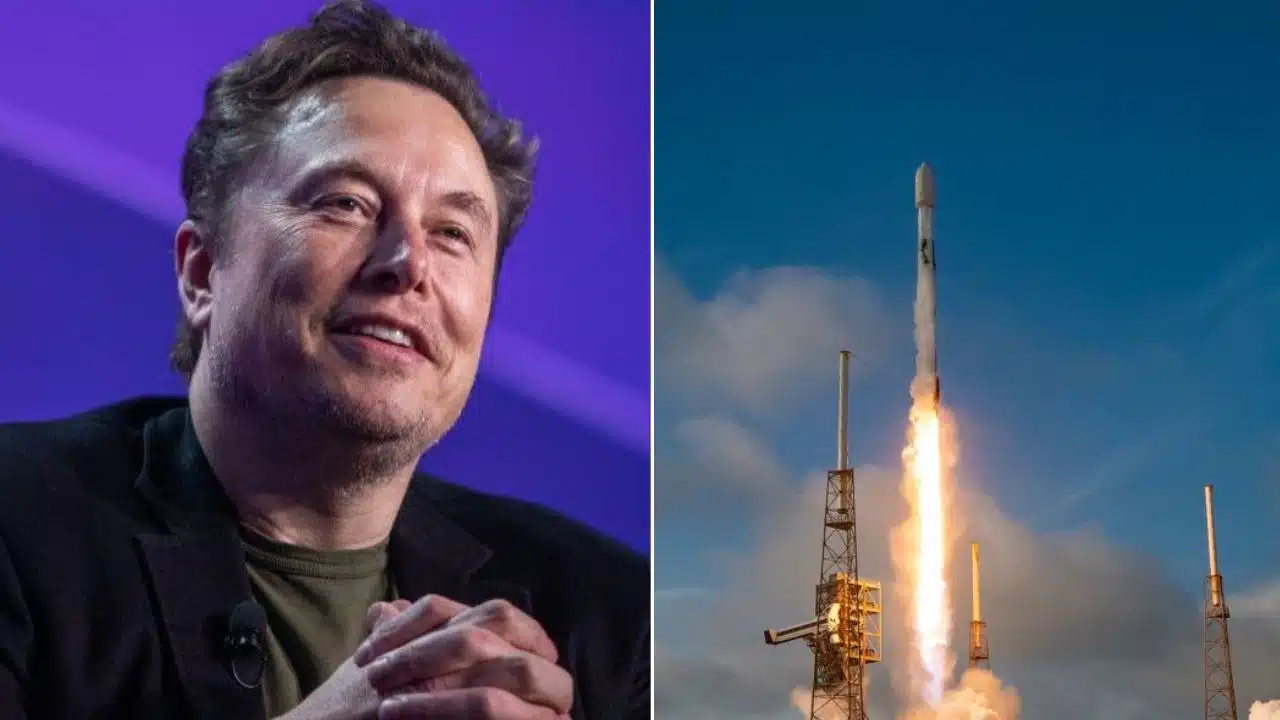
In a landmark move highlighting the growing ties between India’s space program and global commercial space ventures, SpaceX is set to launch India’s most advanced communications satellite, GSAT-20 (also referred to as GSAT-N2). The launch, scheduled for early next week, will take place from Cape Canaveral, Florida, aboard SpaceX’s Falcon 9 rocket. This event marks a pivotal chapter in India’s space ambitions, as the country continues to push boundaries in technological innovation and international collaboration.
A Historic Partnership: ISRO and SpaceX
This mission is not merely a routine satellite launch; it’s a significant milestone in the collaboration between the Indian Space Research Organisation (ISRO) and SpaceX, Elon Musk’s pioneering aerospace company. While ISRO has long been regarded as a leader in cost-effective space missions, the organization’s reliance on external launch providers for heavier satellites has been a logistical challenge.
Traditionally, India relied on Arianespace, the French satellite launch company, for its heavier payloads. However, due to a lack of operational rockets at Arianespace, ISRO opted for SpaceX as its partner for this mission. Radhakrishnan Durairaj, Chairman and Managing Director of NewSpace India Ltd (NSIL), the commercial arm of ISRO, called the deal “a good opportunity” for India. He stated, “We got a good deal on this maiden launch with SpaceX, both in terms of technical compatibility and commercial value.”
ISRO’s GSLV Mk III rocket, affectionately nicknamed “Bahubali,” could only lift payloads up to 4,100 kg into a geostationary transfer orbit. With the GSAT-20 satellite weighing in at 4,700 kg, SpaceX’s Falcon 9 rocket emerged as the optimal solution. Falcon 9’s ability to carry heavier payloads provided India with the reliable launch platform it needed.
GSAT-20: A Game-Changing Communications Satellite
The GSAT-20 satellite is a technological marvel, designed to address the growing demand for high-speed broadband connectivity in India. Developed by ISRO, the satellite is equipped with 32 user beams, comprising eight narrow spot beams for northeastern India and 24 wide spot beams for the rest of the country. These beams will enable enhanced internet services, especially in remote and underserved regions.
One of the most anticipated features of the GSAT-20 is its ability to support in-flight internet connectivity for airlines operating in Indian airspace. This marks a significant leap forward in modernizing India’s digital infrastructure and aligning it with global standards.
With a mission lifespan of 14 years, GSAT-20 will rely on hub stations located within mainland India to operate its broadband services. This purely commercial satellite launch is being overseen by NSIL as part of its mandate to commercialize ISRO’s space capabilities.
Why SpaceX Was the Logical Choice
India’s decision to collaborate with SpaceX is driven by a mix of necessity and opportunity. Beyond the unavailability of Arianespace, geopolitical considerations eliminated other potential launch providers. For instance, Chinese rockets were out of the question due to strained relations between India and China. Similarly, the ongoing conflict in Ukraine has limited Russia’s ability to offer commercial launch services, narrowing India’s options to SpaceX.
The deal between NSIL and SpaceX reportedly cost India around $60-$70 million, a competitive price for such a high-capacity satellite launch. SpaceX, with its track record of successful Falcon 9 launches, was a clear choice to ensure the mission’s success.
Elon Musk’s Growing Interest in India
Elon Musk, the CEO of SpaceX, has repeatedly expressed his admiration for India’s potential as a global leader in technology and innovation. After his meeting with Indian Prime Minister Narendra Modi in June 2023, Musk stated, “I’m incredibly excited about the future of India. India has more promise than any large country in the world.” He also called himself “a fan of Modi” and praised the Prime Minister’s vision for India.
During the same meeting, Musk highlighted his interest in expanding SpaceX’s Starlink satellite internet services in India. Starlink’s potential to provide high-speed internet to remote villages aligns well with India’s goal of bridging the digital divide.
Starlink and Regulatory Challenges in India
While Musk’s enthusiasm for India is clear, his plans for Starlink in the country have faced regulatory hurdles. India’s Telecom Minister, Jyotiraditya Scindia, recently confirmed that Starlink is yet to comply with all the required security norms for satellite-based communication services.
Scindia emphasized that the government is open to granting Starlink a license once it fulfills the necessary conditions. “We are more than happy to give them [a license] if they comply with all the conditions,” Scindia said. However, he stressed the importance of addressing all security concerns before proceeding.
Broader Implications of ISRO-SpaceX Collaborations
The GSAT-20 launch is not the only venture between ISRO and SpaceX. India has also signed a deal with Houston-based Axiom Space to send an Indian astronaut to the International Space Station (ISS) aboard SpaceX’s Falcon 9 rocket and Crew Dragon spacecraft. This mission, estimated to cost $60 million, represents another milestone in India’s ambitious space exploration goals.
The success of these collaborations highlights the evolving role of private space companies in advancing global space exploration. While ISRO and SpaceX are often seen as competitors in the low-cost satellite launch market, their partnership demonstrates how collaboration can drive innovation and mutual growth.
A Step Towards a Connected Future
The upcoming launch of GSAT-20 on SpaceX’s Falcon 9 rocket symbolizes more than just a technological achievement—it reflects India’s growing stature in the global space industry. By leveraging international partnerships and embracing cutting-edge technology, India is well-positioned to address its domestic needs while contributing to global advancements in space exploration.
As India continues to make strides in its space program, collaborations with organizations like SpaceX will play a crucial role in shaping the country’s future in the space economy. With GSAT-20 set to revolutionize broadband connectivity across India, this mission stands as a testament to the power of innovation, cooperation, and forward-thinking leadership.





















