

With the rapid changes in regulatory requirements and growing instances of data breaches, businesses are constantly under pressure to maintain compliance with industry standards. With compliance monitoring, organizations can identify and address potential risks before they lead to any costly violations or incidents. If your organization fails to comply with relevant laws, policies, or regulations, it can have severe consequences, including operational downtime.
Continuous compliance monitoring is essential to businesses of all sizes. It promotes a culture of accountability and reduces the risk of massive fines and reputational damage. Organizations can invest in a reliable learning management system for compliance and ensure that regulations, standards, and policies are adhered to. But first, you must know what compliance monitoring is and why it is so important.
What Does Compliance Monitoring Mean?
Compliance monitoring refers to a systematic approach that evaluates and ensures that the operational processes at an organization adhere to established regulatory and internal standards. These standards may be set as per the government or industry requirements or enterprise policies designed to protect sensitive data.
Compliance monitoring involves regular evaluations that help identify and fix compliance gaps in real time. Unlike conventional methods, which usually rely on annual reviews and external audits, compliance monitoring helps align daily operations with compliance goals. This allows an organization to create a seamless overlap between business operations and compliance requirements.
Why Should Businesses Focus On Continuous Compliance Monitoring?
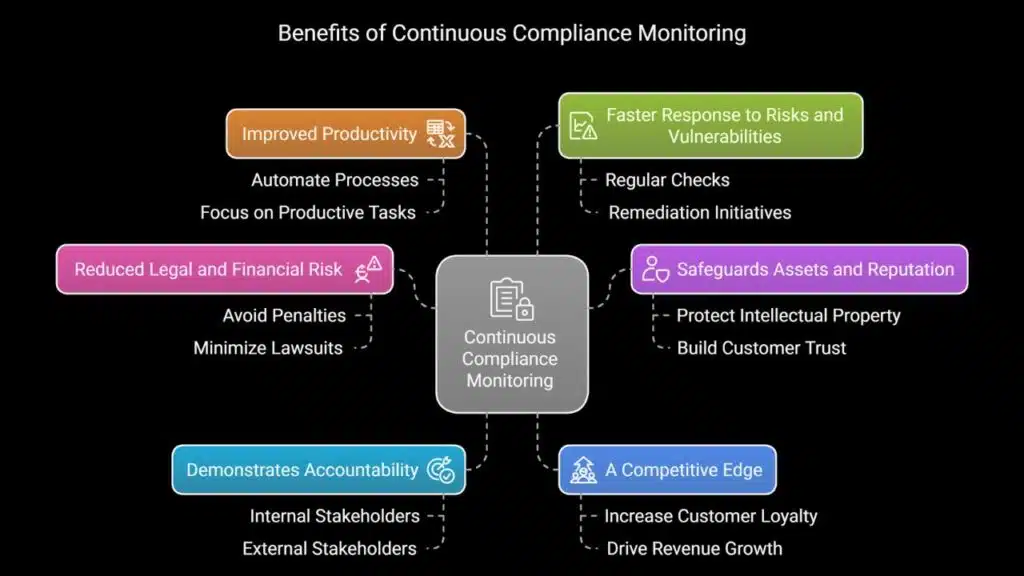
Compliance monitoring is a proactive practice that plays a crucial role in maintaining an organization’s integrity and security. Let’s take a look at some of the major reasons why businesses should focus on continuous compliance monitoring.
Reduced Legal And Financial Risk
Continuous compliance monitoring helps an organization avoid non-compliance penalties and fines. In some cases, these penalties can amount to millions of dollars. By closely monitoring the compliance efforts, organizations can minimize the risk of expensive lawsuits and legal expenses. At the same time, complying with industry standards allows companies to reduce the risk of operation disruptions that usually occur when dealing with non-compliance issues.
Safeguards Assets And Reputation
Companies can protect their intellectual property, sensitive customer and employee information, corporate reputation, and other crucial assets when they comply with regulatory standards. So, when a company has continuous compliance monitoring in place, it helps them build customer trust and loyalty. This also ensures that businesses can maintain a strong reputation in the marketplace.
Demonstrates Accountability
With continuous compliance monitoring, businesses can demonstrate their accountability to internal and external stakeholders, regulatory bodies, and customers. In industries like healthcare and finance, where data privacy and ethical standards are critical, such accountability is invaluable. It allows organizations to win and retain the trust of their stakeholders, customers, and employees.
A Competitive Edge
Companies that treat regulatory compliance as a priority stand apart from the competition and establish their name as trusted industry leaders. This often leads to increased customer loyalty and revenue growth, as customers are more likely to do business with companies that are trustworthy and responsible. In a way, compliance monitoring offers such companies a competitive edge in this cutthroat marketplace.
Improved Productivity
Having a continuous compliance monitoring program in place allows organizations to enhance their efficiency by streamlining their operations. When they are able to automate compliance monitoring and management processes, it relieves employees from the additional burden of keeping track of their compliance activities. In the meantime, they can focus on more productive tasks, accelerate their workflows, and minimize the potential for manual errors.
Faster Response To Risks and Vulnerabilities
Efficient compliance monitoring also helps with risk assessment and management. Besides monitoring compliance with preventive policies, these programs also conduct regular checks for organizational weaknesses, such as security vulnerabilities. With continuous monitoring, businesses can identify exposed systems and investments in remediation initiatives and update non-compliant elements. Businesses can do all these a lot faster when they have a modern CMS in place.
Tips To Create A Strong Compliance Monitoring Strategy
Whether you run a small-scale business or a large enterprise, establishing a powerful compliance monitoring strategy is the key to success in this area. If you are planning to improve your compliance management efforts, here’s how you should create your compliance monitoring plan:
Stay Up To Date With Regulatory Changes
Since compliance laws and regulations are constantly evolving, it is crucial for businesses to keep track of such updates. Frequently checking with the relevant government portals and regulatory authorities can help you stay up to date.
Actively Communicate These Changes To Your Team
Make sure your compliance team has a clear understanding of the policy updates. It is also essential to make sure your employees fully understand the update and what it means to their specific job roles. This is particularly important for employee monitoring, eliminating the chances of any future grievances.
Determine Actionable Steps
Identify the specific laws, regulations, and industry standards relevant to your operations. Propose actionable steps to fix compliance gaps and have regular check-ins on the progress. Once you have an idea about the compliance issues in your organization, it becomes easier to correct them with the right measures
Conduct Compliance Audits On A Regular Basis
Regular audits help confirm adherence to the compliance requirements. This allows businesses to identify areas for improvement and communicate this with key stakeholders. You can follow a traffic light system to spot the key areas at risk in a single glance.
Record Compliance Monitoring Activities
It is important that organizations maintain properly dated documentation of all compliance monitoring activities, as well as findings and corrective actions. This record of compliance monitoring activities simplifies the external audit process, protecting the business against non-compliance penalties.
Parting Thoughts
As you may realize, navigating the complexities of regulatory compliance requires more than just adhering to rules. It requires a strategic approach to streamline compliance processes, ensure continuous monitoring, and create a proactive environment for seamless integration of compliance into daily operations. While compliance monitoring can be simplified with the use of the right LMS solutions, businesses must keep themselves updated as the regulations evolve and complexities increase.
























