

Racing has always been a sport of grit, determination, and relentless pursuit of perfection. It is physically and mentally taxing for drivers who must endure hours of high-speed maneuvering in cockpits that barely accommodate their frames. It is equally demanding for the teams, who face financial and logistical hurdles, and the vehicles themselves, which must perform flawlessly under extreme conditions.
Now imagine removing one of these crucial elements: the human driver. This is precisely what the Abu Dhabi Autonomous Racing League (A2RL) seeks to accomplish, replacing drivers with nearly 95 kilograms of sophisticated computer systems and sensors. While this shift eliminates some human limitations, it introduces a new layer of complexity and challenges that test the limits of technology.
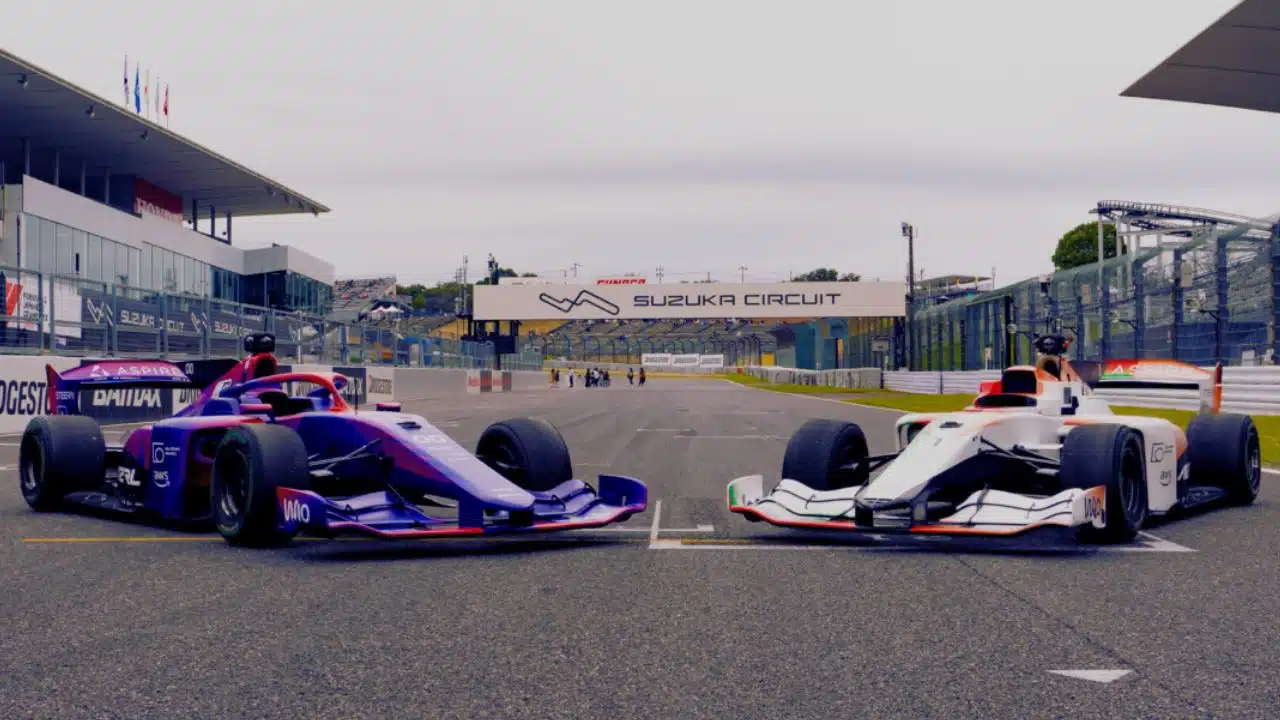
During the Super Formula season finale at Suzuka Circuit in Japan, A2RL sought to demonstrate the potential of autonomous racing vehicles by pitting them against a former Formula 1 driver, Daniil Kvyat. However, as the event unfolded, it became clear that the road to mastering autonomous racing is as steep as the sport itself.
A New Paradigm in Motorsports
The A2RL strives to transform racing by exploring the limits of autonomous technology. Its vehicles are designed to navigate tracks at high speeds without a human driver, relying entirely on an intricate network of sensors, cameras, and computational power. This vision was tested at Suzuka in a demonstration race with two autonomous vehicles and Kvyat, who has been involved with A2RL since its inception.
Unlike traditional motorsports, where human skill and intuition play a pivotal role, A2RL’s vehicles depend on pre-programmed algorithms to make split-second decisions. This reliance on technology introduces a host of challenges that the league is working tirelessly to address.
The Challenge of Mimicking Human Intuition
Giovanni Pau, Team Principal of TII Racing, highlighted one of the most significant hurdles in autonomous racing: the inability to replicate human intuition. “We don’t have human intuition. That’s one of the main challenges to driving these cars. A thing my friend Daniil can do in a nanosecond,” Pau explained.
Humans possess an innate ability to assess grip, adjust to changing conditions, and make decisions based on experience and instinct. Autonomous systems, on the other hand, rely on programmed responses and cannot yet achieve the same level of adaptability. For instance, while human drivers can swerve their cars back and forth to warm up tires—a critical step in ensuring grip—A2RL’s vehicles lack this capability.
Technology Under the Hood
The Technology Innovation Institute (TII) provides the hardware and software foundation for all A2RL vehicles. Each team competing in the league receives identical hardware, including Sony 4K cameras, radar, lidar, and high-definition GPS systems. The software, however, is where the teams differentiate themselves.
Teams must build their own algorithms on top of TII’s software stack, tailoring their systems to navigate tracks effectively. This customization is critical, as it allows teams to develop unique strategies and optimize their vehicles’ performance.
At Suzuka, the cars faced unique challenges due to the circuit’s narrow layout and long corners, which differed significantly from the wider track in Abu Dhabi. The team had to spend weeks re-mapping the track after discovering inaccuracies in the third-party HD map initially provided. This process involved teaching the vehicles to navigate the circuit with precision, further highlighting the gap between simulation and real-world conditions.
Progress in Speed and Performance
When A2RL began testing, the autonomous vehicles lagged three to five minutes behind human drivers per lap. After months of development, this gap has been reduced to just eight seconds—a remarkable improvement, though still a lifetime in competitive racing.
According to Pau, the vehicles are now capable of achieving 90–95% of a human driver’s speed. However, this performance drops when human drivers are on the track, as additional safety precautions are necessary to prevent accidents.
Kvyat has played a crucial role in helping A2RL engineers understand the nuances of high-speed racing. By sharing his expertise, he has helped bridge the gap between human intuition and machine intelligence. Despite this progress, Kvyat remains cautious when racing alongside autonomous vehicles. “I need to be alert and give the AI car space. It’s traveling at respectable speeds, but I have to study its lines to ensure it’s safe to race,” he said.
The Demonstration Race: A Test of Resilience
The demonstration race at Suzuka was intended to showcase the capabilities of A2RL’s vehicles. The autonomous car started 22 seconds ahead of Kvyat, but the race ended prematurely when the vehicle lost traction and spun into a wall.
Khurram Hassan, A2RL’s commercial director, attributed the incident to cold tires and a chilly track, which caused a sudden loss of grip. This highlighted one of the key limitations of autonomous systems: their inability to adapt to real-world variables like tire temperature.
A press release later revealed that one of the vehicle’s rear tires had suddenly lost pressure, further complicating the situation. Despite these setbacks, Hassan emphasized the importance of real-world testing. “You could do things on a computer screen, but this is so important. Because you have to be on the track,” he said.
The Broader Implications of Autonomous Racing
A2RL’s mission goes beyond winning races. The league views its efforts as a preliminary step towards enhancing the safety features of everyday vehicles. By pushing the limits of autonomous technology in a controlled environment, A2RL aims to develop systems that can prevent collisions and enhance road safety.
However, the challenges faced by A2RL underscore the complexity of creating autonomous systems that can perform as reliably as humans. Real-world conditions are unpredictable and chaotic, requiring a level of adaptability that current technology cannot yet achieve.
As Hassan noted, the gap between simulation and reality is a significant hurdle. While simulations allow engineers to test scenarios in a controlled environment, they cannot replicate the dynamic and ever-changing nature of real-world conditions.
A Future of Collaboration, Not Replacement
A2RL is not seeking to replace human drivers. Instead, it aims to complement human racing with autonomous technology, creating a platform for innovation and exploration. By pushing the boundaries of what autonomous vehicles can achieve, A2RL hopes to inspire advancements that benefit both motorsports and society at large.
The road ahead is long and fraught with challenges, but A2RL’s efforts represent a bold step toward a future where humans and machines work together to achieve new heights. While the demonstration at Suzuka ended in disappointment, it also provided valuable lessons that will drive further innovation.
In the words of Hassan, “Failure is always an option.” For A2RL, every setback is an opportunity to learn, adapt, and move closer to realizing the full potential of autonomous racing.
Autonomous racing is still in its infancy, but the progress made by A2RL is a testament to the power of innovation and collaboration. By addressing the challenges of real-world conditions and leveraging human expertise, the league is laying the groundwork for a new era of motorsports.
While the journey is far from over, A2RL’s efforts remind us that even in the face of setbacks, the pursuit of progress is what defines the spirit of racing—whether driven by humans or machines.
























