

Struggling to figure out if an item is real silver? Genuine silver can be valuable, but it’s often mixed with other metals or just plated. This guide will show you simple ways to spot if something is made of real silver.
Stick around on how to tell if something is silver—your questions will soon melt away like ice on silver!
Key Takeaways
- Look for hallmarks like “925” or “Sterling” to check if an item is genuine silver. These marks show it has 92.5% pure silver content.
- Real silver isn’t magnetic and will not stick to a magnet, unlike fake or plated items with base metals like nickel or steel.
- Place ice on the item; real silver melts ice faster due to its high heat conductivity, while plated ones may not react the same way.
- Test with bleach or nitric acid on hidden spots; genuine silver tarnishes (turns black/gray), while fakes may turn green or stay unchanged.
- Seek expert appraisals for accuracy, especially with older pieces that might lack clear markings but still be authentic.
Identifying Silver through Hallmarks
Hallmarks are tiny stamps on silver items that reveal important details. Check closely for numbers like “925” or symbols that might indicate genuine silver.
Detecting purity stamps like “925”
Silver items often have purity stamps. “925” means the item is sterling silver, containing 92.5% pure silver and 7.5% other metals like copper. This mix strengthens the metal while keeping its beauty intact.
Fine silver may show a “999” stamp, meaning it’s 99.9% pure. Check less noticeable areas, such as clasps or inside bands on jewelry, for these marks. Some older items might lack stamps but can still be genuine—a professional appraisal can help in such cases.
Recognizing additional hallmark symbols
Aside from “925,” other hallmark symbols provide clues about an item’s authenticity. Look for marks like “Sterling,” which also signifies 92.5% silver content. Items made in the United Kingdom may feature a lion passant, representing sterling silver standards.
Country-specific markings, like maker’s initials or assay office stamps, can also hint at origin and purity. For instance, older European pieces might carry numeric fineness marks such as “800” for continental silver.
This indicates 80% purity rather than sterling-grade metal. Spotting these extra details helps distinguish solid silver from plated alternatives with no hallmarks or simple plating labels.
Conducting a Magnetic Test on Silver
Silver isn’t magnetic, so using a magnet can give clues. If the item sticks to a magnet, it’s likely made of another metal.
Testing for non-magnetic properties of silver
Bring a magnet close to the item in question. Genuine silver is non-magnetic, so it won’t stick to the magnet. If the item gets pulled or strongly attracted, it contains another metal like nickel or steel.
For accuracy, use a rare earth magnet, as it’s stronger and works better.
Items made of sterling silver (marked “925”) will not react to this test. Coins, cutlery, and jewelry often fail the magnetic check if plated with thin layers of silver over base metals.
This method is quick and simple but doesn’t confirm full authenticity—move on to more tests like observing heat reactions for clearer answers!
Performing the Ice Cube Test
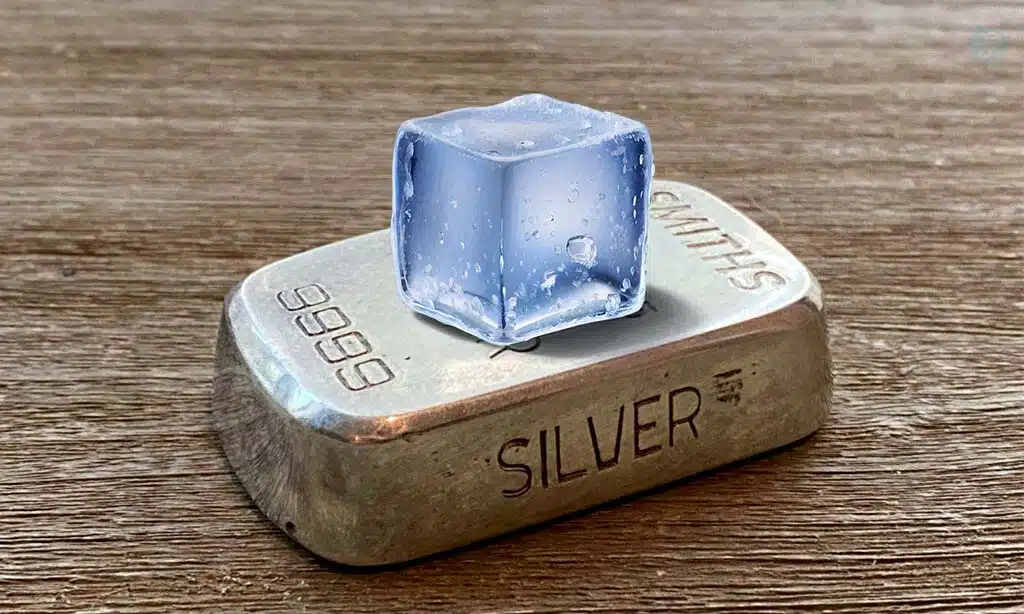
Silver transfers heat fast, so place an ice cube on it and see the magic happen—curious? Keep reading!
Observing quick ice melting on silver
Place an ice cube on the item in question. Genuine silver conducts heat better than most metals. Ice will melt faster when placed on real silver compared to a non-silver item. For example, if you test a sterling silver piece, such as jewelry or silver dollars, melting is noticeably quicker due to its thermal conductivity.
A plated item won’t react the same way because of its base metal core. Only the thin layer of silver might show some reaction, but it won’t match solid pieces made from genuine material.
Use gloves during this test to avoid direct contact with cold surfaces while observing changes closely!
Utilizing Chemical Tests for Silver Verification
Chemical tests can reveal if silver is real or fake. A simple solution reacts with the metal, uncovering its true nature.
Conducting the Nitric Acid Test
Place a small drop of nitric acid on an inconspicuous spot of the item. Genuine silver reacts by turning blue or red, revealing its authenticity. Items made from base metals may show no change or turn green, indicating they are not pure silver.
Be cautious while using nitric acid—it’s powerful and can damage fake items or thin-plated surfaces. Work in a well-ventilated space and use gloves for safety. This test separates real silver from imposters like plated nickel silver quickly! Next, try the Bleach Test to check how an item tarnishes under chemical exposure.
Applying the Bleach Test to check for tarnish
Dab a small amount of bleach on an unnoticeable spot of the item. Genuine silver will tarnish almost instantly, turning black or dark gray. This reaction happens because real silver oxidizes when it touches bleach.
Avoid testing large or visible areas to prevent damage. Use this method only if you’re okay with cleaning or restoring the item afterward. If there’s no color change, the piece may be silver-plated or made of another metal entirely.
Assessing Silver by Sound
Tap genuine silver, and it sings with a sharp, clear tone. Fake or plated items often sound dull or flat when struck.
Listening for the unique “ping” of silver
Real silver sings a clear, high-pitched “ping” when tapped lightly with another metal. The sound is sharp and lingers for a moment, unlike the dull thud of fake silver or alloys.
For example, gently striking a genuine 92.5% sterling silver coin against steel can produce this distinct tone.
Hold the item steady and tap it softly to assess its authenticity. Coins or utensils made of real silver often have this hallmark chime, which reflects their purity. If you hear no ring but instead detect a shorter clink, it’s likely plated or mixed with cheaper metals like nickel or zinc.
Seeking Professional Silver Appraisal
An expert can confirm if your item is real silver or a clever imitation. Their trained eye catches details that tests at home might miss.
Consulting with a certified expert in silver
A certified appraiser can confirm if an item is sterling silver or just silver-plated. These experts use tools like metallurgical assays to test purity and check for base metal cores.
They also recognize rare hallmarks that may go unnoticed by others, helping you avoid mistakes.
Professional appraisal services are especially helpful when selling silver or older jewelry. Experts ensure accurate valuations, which protect you from underselling valuable pieces.
For detailed tests such as a nitric acid analysis, visiting a specialist guarantees safe and precise results at every step.
Distinguishing Silver-Plated Items
Silver-plated items often hide a different metal beneath the surface, so knowing how to spot this can save you from wallet woes.
Identifying items with a base metal core
Scratching the surface of an item can reveal hidden metals beneath. Genuine silver lacks a different layer underneath, but silver-plated items often expose base metals like copper or brass after being scratched.
These plated pieces may show wear over time, revealing the core material.
Look for hallmarks to spot differences. Items marked “925” are sterling silver and not made with base metal cores. Silver plate marks or no hallmarks at all usually indicate plating over cheaper materials.
Move on to testing methods like magnet checks next for further confirmation.
Debunking Common Myths about Silver
Some think all silver items are non-magnetic, but this isn’t always true. Others assume tarnish means fake silver, yet real silver often darkens over time.
Addressing misconceptions regarding silver tests
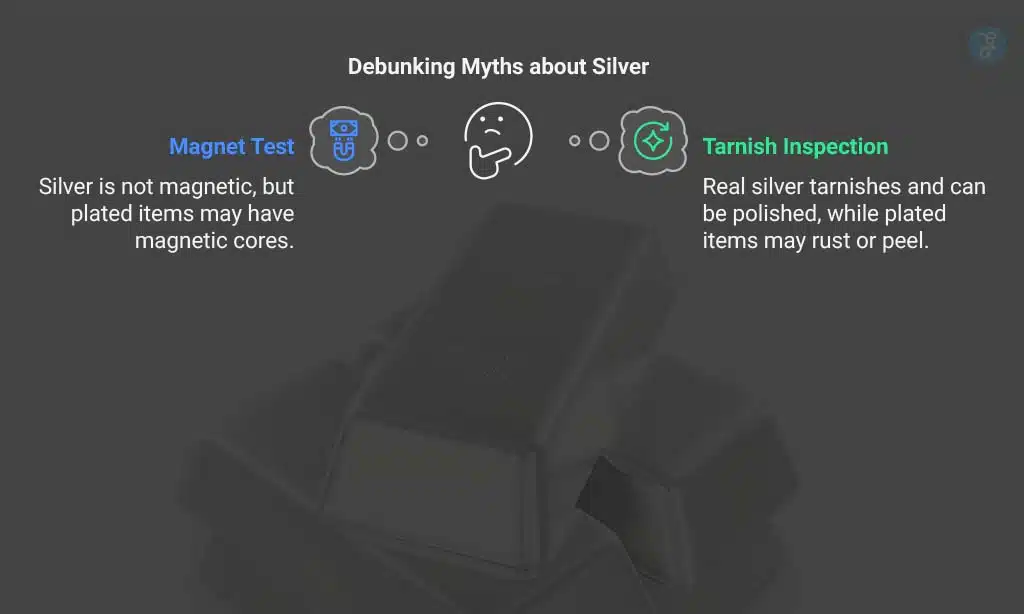
Magnet tests can confuse people. Silver is not magnetic, but some plated items have a core of cheap metals that might stick to magnets. This doesn’t mean the entire item is fake silver; it could just be coated.
Another myth involves tarnish. Real sterling silver tarnishes due to exposure but can be polished back to shine. Plated items, however, might show rust or peeling instead over time since they use other base metals underneath a thin coating of silver.
Always inspect an item closely for these signs before judging its authenticity.
Takeaways
Figuring out if something is real silver doesn’t have to be hard. Simple tests can help, like checking hallmarks, using a magnet, or melting ice on the item. For tougher cases, chemical tests and expert opinions work best.
Real silver shines in more ways than one—it’s worth taking the time to spot it!
FAQs on How to Tell If Something is Silver
1. How can I tell if an item is real silver?
You can test silver at home using simple methods like the magnet test or placing ice on the item to observe its thermal conductivity. Real silver isn’t magnetic and conducts heat quickly.
2. What are silver hallmarks, and why do they matter?
Silver hallmarks are small stamps found on genuine silver items. They show details about the metal’s purity, origin, and maker, helping you identify whether an item contains 92.5% pure silver or is just plated.
3. Is costume jewelry ever made from real silver?
Costume jewelry often looks like it’s made of precious metals but usually isn’t constructed of genuine silver. It may be electroplated with a thin layer of silver over cheaper materials.
4. Can I use a magnet to check if something is real silver?
Yes, using a rare earth magnet is helpful! If the metal sticks strongly to the magnet, it’s not real sterling or pure silver since true silver isn’t magnetic.
5. Are there professional ways to determine if something is made from genuine silver?
Professional appraisal services use tools like nitric acid tests or advanced equipment for electrical resistivity checks to confirm authenticity without damaging intricate items.
6. What should I look for when buying secondhand items online claiming to be “silver”?
When shopping on platforms like eBay or paying with credit cards such as Visa Inc., ask for clear pictures showing hallmarks and proof that it’s not just plated metal pretending to be solid precious material like sterling alloy!






















