

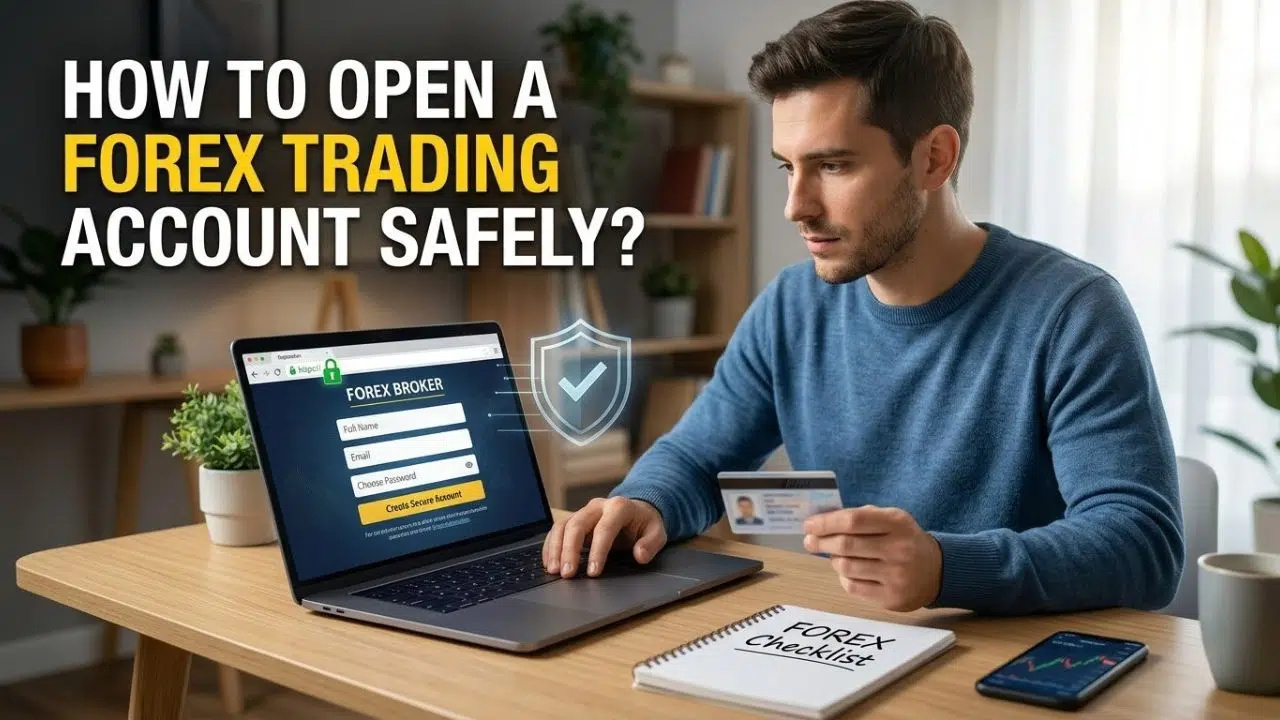
The foreign exchange market or Forex is known for being the largest financial market in the world. When it comes to Forex trading, you are buying one currency and then selling another one simultaneously. You will have different currency pairs here, and the role of a trader is to speculate which currency will rise/fall when compared to others. You can trade safely on a professional trading platform, but it’s important to find the right one that’s dependable and with a great track record.
Why should you focus on safety when opening a Forex account?
These days, there are a lot of promises made, related to quick profits and also plenty of scammers will try to get the best of you. Some of those unsafe brokers will try to manipulate prices, refuse withdrawals, charge some hidden fees, misuse any personal financial data or even offer unrealistic leverage levels. That’s why you always want to verify a broker and not just use any platform out there. Performing your due diligence can literally save you thousands of dollars.
Find a regulated, professional broker
Regulated brokers will operate under very specific financial laws. They are also approved by regulatory bodies like the FCA in the UK, CFTC in the United States or the CySEC in Europe. If a broker is regulated by these bodies, they need to follow strict rules, including transparency or segregating client funds.
It’s very important to check whether the broker is regulated by these bodies, and you may also want to check a review of the platform as well. That way, it becomes easier to identify which are the best options. When researching a broker like Exness, it makes sense to check their license number on the official website of the regulator that’s active in your region.
Comparing platform features
Before you start creating an account with the broker, you want to see what features the platform offers. Most brokers will offer professional trading platforms like MetaTrader or cTrader. That means you can have access to mobile trading, risk management features, automated trading systems, technical indicators, real-time charts and so on.
Of course, you also want to study things like performance, trade execution speed, user-friendly navigation and anything of that nature. And that’s the thing, you want to test these things out before you start trading with real money. Which is where the next step comes into play.
Create a demo account
The best approach is to create a demo account and see how the platform works before you use real money. Demo accounts are the best option because you can easily use real market data, while trading with virtual money. It helps you understand how the currency pairs move, how you can place trades, the way leverage works and so on.
You always want to use a demo account during the learning phase. It will help boost your confidence before you go on to live trading. Plus, demo accounts are safe if you want to experiment with some new strategies.
Complete account registration
Now that you tested things out, your focus is on completing the registration process. That means you must share your full name, email address, phone number, country of residence and some brokers might ask for your financial experience.
Verifying the account
Clearly, serious brokers will do their best to protect everyone from fraud. And in order to keep money laundering and fraud away, regulated brokers will need to verify your identity. What this means is they will require your national ID or passport, proof of address and sometimes even a selfie to confirm your identity. It might seem like an inconvenience, but it’s for your safety. If a broker skips account verification, that makes them very suspicious, and most likely they are not regulated.
Deposit funds
Once the account gets verified, you will be able to deposit funds. Every trading platform might have support for different currencies. Those can be bank transfers, digital wallets, debit/credit card, online payment providers and so on.
When you deposit any money, you want to know what deposit fees will apply, what is the processing time, but also the minimum deposit requirement and so on. Using untraceable methods like crypto isn’t a good idea. Instead, you want to use a secure and regulated payment method, to have the option of a refund if necessary.
Forex trading has its fair share of risks. Yes, you can earn big, but you can also lose big. That’s why you want the broker to offer professional risk management tools. These can be various margin alerts, take-profit orders, stop-loss orders or anything of that nature.
Establish a proper trading plan
In order to achieve success in Forex trading, you need a lot of discipline and a proper plan. That means you need to have trading goals, strategies for entering trades, exit rules, but also trading limits and risk tolerance. Not having a plan and just winging it will lower your chances of success, and that’s the most important thing to consider here. If you want to be a professional trader, you have to treat it like your job, and not like gambling.
When you use any Forex trading account, it’s crucial to protect it at all costs. Some good tips would include:
- Use a strong password and try to change it often, maybe once every month or couple of months
- Enable 2-factor authentication, that will boost the safety of your account.
- Try to keep your trading software updated, so you always have access to the latest features.
- It might seem like a no-brainer, but avoid any public Wi-Fi networks when trading. Those can be dangerous to use, so you want to avoid sharing private information through them.
Conclusion
Trading on the Forex market requires a lot of attention and due diligence. There are tons of different brokers to choose, but it’s important to assess them and see where you are getting the best results. Focus on reviews, experience, features, safety and anything else that’s important to you. In doing so, it will be much easier to find the right option and start trading rightfully.





















