

Do you find your necklaces in a knotted mess every time you reach for them? Tangled chains can waste your time and harm your favorite pendants.
Experts say wearing jewelry last and removing it first protects fine jewelry. In this guide, How to keep necklaces from tangling offers tips on storage, travel, and layering. You will learn how to use a jewelry case with compartments, a necklace stand, and a drinking tube to keep necklaces tangle-free.
Read on.
Key Takeaways
- Experts say to wear jewelry last and remove it first. Store each necklace in its own slot in a jewelry box or hang it on a stand. This cuts metal-on-metal rub and tight knots.
- Slide each chain through a reusable drinking straw before travel. Wrap the straw in plastic wrap, then tuck bundles into a pillbox (holds up to 7 necklaces) or a soft pouch.
- Use a necklace stand or hanger with separate hooks. Feed thin gold chains through straws for long pieces. This keeps each strand flat, visible, and tangle-free.
- Fix layered looks with a clasp or spacer. Set three strands at 14–16 in, 18–20 in, and 22–28 in. Mix fine (≤ 1 mm), medium (1–2 mm), and bold (> 2 mm) chains to avoid overlap.
- Keep chains away from rough fabrics and jostling in drawers. An 8-Mohs stone can scratch gems rated 7 or lower, so pad delicate links in soft slots.
Common Causes of Necklace Tangling

Multiple necklaces slide over one another inside a crowded drawer, twisting into tight knots. Delicate links rub against each other, friction from metal on metal speeds up tangles.
Stuffing them next to rough textiles can snag chains, creating loops that trap fasteners. Tossing them in a bag without a pouch or divider makes them more likely to get tangled.
Different lengths worsen the risk of tangling, as short chains coil around longer ones whenever you move fasteners. A metal fastener can scratch a necklace if they rub together in a knot.
A stone rated 8 on the Mohs scale can scratch a softer gem rated 7 or lower, raising damage stakes. Frequent jostles in a storage drawer heighten chances of a tangled mess, leaving you to carefully untangle every link.
How to Keep Necklaces from Tangling
A padded chest with soft slots tames stray chains and cuts morning frustration. Keep reading to learn smart hacks that keep each chain tangle-free.
Use jewelry boxes with individual compartments
Pick a trinket chest with separate slots. You slide each chain into its own slot. This simple swap cuts knots fast. The divided space protects your jewelry and keeps necklaces tangle-free.
You can scan your collection at a glance.
Store each necklace in its slot and fasten the clasp tight. A rigid chest without jumbled trays works as well as premium organizers. You avoid a mess of necklaces, beads, metals, and pearls.
This trick lengthens the life of delicate chains and eases your morning routine.
Try necklace stands or hangers
Necklace stands hang your jewelry where you spot each chain at a glance. A stand holds every piece apart, so chains lie flat, and you prevent them from tangling. Hangers work like a tool rack; they keep necklaces of different lengths neat, and you cut down on knot-tying later.
You can feed a thin gold chain through a straw before hanging it; it stops twists on long necklaces. Soft cloths work too; roll multiple chains for safe travel, then tuck them on a hanger.
This storage solution suits any wardrobe, and it protects your jewelry every day.
Travel Hacks for Tangle-Free Necklaces
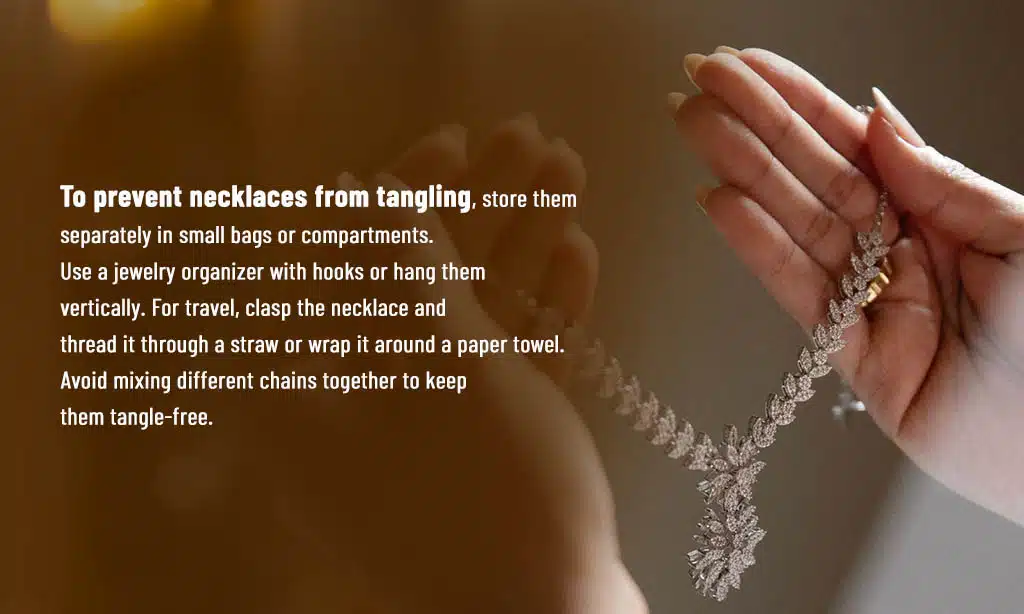
A plastic straw will guard your chains like a knight on patrol, so they glide in one piece through airport scrambles. A sturdy travel pouch tucks your pendants into cushy quarters, so they chill without a knot or fight.
Use straws to separate chains
Slide each necklace chain into a reusable drinking tube. This trick keeps necklaces from getting tangled. It locks each chain in its own tube. You can thread chokers or longer necklaces.
Use a jewelry roll or pouch to store necklaces once they sit inside.
Wrap each tube in a thin sheet of plastic wrap. This layer further prevents the chains from tangling. Slip these bundles into a pillbox or original bag. This travel hack lets you wear necklaces all day.
You will skip hours of untangling.
Store necklaces in small pouches or pillboxes
A medicine container holds up to seven necklaces in its tiny slots. Load one chain per compartment to stop knots. Soft fabric bags keep chains apart and guard beads. These steps help you keep your necklaces from tangling.
Zip lock bags make easy jewelry storage for travel. Slide each necklace into its own pocket. Jewelry rolls also work, with felt strips and snap ties. These methods prevent tangling and save space in your bag.
Tips for Wearing Multiple Necklaces
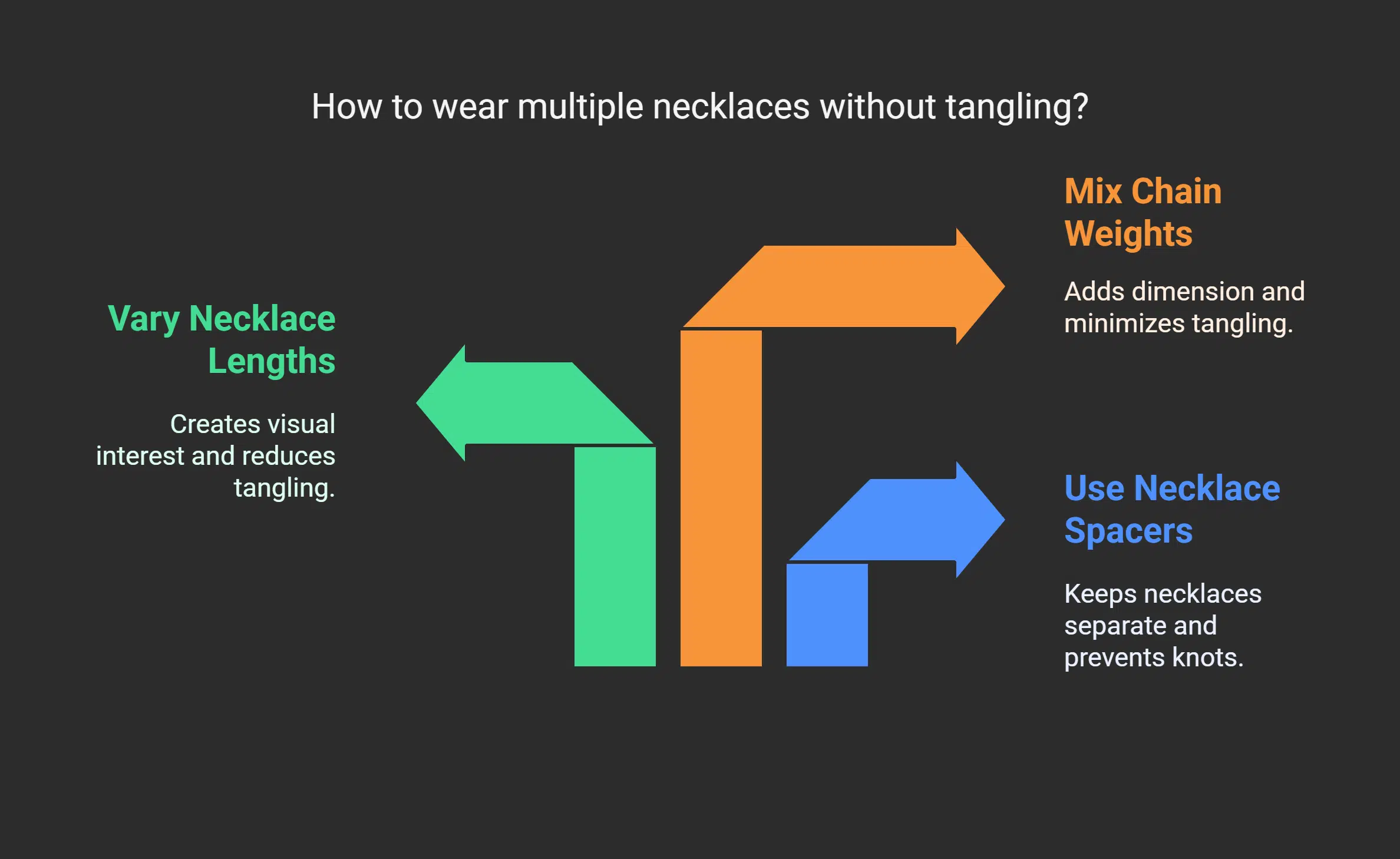
Slip a tiny bead stopper onto a thin chain; it grips each link and keeps strands apart. Clip in a stacking toggle at each clasp, mix chain weights and necklace lengths, and rock a layered look with zero fuss.
Use necklace spacers or layering clasps
A fastener or necklace spacer keeps layers untangled. It holds your jewelry collection apart and stops knots. Use sturdy lobster clasps rather than magnetic closures for extra security.
You link necklaces quickly and protect your gold chains.
Attach a layering clasp for a neat layered look. It fixes each strand at a different necklace length so chains stay separate. This trick reduces the likelihood of tangles on metal necklaces or lightweight chains.
It helps you wear multiple necklaces without hassle.
Choose necklaces of varying lengths and weights
Go short, medium, and long. Pick a 14- to 16-inch chain for the first strand. Then slot in an 18- to 20-inch necklace. Top off with a 22- to 28-inch piece. This spacing helps keep each necklace separate.
Layer necklaces in fine, medium, and statement links. Fine chains sit under 1mm, medium sit at 1 to 2mm, and bold pieces exceed 2mm. This mix adds dimension and cuts down on how often necklaces get tangled.
Add a layering clasp or necklace spacer to hold strands in place.
Takeaways
You can tame stray hairs with easy habits. A storage box and necklace hanger keep each strand separate. A straw trick works wonders on the go. Spacers guard layered looks from twists.
Now, you dodge knots and wear art with ease.
FAQs on How to Keep Necklaces from Tangling
1. How can I store my necklaces to keep them from tangling?
Use a box with compartments specifically designed for chains. Lay each chain flat, fasten the clasp, and then slip it into a small bag or pouch. This cuts the chance of knots and protects your jewelry.
2. Can tissue paper help prevent my necklace chains from knotting?
Yes, wrap each chain in a square of tissue paper before you store it. The extra friction from that paper layer will reduce the chances of tangles.
3. What tips do you have for necklace layering without knots?
Pick short and long necklaces in different lengths. Clip each clasp, hang them on a necklace hanger or stand, and let the layers drape freely. That way they never collide.
4. What is the straw detangler trick for chains?
Thread a single chain through a drinking straw, then close the clasp on the straw. Hang the straw on a hook or bar. It acts like a simple chain detangler.
5. Are jewelry organizers or necklace stands better for ready-to-wear storage?
Both work; it just depends on your style. A stand shows off your favorites, so you grab and go. An organizer with hooks, drawers, or pouches hides your stash, but it guards beads and delicate chains.
6. How do I loosen a knot in a bead necklace or chain?
Lay the chain flat on a table or a sheet of paper. Add a drop of oil or chain detangler at the knot. Use two straight pins or thin needles to tease the knot loose, bit by bit.
























