

Do you struggle with dull, tired skin no matter how much you spend on skincare products? Many people face this issue, often caused by harsh chemicals in commercial beauty items. Your skin deserves better care.
Natural ingredients can work wonders for your skin without breaking the bank. Items like honey, coconut oil, and oatmeal may already be sitting in your kitchen cabinet—and they’re great for cleansing and nourishing.
This blog will guide you step-by-step to create a simple, all-natural routine using these common ingredients. Ready for glowing skin? Keep reading!
Essential Components of an All-Natural Skincare Routine
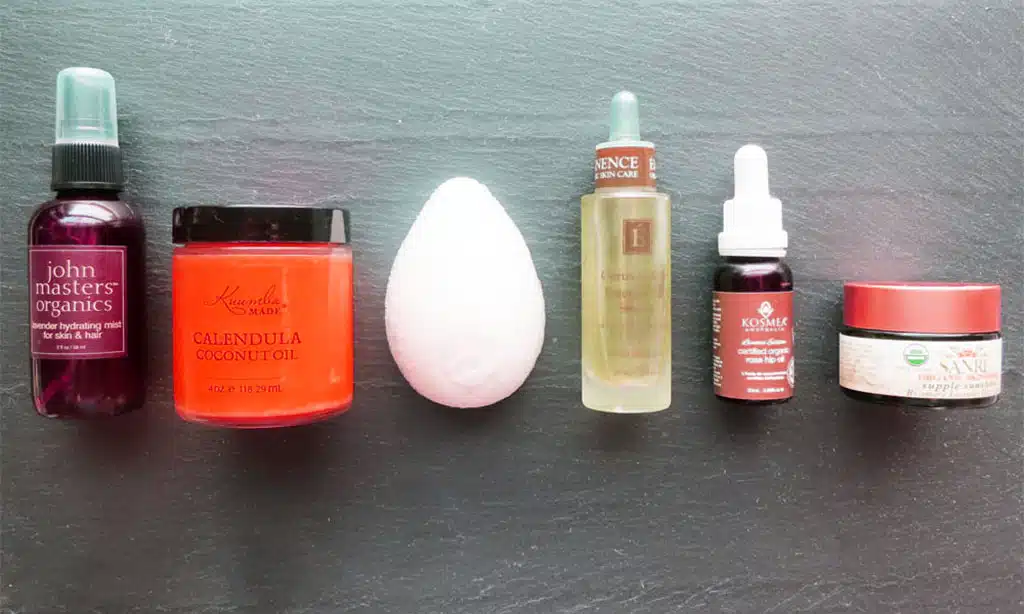
A good skincare routine has three key steps: cleansing, toning, and moisturizing. Each step uses simple ingredients to clean, balance, and hydrate your skin naturally.
Cleansing
Start skincare with gentle cleansing to remove dirt and oil. This step purifies the skin without stripping natural moisture. Use products or ingredients that clean while nourishing your skin’s balance.
Double cleansing works well for heavy makeup wearers. The first cleanse removes makeup, while the second clears impurities. Experiment with raw honey, oatmeal, or coconut oil for a hydrating and soothing start to your routine.
Find what feels right for your skin type through trial and patience!
Toning
Toning refreshes the skin and restores its pH balance. It removes leftover dirt or makeup after cleansing. A good toner calms irritation, hydrates, and preps the skin for moisturizing.
Using natural ingredients like apple cider vinegar, green tea, or rosewater can give your skincare routine an organic touch without spending $40-$48 on store-bought toners.
Apply toner with a cotton pad or spritz it onto your face for a quick boost of hydration. Apple cider vinegar mixed with water balances oily skin and fights breakouts. Green tea soothes redness and feels calming after sun exposure.
Rosewater adds light moisture while leaving a fresh scent behind—perfect for sensitive skin!
Moisturizing
Moisturizing keeps your skin hydrated and protected. It fights dryness, supports skin nourishment, and helps prevent signs of aging like fine lines. Natural ingredients like organic raw honey act as humectants, pulling moisture into the skin for lasting hydration.
Using face oils such as sweet almond oil or high-end choices like True Botanicals Pure Radiance Oil ($110) enhances facial hydration while promoting antiaging benefits.
Affordable options also offer great results. Cocokind Chia Facial Oil costs just $13-$15 but provides deep hydration with organic ingredients. Mid-range moisturizers like Luminance Skin Hydration Moisturizer ($29) balance cost and performance well.
Always choose products that suit your skincare needs to maintain moisture levels and natural beauty daily!
Kitchen Ingredients for Cleansing
You can cleanse your skin using simple, natural ingredients straight from your kitchen. These gentle options effectively remove dirt while nourishing your skin at the same time.
Raw honey
Raw honey cleanses the skin gently while balancing bacteria. Its antibacterial properties make it effective for acne-prone skin. Enzymes and probiotics in natural honey help heal damaged areas and reduce inflammation.
It works best when used raw and organic, ensuring no chemicals or additives interfere with its benefits.
Apply a thin layer of honey to your face as a cleanser or mask. Leave it on for 10 minutes, then rinse with warm water. This simple step removes dirt without stripping moisture from your skin.
Honey’s healing features support smoother, healthier-looking results over time—perfect for all-natural skincare routines!
Oatmeal
Oatmeal works as a gentle facial cleanser and exfoliant. It soothes itchy, dry skin while removing dirt and dead cells. Its anti-inflammatory properties calm irritation and reduce redness, making it ideal for sensitive or acne-prone skin.
Oats also nourish your face with vitamins and minerals, promoting a healthy glow.
Grind oatmeal into fine cleansing grains for easy use. Mix them with water to create a smooth paste. This can act as both an exfoliant or mask—perfect for tackling dryness or managing acne flare-ups naturally.
It’s safe, effective, and leaves your face feeling soft without stripping away natural oils.
Coconut oil
Coconut oil works wonders for cleansing. It has antioxidants and antibacterial properties that help fight germs and keep skin healthy. Its fatty acids hydrate your skin while creating a protective barrier.
Use it as a gentle makeup remover or apply directly to the face for a soothing lymphatic massage.
This cooking oil doubles as an effective shaving cream alternative. Rub 1 teaspoon on your skin before shaving for smoother results. Coconut oil’s cleansing properties make it one of the best kitchen ingredients to pamper your skin naturally!
Kitchen Ingredients for Toning
Toners made from kitchen ingredients can refresh your skin and restore its natural balance—discover these gentle options to keep your face glowing!
Apple cider vinegar
Apple cider vinegar acts as a natural toner for skin health. It contains potassium and malic acid, which help balance the skin’s pH and fight bacteria. Its antiseptic properties also cleanse pores, reducing acne and irritation.
This simple ingredient can refresh your skin without harsh chemicals.
Diluting it is key to safe use. Mix 3 tablespoons of ACV with water for sensitive skin or 1/3 cup for normal to dry types. Oily skin may need up to 1/2 cup per mix. Always apply gently using a cotton pad to avoid over-drying or redness.
Green tea
Green tea is full of antioxidants that protect and refresh the skin. These antioxidants help fight free radicals, which can damage cells over time. It works as a natural toner while soothing irritation caused by redness or blemishes.
Its gentle properties make it perfect for daily use in skincare routines.
To create a green tea toner, steep one bag (or a teaspoon of leaves) in boiling water for 5 minutes. Let it cool completely before applying with a cotton pad to your face. This infusion tones oily areas, calms inflammation, and leaves skin feeling hydrated and smooth.
The herbal remedy blends well with other natural ingredients like witch hazel or aloe vera for custom applications.
Rosewater
Rosewater, a natural toner, works wonders for your skin. Made from fragrant petals like Munstead Wood or Mister Lincoln roses, it’s gentle yet effective. It helps balance skin pH and tightens pores without harsh chemicals.
To make DIY rosewater, boil fresh rose petals in distilled water until the color fades. Store it in a sterilized glass container in your refrigerator. Use within one week for best results.
Apply as toning water or add to your bath for a soothing experience.
Kitchen Ingredients for Moisturizing
Moisturizing is key to keeping your skin soft and hydrated. You can find rich, natural moisturizers right in your kitchen that work wonders for a healthy glow.
Cacao butter
Cacao butter deeply nourishes dry skin. It is packed with Vitamins E and K, along with fatty acids, which help in locking moisture. This makes it a fantastic choice for hydration and softening rough areas.
Its soothing properties also reduce inflammation, making it ideal for sensitive or irritated skin.
Warm cacao butter between your hands before applying to dry patches or dull spots. You can also add a small amount to bath water for full-body moisturization. Often found in beauty products like lotions and lipsticks, this natural ingredient enhances skin elasticity while giving it a healthy glow.
Sweet almond oil
Sweet almond oil deeply moisturizes the skin and keeps it soft. It contains vitamins E and A, plus essential nutrients like protein, potassium, zinc, and fatty acids. These help strengthen the skin while protecting against free radical damage.
Its antioxidant properties also support collagen production for firmer, healthier-looking skin.
Applying just 2 drops under the eyes can reduce dark circles over time. This oil promotes wound healing by soothing irritation and boosting cell repair. It acts as a gentle yet effective moisturizer for dry or sensitive skin types without clogging pores.
Aloe vera gel
Aloe vera gel is a natural skincare powerhouse. It soothes the skin, heals minor cuts, and reduces sunburn pain quickly. Packed with antioxidants and unique polysaccharides, it promotes healthy skin repair.
Many use it as an organic moisturizer because of its hydrating properties.
Homemade aloe vera gel can be made fresh from store-bought or homegrown leaves. It’s chemical-free but lasts only about one week without preservatives. Apply directly to bug bites for relief or massage onto dry patches for better hydration.
Additional DIY Skincare Recipes
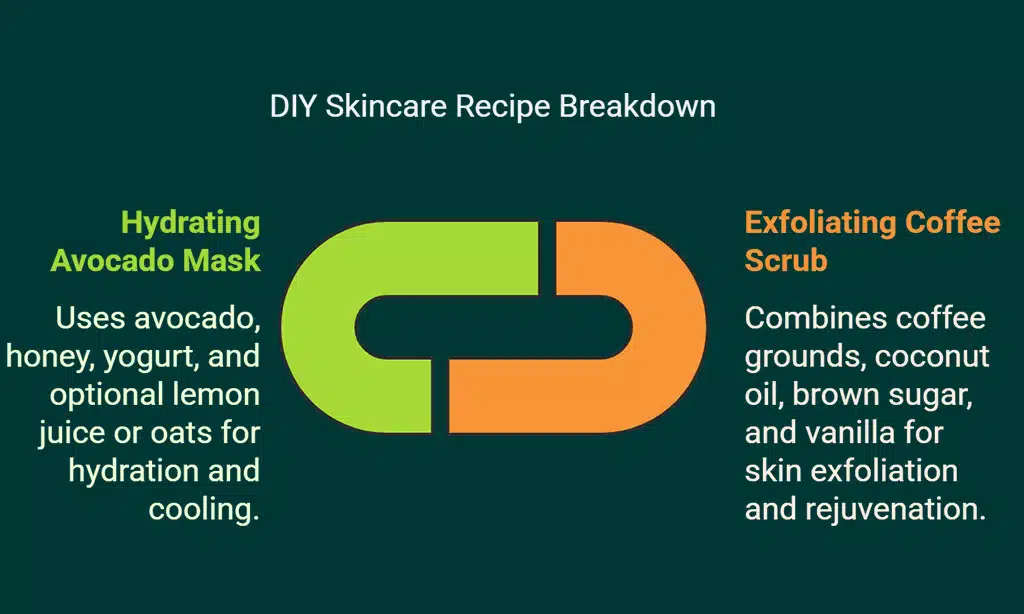
Create fun skincare blends at home using simple ingredients. These easy recipes can refresh your skin and boost its natural glow.
Exfoliating coffee scrub
Coffee grounds make an ecofriendly exfoliator. They remove dead skin cells and unclog pores without creating waste. Mixing coffee grounds with coconut oil, brown sugar, and vanilla extract creates a simple homemade scrub.
This blend uses 100% natural ingredients found in most kitchens.
The caffeic acid in coffee may boost collagen production, helping reduce signs of aging like wrinkles and fine lines. Exfoliating with this organic body scrub leaves the skin feeling smooth and refreshed.
Its texture also improves blood circulation, promoting natural skin rejuvenation with every use—perfect for sustainable beauty practices!
Hydrating avocado mask
Mash one ripe avocado until smooth. Mix it with one tablespoon of honey and two tablespoons of plain yogurt. Add a few drops of lemon juice for brightness or a teaspoon of rolled oats for gentle exfoliation, if desired.
Chill the mixture for 10 minutes to enhance its cooling effect.
Spread the mask evenly on your face, avoiding your eyes. Leave it on for 20 minutes to let the nutrients soak in. Rich in vitamins and healthy fats, this nourishing avocado mask deeply hydrates skin while improving elasticity.
Rinse off with lukewarm water and enjoy soft, refreshed skin!
Depuffing cucumber eye pads
Cucumber eye pads work wonders for puffy eyes and tired skin. They calm the delicate under-eye area while reducing puffiness effectively. The natural cooling properties of cucumbers refresh and revive your skin, leaving it soothed and hydrated.
To make them, slice a fresh cucumber into thin rounds. Chill the slices in the fridge for 10–15 minutes. Place one on each closed eyelid for about 15 minutes. This simple DIY treatment is easy to prepare and provides instant relief from puffiness, making it perfect as part of your natural skincare routine!
Tips for Customizing Your Routine
Make your skincare fit your unique needs by testing ingredients carefully and adjusting how often you use them—small tweaks can lead to glowing skin!
Identify your skin type
Skin type analysis is essential for a personalized skincare routine. Oily skin may feel greasy and shiny, especially on the forehead, nose, and chin. Dry skin often feels tight or rough with possible flaking.
Combination skin has oily areas but dry patches elsewhere. Sensitive skin can react easily to products, showing redness or irritation.
A proper cleansing regimen supports your specific needs. For example, gentle skincare options work well for sensitive types to help rebuild the skin barrier. Dermatological assessments or simple at-home tests using blotting paper can guide you in identifying oil levels on your face during different times of the day.
Test ingredients for sensitivity
Patch testing helps avoid allergic reactions and skin irritation. Apply a small amount of the ingredient to your inner arm or behind your ear. Wait for 24 hours to check for redness, itching, or swelling.
Avoid using that ingredient if you notice any reaction.
Consult a dermatologist before trying natural ingredients if you have sensitive skin or health concerns. Ingredients like essential oils can trigger allergens in some people. Always start slow when adding new items to customize your skincare routine safely.
Adjust frequency of use
Modify how often you use each product based on your skin’s needs. Exfoliate 1-2 times a week for normal or combination skin, but oily or acne-prone types can manage 3-4 times weekly.
Herbal toners like green tea infusions should be refreshed every seven days to avoid spoilage. Use hydrating serums daily for consistent nourishment.
Overdoing any step may harm the skin. Stick to simple routines that work best with your schedule and lifestyle. Consistent care improves results more than irregular actions ever will.
Tailor adjustments carefully as your skin evolves over time!
Takeaways
Natural skincare with kitchen ingredients can be simple, affordable, and safe. It helps you care for your skin without harmful chemicals. Dr. Emily Harper, a dermatologist with 15 years of experience and a PhD in Skin Biochemistry, shares her thoughts on this method.
Dr. Harper has worked on natural skincare research and developed eco-friendly beauty solutions. She says using items like honey or coconut oil is effective because they are rich in nutrients that boost skin health naturally.
She highlights the safety of these ingredients when used properly at home. They are chemical-free, cruelty-free, non-toxic, and budget-friendly options compared to many commercial products filled with additives.
For best results in daily life, Dr. Harper suggests starting small—try one recipe at a time based on your skin type. Mix only fresh ingredients and test them on a small area first if unsure about allergies.
Using kitchen formulas lets you avoid waste while caring for your skin naturally—it’s cost-efficient too! But consistency matters—stick to routines suitable for sensitive or oily types instead of overdoing it.
Dr.Harper appreciates how accessible homemade fixes fit easily into anyone’s day-to-day habits! Making mindful eco-conscious choices adds long-term positive impacts benefitting individual-glow-transition phases alike!