


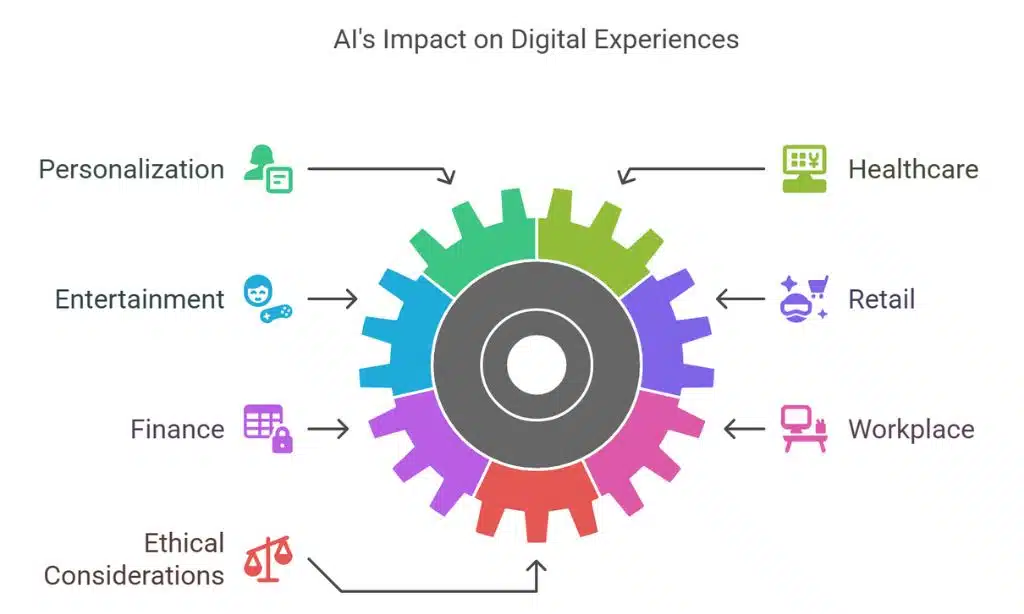
The integration of artificial intelligence into our digital landscape has transformed from a futuristic concept to an everyday reality. As we navigate through 2025, the influence of AI on digital experiences has reached unprecedented levels, revolutionizing how businesses operate and how consumers interact with digital platforms across various industries. From healthcare to entertainment, retail to finance, AI algorithms are working behind the scenes to create more personalized, efficient, and engaging digital experiences.
The Personalization Revolution
Perhaps the most visible impact of AI on digital experiences is the hyper-personalization of content and services. Today’s AI systems analyze vast amounts of user data to predict preferences and behaviors with remarkable accuracy. Netflix’s recommendation engine suggests shows you might enjoy based on viewing patterns, while Spotify curates playlists tailored to your unique musical taste.
This level of personalization extends far beyond entertainment. E-commerce giants like Amazon utilize AI to create individualized shopping experiences, displaying products that align with your browsing history, purchase patterns, and even seasonal trends. The days of one-size-fits-all digital experiences are rapidly fading, replaced by dynamic interfaces that adapt to individual users in real-time.
Healthcare Transformation Through AI
In healthcare, AI is fundamentally changing patient experiences through improved diagnostics, treatment plans, and preventative care. AI-powered diagnostic tools can analyze medical images with greater precision than human experts in some cases, leading to earlier detection of conditions like cancer and heart disease.
Telemedicine platforms now incorporate AI assistants that can triage patients, answer basic medical questions, and even monitor chronic conditions remotely. Companies like Ada Health have developed symptom checkers that use machine learning to help patients better understand their health concerns before consulting a physician, potentially saving valuable time in critical situations.
Enhancing Entertainment and Gaming
The entertainment sector has embraced AI to create more immersive and interactive experiences. Video games now feature non-player characters with sophisticated AI that adapts to player behavior, creating unique gaming experiences with each session. Streaming platforms leverage AI not only to recommend content but also to enhance video quality and reduce buffering by predicting viewing patterns.
In the decision-making technology sector, data analysis platforms like Betzoid are implementing AI algorithms to enhance predictive analytics, personalize user interfaces, and strengthen security protocols. These AI implementations have transformed what was once a straightforward data interaction into an intelligent system that adapts to individual user patterns while maintaining strict privacy and security standards.
Retail Revolution: From Browsing to Buying
Retail experiences have undergone a profound transformation thanks to AI integration. Virtual shopping assistants can now guide customers through online stores, answering questions about products and making recommendations based on stated preferences and past purchases. Visual search capabilities allow shoppers to find products by uploading images rather than typing text descriptions.
Behind the scenes, AI manages inventory forecasting with unprecedented accuracy, ensuring popular items remain in stock while reducing waste from overstocking. This delicate balance benefits both retailers and consumers, creating a more sustainable shopping ecosystem.
Financial Services: Security and Accessibility
The financial sector has leveraged AI to balance two seemingly opposing goals: enhanced security and greater accessibility. AI-powered fraud detection systems monitor transactions in real-time, flagging suspicious activities while allowing legitimate transactions to proceed smoothly. These systems continuously learn from new data, adapting to evolving fraud techniques.
Simultaneously, AI has made financial services more accessible through chatbots and virtual assistants that can handle everything from basic account inquiries to complex financial planning. These tools democratize financial advice, making it available to consumers who might not otherwise have access to professional guidance.
The Workplace Reimagined
AI has transformed not only consumer experiences but also how we work. Intelligent productivity tools can prioritize emails, schedule meetings, and even draft responses based on previous communications. Collaboration platforms use AI to transcribe meetings, extract action items, and facilitate connections between team members working on similar projects.
In customer service, AI-powered chatbots handle routine inquiries, freeing human agents to focus on more complex issues. These systems can recognize when a conversation requires human intervention and seamlessly transfer the customer to an appropriate representative, creating a hybrid service model that combines efficiency with empathy.
Challenges and Ethical Considerations
Despite its transformative potential, AI implementation in digital experiences raises important ethical questions. Privacy concerns remain paramount as AI systems collect and analyze increasingly personal data. The potential for algorithmic bias requires vigilant monitoring to ensure AI systems don’t perpetuate or amplify existing inequalities.
Transparency is another critical consideration. As AI systems become more complex, explaining how they reach specific conclusions becomes more difficult. This “black box” problem challenges businesses to balance sophisticated AI capabilities with the need for explainable outcomes, particularly in high-stakes areas like healthcare and finance.
The Future of AI-Driven Experiences
Looking ahead, the integration of AI into digital experiences will likely accelerate, with several emerging trends shaping the landscape. Multimodal AI systems that can process text, images, and voice simultaneously will create more natural human-computer interactions. Emotion recognition capabilities will allow digital experiences to respond not just to what users do, but how they feel.
Edge computing will bring AI processing closer to users, reducing latency and enabling real-time personalization even in bandwidth-constrained environments. This distributed approach to AI will be particularly valuable for mobile experiences and Internet of Things [IoT] applications.
Takeaways
The reshaping of digital experiences through AI represents not just a technological evolution but a fundamental shift in how we interact with digital environments. As AI systems become more sophisticated and ubiquitous, the line between digital and human experiences continues to blur, creating opportunities for more intuitive, responsive, and personalized interactions.
For businesses across industries, embracing this AI-driven transformation is increasingly not just an advantage but a necessity. Those who successfully integrate AI into their digital experiences while addressing ethical considerations will be well-positioned to meet the evolving expectations of tomorrow’s consumers. As we move forward, the most successful implementations will be those that leverage AI’s capabilities while maintaining a human-centered approach to digital experience design.
























