

In today’s fast-paced professional world, mental wellness has become a critical concern. Stress, anxiety, and burnout are rampant among professionals across industries.
However, advancements in artificial intelligence (AI) and mental wellness apps are revolutionizing how individuals manage their mental health.
AI-driven solutions and digital applications provide accessible, personalized, and efficient support systems, empowering professionals to take control of their well-being.
From AI-powered chatbots and therapy assistants to real-time mental health tracking, AI is reshaping how professionals receive support.
This comprehensive guide explores the intersection of AI and mental wellness, diving deep into how AI-powered chatbots, personalized tracking, therapy assistance, and corporate wellness programs are transforming the professional landscape.
The Growing Need for Mental Wellness Support in Professionals
Modern workplaces have become high-pressure environments, leading to an increased demand for mental health resources. Many professionals struggle to balance heavy workloads, long hours, and personal responsibilities, often at the cost of their well-being.
The stigma around mental health issues further prevents individuals from seeking timely support, making AI-driven interventions all the more crucial.
Workplace Stress and Mental Health Statistics
Professionals today face an overwhelming workload, tight deadlines, and high expectations. The following statistics highlight the urgent need for mental wellness interventions:
| Aspect | Statistics |
| Workplace stress | 83% of US workers suffer from work-related stress (American Institute of Stress) |
| Productivity loss | Mental health issues cost the global economy $1 trillion annually (WHO) |
| Burnout | 76% of employees experience burnout at work (Gallup) |
| Employee retention | 50% of employees consider leaving jobs due to mental health concerns (Harvard Business Review) |
The combination of long working hours, lack of work-life balance, and high job pressure calls for innovative solutions like AI-driven mental wellness support.
How AI is Revolutionizing Mental Wellness
The rise of AI in mental health care is transforming the way professionals access and manage their well-being.
By integrating AI-driven tools, companies and individuals can take a proactive approach to stress management, emotional resilience, and mental wellness.
AI technology is helping bridge the gap between demand and accessibility, providing innovative solutions to address mental health challenges in real time.
1. AI-Powered Chatbots for Instant Support
AI-driven chatbots provide immediate, confidential, and judgment-free support for mental health concerns. Popular AI-based mental wellness chatbots include:
| AI Chatbot | Key Features |
| Woebot | Uses CBT techniques, AI-driven emotional support |
| Wysa | AI-powered mental health coach, personalized therapy suggestions |
| Replika | Conversational AI for companionship and emotional support |
How AI Chatbots Help:
- Offer 24/7 mental health support without the need for appointments.
- Use natural language processing (NLP) to detect emotions and respond empathetically.
- Provide coping strategies for stress and anxiety tailored to user responses.
- Direct users to human therapists when needed for professional intervention.
Example Use Case:
A financial analyst struggling with burnout uses Wysa to practice guided breathing exercises and access mindfulness techniques between high-stress client meetings.
2. Personalized Mental Health Tracking with AI Algorithms

AI-driven apps analyze users’ mood patterns, sleep quality, and stress levels to provide tailored recommendations. Popular apps include:
| App | Key Features |
| Mindstrong | AI-based mental health tracking, detects early signs of distress |
| Moodfit | AI-generated mental health reports and mood analysis |
| Tess | AI-powered chatbot providing therapy-like interventions |
Actionable Tips:
- Use Moodfit to log daily stress levels and receive AI-driven recommendations on relaxation techniques.
- Set up Mindstrong alerts for real-time emotional fluctuations.
3. AI-Enabled Therapy Assistance for Professionals
AI enhances traditional therapy by assisting therapists in analyzing patient progress and suggesting better interventions.
| Therapy App | Key Features |
| Ginger | AI-based coaching and counseling for professionals |
| Spring Health | Uses AI to predict effective mental health treatments |
| Talia | AI-driven therapy assistant for mental health professionals |
Real-Life Example:
A busy tech entrepreneur uses Ginger’s AI-powered coaching to receive quick stress-relief techniques before investor meetings, ensuring clarity and focus.
Mental Wellness Apps Enhancing Professional Well-being
AI-driven mental wellness apps are becoming indispensable tools for professionals seeking balance and peace of mind in high-stress work environments. These apps provide real-time insights, relaxation techniques, and personalized support to help individuals stay mentally resilient.
With features like guided meditations, stress tracking, and AI-powered emotional analysis, these tools offer scientifically-backed solutions to improve mental health and workplace productivity.
1. Meditation and Mindfulness Apps
Meditation and mindfulness play a key role in reducing workplace stress. AI-powered apps offer guided sessions tailored to users’ needs.
| App Name | Key Features |
| Headspace | Guided meditation, focus exercises, sleep aid |
| Calm | Stress reduction, bedtime stories, breathing exercises |
| Insight Timer | Free guided meditations, expert-led wellness talks |
| MyLife Meditation | Personalized mindfulness plans based on mood |
Tip:
Dedicate 10 minutes daily to guided meditation on Headspace to boost focus and reduce stress at work.
2. Stress and Anxiety Management Apps
These apps use AI-driven insights to alleviate stress, manage anxiety, and prevent burnout.
| App Name | Key Features |
| Sanvello | AI-powered mood tracking, therapy integration |
| Happify | Science-backed activities for stress reduction |
| Breethe | AI-driven emotional support, sleep tracking |
| Rootd | AI-assisted panic attack relief techniques |
3. AI-Powered Sleep Enhancement Apps
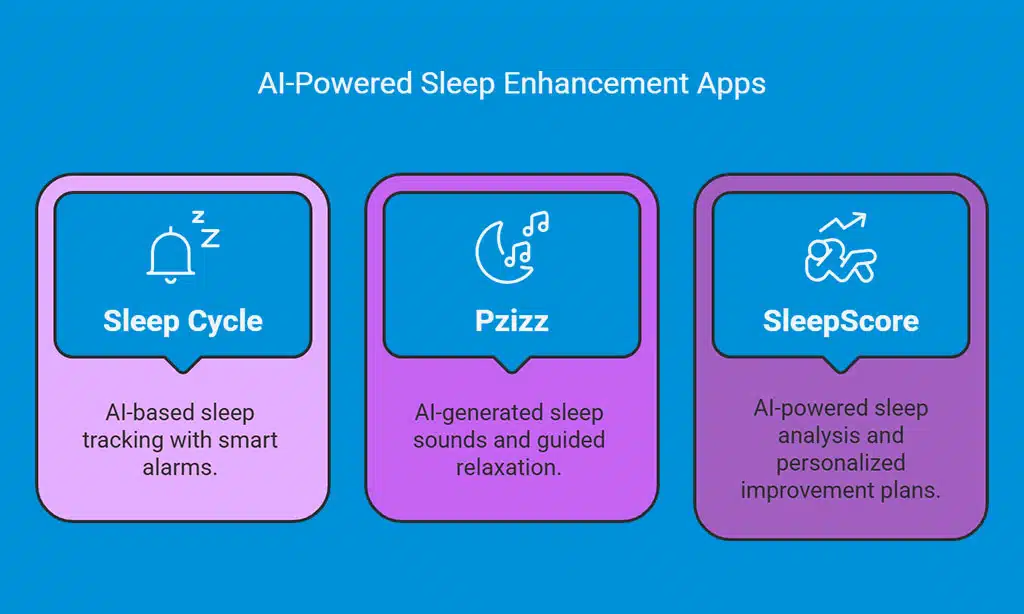
Quality sleep is crucial for productivity. AI-driven sleep apps include:
- Sleep Cycle: AI-based sleep tracking, smart alarms.
- Pzizz: AI-generated sleep sounds and guided relaxation.
- SleepScore: AI-powered sleep analysis and personalized sleep improvement plans.
4. Virtual Counseling and Therapy Apps
With AI-powered mental health platforms, professionals can access therapy anytime.
| App | Key Features |
| BetterHelp | Online therapy with licensed professionals |
| Talkspace | AI-assisted therapist matching |
| iPrevail | AI-supported mental wellness coaching |
AI in Corporate Mental Wellness Programs
Many companies now integrate AI and wellness apps into employee assistance programs (EAPs):
- AI-powered HR chatbots provide anonymous mental health inquiries.
- Wearables like Fitbit and Apple Watch track employee stress levels.
- Real-time burnout detection through AI-driven data analysis.
Case Study: Google’s Employee Wellness Program
Google integrates AI-driven mindfulness sessions and stress tracking into its corporate wellness strategy, improving employee engagement and reducing absenteeism.
The Future of AI in Mental Wellness
AI Innovations Expected in Mental Health Tech
- Emotion recognition AI for better mental health analysis.
- VR therapy powered by AI for immersive healing experiences.
- AI-driven real-time stress prediction models for proactive intervention.
Ethical and Privacy Concerns
- Data security and user privacy must be prioritized.
- Bias in AI algorithms should be minimized for fair treatment.
- AI should complement, not replace, human therapists.
Takeaways
AI and mental wellness apps are revolutionizing professional mental health support by providing accessible, efficient, and personalized solutions.
From AI-powered chatbots to meditation and therapy apps, technology is enabling professionals to manage stress, improve resilience, and enhance overall well-being.
AI-driven interventions can help reduce the stigma around seeking mental health support, making it easier for individuals to access the help they need. Additionally, these innovations offer cost-effective solutions for companies to improve employee wellness and productivity.
As AI continues to evolve, its impact on mental wellness will grow, making mental health support more effective and widely available.





















