

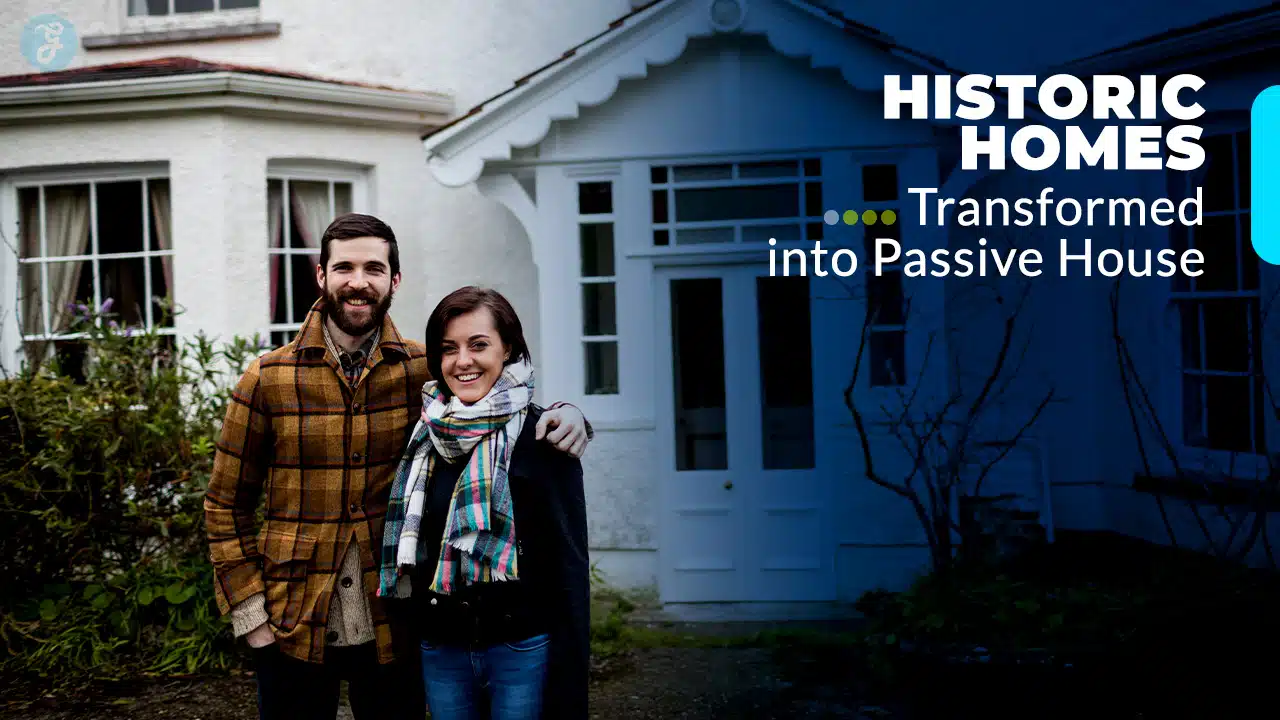
Old homes can leak heat through walls or roofs, and they can hike your energy bills. You may wake to cold drafts in winter or sweat in summer, even with an air conditioning and heating system.
Passive Houses use airtight construction and high-performance insulation. They need little to no active heating or cooling.
In this post, we tour five historic homes, from a Victorian townhouse to a Japanese traditional house, and show how builders added triple-glazed windows, hvac systems, and a ventilation system.
We share blower door test results that prove tight building envelope upgrades, and we explain how passive solar design and thermal bridging fixes cut energy use. You will learn steps to slash bills and boost indoor air quality.
Read on.
Key Takeaways
- Builders cut a London Victorian townhouse’s energy use from 180 to 20 kWh/m²·yr. They wrapped brick walls in rigid foam, applied an airtight membrane, hit 1.1 ACH@50 Pa on a blower door test, and installed triple-glazed windows plus a 93%-efficient HRV.
- A 2015 Ditmas Park retrofit in Brooklyn cut heating demand by 40%. Contractors added basement wall insulation, a vapor barrier, rim-joist spray foam, rigid roof boards, triple-pane windows, an ERV/HRV, a heat pump, and a solar canopy.
- Workers transformed a 100-year-old Tokyo house to cut energy use by 60%. They sealed gaps with modern tape, ran a blower door and infrared scan, fit triple-pane rice-screen windows, installed a heat-recovery ventilator, and added roof solar shading.
- Passive retrofits slash bills by up to 75% (Jane’s home) and meet Passive House Institute targets. Owners keep cornices, oak sashes, and timber beams. They boost R-values, seal thermal bridges, run blower door tests under 0.6 ACH@50 Pa, and use solar panels for net-zero living.
Historic Home Transformation #1: Victorian Townhouse in London
They wrapped the brick walls in dense insulation, sealed every gap with air sealing, and aced the pressure test. They swapped old sash panes for triple-pane windows, and added an HRV to chase damp air outside.
Insulation techniques and airtightness improvements
Cracks and gaps had sapped heat, driving energy use skyhigh. Upgrades cut demand from 180 to 20 kWh per square meter each year.
- Workers installed rigid foam board on interior walls, boosting R-value, sealing out cold and stopping thermal bridging.
- Craftsmen applied an airtight membrane across the floor, walls and roof, then used a blower door test to hit 1.1 air changes per hour at 50 Pascals, meeting Passive House Institute targets.
- Installers fitted high-performance triple-glazed windows that mimic original sashes, cutting heat loss and keeping the facade intact.
- A heat recovery ventilator scooped in fresh air, reclaimed warmth and kept indoor air quality high without hiking energy bills.
- Builders packed ceiling and floor cavities with dense glass fiber and sealed joints with weather-resistant tape, locking the building envelope tight.
Window upgrades while preserving historic character
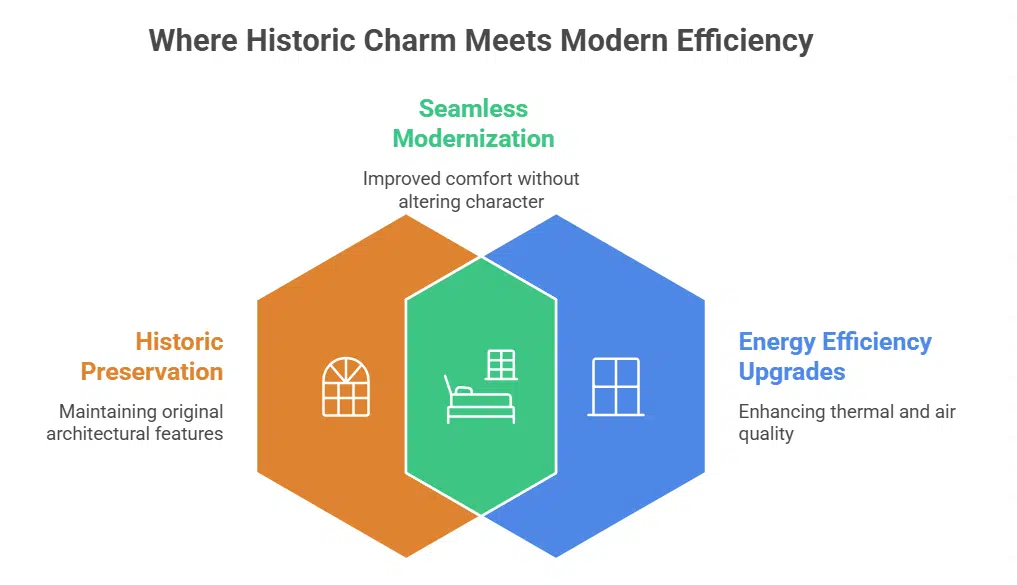
Craftspeople removed old single-glazed panels and installed evacuated double-skin panes with U-values of 0.6 to 0.8. The new panes mimic high-performance triple-glazed windows but slot neatly into the original sash.
Artisans stripped back layers of paint to reveal the oak frames, then sealed gaps with low-expansion foam to boost airtight construction and fortify the building envelope. A blower door test pinpointed leaks, and workers restored the historic moldings for a seamless look.
Engineers added two mechanical ventilation with heat recovery units, each pulling heat from stale air at 93% efficiency. The heat recovery ventilator balances fresh air flow without harming the antique frames.
Residents now enjoy better indoor air quality and cut energy consumption by nearly half. The sash still opens as it did in 1875, yet the home feels cozy all winter.
Historic Home Transformation #2: Ditmas Park Passive House, Brooklyn, NY
Crew sealed cracks, swapped in high-performance windows, then ran an airtightness test to lock in warmth. They added a heat pump and a ventilation unit with heat recovery, so now the house sips energy like a straw.
Basement and roof retrofits for energy efficiency
Brooklyn homes see big energy gains from basement and roof upgrades. Baxt Ingui Architects led a 2015 retrofit on a 20th century house, cutting heating demand by 40 percent.
- Contractors install high-performance insulation on basement walls, sealing gaps to stop heat loss and strengthen the thermal envelope.
- Technicians apply a vapor barrier on foundation walls to limit moisture and avoid mold while raising indoor air quality.
- Installers seal rim joists with spray foam to block drafts and reduce thermal bridging at the floor edge.
- Roof teams add rigid board insulation under sheathing, boosting R-value and supporting passive solar design.
- Renewable energy installers mount a solar canopy on the south roof, feeding renewable power into a heat pump and cutting carbon emissions.
- Specialists apply airtight construction tactics at roof eaves and around pipes, verified by an airtightness test with a blower door.
Integration of modern passive house principles
Designers placed air-tight doors along all entry points. Engineers ran a blower door test to verify airtight construction. Technicians installed an energy recovery ventilator to keep fresh air without heat loss.
Teams sealed thermal bridges and added high-performance insulation around the building envelope. Owners fitted triple-glazed windows for better solar gain and glare control.
Installers added a solar canopy on the south roof plane for renewable energy. They sized heat pumps to handle heating and cooling loads. Contractors used passive solar design to boost natural light.
Retrofits kept walls thick, cut energy demand, and trimmed carbon emissions.
Historic Home Transformation #3: Northern Irish Stone Cottage
They pumped corkboard panels into the stone gaps, sealed leaks with high-grade caulk, and boosted the wall’s R-value. They ran a blower door test, scanned for cold spots with a thermal imaging camera, then fitted rooftop photovoltaic modules for clean power.
Wall insulation strategies for stone structures
Stone walls leak heat through cracks and dense rock. A timber frame wall can hold high-performance insulation. Install mineral wool batts or an aerogel blanket to fill cavities. This method meets Passive House standards like Foyle House, cutting thermal bridging.
Workers seal gaps, run a blower door test, and fix any leaks.
You can also add rigid panels outside, covered with lime render. These boards stop heat transfer and protect historic stone. Install air sealing tape at joints, tie it into an airtight membrane.
Mechanical ventilation with heat recovery keeps air fresh and trims energy demand.
Solar energy integration for sustainable living
Photovoltaic panels capture sunlight and feed power into the home battery. Heat recovery systems work at over 80 percent efficiency, so they minimize energy waste. Thick insulation and a tight building envelope keep warmth in, while passive solar design boosts thermal mass.
Homeowners slash energy consumption and cut carbon emissions with this green building approach.
A solar canopy shades vehicles and generates renewable energy at the same time. Digital meters show solar heat gain in real time, so people can adjust heating and cooling systems quickly.
Passive Houses cut emissions by tapping natural phenomena, like sunbeams on triple-pane windows, to heat and light rooms.
Historic Home Transformation #4: Colonial Revival in Pennsylvania
Craftsmen sealed thermal bridges and tightened the building envelope, then ran an airtightness test that dropped air leaks to Passive House Institute standards. They swapped old sash windows for high-performance glazing and added a mechanical ventilation system, to slash energy demand in a 19th-century shell.
Upgraded HVAC systems for passive performance
Wyant Architecture installed a ground-source unit for geothermal heating in its 2017 Passive Solar House in Pennsylvania. It links to a heat recovery ventilator to boost indoor air quality and cut energy consumption.
Workers sealed the building envelope and ran a blower door test to secure airtight construction. The unit yields net zero energy in heating and cooling, fitting passive solar design goals.
Mechanical ventilation distributes warm air across thermal mass floors. It runs on low power fans. The ground-source unit taps stable earth temps. This setup slashes carbon emissions and cuts energy costs by eighty percent.
Occupants enjoy steady temperatures all year. The upgrade meets passive house standards while keeping historic charm intact.
Maintaining architectural integrity during the transformation
Craftsmen matched new triple-glazed windows to original sashes. They kept cornices and moldings intact, just like pieces in a jigsaw. Engineers added high-performance insulation behind the walls.
Workers tested the seal with a blower door test. They met passive house standards.
A tight building envelope cut thermal bridges across the 4,500 sq ft structure. The home sits on 1.3 acres with a rainwater capture system feeding toilets. A heat recovery ventilator moves fresh air without wasting heat.
Solar panels on the roof supply renewable energy and honor the Colonial style. Mechanical ventilation hides in the basement, out of sight, the system hums quietly.
Historic Home Transformation #5: Japanese Traditional Home in Tokyo
Workers swapped old sash for triple-glazed panes and added a solar shade canopy to tame Tokyo’s steamy summers. They used an airtightness meter and PHPP energy model to seal drafts, while a heat-recovery ventilator keeps air fresh.
Enhancing energy efficiency in a humid climate
Miwa Mori used thick walls and triple-pane windows to boost energy efficiency in Tokyo’s humid climate. She applied airtight construction to seal the building envelope. A mechanical ventilation heat recovery unit dries fresh air and cuts cooling loads.
These upgrades mimic passive house methods in a dense city block.
Crews ran a blower test, then scanned walls with an infrared scanner to find leaks. They tweaked insulation and added roof solar shading. Later this 100-year-old home cut energy consumption by 60 percent.
It keeps humidity at bay and preserves its classic look.
Blending traditional design with passive house features
Tokyo craftsmen wrap ancient wood beams in tight seams. They seal gaps with modern air sealing tape. They fit triple-pane windows in rice screen frames. They install a mechanical ventilation system with heat recovery.
It cuts energy demand by 80 percent and slices greenhouse gas emissions. The home holds its heat like a warm cup of tea. It blends the scent of cedar with a high-performance building envelope.
Kamakura hosts Japan’s first passive house. It sparked a trend when builders joined wood joinery with airtight construction. Engineers added a solar canopy, high-performance windows, and renewable energy panels on the roof.
They reduced thermal bridging by bolting high-performance insulation to old stone walls. Mr. Sato jokes that the house now breathes better than its owners. A nearby block earned EnerPHit status as Passive Town Phase 3.
This multi-story retrofit shows how heritage and green tech can live side by side.
Benefits of Transforming Historic Homes into Passive Houses

A sealed building envelope with a heat recovery ventilator trims bills, boosts comfort, and delivers fresh air, while you keep the wood beams and crown moldings. Want to see how three-layer glazing and an air-leak check brought net-zero flair to these old walls? Read on for the full before and after.
Significant energy cost reductions
Jane saw her bill shrink by 75 percent after sealing leaks, swapping single-glazed frames for triple-pane windows, and adding dense insulation. She now uses a heat recovery ventilator to bring fresh air in, and an air-leak check gave her house a top score thanks to airtight construction and a tight building envelope.
Workers ran an infrared scanner to spot thermal bridging in her walls and sealed every gap so no heat can hide. These energy efficiency moves mean she pays pennies for space heating, and her rooftop solar panels even cover her hot water needs with renewable energy.
Her home now cuts carbon emissions and shows how passive house tools can curb climate change.
Residential buildings make up 10.9 percent of global emissions, but retrofits like this change that story. Passive upgrades slash energy demand by up to eighty percent in many studies and ease the need for two billion new low-energy homes by the century’s end.
A simple building upgrade can save families thousands and drive zero carbon living. That level of ambition feels satisfying, and it pushes sustainable architecture into everyday life.
Enhanced comfort and indoor air quality
Owners report a cozy feel year-round. A blower door test measures leakage at under 0.6 air changes per hour. Walls gain insulation, wrapping the home like a warm blanket and sealing thermal bridges.
A balanced ventilation system with heat recovery brings fresh air after heating and cooling. This setup meets Passive House Institute standards for thermal comfort.
Indoor air quality stays high, thanks to continuous mechanical ventilation. Triple-pane windows and a tight building envelope cut energy consumption by up to 90%. Families notice fewer drafts, less noise, and lower carbon emissions.
Renewable energy sources and solar shading boost comfort and reduce energy demand. Many owners enjoy energy savings and healthy living.
Preservation of historic charm with modern functionality
Craftsmen installed triple-pane windows behind original frames. People once feared that energy upgrades would ruin looks. This move boosted energy efficiency and cut consumption by 80 percent in a 2021 retrofit while preserving old woodwork.
Architects at the Passive House Institute applied passive house methods for airtight construction and thermal mass upgrades. Lime mortar matched century-old walls without harming the envelope.
A blower door test sealed drafty gaps around doors and windows. Oak beams now support a solar canopy for renewable energy on the roof. Ductless heat recovery ventilators boost indoor air quality with fresh airflow.
Residents praise the comfort boost and the preserved cornices. My neighbor laughs that the house feels like a time capsule with a green heart.
Takeaway
This tour of vintage walls turned eco champions sparks fresh hope. Owners saw bills shrink after a pressurization test sealed the building envelope. Hands-on tweaks, from triple-pane glass units to a solar canopy, add charm and green power.
Each tale proves that past style and low-energy living can dance together. We toast to homes that keep history alive, and to hot cocoa in snug spaces.
FAQs on Historic Homes Transformed into Passive Houses
1. What makes a historic home a passive house?
It seals air leaks, adds thick insulation, and uses airtight construction to strengthen the building envelope. Think of it as tucking your home in a warm blanket.
2. How do they boost energy efficiency?
They swap old windows for high-performance windows and seal thermal bridging. They add thick insulation to cut energy use.
3. Why choose high-performance windows?
They block heat loss, cut drafts, and boost indoor air quality. They also trim solar heat gain and slash energy use.
4. How do they blend old charm with modern insulation?
They tuck sustainable building materials inside the walls, behind the old trim. This keeps the look, yet moves the home toward net-zero energy.
5. What renewable energy options fit these homes?
Owners often add a solar canopy or rooftop panels. They tap into renewable sources like sun and wind to power the home.
6. Do passive house upgrades cut carbon emissions and bills?
Yes, they bring big energy savings in space heating and cooling. They also turn a home into an energy-efficient building and slash carbon emissions.





















