

Getting sued can be scary. You might feel confused, stressed, or unsure about what to do next. Many people panic and ignore the papers they get, but that can lead to bigger problems like a default judgment.
This means you could lose money or property without even stepping into court.
The good news? You don’t always have to go before a judge to settle things. There are smarter ways to handle lawsuits, like talking it out or using alternative dispute resolution (ADR).
In this blog, you’ll learn step-by-step tips for managing your case while avoiding court battles.
Ready to take charge of your lawsuit? Keep reading!
Key Takeaways
- Act quickly when sued. Read the summons and complaint carefully to understand deadlines and actions needed. Missing deadlines can lead to a default judgment.
- Try mediation or arbitration instead of court. These methods save time, money, and stress while staying private.
- Talk with the other side to find solutions like settlement agreements or payment plans. Write offers clearly for proof later if needed.
- Respond properly to lawsuits by filing a written answer on time, addressing claims made in the complaint, and following court rules.
- Look out for procedural issues like improper service or missed deadlines that might help dismiss the case early.
Understand Your Legal Situation
Start by figuring out what the lawsuit is about. Missing deadlines or forms can lead to big trouble, so act fast!
Read the summons and complaint carefully
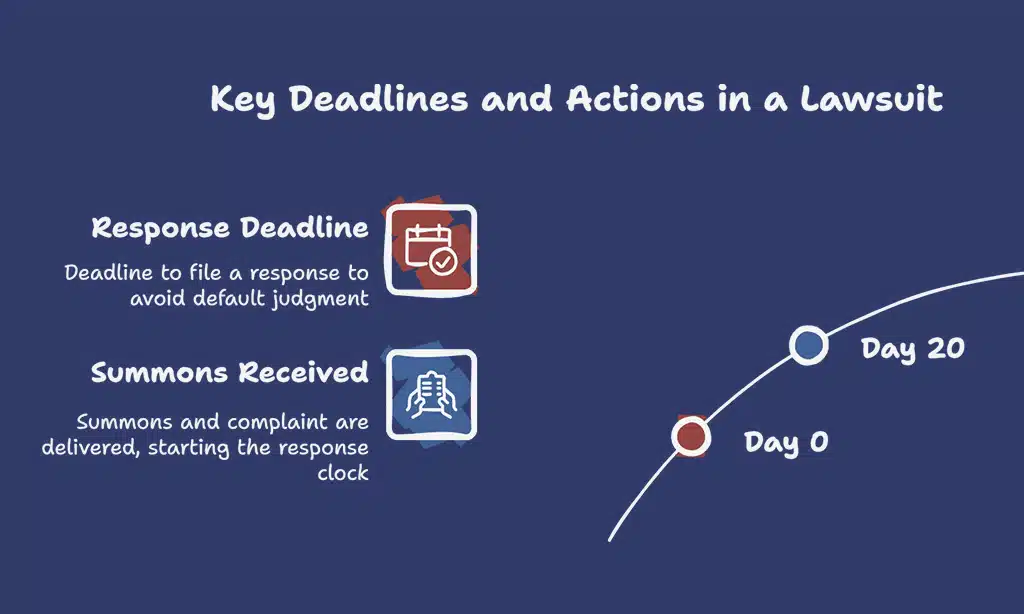
The summons tells you about the lawsuit. It gives deadlines and explains what to do next. Missing these deadlines can lead to a default judgment against you. Look for dates on federal or circuit court forms, as filing deadlines matter in civil cases.
The complaint lists the claims made against you. Each fact is in numbered paragraphs for clarity. Check if it mentions contracts, debts, or personal injury issues. Pay attention to terms like “failure to state a claim” or “affirmative defenses.” These could help with your legal response later.
Identify deadlines and required actions
Deadlines in lawsuits are crucial. Missing them can lead to default judgments, like losing money or property.
- Check the date on your summons and complaint. You usually have 20 calendar days to respond after receiving them.
- Mark this deadline on your calendar or set a digital reminder. Do not lose track of it.
- Read all court forms carefully. They explain what actions you must take.
- Find out where to file your response. This could be in small claims court, federal court, or another location.
- Pay any filing fees if required. These vary by court but are often paid with a debit card, Visa, Mastercard, or money order.
- Learn the statutes of limitation for your case type. Acting too late could void your legal claim.
- Seek legal help if unclear about next steps. Many local resources or online tools like “chat now” options can guide you.
- Contact the relevant parties for clarity on required paperwork or other procedural rules.
Act fast and stay organized to avoid mistakes that cost time and money!
Explore Alternative Dispute Resolution (ADR)
You don’t always have to fight it out in court. Mediation or arbitration can save time, money, and stress.
Mediation
Mediation can help settle disputes without a court hearing. Both sides meet with a neutral mediator to discuss the issues. This process is less formal than civil cases in federal or small claims courts.
It’s private and confidential, which many people prefer.
Small Claims disputes often offer voluntary mediation. Sessions happen on Thursdays at 9:00 AM and 1:30 PM. These meetings save time, money, and stress compared to filing fees or attorney’s fees for a trial.
Mediation allows both parties to negotiate directly while keeping costs low.
Arbitration
Arbitration is private and faster than court. Instead of a judge, an arbitrator listens to both sides. They then make a decision, which can be binding or non-binding based on the agreement.
Many civil cases, like disputes over loans or evictions, choose this method.
Filing fees for arbitration are often lower than federal court costs. Both parties present facts but skip the formal rules of evidence in civil procedure. This process saves time and avoids jury trials.
It works well for resolving complaints without extra steps in small claims court or larger civil lawsuits.
Communicate With the Opposing Party

Talk openly with the other side to find a solution. A clear discussion can save time, money, and stress.
Negotiate a settlement agreement
Offer a fair deal to avoid long legal battles. Discuss payment plans, reduced amounts, or other terms. For example, propose installment payments if covering one lump sum feels tough.
Write clear offers in case you need proof later.
Update all contact changes with the Pro Se Intake Unit promptly and in writing. Missing updates can complicate talks or deadlines. Keep communication polite but firm to protect your interests without sparking more conflict.
Propose installment payments if applicable
Offer to pay the amount in smaller payments over time. Many people can’t pay big amounts all at once, and that’s okay. Suggesting installment payments shows good faith. For example, if sued for $5,000, you could ask to pay $500 a month for ten months.
This option might stop harsher actions like default judgment or wage garnishment. Write your offer clearly so both sides agree on terms. It’s best to stick with payment agreements once made to avoid further legal trouble.
Prepare Your Legal Response
Write your response clearly and stick to the facts. File it before the deadline to avoid trouble.
Draft and file a written response
You must respond quickly to a lawsuit. Missing deadlines can lead to a default judgment against you.
- Carefully read the summons and complaint. Look for claims made against you. Check the filing deadlines listed in these papers.
- Include your contact information in your response. This means your address, phone number, and email should be current.
- Write a clear answer addressing each claim. Admit, deny, or say you lack enough info for each point raised.
- Include any compulsory counterclaims in your response. These are claims tied directly to the case that must be made now or lost forever.
- Check court rules like the Federal Rule of Civil Procedure if filing in federal court. Follow all guidelines for format and content.
- Attach copies of evidence if needed, but don’t file originals with the court.
- Pay any filing fees required by your court when submitting your response.
- File your response on time with the correct courtroom clerk’s office or online portal if available.
- Serve a copy of the response to the opposing party following proper service of process rules.
- Keep copies of all documents filed and served for yourself as proof later if needed!
Raise procedural issues if relevant
Procedural issues can save time and money. Spotting them early helps avoid unnecessary headaches.
- Check if the summons and complaint were served properly. Example: California courts require specific hand delivery or mail methods.
- Confirm deadlines were met. A missed filing deadline can dismiss the case entirely.
- Review statutes of limitations for the claim. Legal actions filed too late may not proceed.
- See if mandatory court rules, like Federal Rules 8, 10, or 11, were followed in court filings.
- File a motion to dismiss if there are legal mistakes or missing details in the complaint.
- Question jurisdiction if you believe the case belongs in a different state or federal court.
- Look for incorrect details on court forms, as these could weaken the opposing party’s argument.
Small errors can make a big difference in civil cases.
Know What to Expect Next
Courts may schedule a hearing after you file your response. Check all filing deadlines and court dates. Missing these can lead to a default judgment against you.
Opposing parties might request mediation or settlement discussions before trial. Small claims court cases often resolve faster but can still involve court costs. Federal courts handle civil cases differently, so review their rules if your case is there.
Always be prepared for updates like new summons or additional pleadings filed by the other side.
Takeaways
Avoiding court can save time, money, and stress. Read all documents carefully and act quickly. Try to work things out through mediation or negotiation. If needed, get legal help to protect your rights.
Stay calm, take action, and keep the matter from escalating further!
FAQs
1. How can I avoid going to court if someone is suing me?
You can try to mediate the issue. Mediation allows both sides to talk and settle without a court hearing or judgment.
2. What happens if I miss filing deadlines in a lawsuit?
Missing filing deadlines could lead to a default judgment, where the other side wins automatically.
3. Can small claims court help with civil cases?
Yes, small claims court handles simple civil cases like disputes over money or property under certain limits.
4. Do I need legal help for permissive counterclaims?
It’s smart to get legal help when dealing with permissive counterclaims since they involve extra issues beyond the original case.
5. What are some common costs of handling lawsuits outside of federal court?
You may still pay filing fees, cover mediation costs, or deal with expenses like serving summons and complaint forms.
























