

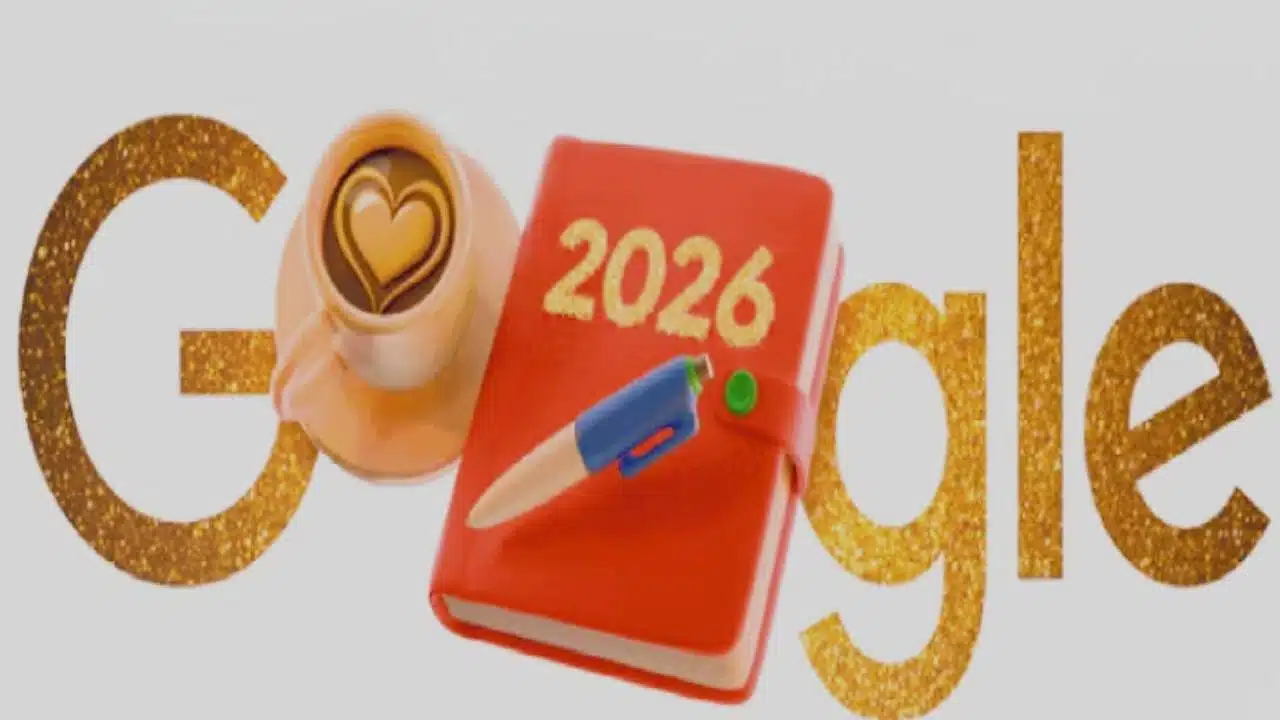
The Google New Years Day 2026 Doodle went live on Jan. 1, 2026, using an animated “fresh start” theme that turns everyday goal-setting symbols into a simple message: pause, reset, and begin again.
What The Google New Years Day 2026 Doodle Is And When It Appeared?
Google marked the first day of 2026 with a homepage Doodle designed around the idea of a reset. The official Doodle description calls New Year’s Day “a universal pause button,” encouraging people to reflect on the year behind them and start the new one with intention.
The timing is straightforward. The Doodle is dated January 1, 2026, and is part of Google’s regular New Year series that typically places themed artwork on the homepage around Dec. 31 and Jan. 1. Google also maintains a public Doodle archive, where each Doodle is stored and can be revisited after it stops appearing on the homepage.
While the Doodle can feel “global,” Google does not always display the exact same homepage art everywhere at the same time. Google’s own Doodle team notes that multiple Doodles can run in different locations at once, depending on local calendars, cultural moments, and regional programming.
For readers, the main point is simple: if you opened Google on Jan. 1 and saw the New Year-themed animation, you were looking at a deliberate New Year greeting meant to match the day’s mood.
New Year Doodles At A Glance
| Date | Google Doodle Theme | What Users Typically See |
| Dec. 31, 2025 | New Year’s Eve | End-of-year countdown celebration visuals |
| Jan. 1, 2026 | New Year’s Day 2026 | A “fresh start” message and goal-oriented imagery |
This Doodle matters for a practical reason, too. Google’s homepage remains one of the most-viewed digital entry points in the world. When Google’s logo changes, it becomes a mass-audience signal—less like an advertisement and more like a public bulletin that a major cultural moment is underway.
What The Doodle Shows And What The Symbols Mean?
The Google New Years Day 2026 Doodle is built around familiar “reset” objects: a new notebook, a pen, and small visual prompts that suggest common New Year goals. Instead of fireworks and noise, the design leans into quiet, everyday motivation. The animation uses a set of simple icons that rotate through the “O” shape in the Google logo. Each icon is a shorthand for a goal many people recognize at the start of the year.
The best way to understand the Doodle is to treat it like a visual checklist. It is not telling people which resolutions to choose. It is reflecting the kinds of goals people already set—fitness, creativity, healthier routines, and self-care—and presenting them in a calm, friendly style.
Symbols And Likely Goal Themes
| Doodle Detail | Goal Theme | Why It’s A Common January Choice |
| Notebook labeled “2026” | Planning and tracking | People often start new journals, habit trackers, and schedules |
| Pen | Commitment | Writing something down is a simple “I’m starting” action |
| Dumbbell icon | Fitness | Exercise is one of the most common resolution categories |
| Yarn icon | Creativity and hobbies | New skills and creative projects often begin with small routines |
| Chef hat + salad icon | Healthier eating | Food resets are common after holiday seasons |
| Coffee cup + heart | Comfort and self-care | Many people frame goals around balance, rest, and consistency |
This is also where the Doodle’s tone stands out. The design does not suggest “overnight transformation.” It suggests steady starts. That is a subtle but important difference, because many people burn out on goals when expectations are unrealistic.
Another detail is the emotional framing. A heart motif paired with a familiar daily drink signals warmth rather than pressure. It supports a modern view of goal-setting that includes mental well-being and sustainable habits, not just productivity.
The New Year Search Surprise And How People Are Using It?
Along with the Doodle, many users also notice a New Year-themed interactive moment inside Google Search. This is the kind of feature that looks small but spreads quickly, because people love sharing quick “hidden” experiences. In practice, it works like this: a New Year-related search can trigger a small on-screen prompt. When tapped or clicked, it releases a confetti-like animation over the results page. The search results remain the same, but the screen briefly celebrates.
Google has used similar interactive touches for other cultural moments, and New Year is a natural fit because it is one of the few events observed widely across countries, languages, and cultures—even when traditions differ.
How The Search Celebration Typically Works?
| What You Do | What Happens | Why It’s Shareable |
| Search a New Year phrase | A small on-screen prompt may appear | People enjoy discovering it unexpectedly |
| Tap/click the prompt | Confetti animation plays on top of results | It’s visual, quick, and easy to record |
| Continue browsing | Results remain usable | The effect feels playful, not disruptive |
This kind of interaction also signals something bigger about how search engines compete. Search is no longer only about links. It is also about experience, delight, and brand identity. A tiny celebration can improve how people feel about the moment, and it reminds users they are using a product with personality.
It also turns New Year into a shared online ritual. Many people now start January by checking calendars, reading “Year in Review” lists, and searching for habits or routines. When a search platform adds a celebration layer, it becomes part of the tradition.
Why “Fresh Starts” Matter: What Data And Research Say About Resolutions?
The New Year is a cultural moment, but it is also a measurable behavioral pattern. Surveys and research consistently show that “fresh start” time markers—like Jan. 1—can increase motivation to begin aspirational behaviors.
A large U.S. survey by Pew Research Center found that New Year resolutions are more common among young adults than older adults. The same report highlights that health goals dominate the resolution landscape, with many people focusing on exercise, diet, or broader well-being.
Resolution-Making By Age (U.S. Survey Data)
| Age Group | Share Who Say They Made Resolutions |
| 18–29 | 49% |
| 30–49 | 31% |
| 50+ | 21% |
Pew’s data also adds useful context: many people simply do not like making resolutions. That matters because New Year motivation is not universal. Google’s Doodle message reflects that reality by allowing for both “big goals” and “quiet starts.” It does not assume everyone wants a strict resolution list.
On the research side, studies on the “fresh start effect” describe a consistent pattern: after a temporal landmark (like the start of a year), people often feel psychologically separated from the past version of themselves. That sense of separation can reduce discouragement from past mistakes and make new efforts feel more possible.
Researchers have also documented that interest in aspirational topics can spike around these landmarks. In some studies, behaviors such as gym attendance, goal commitments, and searches for diet-related terms rise at the start of new time cycles.
This helps explain why a New Year Doodle can be more than decorative. The artwork aligns with a predictable behavioral moment, when many people are already searching for routines, tools, and plans.
Common New Year Goal Areas (Based On Survey And Research Patterns)
| Goal Area | Typical Examples | Why It Peaks In January |
| Health and fitness | Exercise routines, walking, strength training | A clear “start line” after holidays |
| Diet and nutrition | Meal planning, reducing sugar, cooking at home | Post-holiday reset mindset |
| Money and work | Budgeting, saving, career plans | Yearly planning cycles and goal reviews |
| Relationships | Spending time with family, improving communication | Reflection on what mattered last year |
| Hobbies and learning | New skills, creative projects, reading goals | New schedules and renewed motivation |
Google’s design choices mirror these categories. It uses symbols that match the most common goal areas without turning the homepage into a lecture.
How Google Doodles Are Made And What Happens After Today?
Google Doodles may look effortless, but they follow a structured process. Google’s Doodle team explains that ideas come from both internal staff and the public. A committee reviews options and builds an annual plan that can include hundreds of Doodles across the world. The process includes research, concepting, iteration, and testing. For interactive Doodles, that testing can be more intensive, because animations and games must work smoothly across devices.
Google also explains a key operational detail: most Doodles run for a short window, typically 24 to 48 hours, before being replaced by the standard logo again. After that, they remain accessible in the Doodle archive.
Google’s Described Doodle Process (Simplified)
| Stage | What Happens | Why It Matters |
| Idea selection | Topics are gathered and reviewed | Ensures relevance and diversity of subjects |
| Team assembly | Artists, designers, engineers collaborate | Makes Doodles both creative and functional |
| Research | Background is verified and refined | Supports accuracy and cultural context |
| Concepting | Sketches and formats are explored | Finds the best visual storytelling approach |
| Iteration/testing | Designs are refined repeatedly | Ensures quality across screens and regions |
| Launch | Doodle runs briefly, then moves to archive | Keeps homepage timely while preserving history |
For New Year’s Day 2026, the next “what happens” is simple: the Doodle will rotate off the homepage after its run window, but it will remain viewable in the archive. The New Year moment will move on, but the digital record stays. For Google, New Year Doodles also serve as brand storytelling. They remind users that Google sees itself not just as a utility, but as a cultural participant that marks major events with art and interaction. For users, the impact is smaller but real: a brief reminder that a fresh page exists, and that starting can be gentle.





















