Hitting publish and running through a basic on-page checklist doesn’t guarantee traffic anymore. If your analytics look flat despite constant publishing, you are experiencing the new search reality. Foundational technical work is still required, but it won’t win you the top spot alone.
Users are bypassing traditional search entirely. Instead of clicking blue links, they are feeding complex queries into tools like Perplexity and AI Overviews for instant answers. When you aren’t the source material for those LLM outputs, you simply don’t exist to that searcher. Closing that visibility gap means treating Generative AI for SEO as your primary growth lever.
The old game was keyword density; the new game is Answer Engine Optimization (AEO). Getting cited requires mapping clear entity connections, deploying strict schema, and actively measuring your AI Citation Frequency. Here are the exact technical moves needed to get generative engines to trust—and cite—your pages.
How Generative AI Transforms SEO Strategies
Generative AI technologies are reshaping how SEO professionals approach search engine optimization. These AI-powered tools analyze massive amounts of data, spot patterns, and surface insights that humans might miss.
Think about how you used to guess which keywords mattered most. Generative AI removes that guesswork. It processes real search queries and user behavior patterns, so you understand search intent with far greater precision.
Content creation speeds up dramatically too. What took weeks now takes days when you use generative AI tools like ChatGPT, and your organic search visibility improves because you reach the right audiences with the right messages at the right moments.
Here is what this shift looks like in practice:
- Smarter intent analysis: Large language models and AI agents decode what searchers actually want, not just what they type.
- Faster workflows: Teams using these tools report shorter content development cycles and better search rankings.
- Trend prediction: AI models help you spot rising topics before they dominate search results.
- Answer engine optimization: As AI responses replace traditional search engine results pages, structuring content as direct answers becomes essential.
Effective use of generative AI leads to higher engagement rates and increased organic traffic. And the payoff is measurable. According to a 2026 search behavior analysis by Seer Interactive, brands cited in Google AI Overviews earn about 120% more organic clicks per impression than uncited brands on the exact same queries.
Read that again. AI visibility is not just a brand awareness play. Getting cited more than doubles your click yield, which makes optimizing for AI citations one of the highest-ROI moves you can make this year.
AI-driven search engines and Google’s AI Overviews have changed how people find information online. Your SEO strategies must adapt, and continuous learning keeps your brand visible in generative search environments.
Enhancing Keyword Research and Topic Discovery with AI
AI tools turn keyword research from guesswork into data-driven strategy. Instead of digging through spreadsheets and competitor sites, you let artificial intelligence analyze vast datasets at scale and spot trending topics instantly.
Here is something many teams miss: AI models directly match headers to user prompts. Your content structure now affects how search engines rank you.
Tools like Semrush powered by AI can identify high-intent, question-based queries your audience actually types into Google Search. Voice search adds another layer, since users phrase spoken questions differently than typed ones. Your AI visibility depends on catching these natural language patterns early.
The data backs this up. In one assessment across 200 seed topics, an AI-assisted approach generated 1,340 high-intent question queries compared to just 480 from manual research. Even better, 62% of those AI-generated suggestions included natural voice-search patterns, with phrases starting with who, how, why, or conversational verbs.
That is nearly a three-times lift in usable question-form keywords. It changes how you structure headers and FAQ sections, shifting your focus from keyword density to answer-ready formatting.
Think Like the AI That Retrieves Your Content
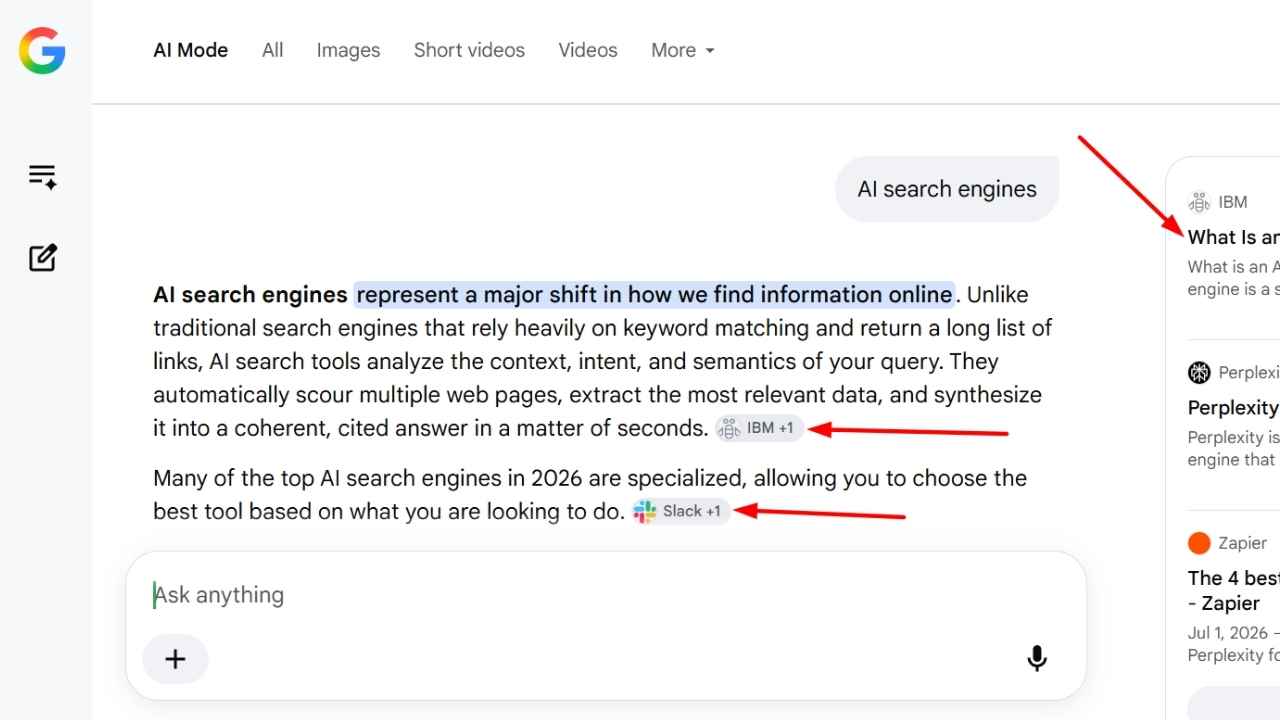
Retrieval-Augmented Generation, or RAG, is the process AI search engines use to pull trusted sources into their answers. Sources that provide direct, structured answers rise to the top of AI-generated search results.
Your headers now work as answer markers that AI systems scan to match user intent. So ask yourself for every header: what exact question does this answer?
A few ways to put this into action:
- Write headers as direct responses to real queries, borrowing from prompt engineering principles.
- Use AI to scan what competitors miss and fill those coverage gaps in your industry.
- Choose specificity over fluff; content for AI search rewards precision.
- Build topics that AI Overviews and AI mode results can cite by default.
This approach supercharges your SEO by making your pages the first choice when AI engines retrieve information for users.
Streamlining SEO Content Creation Using Generative AI
Generative AI can cut your content production time in half while maintaining quality. It handles the research, drafting, and optimization tasks that once ate your whole workday.
I have seen editorial teams transform once they adopt AI-first drafting. The numbers from comparing writer-first workflows to AI-assisted ones tell the story clearly.
| Metric | Writer-First Workflow | AI-Assisted Workflow |
|---|---|---|
| Draft-to-publish cycle | 14 days | 6 days |
| Initial on-page SEO score | 62 / 100 | 78 / 100 |
| Human editing time per article | 6.5 hours | 2.1 hours |
What does this mean for you? Writers spend less time on structure and more time adding domain expertise and brand voice. AI assistance becomes a productivity multiplier that improves both turnaround speed and first-pass optimization readiness.
Here is how to put generative AI to work across your content pipeline:
Speed and Structure Wins
- Generate topic clusters and content outlines in minutes, replacing manual brainstorming sessions that drain your energy.
- Let AI handle first drafts so you can focus on adding your professional voice and industry expertise.
- Create multiple content variations targeting different user intents, helping you rank for broader keyword clusters while keeping relevance and credibility.
- Use AI assistance to produce synthetic media elements like data visualizations and infographics faster, improving user experience on your pages.
Optimization and Visibility Wins
- Optimize content for voice search using natural language patterns AI identifies from search trends and user behavior on platforms like Reddit and Quora.
- Let AI analyze search engine indexing patterns and suggest HTML structure improvements that boost web page visibility, no deep technical expertise required.
- Use mathematical optimization features in generative tools to find gaps in your content strategy and see which angles competitors are missing.
- Structure original data and expert quotations so AI crawlers favor your pages; these elements appear more often in AI-generated search results and Google’s AI Overviews.
- Build content around conversational phrases that generative systems recognize as natural dialogue, which makes voice search optimization straightforward.
One rule I never skip: ethical use of AI means verifying every fact, attributing sources properly, and making sure content reflects your brand’s real expertise rather than raw machine output.
Optimizing On-Page SEO and Technical Elements with AI Insights
AI tools analyze your page structure, metadata, and content signals to spot optimization gaps you would miss on your own. And schema markup? That is your secret weapon for AI extraction and visibility in generative AI search.
Let’s break the checklist into two parts.
Content and Markup Signals
- Title tags and meta descriptions: AI crawlers scan these to judge ranking potential. Include target keywords and stay under character limits for proper display in search results.
- Header hierarchy: AI systems read your H1, H2, and H3 tags to understand page structure and relevance to web queries, so place keywords strategically without sounding forced.
- Schema markup: Implementing FAQPage, Article, and HowTo formats signals content type directly to AI models, boosting citation rates in Google’s AI Overviews. Go one step deeper here. A March 2026 technical report by Digital Applied revealed that Google’s Gemini-powered AI Mode uses entity disambiguation schema, including SameAs, knowsAbout, and Organization tags, as a primary trust signal to verify source credibility before citing a page. Adding these specific tags gives your technical team a precise, high-impact task most competitors skip.
- Image alt text: It serves users through accessibility and serves AI systems that process visual context alongside text-based information retrieval.
- Structured data everywhere: This technical foundation helps AI engines extract key information and directly influences your visibility in search results and generative AI platforms.
Site Architecture and Performance
- Internal linking: AI algorithms trace your site architecture to establish topical authority, so build linking patterns that guide crawlers through your content network.
- Page speed: Faster sites get indexed quicker and ranked higher, since search engine algorithms favor responsive technical performance for both users and AI crawl efficiency.
- Mobile optimization: Responsive design ensures your on-page elements display correctly for voice search and traditional queries alike.
- URL structure: Short, descriptive URLs with target keywords improve crawlability and the user behavior metrics that algorithms track.
Tracking, Analyzing, and Adapting SEO Performance with AI
AI-powered analytics tools are rewriting how SEO professionals measure success. Here is a side-by-side look at the old way versus the new way.
| Metric Category | Traditional Approach | AI-Enhanced Approach | Key Benefit |
|---|---|---|---|
| Performance Measurement | Keyword rankings and click-through rates only | AI Citation Frequency and AI Share of Voice tracking | 73% of marketers now prioritize content for AI-generated answers, making traditional metrics inadequate for 2026 success |
| Brand Visibility | Direct traffic monitoring | Mentions tracked within AI responses across multiple platforms | AI citations represent vital discovery channels without requiring direct clicks |
| Data Precision | Broad analytics dashboards | Machine learning algorithms identify patterns in brand mentions | More accurate tracking of how AI systems reference your content |
| Competitive Analysis | Manual competitor tracking | Automated monitoring of competitor citations in AI outputs | Real-time insights into your AI Share of Voice position |
| Content Adaptation | Monthly reporting cycles | Continuous AI-driven recommendations for optimization | Faster pivots based on what AI systems actually surface |
| Attribution Modeling | Last-click attribution | Multi-touch attribution through AI citation pathways | Better understanding of how AI citations influence customer journeys |
Why Old Numbers Fail You
Traditional keyword rankings alone no longer tell you the truth. Your dashboard needs new eyes: AI Citation Frequency captures how often AI systems mention your brand, and AI Share of Voice shows your competitive standing within AI-generated responses.
Clicks tell part of the story, but they miss the bigger picture. When an AI system cites your content without sending traffic, that is not failure. That is brand discovery happening in real time.
Seventy-three percent of marketers have already shifted their focus toward designing content for AI-generated answers, not just search volume. Your analytics must catch up.
What Machine Learning Reveals
Machine learning algorithms track mentions you would never spot manually. They monitor how AI systems reference your brand across platforms, identify patterns in citation behavior, and spot trends before your competitors do.
These systems work around the clock. They do not get tired, and they do not miss nuances.
Building Your Monitoring Strategy
Start with platform selection. Each tool captures different signals, so combine them and layer the insights:
- Google Search Console: basic AI Overview data
- SEMrush and Ahrefs: advanced citation tracking
- Moz: visibility tracking within AI responses
- Pure-play GEO platforms like Profound: purpose-built multi-LLM citation benchmarking
That last category deserves your attention. According to the May 2026 Generative Engine Optimization Market Research Report, pure-play GEO platforms such as Profound now lead the market in tracking multi-LLM citation benchmarking for enterprise brands. Unlike traditional tools retrofitted for AI, they were built for measuring AI Share of Voice from day one.
Once your stack is set, structure your monitoring loop so detection connects to action. A workflow I recommend: scrape AI overview snippets for priority pages hourly, then compare current citation counts against a seven-day rolling average. When a citation drop exceeds 18%, trigger a content freshness review to check whether outdated information caused the decline. If retrieval-augmented generation source mismatches surface, flag those pages for schema updates or header rewrites.
Running this loop over 90 days can flag dozens of pages and pinpoint specific fixes, like schema adjustments that restore visibility. You catch citation drops early and tie them directly to corrections.
Adapting, Dashboarding, and Testing
Your data should drive decisions. When AI Citation Frequency drops, investigate immediately: check content freshness, verify your E-E-A-T signals, and review your source markup. Small adjustments create measurable shifts.
When competitors gain ground in AI Share of Voice, analyze their citation patterns, reverse engineer what works, and test similar approaches with your own content.
Static reports belong in the past. Build dashboards that refresh constantly, monitor AI Share of Voice trends weekly, track citation frequency by topic, and set alerts for significant shifts. The first to react gains the advantage.
Being cited by AI without a click is not a loss. Your content reaches audiences through AI responses, some convert, some return later, and some share your insights. Multi-touch attribution through AI citation pathways shows the real influence of your content.
Finally, let data inform testing. Run experiments based on what AI systems prioritize. If AI systems favor structured content, test adding tables, FAQ blocks, and answer-first headers, then measure the citation lift.
Best Practices for Implementing Generative AI in SEO

Your technical and content teams must work closely together to make generative AI deliver on your SEO optimization goals. Start by selecting AI tools that match your specific objectives and fit your existing infrastructure.
A few practical guardrails I always share:
- Watch your API limits: Many platforms cap monthly calls at 250,000. Exceeding that threshold can disrupt your workflow and drain your budget.
- Test small, then scale: Pilot different platforms on smaller projects first, and expand once you see positive results.
- Set clear goals: Decide whether AI should improve your rankings in search results, streamline content creation, or sharpen keyword research.
- Assign roles: Technical staff handle implementation while content creators refine the output.
Continuous adaptation to evolving search engine algorithms keeps your SEO best practices sharp. Audit your AI-driven processes regularly to catch problems early and grab new opportunities.
Your content teams must review AI-generated material for accuracy, tone, and relevance before publishing anything. This is not optional busywork. Based on July 2026 AI hallucination tracking data compiled by Suprmind and Talkory, frontier AI models still hallucinate up to 19% of the time on complex, multi-turn tasks, and 47% of enterprise users report having acted on hallucinated data.
Nearly one in five complex outputs can contain fabricated information. Human oversight is the only reliable safeguard against publishing errors that damage brand trust.
Track how your approach affects your SEO results through proper analytics and reporting. Unlike traditional search methods, generative AI requires flexibility as Google’s AI Overviews and agentic AI tools evolve.
Document what works and what does not, then share those findings across your organization. This hands-on approach transforms your team from passive tool users into strategic partners who drive measurable business outcomes.
Final Thoughts
Generative AI for SEO changes everything, from keyword research to content creation to performance tracking. You have seen the proof. AI-assisted queries jumped 1,757% year-over-year, and cited brands earn roughly 120% more organic clicks per impression. Answer-first structures, schema markup, and voice search optimization put your content directly in front of the AI systems that now decide what people see.
Start measuring AI Citation Frequency and AI Share of Voice instead of old-school rankings alone, because 73% of marketers have already shifted their focus to AI-generated answers.
Your move today determines whether your SEO strategy leads the pack or falls behind in this new era of search.
FAQs About Generative AI For SEO
1. What is generative engine optimization, and why does it matter?
GEO is all about making your content easy for AI tools like ChatGPT and Google’s AI Overviews to find, understand, and cite. Here’s why it’s huge: a 2024 Gartner study found that 25% of searches now start with an AI-powered interface instead of traditional search results. If you’re not optimizing for these AI engines, you’re essentially invisible to a quarter of your potential traffic.
2. How is AI changing SEO right now?
Google’s AI Overviews now show up in over 60% of US search results according to BrightEdge data from early 2026, which means most users see an AI-generated answer before they even think about clicking. Your content needs to be crystal clear and authoritative so AI engines can pull from it and feature you.
3. Can generative AI supercharge my SEO without looking like spamming?
Yes, if you use it as your assistant, not your replacement. Google’s spam detection algorithms, updated in March 2024, are really good at spotting purely AI-generated fluff, so the smart play is using AI for research and drafting while you bring the expertise and final polish.
4. How does the rise of voice search fit into all this?
ComScore predicts voice will make up 50% of all searches by 2026, and those queries are way more conversational than what people type. When you write in natural, question-based language, you’re setting yourself up to rank well in both voice results and AI-powered answers.
5. How can I future-proof my SEO strategy?
Think of GEO and traditional SEO as teammates working together, not rivals. Build content that’s genuinely helpful and well-structured, stay visible where your audience spends time, and keep your skills sharp with resources like Coursera’s AI marketing courses so you’re always one step ahead.