


For years, brands tried to guess what shoppers wanted. They tracked clicks, bought lists of data, and followed people around the web with ads, and the guesses were often wrong. This guide explains how brands use zero-party data from quizzes and polls to stop guessing, where most of them go wrong, and how to fix it.
The short answer is simple. Brands ask shoppers a few questions and give something useful back right away. Then they use the answers to pick products, write emails, and plan new launches. Collecting the answers is the easy part. Using them well is the hard part.
What Is Zero-Party Data and What It Is Not
The research firm Forrester named this kind of data in a 2018 report by analyst Fatemeh Khatibloo. It means information a customer chooses to share with a brand on purpose. That includes their preferences, what they plan to buy, details about their life, and how they want the brand to treat them.
It helps to see it next to the other data types:
| Data type | Where it comes from | Example |
|---|---|---|
| Zero-party data | The customer tells you on purpose | “My skin is oily” in a quiz |
| First party data | You watch what customers do on your site or app | Pages viewed, past orders |
| Third party data | Another company collects it and shares or sells it | Interest lists from a data broker |
This difference shapes how brands use zero-party data. A click tells you someone looked at a product. A quiz answer tells you why they looked.
Why Brands Are Asking Instead of Guessing in 2026
Many articles still say Google is about to kill third-party cookies in Chrome. That is out of date. Google dropped its plan to remove them in 2024. In April 2025, it confirmed it would not add a new cookie choice prompt either. Third-party cookies still work in Chrome by default.
Tracking is still getting harder, though, for three reasons:
- Other browsers block it: Safari and Firefox have blocked third-party cookies by default for years, so ad tracking already misses many shoppers.
- Privacy laws keep growing: Twenty US states have full consumer privacy laws in effect in 2026. Indiana, Kentucky, and Rhode Island joined on January 1, 2026.
- Trust is low: In a 2025 Press Ganey Forsta survey, only about 1 in 5 US shoppers said they trust retailers to use their data responsibly.
Shoppers will still share when the trade is fair. In an attentive survey of 3,300 consumers in the US, UK, and Australia, 99.6% said they would share some personal data in exchange for relevant rewards, and product recommendations were the top reason. But 38% said they were unsure what brands actually do with their data.
So brands use zero-party data, not because cookies died. They use it because asking works better and is easier to explain to customers.
How Brands Use Zero-Party Data From Quizzes and Polls
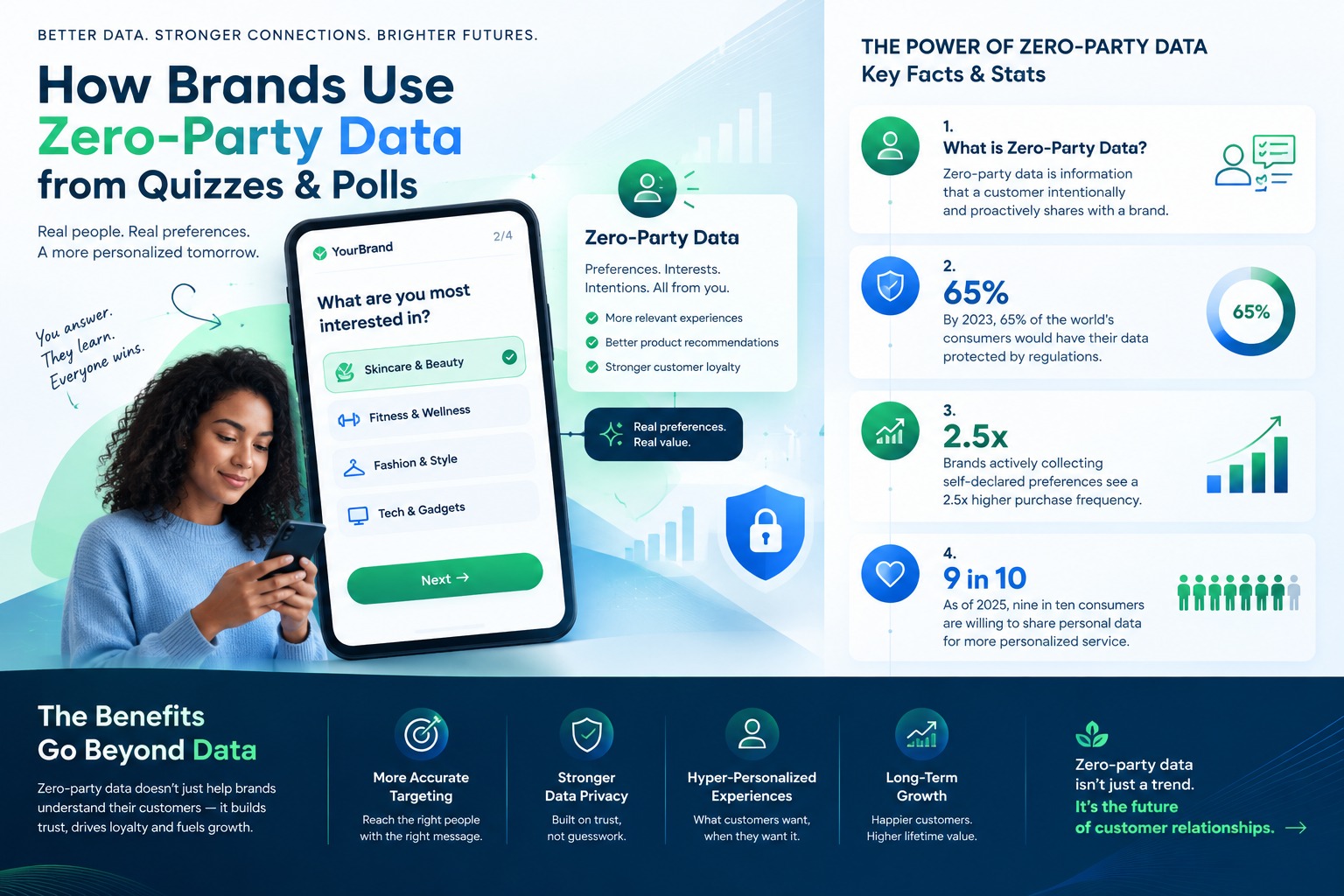
Most brands use these answers in three main ways.
1. Product Finder Quizzes That Recommend the Right Item
This is the most common way brands use zero-party data, because the shopper gets an answer in seconds.
- Sephora runs quizzes like Foundation Finder, Skincare Routine Quiz, and Fragrance Finder. They ask about skin type, tone, concerns, and scent likes.
- Warby Parker uses a short quiz to help new customers choose frames online.
- Function of Beauty built its whole business on a quiz. Your answers decide the formula of your shampoo or skin care.
The results can be strong. Octane AI, a quiz software company, studied more than 500 of its online stores that sent paid ad traffic to both quiz pages and product pages. Quiz pages converted at 7.1% on average, while product pages converted at 2.3%. Quiz pages also got 42% of visitors to share an email address, compared with 3% on product pages. Keep in mind that this data comes from a company that sells quizzes, so treat it as a best case, not a promise.
2. Emails and Texts That Match Each Answer
A quiz answer is most useful after the quiz is over. Brands tag each customer with their answers and send messages that fit.
The food brand Pack’d asked quiz takers about their lifestyle, such as whether they eat vegan or vegetarian. About 15% of quiz takers bought right away. Nearly half signed up for the email series that followed the quiz. That series became the brand’s best email flow by revenue per person.
This is where many brands see the real payoff. One answer can shape months of emails.
3. Polls That Shape What Gets Made Next
Polls are faster and lighter than quizzes. The home decor brand Letterfolk uses Instagram Story polls to ask followers which products they want next.
There is one catch most guides skip. Answers to a poll on a social app stay inside that app. You usually cannot link them to a customer’s profile in your email tool. So treat social polls as a group signal for product decisions, not as data about one person.
Polls on your own website, in your app, or at your events can be linked to a profile. Brands investing in live experiences can add a quick poll at check-in. That turns a fun moment into useful data the team can act on later.
The Problems Most Brands Run Into
Collecting answers is easy. The trouble starts after that. Here are the most common ways brands use zero-party data badly:
- The answers go nowhere: The quiz tool saves the answers, but nobody connects them to email, text, or the website. The data just sits there.
- The answers get old: A skin type, a budget, or a baby’s age can change in a year. A quiz answer from last spring may be wrong today.
- What people say is not always what they do: Someone may say they want “natural” products and then buy the cheapest option. Answers alone can mislead you.
- The numbers are small: Only some visitors take a quiz, and they tend to be your most interested shoppers. They may not represent everyone.
- Some questions are risky: Questions about health, pregnancy, or medical conditions can count as sensitive data. Many state privacy laws require clear permission before you collect it.
- Too many questions: Every extra question gives people another reason to quit before the end.
A Simple Plan to Fix It
Here is a practical way to make sure your brand uses zero-party data well, not just collects it.
- Decide the use before you write the question. Every question should change a product pick, a message, or a business decision. If it changes nothing, cut it.
- Keep it short and pay people back fast. Show the result on the very next screen. Don’t hide it behind a long form.
- Sound like your brand. A quiz is part of your brand voice. Follow your brand style guide so the questions sound like the rest of your site.
- Send answers to your email and text tools the same day. Tag each profile with its answers so the first follow-up message already fits.
- Ask again later. Add a simple preferences page, or ask one new question in a later email. This keeps the data fresh.
- Mix answers with behavior. Compare what people said with what they bought. When the two disagree, trust what they did, and ask a better question next time.
- Be clear and careful. Say plainly how you will use the answers. Ask for separate permission before collecting anything sensitive, and let people change or delete their answers.
How to Tell If It Is Working
Look at a few simple numbers:
- Completion rate: how many people who start the quiz finish it.
- Email sign-up rate: how many quiz takers share contact details.
- Conversion rate: how often quiz takers buy, compared with people who skip the quiz.
- Revenue per email sent for the messages that follow the quiz.
- Use rate: how many of your questions feed at least one recommendation or message.
The last number is the one most teams forget. It shows how well your brand uses zero-party data, not just how much of it you have.
Final Thoughts
How brands use zero-party data matters more than how much they collect. The winners ask fewer, better questions. They give something back right away, and they put every answer to work in their emails, product pages, and launch plans.
Start small. Pick one quiz or poll, map each question to one clear use, and connect the answers to your email tool this week. Then check your use rate in a month.
Frequently Asked Questions (FAQs)
What is zero-party data in simple words?
It is information a customer chooses to tell a brand, such as their skin type, size, budget, or what they plan to buy. They usually share it through a quiz, poll, survey, or preferences page.
What is the difference between zero-party data and first-party data?
Zero-party data is what customers tell you on purpose. First-party data is what you observe them doing, such as the pages they visit or the items they buy.
What are examples of zero-party data?
Common examples include quiz answers about style or skin type, poll votes on new products, preferences set in an account, and reasons for buying given in a short survey.
Is zero-party data legal to use?
Yes, but it is still personal data. Privacy laws still apply. Brands should explain how they will use it, keep it safe, get clear permission for sensitive details, and let people update or delete it.
Not in Chrome. Google dropped its plan to remove them in 2024, so they still work by default. Safari and Firefox already block them, which is one reason brands are turning to data customers share directly.
How do you collect zero-party data without annoying customers?
Keep it short, explain why you are asking, and give an instant reward, such as a product match, a routine, or a discount. Don’t ask for anything you won’t use.






















