When I review gamification elements in children’s learning apps, I start with what happens after a mistake. During my Android testing, I deliberately tried wrong answers and incomplete traces. In the activities I checked, the apps did not mark the task as complete until I made a correct attempt.
That told me something useful about how completion worked. The next question was whether a child could understand the mistake and improve the next attempt.
The apps I tested were Alphabet Magic Trace & Phonics and 123 Magic Number Fun: Math Kid. Both are built by our team at Editorialge. Alongside those tests, I have watched children in my family and wider circle use them.
Those experiences shaped how I judge gamified learning. I look for activities that give children useful practice, help them recover from mistakes, and let them demonstrate a skill afterward.
What Makes Gamification Useful for Learning?
Gamification adds game features, such as missions, levels, points, and progress maps, to an activity. Game-based learning uses a game itself to teach or practise a skill. An educational app can use both.
Research reviews have found positive average effects of gamification on learning, although results vary across learners and designs. Choosing a game feature is only the beginning. Its value depends on what it encourages the learner to do.
For me, real learning becomes visible when a child needs fewer prompts, remembers something later, or recognizes it in another setting. Enjoyment matters because it can make practice inviting. I also want to see what the child takes away from that practice.
The eight gamification elements below form my practical checklist. They can support learning when they serve a clear educational purpose.
1. Clear Missions With One Learning Goal
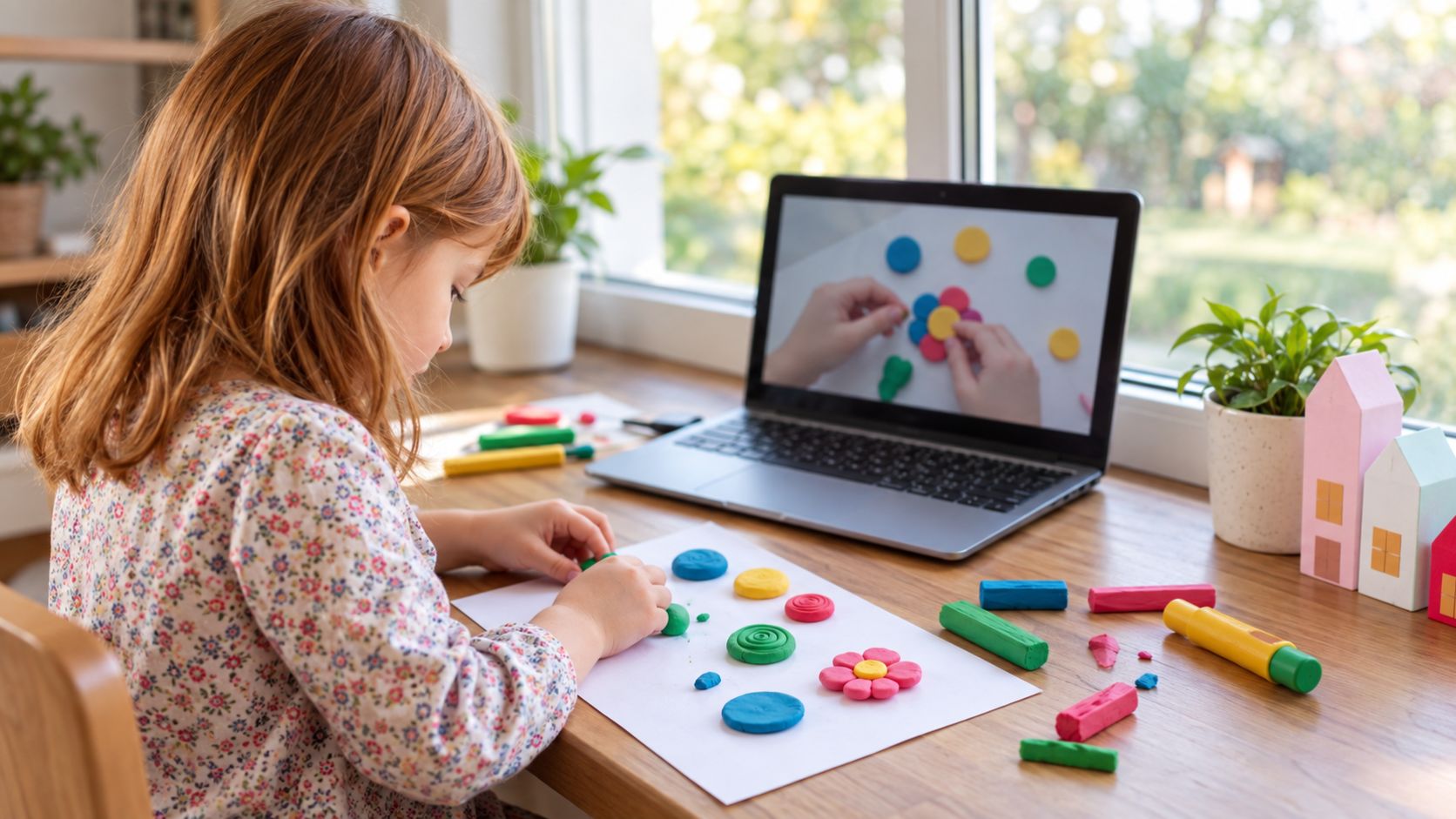
A mission gives a child a small, understandable task to complete. A theme can make it appealing, while the goal gives the activity its educational purpose.
“Find the letter B” is specific. So is “make a group of five animals.” Each asks the child to demonstrate something an adult can check.
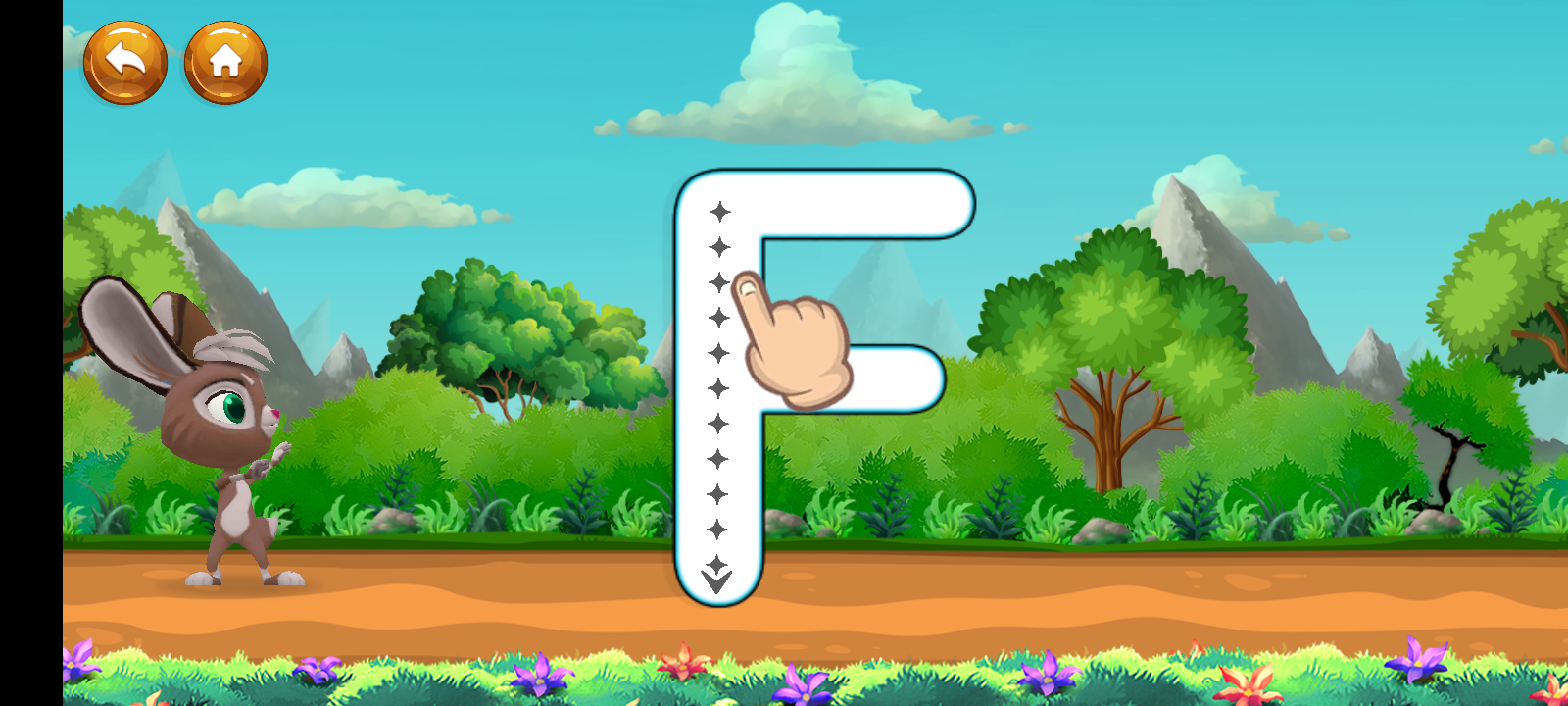
This distinction mattered when I compared our two apps. Alphabet Magic trace includes letter tracing, matching, and letter-sound activities. The 123 magic number app includes numeral recognition, tracing, and object counting. Each activity targets a particular skill.
Recognizing the symbol 5, for example, is a different achievement from counting five objects. A child may become familiar with the numeral before confidently connecting it to a quantity.
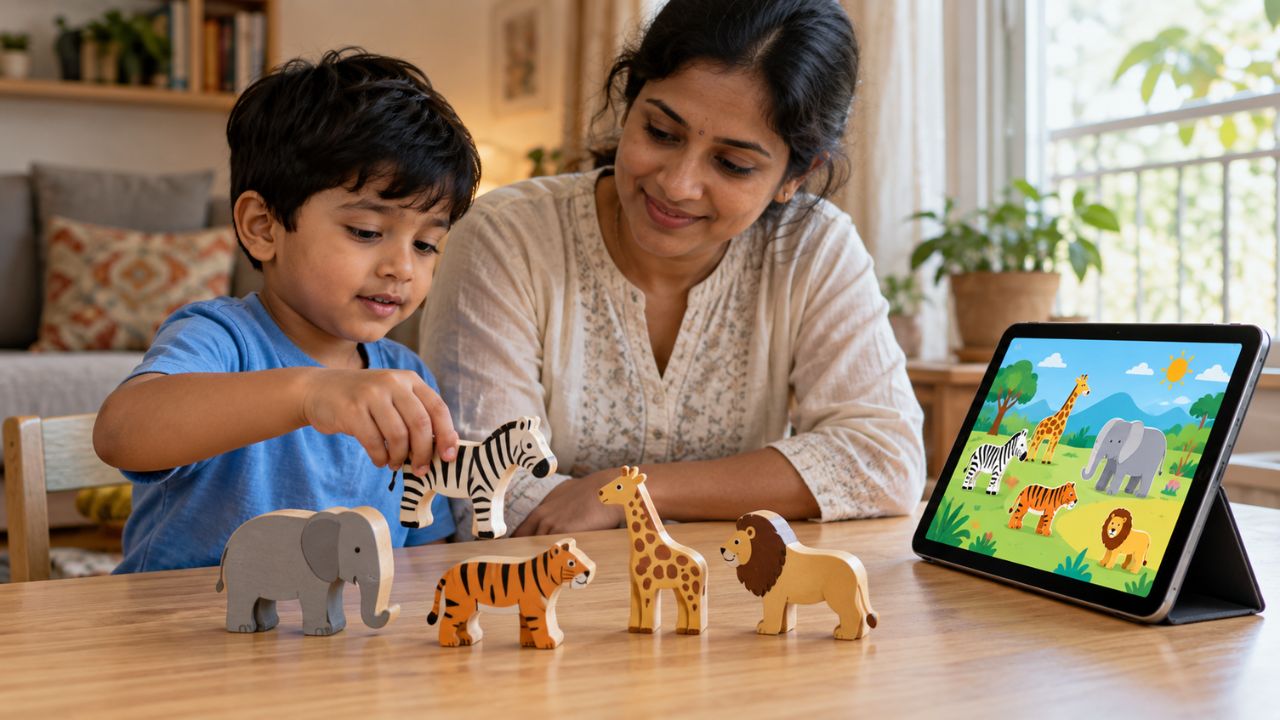
A home mission could turn that quantity task into a little rescue game: “Help five toy animals reach their house.” The child gathers the animals and checks the group. The story gives the task a purpose within the game, and counting remains central to completing it.
I find a mission easier to judge when I can name the skill it requires. That also makes it easier to decide what to practise next.
2. Levels That Introduce a Manageable Challenge
Levels can give practice a sense of direction. A useful next level changes the learning demand in a way the child can reasonably attempt.
In a letter hunt, an early level might show a target letter beside the choices. A later level could remove that reference or introduce the letter in a different font. The activity builds on something familiar while asking for a little more independence.
Research on gamified learning identifies unsuitable difficulty as a problem learners can encounter. A challenge can offer too little useful practice or demand more than the learner is ready to handle.
Across my observations of roughly 12 children aged three to four, I saw a recurring pattern: they needed help at the beginning and later handled activities more independently.
That independence was encouraging. It also made me think carefully about what had improved. Finding the right button, following a familiar sequence, and recognizing a letter are separate abilities.
Before moving to a harder task, I look for a successful response with less help or a changed example. A level number becomes meaningful when the child’s performance supports it.
3. Feedback That Makes the Next Attempt Better
Feedback is one of the clearest places to examine the learning behind a game. My incomplete-trace tests showed that the activities I checked had rules for accepting completion. To judge their educational value more fully, I also need to consider what helps the learner make a better attempt.
A correction should give usable information. For example, a tracing activity could highlight the remaining part of a path. In a counting game, an adult could help the child touch each object once while counting again. These cues connect the response to the task. They give the learner something specific to try.
Research on feedback shows that its information content matters. The most helpful response depends on the task and the mistake; a sound or animation alone tells us little about the guidance provided.
I also pay attention to whether a child can act on the correction. If the same error keeps happening, the child may need a clearer cue, a simpler example, or adult support. A success sound can celebrate an attempt. Useful feedback gives the next attempt a better chance.
4. Safe Retries and Review Missions
A retry can make a mistake feel manageable. Its learning value comes from giving the child another chance with enough support to improve.
If a child repeatedly chooses the wrong letter, another round might reduce the choices or offer a relevant hint. Repeating the same unsuccessful attempt without guidance can lead to guessing. Review missions serve a different purpose: they bring a familiar skill back after some time has passed.
Research supports spreading practice over time and asking learners to bring previously learned information to mind. A game can build those opportunities into short return visits to a skill.
For example, a child could meet a familiar letter during one activity and later recognize it on another card. Recalling a letter sound without first hearing the answer asks for a different response from copying a tracing movement.
With my nephew Fariz, I noticed growing familiarity with letters and recall after breaks. That experience made me pay attention to what he remembered when the original activity was no longer in front of him.
A useful review mission revisits the skill through another example. It gives the learner a reason to remember and gives the adult another opportunity to observe.
5. Progress Maps That Represent Actual Skills
A progress map can make a learning journey visible. Its usefulness depends on what the markers mean.
Finishing several activities shows participation. A map that also distinguishes between a skill attempted with help and a skill demonstrated independently tells a fuller story.
My nephew Fariz initially recognized uppercase letters. Over about a year and a half, I saw him become familiar with lowercase letters and letter sounds. I also saw him recognize letters in books, away from the familiar app screens. Those observations gave me concrete examples of progress to describe.
A paper learning map could record similar steps: recognizing a target letter with help, recognizing it independently, and finding it in another book. Each marker would stand for a specific observation.
The map can also make the next step clearer. If a child recognizes a letter on a familiar screen but struggles to find it elsewhere, another example may be more useful than another activity count.
I want a progress display to help a parent or teacher explain what has changed. The child’s demonstrated skill gives the marker its meaning.
6. Points and Badges With Understandable Criteria
Points and badges can acknowledge an achievement. I pay attention to what a learner must do to earn them.
A reward for returning to an activity recognizes participation. A reward for identifying familiar letters on a different set of cards recognizes a particular performance. Both can have a purpose, provided their meaning is clear.
For a home activity, a simple achievement card could name the accomplishment: “Found B in three different places.” The adult can then explain what the child did successfully. The reward marks that moment. A later attempt helps reveal whether the skill remains familiar.
Research has found cases where points, levels, and leaderboards increased task activity without increasing intrinsic motivation, the desire to do an activity for its own sake. More activity, stronger motivation, and better learning need to be considered separately.
For young children, I would keep achievements simple and easy to understand. The reward should help them notice their progress, while the activity continues to provide worthwhile practice. A badge becomes more informative when someone can explain the skill behind it.
7. Meaningful Choices Between Learning Missions
Choice gives children some say in how they approach practice. Within a game, that could mean choosing between two missions that work toward the same learning goal.
For letter recognition, the options might be a letter hunt in a book or a matching-card challenge. For counting, the child could choose whether to gather toy animals or building blocks. The materials and setting change. The learning target stays clear.
Research on gamification has found positive average effects on learners’ sense of autonomy. That gives me a reason to consider choice carefully, while still checking what the chosen activity helps the child practise.
Two suitable options can be easier to manage than a large menu. Each should be understandable, achievable, and relevant to the target skill.
Choice also gives an adult a way to notice preferences. A favourite activity can be a comfortable starting point, followed by another example that asks the child to use the same skill differently.
For me, a meaningful choice lets the child influence the experience while keeping the practice useful.
A cooperative challenge turns practice into a shared mission. The task needs room for each participant to think and contribute.
A counting mission could ask two children to prepare small groups of toy animals. One makes a group; the other checks it. They switch roles in the next round.
An adult can take one role with a younger child. The shared goal gives them a reason to talk about the task, check an answer, and try again together.
Research on gamification in collaborative learning reports positive average outcomes across educational settings. The details still matter, including the task, the learners, and how participation is organized.
The children I observed often needed adult help at the beginning. Those early sessions made me attentive to who was actually completing the activity and how much support was needed.
In a cooperative mission, I look for a contribution from each learner. If one person supplies every answer, the finished task gives little information about the other person’s understanding.
Switching roles helps create opportunities for both. A short individual attempt afterward can provide another useful check.
What I Look for After the Game Ends
My clearest observations beyond the apps involved letters. Fariz’s recognition of letters in books was especially useful because it showed the skill appearing in another setting.
For number learning, I would want a similarly concrete observation before making a strong claim about progress away from the screen.
These simple follow-ups can help parents and teachers look beyond a familiar activity:
| Skill practised | A follow-up to try | What to observe |
| Letter recognition | Show the letter in a different book, font, or position. | Whether the child recognizes it without the familiar screen or location. |
| Letter sounds | Ask for a familiar sound without first playing the answer. | How much prompting the child needs. |
| Letter formation | Offer paper and a suitable writing tool when appropriate. | How the child approaches forming the shape in this different task. |
| Numeral recognition | Show the numeral on another card or page. | Whether recognition carries across presentations. |
| Counting and quantity | Ask the child to make a small group of toys and say how many there are. | How they count the objects and connect the count to the group. |
| Remembering | Return to a familiar skill after a break. | What the child remembers and what needs another explanation. |
My testing and child observations were informal, without standardized assessments. The children also learned through books, toys, preschool activities, and adult guidance, so I cannot attribute all their progress to an app.
What I can describe is the practice I saw and the skills that appeared elsewhere. That is the standard I bring to gamification elements: they should create useful opportunities to practise, understand, and remember.
I want the game to lead somewhere: to a letter recognized in another book, a skill remembered later, or a new task the child can attempt with less help.
Frequently Asked Questions About Gamification Elements
1. Does gamification actually improve learning?
It can. Research reviews have found positive average learning effects, but the design matters. Look at what the child practises, what help is available after a mistake, and whether they can use the skill again. A fun activity gives you a good starting point for those checks.
2. What is the difference between gamification and game-based learning?
Gamification adds game features to an activity. A progress map for letter practice is one example. Game-based learning uses a game to practise the skill, such as a letter-matching game. An educational app can combine both approaches.
3. Are points and badges good for children’s motivation?
They can help make achievements visible, but their effects vary. Look for a reward the child can understand and an activity worth doing. “You found that letter in another book” tells the child something specific about their success. Keep observing the skill after the reward has been earned.
4. How can I tell whether my child understands or is guessing?
Try a different example without giving the answer first. Move the choices, show the letter in another book, or count a different group of toys. Give the child time and notice how much help they need. Difficulty with a changed example can show you where further practice would help.
5. Can I use gamification without an app?
Yes. A paper treasure map, a letter-hunt mission, or a shared counting challenge can add game features to learning. Start with one clear skill and a task your child understands. Let the game make practice inviting, then try another example to see what they can do.