You want PR that gets results, but you do not know which tactics cost time or cash. Digital PR Campaign Types range from quick wins to long projects, and that mix can feel messy. One simple fact: some tactics win fast coverage, while others build steady SEO value.
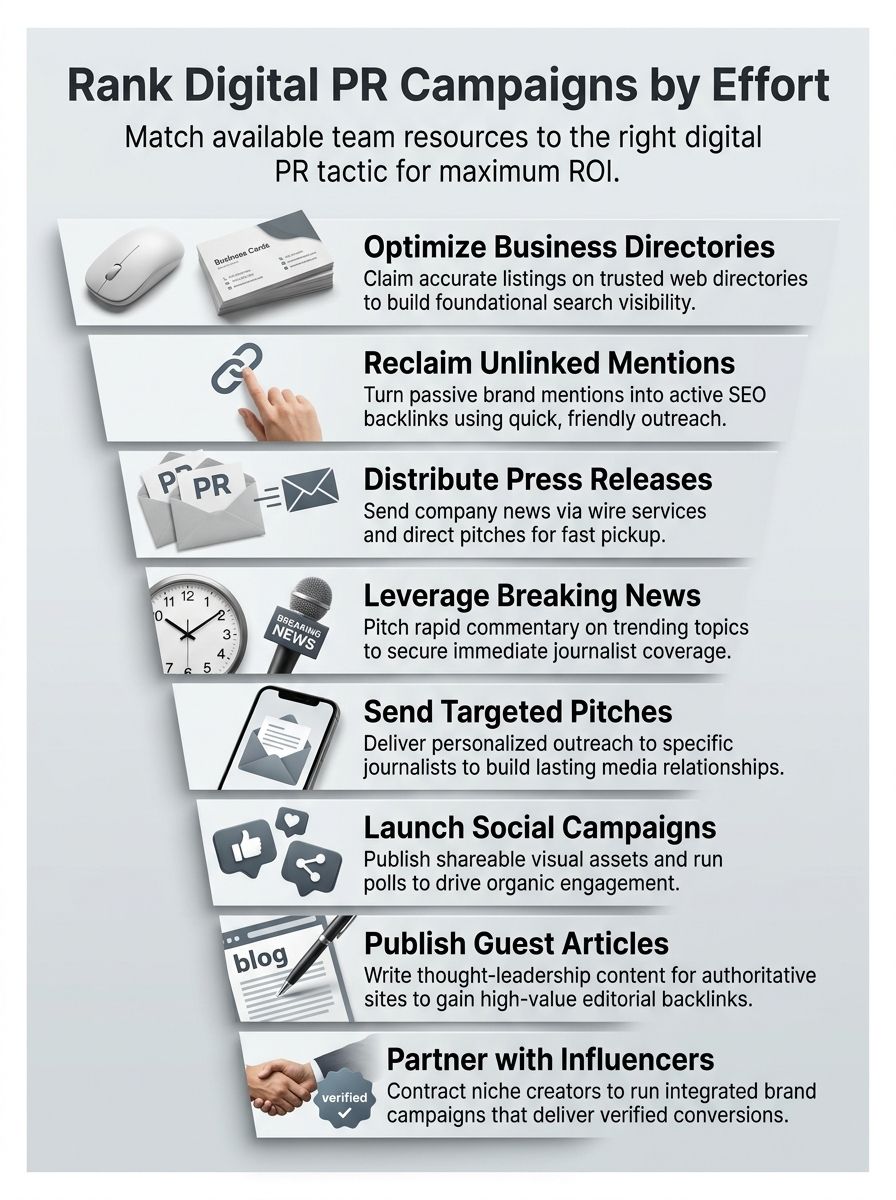
This post ranks eight Digital PR Campaign Types by effort, so you can pick wisely. You will get clear steps, time needs, and expected wins, plus a few tips to save hours. Pick the best plan.
1. Press Release Types
Press releases come in many forms. Each type serves a purpose, from announcing news to sharing updates with the public.
News Announcement Strategy
Craft a tight news angle that matters to your audience. Write a clear headline, a strong lead, and a short boilerplate that states who you are. Use SEO keywords, and add facts, dates, or numbers to boost credibility.
Target specific reporters and outlets that cover your topic. Send the release at a time when editors work, and follow up with a short, polite email.
Track coverage with media monitoring and analytics, so you know which outlets pick up the story. Measure reads, shares, and backlinks to judge impact on brand authority and SEO. Use the data to refine your campaign strategy, and to improve future content distribution and audience engagement.
Press Release Distribution Method
Press releases reach people in many ways. Pick the right path for your goals, budget, and audience.
- Use a wire service, like PR Newswire or Business Wire, to send your press release wide, get pickup by major outlets, and track basic analytics.
- Pitch journalists directly, write a short, targeted email, include facts and a clear angle, and follow up once to build media relations and often gain deeper coverage.
- Send your release to niche trade outlets, focus on industry readers, boost brand authority, and help SEO with topical relevance.
- Post the release on your company newsroom page, add multimedia, let reporters find assets fast, and keep a public archive for content distribution.
- Share the release on social media, craft short hooks for each platform, invite audience engagement, and link back for traffic and tracking.
- Offer embargoed releases to trusted reporters, give them time to prepare pieces, earn thoughtful coverage, and measure pickup timing with media monitoring.
- Work with influencers to amplify your release, provide clear talking points, pay or barter for placement, track campaign ROI, and watch social sharing.
- Buy sponsored placements on targeted sites, choose audience demographics, set a budget, and expect faster visibility than unpaid routes.
- Use local press lists, call small newsrooms, highlight community impact, and drive local brand awareness and foot traffic.
2. Newsjacking Campaigns
Newsjacking campaigns grab attention by using trending topics. Timing is everything here; if you catch a wave, your brand can ride it to greater visibility.
Trend Topic Leverage
Spot trending topics with Media Monitoring tools. Move fast, pitch a clear angle, add a crisp quote or quick data point. Pitches that match reporters’ needs win coverage.
Aim for relevance, not a forced product plug. Track social shares and backlinks, watch referral traffic, and tweak the next pitch based on real results.
Timing and Topic Relevance
Timing and topic relevance are key for a successful newsjacking campaign. Grab the attention of your audience by choosing trends that matter right now. Use current events or popular topics to connect with readers. People love to talk about what is happening today, so jump in at the right moment.
Share your thoughts on these hot topics quickly. The faster you act, the better chance you have to be heard. A well-timed post can spread like wildfire across social media. This boosts brand authority and helps with SEO too.
Stay alert; know what’s trending and align your message with it for maximum impact!
3. Guest Post Campaigns
Guest Post Campaigns bring fresh ideas to your audience. Write for expert sites and build trust with their readers.
Authority Publication Writing
Writing for authority publications helps build your brand credibility. It shows you know your stuff. An article in a respected magazine or website can make a big impact. It gets your name out there and attracts more eyes to your work.
Creating content for these platforms takes effort. You need clear ideas and strong writing skills. Focus on delivering value while being engaging. This wins trust with readers and boosts awareness of your brand in the crowded digital marketing space.
Bylines and Brand Credibility
Bylines can boost brand credibility. When your name appears in a respected publication, it shows you know what you’re talking about. Readers see that byline and feel trust. They think, “This person has authority.”
With strong bylines, brands build reputation over time. People look for reliable sources to guide their decisions. A solid byline makes them more likely to choose your brand. It turns casual visitors into loyal fans and keeps interest high in the long run.
4. Unlinked Mention Campaigns
Unlinked mention campaigns help you regain lost links. They seek out mentions of your brand without a link back to your site. This is a smart way to improve your website’s authority and drive traffic.
Reach out and ask for those links; it could boost your online presence!
Link Reclamation Opportunity
Finding unlinked mentions of your brand is a big chance to get backlinks. Many websites talk about you without linking back. This can hurt your SEO and limit your online reach.
Reaching out to these sites can turn those mentions into links. Send them a friendly email asking for the link. Explain why it matters and how it helps both sides. This effort boosts your site’s authority and improves visibility in search results.
Use tools like Google Alerts to spot these mentions easily, so you don’t miss any opportunities!
Link Outreach Tactic
Link outreach is a smart way to get your brand noticed. This tactic focuses on reaching out to websites for links back to your content. Here are the key steps:
- Identify target websites that fit your niche and audience. Look for blogs or industry sites that share similar interests.
- Create valuable content that others want to link to. This can include articles, infographics, or tools that offer helpful information.
- Personalize your outreach emails. Address the recipient by name and show genuine interest in their work.
- Explain why linking to your content is beneficial for them. Highlight how it adds value to their audience or fits within their existing content.
- Follow up politely if you don’t hear back after a week or so. A gentle reminder can often lead to positive responses.
- Track your results through analytics tools. Measure the success of your outreach by checking referral traffic and new backlinks.
Taking these steps makes link outreach effective and boosts brand awareness in digital marketing efforts.
5. Influencer Marketing Campaigns
Influencer marketing can boost your brand’s reach. Partnering with the right influencer helps spread your message to a wider audience.
Niche Influencer Partnership
Niche influencers have a loyal following. They connect with specific audiences. Partnering with these influencers can boost your brand’s visibility. These influencers often share content that aligns closely with their follower’s interests.
This makes the partnership feel genuine.
Campaigns with niche influencers can show great results. Brands see higher engagement and sales from this type of marketing. It is important to measure the return on investment (ROI) for these campaigns, too.
Tracking metrics helps brands understand what works best for them in digital marketing strategies.
Campaign ROI Measurement
Measure ROI to know if influencer work pays off.
| Metric | Why it matters | How to measure | Benchmarks / Examples | Tools |
|---|---|---|---|---|
| Reach & Impressions | Shows audience size hit by a post. | Track impressions from platform stats, use UTM tags for referral views. | 100K impressions can drive hundreds of clicks, depending on niche. | Instagram Insights, YouTube Analytics, Google Analytics |
| Engagement Rate | Measures audience reaction, not just eyeballs. | Divide likes+comments+shares by reach; express as a percent. | 2% to 5% is healthy on many platforms, micro-influencers often hit higher. | Socialbakers, Hootsuite, native analytics |
| Click-Through Rate (CTR) | Shows content’s pull, where interest turns to action. | Clicks on links divided by impressions or views. | CTR varies, 1% is common for organic posts, higher for paid ads. | Bitly, Google Analytics, UTM tracking |
| Conversion Rate | Measures how many clicks become customers. | Track goal completions from campaign UTMs, calculate percent. | 5% conversion from influencer traffic is strong for many niches. | Google Analytics, Shopify reports, CRM |
| Cost Per Acquisition (CPA) | Tells you what each customer costs. | Total campaign spend divided by conversions. | $20 CPA may be fine for high-margin products, lower is better. | Excel, Google Sheets, campaign billing tools |
| Return on Ad Spend (ROAS) | Compares revenue to money spent. | Revenue from campaign divided by spend, expressed as ratio. | 3:1 ROAS often used as a baseline target. | Ad platform reports, ecommerce analytics |
| Customer Lifetime Value (LTV) | Shows long term value from acquired users. | Average revenue per user over time, use cohort data. | LTV $150 means you can afford higher CPA. | CRM, subscription platform reports, analytics |
| Brand Mentions & Sentiment | Tracks reputation and buzz quality. | Count mentions, score sentiment with simple positive/neutral/negative labels. | A spike in positive mentions after a post is a good sign. | Brandwatch, Mention, Google Alerts |
| Media Value (Earned Media Value) | Estimates ad equivalent for earned coverage. | Assign CPM value to impressions from organic posts or press hits. | $5 CPM on 50K impressions equals $250 EMV, rough math but useful. | PR software, manual CPM calculations |
| Reporting Cadence | Keeps teams aligned, and lessons flowing. | Set weekly check-ins during live campaigns, monthly for reviews. | Weekly checks catch issues fast, monthly deep-dives catch trends. | Sheets, dashboards, scheduled reports |
6. Directory Submission Campaigns
Directory submission campaigns help businesses get noticed. They list your business in online directories, which can boost visibility and credibility.
Business Listing Optimization
Listing your business in online directories is key. It helps people find you. Here are some tips for effective business listing optimization:
- Choose the right directories. Find popular ones related to your industry. Use both general and niche sites.
- Fill out all information completely. Include your business name, address, phone number, and website. Accuracy builds trust with customers.
- Use keywords in your description. Think about what potential customers might search for. This can improve your visibility online.
- Add photos and videos of your business. Visuals can attract more visitors to your listing. They also show off what makes you special.
- Encourage customer reviews. Happy customers should share their experiences online. Positive feedback boosts your reputation and ranking.
- Check and update listings regularly. Business details can change over time, so keep everything current to avoid confusion.
- Monitor directory performance using analytics tools. Tracking how often people view your listing helps measure success.
These steps can enhance visibility and build brand authority in digital marketing efforts while making it easier for audiences to engage with you.
Directory Authority Building
Directory authority building assists your business in gaining visibility online. This involves listing your company on trusted directories. These are sites like Yelp, Yellow Pages, and Google My Business.
A strong presence in these locations enhances your search engine ranking.
To succeed, ensure all listings have the same name, address, and phone number. Accurate information enhances credibility. It also simplifies the process for customers to find you. The right keywords can help too; they draw the right audience to your page.
Getting listed is a step towards improved brand awareness in digital marketing.
7. Email Marketing Campaigns
Email marketing campaigns can reach your audience directly and make a big impact. Personalization is key here; it helps build strong relationships for more media coverage down the line.
Outreach Campaign Personalization
Outreach campaign personalization makes your messages stand out. It connects you with your audience in a meaningful way.
- Know Your Audience: Understand who you are writing to. Learn their interests and needs to craft a message that resonates.
- Use Their Name: Personalize emails by using the recipient’s name. This simple touch shows that you care.
- Mention Their Work: Reference something specific they have done or shared. This shows you have done your homework and value their contributions.
- Tailor Your Message: Align your message with their goals or challenges. Speak directly to how your content can help them succeed.
- Keep It Brief: Avoid long messages; stick to clear and concise points. Busy people appreciate quick reads.
- Create Engaging Subject Lines: Catchy subject lines grab attention and encourage opening emails. Make it interesting but relevant.
- Follow Up Thoughtfully: Send reminders or additional info after the first email, but do so sparingly; avoid overwhelming them.
- Use Relevant Data: Include statistics or insights that matter to them; this adds credibility to your outreach.
Personalizing outreach campaigns boosts engagement rates and builds strong relationships over time.
Media Coverage Relationship
Media coverage builds strong ties between brands and the public. Good media relationships can lead to more trust in a brand. This helps create a positive image. It also increases brand awareness.
Press releases play an important role here. They spread news about events or changes fast. When journalists receive press releases, they can share this news with their audiences. Engaging stories will catch attention and spark interest in what your brand offers.
8. Social Media Campaigns
Social media campaigns can spark engagement and fun. They turn ideas into shareable content that people want to talk about.
Creating shareable content is key for any digital PR campaign. Engaging your audience can help spread your message far and wide. Focus on making posts that are fun, informative, or useful.
Use images, videos, or memes to grab attention quickly. Well-crafted headlines pull people in too.
Track what works best with analytics tools. Knowing which posts get shares helps you refine future strategies. Make sure to interact with your audience across platforms like Instagram, Facebook, and Twitter.
Ask questions or encourage comments to boost engagement even more!
Audience Engagement Across Platform
Audience engagement is key to any digital PR campaign. It helps build strong connections with your audience.
- Shareable content draws interest. Create graphics, videos, or articles that people want to share. This increases visibility and reach.
- Use social media platforms wisely. Each platform has its own vibe and audience. Tailor your content for each site, like Facebook, Twitter, or Instagram.
- Engage with comments and messages quickly. Responding to questions shows you care about your audience’s thoughts and feelings.
- Run polls or contests on social media. This invites participation and makes followers feel part of your brand story.
- Collaborate with influencers in your niche. Their followers trust them, so their support can boost your brand’s credibility.
- Use analytics tools regularly to track engagement metrics. Monitoring likes, shares, and comments helps you understand what resonates with your audience.
- Post consistently to keep followers engaged over time. A regular schedule maintains interest and builds anticipation for new content.
- Encourage user-generated content by asking followers to share their experiences with your brand or products; this creates a sense of community around your brand.
Final Thoughts about Digital PR Campaign Types
These eight digital PR campaigns can really help your brand stand out. We’ve looked at press releases, newsjacking, guest posts, and more. Each has its own charm and level of effort.
They’re all practical strategies that anyone can use to boost their visibility. Applying these techniques can lead to great results, like higher engagement and brand authority. So grab the tools you need and start making waves in the digital world!