
Have you ever looked at your grocery bill and thought, “There must be a better way”? Maybe you feel stuck buying wilted lettuce or sad tomatoes from the store every week. Long lines, high prices, and mystery ingredients can leave anyone frustrated.
Here is an interesting fact to consider. According to 2024 data from ReFED, households generate about 35% of all food waste in the United States. That is a huge amount of food that never makes it to a plate. Growing even a small amount of food at home can change that cycle. In this post, I will share easy steps to start growing your own groceries inside an apartment.
Curious how Food Sovereignty connects to city living? Keep reading, because fresh herbs might be closer than you think!
What is Food Sovereignty?
Food sovereignty means people have control over their food choices and how food is grown. It goes beyond just having enough to eat. It is about power, respect, and fairness in every bite.
Definition of Food Sovereignty
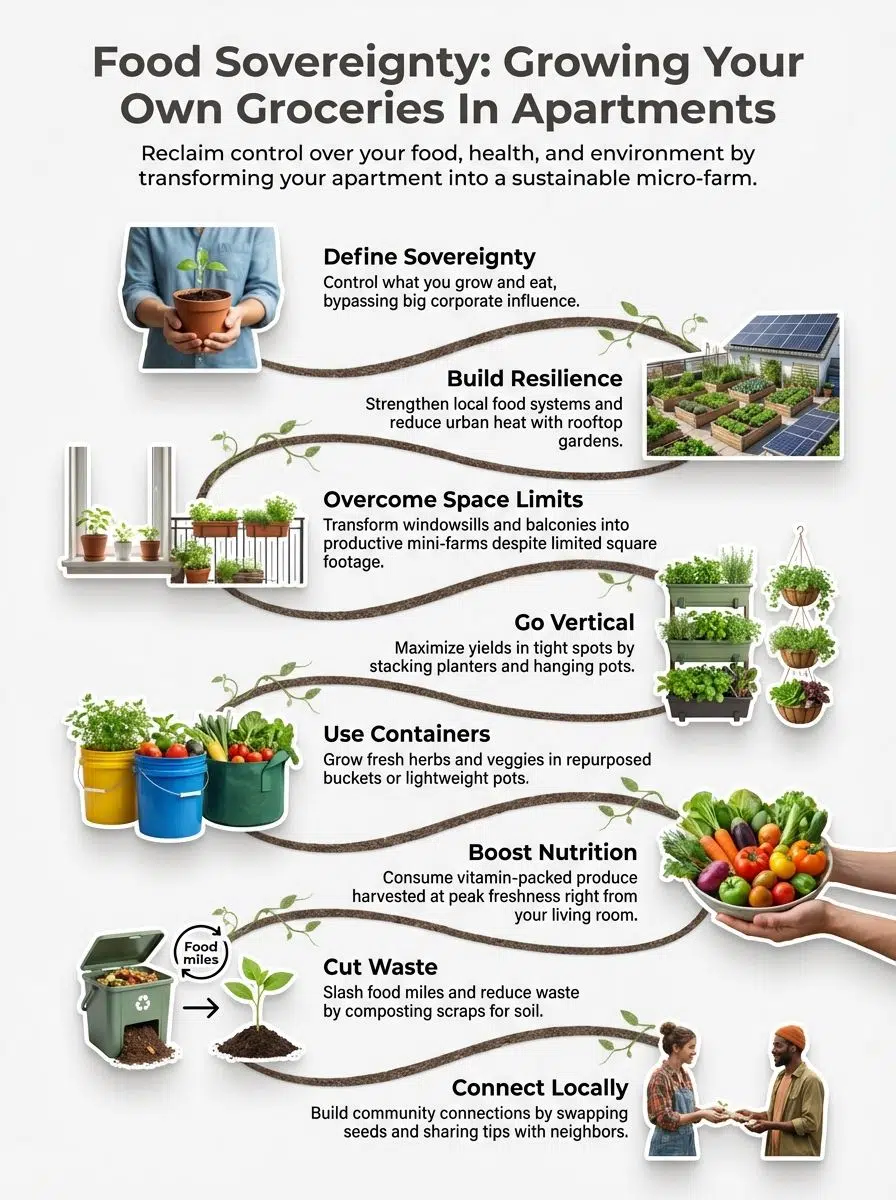
Food sovereignty means that people have control over how they grow, share, and eat food. Families pick what to plant, how to care for crops, and decide if the food stays local or gets traded. This idea puts power in the hands of growers rather than just big companies or outside markets. Small gardens help families rely less on store-bought groceries.
Growing your own food is like printing your own money. – Ron Finley
Urban gardening brings choices closer to home. It supports self-sufficiency and gives everyone a say in what ends up on their plate. Local food systems get stronger as more folks join the movement right from their apartments.
How it Differs from Food Security
Food sovereignty gives people the right to choose how food is grown and shared. Food security focuses only on having enough to eat, no matter where it comes from. One family may grow tomatoes in containers on a balcony, while another buys all their groceries at the store.
Both families have enough food, but only one controls the source. Urban gardening lets folks decide what crops work best for small spaces or balconies. With sovereignty, neighbors might swap herbs or lettuce. This builds local food systems instead of depending just on big markets or stores.
This shift offers more choice over seeds, farming methods, and even helps preserve old vegetable varieties that giant companies often ignore.
Importance of Food Sovereignty in Urban Settings
Cities teem with people, but city life makes it hard to access fresh food. Growing even a few plants at home lets you take control of your plate and your health. Recent legal wins have made this easier for many Americans.
Addressing Governance and Access Issues
Many people in big cities face long trips just to buy fresh food. Sometimes, local laws make it hard to plant even a tomato on your balcony. Renters may also struggle because landlords say no to gardening or hanging pots outside the window.
However, the tide is turning. States like Florida and Illinois have passed “Right to Garden” laws, such as Florida’s Senate Bill 82 and the Illinois Vegetable Garden Protection Act. These laws prevent local governments from banning vegetable gardens on residential properties.
Community gardening groups and urban agriculture rules help fix some of these problems. City rules about rooftop gardens and crop sharing can make homegrown produce easier for families to get.
Urban gardening programs push for more equal access so people do not have to depend on expensive stores far away from their homes. Small changes in city planning mean families can use containers or microfarms right in apartments.
Building Resilient Local Food Systems
Tackling governance and access is just the start. Building resilient local food systems is key to real change. Urban agriculture brings fresh produce closer to home, even in high-rise apartments.
- Rooftop gardens can soak up rainwater and reduce heat islands.
- Microfarms on balconies add green space and food simultaneously.
- Crop exchanges help neighbors trust each other and share knowledge.
- Seed libraries, like the one at the Madison Public Library, allow residents to “borrow” seeds for free.
Container gardening gives city folks a way to control what grows on their plates. Vertical farms use less land but give more veggies per square foot than old-school farming. Community gardening programs teach sustainable farming skills that boost self-sufficiency for people of all ages.
“Planting one small pot today can grow into tomorrow’s meals, says urban gardener Lily Tran.”
Challenges of Growing Food in Apartments
Growing veggies in small spaces tests your patience and creativity. Many folks feel lost, staring at empty pots, unsure where to begin or what will actually grow.
Limited Space and Resources
Apartments squeeze you for space. Windowsills, balconies, and corners have to act like mini farms. Many people lack yards or big pots but still want homegrown produce on their plates.
Water and sunlight may be scarce. Forgetting to check both can leave your lettuce limp or tomatoes stunted. Even finding the right soil means lugging bags up stairs or relying on store-bought mixes.
Lighting is often the biggest hurdle indoors. Lettuce, for example, needs a specific light intensity (PPFD) of 200-400 µmol/m²/s to thrive. You can measure this using free apps like “Photone” on your smartphone to ensure your spot is bright enough.
Money matters here, too. Building a microfarm indoors does cost some cash upfront. Container gardening makes it possible, yet one must pick compact crops such as herbs, lettuce, peppers, or cherry tomatoes instead of pumpkins or corn.
Lack of Traditional Gardening Knowledge
Many people in cities have never learned how to care for plants. Family gardens and farm skills often get lost as families move into apartments or busy urban lives. Without this old-fashioned know-how, words like “soil” and “compost” can sound confusing.
New growers feel unsure about watering, sunlight, or what kind of soil helps lettuce or tomatoes thrive indoors. Simple tasks may seem tricky without a neighbor’s advice or a grandparent around to help.
One common mistake new gardeners make is overwatering. To avoid this, try “bottom watering.” Place your pot in a bowl of water for 15 minutes and let the soil drink what it needs from the drainage holes. This keeps the roots healthy and prevents fungus gnats.
Urban agriculture classes, videos online, and community gardening groups make it easier to learn these basic skills today. With the right info at your fingertips, growing food on a balcony or kitchen shelf is just one small step away.
Strategies for Growing Your Own Groceries in Apartments
You can grow food, even with little space, if you get a bit clever and creative. Try different setups to see what works best in your apartment.
Vertical Gardening
Stack planters or use hanging pots to grow more in less space. Build shelves by a sunny window, and watch your herbs reach for the sky. Lettuce, spinach, mint, and strawberries love climbing up instead of spreading out.
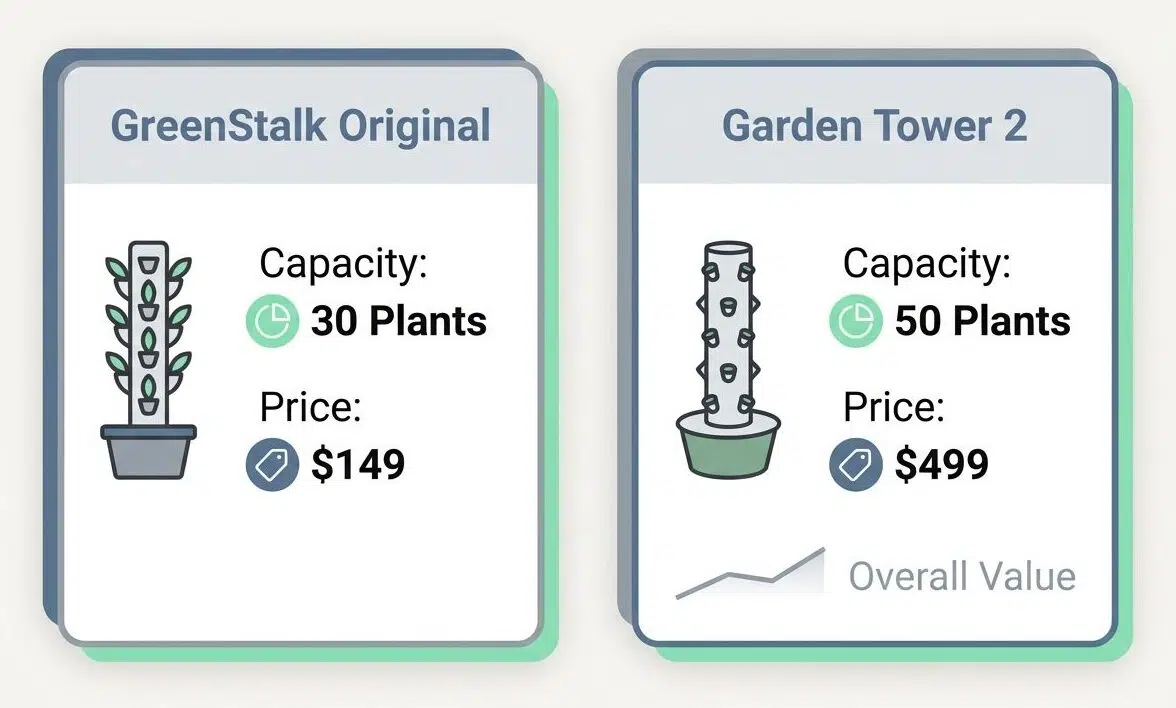
There are great tools available to help you maximize vertical space. Here is a quick comparison of two popular systems for apartment growers:
| Feature | GreenStalk Original (5-Tier) | Garden Tower 2 |
|---|---|---|
| Best For | Budget-conscious beginners | Integrated composting |
| Capacity | 30 Plants | 50 Plants |
| Approx. Price | $149 | $379 – $499 |
| Key Feature | Simple stackable design | Central worm compost tube |
Walls become food gardens with fabric pockets or old shoe organizers filled with soil. Some folks try hydroponics on shelves. This means growing plants without dirt by using just water and nutrients.
Container Gardening
Place herbs, lettuce, or tomatoes in pots on your windowsill or balcony. Even a five-gallon bucket works for growing potatoes and peppers inside an apartment. Use lightweight soil mixes so roots get air, and make holes at the bottom of each pot for drainage.
Choosing the right soil is critical. Experienced container gardeners often recommend mixes like FoxFarm Happy Frog for its nutrient balance. If you are on a budget, you can make your own mix using 1 part peat moss (or coco coir), 1 part perlite, and 1 part compost.
Water more often than with outdoor gardens because containers dry out fast under the sun. Repurpose yogurt cups or milk jugs as microfarms to grow salad greens year-round. City dwellers in New York grew spinach on shelves by using recycled bins in 2021, showing how space does not limit fresh food dreams.
Utilizing Balcony or Rooftop Spaces
Balconies and rooftops offer strong spots for urban gardening in apartments. Small pots, raised beds, or hanging baskets can fill these areas with homegrown produce like cherry tomatoes, lettuce, herbs, or even strawberries.
Rooftop gardens cool buildings and reduce energy bills by as much as 20%. People often start microfarms on city roofs using recycled containers. These setups boost food sovereignty and help cut down trips to the grocery store.
Watering cans and compost buckets fit well on most balconies. Many city dwellers share rooftop plots to form community gardens. Sharing a space supports crop exchange and adds fresh nutrition to diets, too.
Even kids join in planting seeds after school, learning about self-sufficiency along the way. In crowded cities such as New York or Chicago, residents grow food high above street level while enjoying birdsong instead of car horns.
Benefits of Apartment Gardening for Food Sovereignty
You will pull tomatoes off the vine, still warm from the sun, right in your kitchen. Growing food where you live puts some power back in your hands.
Access to Fresh, Healthy Produce
Fresh veggies, right from your windowsill garden, taste so much better than grocery store ones. Growing food in apartments helps fill your plate with spinach, tomatoes, basil, and peppers picked at their peak.
City-grown produce often packs more vitamins because it goes straight from plant to plate. Did you know that store-bought produce travels an average of 1,500 miles to get to you? During that trip, it can lose up to 45% of its nutritional value.
People with homegrown gardens eat healthier meals, too. Studies show kids living near gardens eat 26% more vegetables than others. Small spaces can grow big rewards; even a few pots of lettuce or radishes make a daily salad possible.
Reducing Dependence on Corporate Food Systems
After you pick a tomato off your balcony, it feels different from grabbing one at the store. Homegrown produce cuts the chain that big food companies control. Each plant in your living room or on your rooftop means fewer trips to supermarkets and less money spent on packaged goods.
Apartment gardening supports local food systems and boosts self-sufficiency, too. According to data from Garden Pals, growing your own food can save you approximately $600 annually.
By growing your own spinach or peppers, you help create safer and fairer urban agriculture for everyone. Now, every bean sprout becomes a step toward food equity and true independence.
Promoting Sustainable and Ecological Practices
Growing food at home saves water and lowers waste. Using old jars or buckets for plant pots keeps trash out of landfills. Composting kitchen scraps turns peels and leftovers into rich soil for balcony gardens. Vertical gardening helps fit more plants in less space, using up walls instead of floors.
Choosing crops like herbs, spinach, or tomatoes supports urban agriculture. These plants grow well in containers and give fresh produce year-round. Picking these easy-to-grow foods means fewer trips to the store, cutting pollution from travel and packaging.
Community Initiatives Supporting Apartment Gardening
You can join local groups or workshops to swap seeds, share tips, and grow veggies with your neighbors. Keep reading to find out how easy it is to get involved!
Urban Gardening Programs
Urban gardening programs make growing food in cities much easier. Many offer classes on container gardening, composting, and vertical farming.
- NYC Parks GreenThumb: This program has helped over 600 community gardens bloom across New York City since 1978.
- LA Community Garden Council: This group manages community gardens across more than 40 neighborhoods in Los Angeles.
- Peterson Garden Project: Based in Chicago, this initiative teaches people how to grow food in city spaces.
These programs often give out free seeds or help people start small microfarms right on balconies or rooftops. Local workshops show how to plant tomatoes in buckets or lettuce in old milk cartons.
Seed Sharing and Local Workshops
Neighbors swap tomato seeds like trading baseball cards. Seed sharing helps save money and brings new crops into small apartment gardens. Many local workshops teach easy tips, from starting seedlings on a windowsill to swapping herbs with others in your building.
You meet friends, learn hands-on tricks for container gardening, and get inspired at these events. Workshops often focus on practical skills. People leave knowing how to make simple compost or care for indoor microfarms. Little by little, these activities spark more interest in sustainable farming and food equity.
Final Thought
Growing your own groceries in an apartment is simple, smart, and life-changing. You can use containers, balconies, or even shelves to grow fresh food right where you live. Imagine snipping basil for dinner or sharing tomatoes with a friend across the hall. It is a true joy.
Do you feel ready to start your urban garden today? Small steps bring big rewards. Grab some seeds and let your windowsill become a tiny farm that feeds both body and soul.