

Are your electric bills going up each month and stressing your wallet? Installing solar panels can cut 20 to 100 percent of those costs. This guide will list ten hidden perks like federal tax credits, rebates, net metering gains and show you how a solar calculator can guide you toward renewable energy and energy independence.
Ready to save?
Key Takeaways
- Solar cuts your electric bills by 20% to 100%. The average U.S. home spends $154 per month and can save about $37,000 in 25 years, with high-rate states seeing up to $120,000.
- The IRS offers a 30% Investment Tax Credit on solar installations through December 31, 2025, saving homeowners about $9,000 on a typical array. State and utility rebates lower costs further.
- A 2019 Zillow analysis shows homes with solar panels sell for 4.1% above market price. Buyers pay more for energy independence, lower bills, and green upgrades.
- Net metering credits let you export extra solar power at retail rates. You can earn $0.10–$0.30 per kWh or sell Solar Renewable Energy Certificates (SRECs) to utilities.
- Solar systems pay back in 7–10 years and last 25–30 years. With falling panel costs and rising power rates, you can see up to a 500% return on investment.
How Can Solar Panels Lower My Monthly Utility Bills?
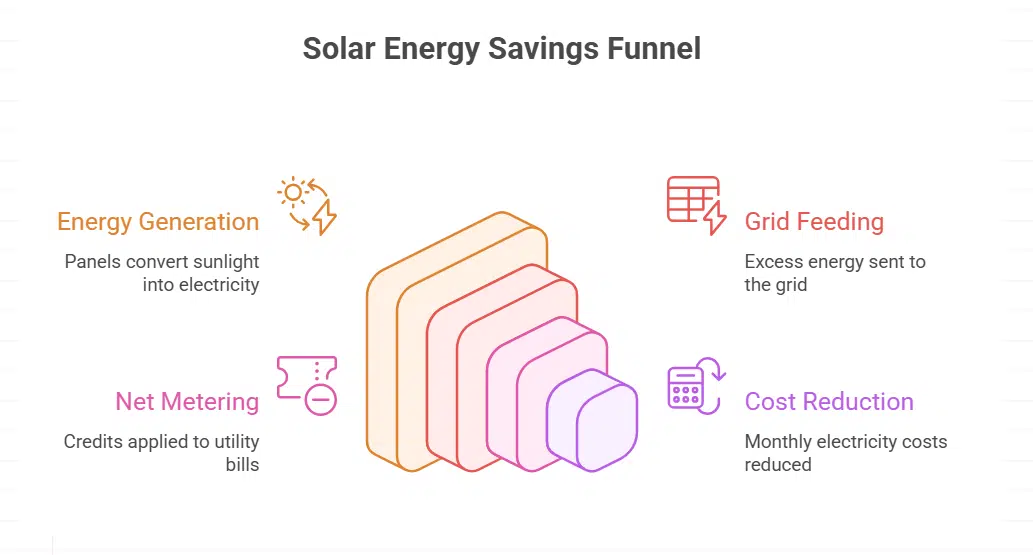
Homeowners slash utility bills by 20% to 100% with solar panels. Photovoltaic modules feed clean renewable energy into the grid. Net metering credits extra output. These credits shave off monthly electric costs.
Average U.S. homes spend $154 on power each month. Panels can wipe that cost out or cut it in half. Mobile apps track energy flows like a personal budget coach.
Generating solar energy locks in rates and shields families from rising electricity prices. A power inverter converts sunlight into usable AC power. Folks stash surplus watts in a photovoltaic battery pack.
U.S. homeowners save about $37,000 in 25 years on average. High-efficiency systems deliver up to $90,000 in savings. States with steep power rates see up to $120,000 over a system’s life.
Why Do Solar Panels Protect Me Against Rising Energy Prices?
Electric bills jumped 32 percent over ten years, rising by 2.8 percent each year. Installing solar panels grants energy independence from utility hikes, which often fuel cost swings.
A $100 monthly charge could swell to $13,624 in ten years, $31,564 in twenty, or $55,187 over thirty if you stick to the grid. Solar power cuts that risk and shields you against volatile fuel markets.
Fossil fuel prices keep climbing, while solar gear costs fall with every new model. Panels and a solar battery lock in low rates, even when grids fail under storms or outages. Tools like a solar calculator and net metering give extra credits, making that renewable energy switch pay you back sooner.
What Tax Credits and Rebates Can I Get for Installing Solar Panels?
Solar buyers claim the Investment Tax Credit. It covers 30% of installation costs. The IRS offers that benefit until December 31, 2025. Most homeowners save about $9,000 on a typical solar array.
State and utility rebate programs further slash upfront bills. Systems feed the power grid and boost energy independence.
Certificates for solar renewable energy earn extra cash. Owners sell SRECs to utility companies. A solar calculator shows income potential from these credits. Officials warn the federal credit ends January 1, 2026.
Upfront costs may climb after that date. Act now to lock in savings and escape fossil fuel bills.
How Do Solar Panels Increase Property Value?
Homebuyers often pay more for houses with clean energy systems. A 2019 Zillow analysis found that residences with PV modules sell for 4.1% above market price. Realtors report faster sales and higher appraisals when PV modules are owned outright.
Investing in renewable energy boosts property value most after customers pay off the system. Buyers prize energy independence, lower utility bills, and a smaller carbon footprint. Some markets even offer property tax exemptions on green upgrades.
Installing PV modules counts as an upgrade that appeals to eco-minded buyers.
What Are the Long-Term Energy Savings from Solar Panels?
A typical solar panel system lasts 25 years or more. It cuts energy expenses by over $52,341 on average in the U.S. Homeowners can save from $34,000 to $120,000 over its lifetime, based on local electricity costs.
A solar calculator helps estimate these long-term savings. Investors in California may see $124,104, while Massachusetts residents can claim $98,937.
The average 12 kW setup costs $29,649, but tax incentives reduce it to $20,754. Systems in Arizona, Florida and Texas cost $19,123, $21,544 and $20,316 respectively. They boost energy efficiency while cutting carbon emissions.
Net metering programs pay for extra clean energy sent to the grid. Battery storage options add more energy independence. These moves can yield a 500 percent return on solar investment in 20 years.
How Do Solar Panels Reduce Dependence on Fossil Fuels?
Solar panels tap sunlight and cut coal, oil, and natural gas use. This shift lowers carbon footprint and pollution. A power converter sends clean energy to your house. Solar prices slid 70 percent since 2010 while fossil fuel rates climbed.
Zero emissions renewable energy keeps air and water clean. Energy independence grows as you dodge volatile markets. An energy bank stores extra power for gloomy days. Solar tech fuels sustainable living and trims environmental impact.
What Are Net Metering Programs and Am I Eligible?
Net metering rewards a solar panel installation that sends extra power to the grid. Utility companies track the kilowatt hours you export then credit your bill. A homeowner can sell surplus renewable energy at the retail rate.
This method cuts your monthly utility bills and shrinks your carbon footprint. A solar calculator can estimate your annual credit based on local energy prices.
Different states set program limits, often around 5 megawatts. Not all utilities allow net metering, so check with your provider or installer. A power purchase agreement often lists eligibility details.
These credits can boost your solar investment return over time.
Why Are Maintenance Costs Minimal for Solar Panels?
Homeowners pay little for solar panel maintenance each year. Systems hold few moving parts, so they break down less often. Regular cleaning costs under fifty dollars, and debris removal takes minutes.
Professional checks may cost up to two hundred dollars, but they happen once a year. Inverters might need swapping once in a 25-year lifespan. Manufacturers back panels with warranties that last 25 years.
Installation costs can top $15,000, yet the upkeep stays low. Visual inspections, monitoring tools, and simple wipes keep output high.
Solar energy systems tap a renewable energy source that cuts carbon footprint and boosts energy independence. The system uses clean energy from the sun, with panels that need little oil or grease.
Battery storage may add some checks, but panels keep humming like clockwork. They cut reliance on fossil fuels too. Electric vehicles and homes enjoy stable power from solar technology.
Solar calculator apps track performance, so you see energy savings each day. Low upkeep becomes one of the financial benefits of solar.
How Does the Return on Investment Improve Over Time?

Solar panels repay your upfront cost within 7 to 10 years, then start to boost your savings. Equipment expenses drop as panel prices fall, while power prices climb each year. Government tax incentives and rebates speed that timeline if you claim them before 2026.
Net metering programs send extra solar energy back to the grid, cutting energy expenses even faster. A 25 to 30 year lifespan ensures rising returns on your solar investment long after break-even.
An average solar homeowner scores about thirty-seven thousand dollars back over 25 years, and those with high-output modules can get up to ninety thousand. Solar energy systems deliver clean energy and shrink your carbon footprint over time.
Tools like a solar calculator help you chart those long-term savings. Battery storage and grid connection add flexibility during power outages and push you toward a sustainable future.
This plan highlights clear financial benefits of solar for decades.
Can I Earn Income by Selling Excess Solar Energy?
Homeowners can tap net metering programs to send extra solar energy back to the grid, earning credits or payments. Some states, like California and Massachusetts, offer rebate schemes and Solar Renewable Energy Certificates that pay per kilowatt-hour.
A typical setup might cover most of your utility bills and even yield a small monthly check, boosting cash flow. High electricity rates in certain regions can turn your solar array into a mini power plant, lowering energy expenses and slashing your carbon footprint.
Energy certificates act like yard sale tickets for your surplus clean solar power, making each extra kilowatt worth cash. Utility policies vary, so check your local net metering program or use a solar calculator to estimate earnings.
You might see a rebate of $0.10 to $0.30 per kWh, or earn SRECs that trade on energy markets. This extra income can speed up your solar investment payback and boost long-term savings, highlighting the financial benefits of solar.
Takeaways
The cash you save, the lower bills you enjoy, and the clean energy you harness add up fast. You gain more home equity and win tax credits with net metering and state rebates. A sun meter tool can show exactly how panels cut your carbon footprint.
Storage units keep lights on during outages, so you skip costly downtime. This journey pays off in a few years, then you watch savings grow for decades.
FAQs on Financial Benefits Of Installing Solar Panels
1. What tax incentives and government incentives can I get with solar panel installation?
You can earn tax credits, tap state rebates, and claim federal incentives, they cut your upfront cost. Use a solar calculator to see real numbers. Net metering programs often pay you back for extra solar energy. Battery storage may win extra tax breaks too.
2. How do solar panels boost property value and reduce utility bills?
Homes with solar energy systems often sell for more, they go off market faster, they beat similar homes without solar. Studies say values rise around 5%. You cut your utility bills, you slash energy expenses for decades. You pay less for electricity, you shrink your cost of electricity, you hug your wallet.
3. Will solar panels guard me from rising energy prices and power outages?
Yes, you lock in stable rates, you dodge hikes from non-renewable energy costs. You gain real energy independence. With battery storage, you keep lights on in a blackout, you ride out the storm. It feels like carrying a little power plant on your roof.
Sure, you may need to fix your roof first to handle solar panel installation. Permit fees or higher home insurance can pop up. Solar panel warranties last 20 to 25 years, you must read the fine print. Financing can mean a personal loan, a line of credit, or helocs, you count interest rates and principal, you pay over time.
5. How do solar panels help the environment and make cleaner air?
Solar power cuts your carbon footprint, it fights pollution from fossil fuels. You swap to emissions-free energy, you back a sustainable future. You breathe easier with cleaner air, you protect kids, pets, and plants.
6. Do solar panels boost local job creation?
Yes, each solar panel installation hires local roofers, electricians, and system analysts. The solar industry drives alternative energy careers, it adds work in battery storage and system upkeep. It pumps money into local economies, it fuels renewable energy growth.





















