

Australia’s food culture is undergoing a significant transformation, driven by the growing farm-to-table movement in Australia.
This concept, which emphasizes sourcing fresh, local ingredients directly from producers to consumers, is reshaping how Australians grow, prepare, and enjoy their meals.
As this movement gains momentum, it is fostering sustainability, boosting regional economies, and elevating the nation’s culinary experiences.
In this article, we’ll explore how the farm-to-table movement in Australia is influencing local food systems, uncover its benefits and challenges, and look ahead at its future.
Understanding the Farm-to-Table Movement Australia
What is Farm-to-Table?
The farm-to-table movement in Australia is a food philosophy that prioritizes sourcing ingredients directly from local farms rather than through industrial supply chains.
This approach emphasizes:
- Freshness: Ingredients are consumed closer to harvest, preserving their flavor and nutritional value.
- Transparency: Consumers know where their food comes from and how it’s produced.
- Community Support: Local farmers and small-scale producers are supported, fostering economic growth.
| Aspect | Farm-to-Table Features |
| Freshness | Consumed shortly after harvest, maximizing taste |
| Transparency | Clear knowledge of sourcing |
| Community Support | Directly benefits local farmers and producers |
The Origins of the Movement
The farm-to-table movement in Australia traces its roots to the organic and locavore movements of the 1970s in the United States.
These trends emphasized health, sustainability, and reducing environmental impact. Over the years, global interest in sustainable food practices brought the farm-to-table movement to Australia, where it now flourishes thanks to the country’s rich agricultural heritage and innovative culinary scene.
Why the Farm-to-Table Movement in Australia is Growing
Several factors have propelled the popularity of this movement in Australia:
- Sustainability Awareness: Australians are increasingly conscious of their environmental impact.
- Health Focus: Fresh, unprocessed foods are linked to better health outcomes.
- Support for Local Farmers: Many consumers are choosing to invest in their communities by buying locally.
- Unique Australian Ingredients: Native produce like finger limes, Kakadu plums, and wattleseed are gaining popularity through farm-to-table practices.
| Reason | Explanation |
| Sustainability Awareness | Focus on reducing food miles and environmental footprint |
| Health Focus | Preference for nutrient-rich, minimally processed foods |
| Support for Local Farmers | Encourages economic growth in local agricultural sectors |
| Unique Ingredients | Promotes the use of native Australian produce |
Key Impacts of the Farm-to-Table Movement Australia
1. Transforming Local Food Systems
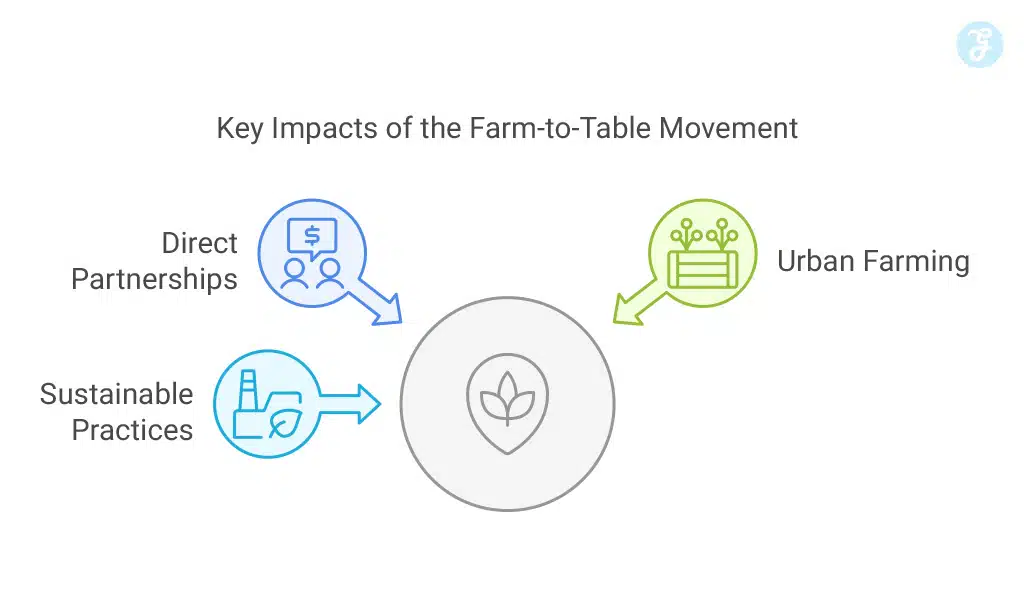
The farm-to-table movement in Australia has shifted the food supply chain by:
- Encouraging small-scale farmers to adopt sustainable practices.
- Establishing direct partnerships between producers and restaurants, bypassing middlemen.
- Inspiring urban farming initiatives to bring food production closer to city centers.
Actionable Tips:
- For Restaurants: Build direct relationships with local farmers to reduce costs and ensure quality.
- For Urban Communities: Start community gardens or rooftop farming projects to promote fresh produce.
Examples:
- In Sydney, rooftop gardens like the Green Square initiative are producing fresh vegetables for local communities.
- Farmers’ cooperatives in regions like Victoria facilitate direct sales to restaurants and consumers.
| Impact | Details |
| Direct Partnerships | Reduces reliance on industrial supply chains |
| Urban Farming | Utilizes city spaces for fresh produce |
| Sustainable Practices | Encourages eco-friendly farming techniques |
2. Boosting Regional Economies
By focusing on local sourcing, the farm-to-table movement in Australia provides significant economic benefits:
- Job Creation: Farmers, chefs, and distributors benefit from increased demand.
- Agritourism: Destinations like Tasmania’s Bruny Island offer farm tours, showcasing the origin of ingredients used in their acclaimed restaurants.
- Market Growth: Local farmers’ markets have grown in popularity, connecting consumers directly with producers.
Actionable Tips:
- For Farmers: Collaborate with tourism boards to develop agritourism experiences.
- For Consumers: Support local markets and participate in farm tours to boost regional economies.
Case Study:
Bruny Island in Tasmania has seen a surge in agritourism, with visitors touring local farms, sampling fresh produce, and dining in farm-to-table restaurants.
This model has significantly boosted the local economy.
| Economic Benefit | Examples |
| Job Creation | Employment for chefs, farmers, and food artisans |
| Agritourism Growth | Farm tours in Tasmania, Victoria, and Queensland |
| Increased Market Access | Farmers’ markets flourishing in urban and rural areas |
3. Promoting Sustainability and Environmental Responsibility
The farm-to-table movement in Australia significantly reduces the environmental impact of food production.
Key benefits include:
- Lower Carbon Footprint: Fewer food miles are involved as ingredients are sourced locally.
- Biodiversity Support: Many participating farms use sustainable farming practices, preserving native ecosystems.
- Waste Reduction: Restaurants aligned with the movement often adopt zero-waste policies.
Actionable Tips:
- For Farmers: Adopt sustainable farming methods to preserve biodiversity.
- For Consumers: Reduce food waste by buying only what’s needed and composting scraps.
| Sustainability Aspect | Details |
| Lower Carbon Footprint | Locally sourced ingredients reduce transportation needs |
| Biodiversity Preservation | Sustainable practices protect local ecosystems |
| Waste Reduction | Emphasis on composting and minimal waste |
4. Elevating Culinary Experiences
Australia’s vibrant culinary scene has embraced the farm-to-table movement Australia:
- Showcasing Native Ingredients: Chefs are incorporating indigenous ingredients like bush tomatoes and kangaroo into innovative dishes.
- Seasonal Menus: Restaurants frequently change their offerings to align with seasonal harvests.
Actionable Tips:
- For Chefs: Experiment with native ingredients to craft unique, locally inspired dishes.
- For Diners: Choose restaurants with seasonal menus to experience the best of local produce.
Notable Examples:
- Attica in Melbourne offers a seasonal tasting menu that celebrates locally sourced produce.
- Brae, located in Victoria, features an on-site organic garden that supplies its kitchen.
| Restaurant | Specialty | Sourcing Practice |
| Attica | Seasonal Tasting Menu | Partnerships with local farmers |
| Brae | Native Ingredient Salads | On-site organic garden |
| Three Blue Ducks | Free-Range Roast Chicken | Sourced from nearby producers |
Challenges Facing the Farm-to-Table Movement in Australia
1. Supply Chain Issues
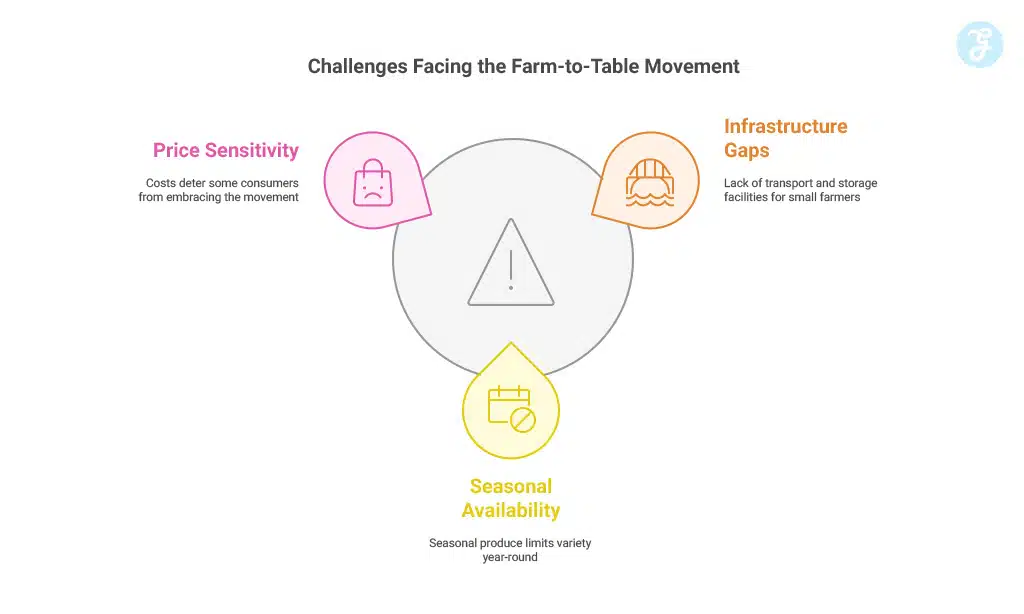
The farm-to-table movement in Australia faces logistical challenges such as:
- Infrastructure Gaps: Small-scale farmers often lack the resources to meet growing demand.
- Seasonality: Limited availability of certain crops during off-seasons creates supply challenges.
Actionable Tips:
- For Policymakers: Invest in better storage and transport infrastructure for small farmers.
- For Restaurants: Plan menus around seasonal availability to avoid supply disruptions.
2. Balancing Cost and Accessibility
While the farm-to-table movement in Australia promotes quality, it can be more expensive:
- Higher Prices: Locally sourced, sustainable products are often pricier than mass-produced alternatives.
- Consumer Education: Many consumers may not understand the value of paying more for locally sourced ingredients.
| Challenge | Details |
| Infrastructure Gaps | Lack of transport and storage facilities for small farmers |
| Seasonal Availability | Seasonal produce limits variety year-round |
| Price Sensitivity | Costs deter some consumers from embracing the movement |
Actionable Tips:
- For Consumers: Shop at farmers’ markets where prices are often competitive.
- For Restaurants: Offer smaller portions or specials featuring local ingredients to balance costs.
3. Educating the Public
Misconceptions about the farm-to-table movement in Australia hinder its growth:
- Perceived Elitism: The movement is often associated with upscale dining, alienating average consumers.
- Awareness Gaps: Efforts to highlight the environmental and health benefits of this approach are ongoing.
Actionable Tips:
- For Advocates: Host workshops and farm tours to demystify the movement.
- For Media: Showcase affordable farm-to-table options to reach a wider audience.
Innovative Approaches Driving the Farm-to-Table Movement Australia
1. Technology in Farm-to-Table
Innovations are streamlining the farm-to-table movement in Australia process:
- Apps: Platforms like FarmMatch connect farmers directly with restaurants and consumers.
- Blockchain: This technology ensures transparency by tracking food’s journey from farm to table.
Actionable Tips:
- For Developers: Create user-friendly apps that link farmers, consumers, and chefs.
- For Farmers: Use digital platforms to market produce directly to buyers.
2. Urban Farming and Community Gardens
City-based initiatives are making fresh produce accessible through the farm-to-table movement Australia:
- Rooftop Gardens: Urban spaces like Sydney’s Green Square are pioneering rooftop farming.
- Community Supported Agriculture (CSA): Programs allow consumers to invest in farms for a share of the harvest.
Actionable Tips:
- For Urban Planners: Allocate more spaces for community gardens and rooftop farms.
- For Consumers: Join CSA programs to support local farmers while accessing fresh produce.
3. The Role of Chefs and Restaurants
Australian chefs are at the forefront of the farm-to-table movement Australia:
- Trailblazers: Chefs like Ben Shewry of Attica are renowned for their farm-to-table menus.
- Sustainability Champions: Restaurants are adopting practices like composting and sourcing ingredients locally.
| Innovation | Examples |
| FarmMatch App | Links producers with buyers |
| Rooftop Gardens | Green Square initiative in Sydney |
| Zero-Waste Restaurants | Composting and sustainable sourcing in leading restaurants |
Future of the Farm-to-Table Movement Australia
1. Growing Consumer Trends
As awareness grows, more Australians are embracing sustainable dining through the farm-to-table movement Australia:
- Increased demand for organic, locally sourced produce.
- Expanding market for native Australian ingredients.
Actionable Tips:
- For Food Producers: Focus on expanding organic certifications to meet consumer demand.
- For Entrepreneurs: Invest in sustainable food ventures, such as farm-to-table cafes or delivery services.
2. Policy and Government Support
Government initiatives are aiding the farm-to-table movement Australia:
- Grants: Funding programs for sustainable farming.
- Education Campaigns: Promoting the benefits of locally sourced food.
Actionable Tips:
- For Policymakers: Increase subsidies for small-scale farmers.
- For Educators: Incorporate farm-to-table principles into school curriculums.
3. Integration into the Mainstream
The farm-to-table movement in Australia is influencing large-scale food systems:
- Supermarkets offering local produce sections.
- Partnerships between large retailers and small-scale farmers.
| Future Development | Potential Impact |
| Consumer Trends | Growth in demand for farm-to-table dining experiences |
| Government Support | Policies Encouraging Sustainable Agriculture |
| Retail Integration | Wider availability of locally sourced products |
Takeaways
The farm-to-table movement in Australia is more than a trend—it’s a transformative approach reshaping how Australians connect with their food.
From supporting local farmers to promoting sustainability and elevating culinary experiences, this movement is paving the way for a healthier, more responsible future.
By choosing farm-to-table, you’re not just enjoying fresher, better meals—you’re contributing to a sustainable and vibrant food culture.
Start today by exploring local markets, dining at farm-to-table restaurants, or even growing your own produce.
Together, we can continue to transform Australia’s food scene for the better.






















