


Against a backdrop of constant progress within the legal tech landscape, emerging trends are changing the practice of law forever. In the last three years, the professions within the system have done an about-face as artificial intelligence [AI] and generative AI have become key parts of the current legal industry. What was once an unethical taboo turned into an easy push button, or shortcut to streamline activities. From improving legal research skills to streamlining document review, AI tools emerge as assistants helping lawyers improve their work and lessen the time spent on everyday tasks. This technology also helps generate better results for lawyers’ clients.
When zooming in on the image, more questions emerge as the technology is yet to mature within the legal system. This development brings about boundless questions from legal professionals and lawyers alike. Can artificial intelligence help foresee case results? How might AI impact students and current employees within the legal system? Can lawyers guarantee AI tools’ reliability and accuracy, as well as outcomes’ ethicality? These are some of the most pressing questions muttered by legal professionals and learners alike.
Whether you’re part of a big firm or a freelancing practitioner, the following common questions may have likely crossed your mind. In this blog, we’re dissecting the most burning questions that lawyers have regarding AI.
How does AI work exactly?
First things first, it’s important to note that artificial intelligence, shortened AI, points to the ability of computer programs and machines to carry out tasks that have traditionally been done by human labour. The list of capacities is mouth-opening as it includes learning, reasoning, perception, and even decision-making. In short, AI can develop computer programs and algorithms that consequently assess information, spot patterns, and make decisions depending on what the found data discloses – all without needing human intervention.
How do legal professionals use AI?
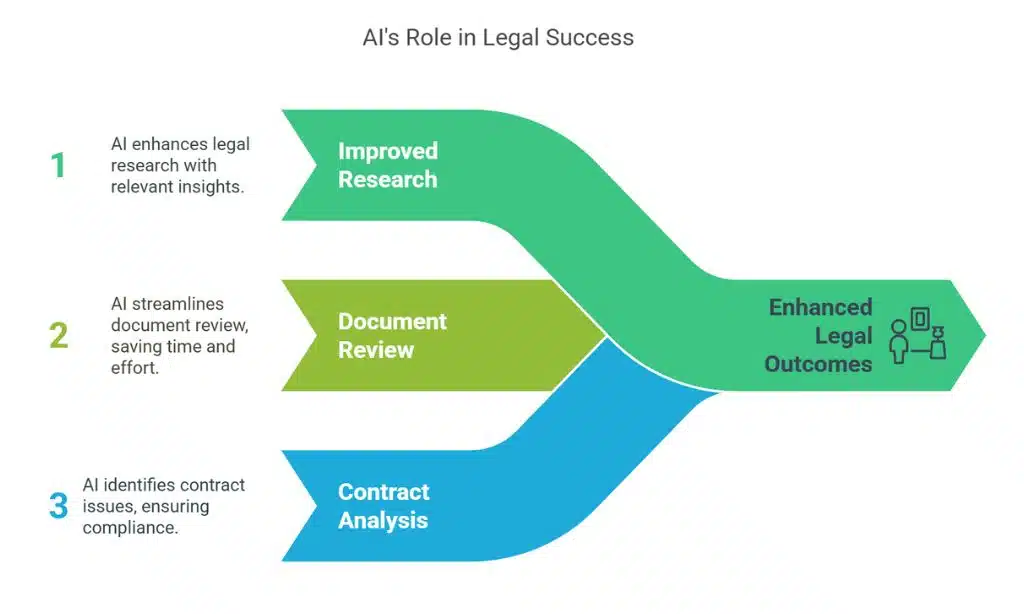
Among the most common AI-based questions asked by legal professionals or lawyers-to-be is how AI actually helps their results. Here are some of the advantages brought by this tech:
- AI can help improve research by offering more pertinent search results. There are AI-based tools for legal research that can approximate the rate of success of a specific case depending on case law and previous rulings. In a similar way, lawyers like those at www.personalinjuryclaimsuk.org.uk make calculations to estimate whether a received case stands a chance of winning, thus determining whether a consequential lawsuit would stand to reason. As expected, it’s best to take the guesswork out of the equation by leaving matters like these to lawyers with experience, for they take decisions based upon facts and knowledge.
- AI can help review and assess documents regardless of their volumes. This helps draw key information and facts in less time than traditional methods can do. It can identify clauses, citations, and case laws. It also assists researchers in identifying relationships and patterns that might be tricky, if not impossible, to draw from texts alone, all by giving untrained data visual formats.
- AI can assess contracts and spot possible areas of concern or problems. For instance, AI-based algorithms can be instructed to recognize problematic clauses connected to intellectual property rights or indemnification, among others.
Are there more types of AI?
AI is split between more categories, which is essential to know from the start. Machine learning involves developing algorithms that auto-educate and upgrade as time passes depending on the data they process. For instance, the mainstream ChatGPT uses a type of machine learning technique named RLFH, which helps it choose between correct and wrong responses. Shortened ML, this technology is instructed to spot patterns in data through various instances to which it is exposed.
Rule-based systems, on the other hand, represent programs employing more pre-established rules to make decisions depending on exact criteria or inputs. For instance, rule-based systems can be trained to identify types of potentially illicit financial transactions based on precise criteria.
Neural networks are also a subcategory of AI. They involve intrinsic networks of interrelated algorithms built to copy the human brain’s structure. Lastly, natural language processing, abbreviated NLP, involves developing algorithms that can assess and grasp human language. Numerous apps use this technology, from language translators to virtual assistants and sentiment analysis to bots.
What is sentiment analysis?
The recent AI-based sentiment analysis tools are used to assist businesses in sorting out online mentions and reviews for personal bias, managing to get less biased impressions about their offerings and brands. For instance, a human assistant may label a review as unfavourable even if it contains some positive opinions, meaning that it’s not entirely complaining. AI-based sentiment classification helps evaluate and categorize big chunks of texts in an impartial manner so that both feelings are dissected and there’s no room for biased outputs.
Is GPT all that lawyers have?
While the current star of the show in the AI industry this year is ChatGPT and its newest releases, it is far from being the only tool involved in the legal practice of past years. The legal system has been using numerous other tools powered by ML and AI for more than ten years. This means that despite GPT’s key position among AI-based tools, new models emerge and shake up legal AI. For instance, the Darrow app can spot concealed legal violations that are hard or impossible to be seen by the naked eye.
It’s important to remember that there are many standards and regulations that control the use of AI in legal systems, which differ from country to country. Ethical guidelines and data protection regulation are present in the bulk of countries, among other standards.
AI shakes up the legal system as we know it. What do experts advise interested ones to do? Kick their work humbly, thrive on success, and keep an eye out on the news as the AI revolution unfolds in front of our eyes!






















