Are you tired of high energy bills or feeling cold drafts sneaking into your home? Many homes waste energy because of poor design and outdated systems. This adds to costs and impacts the environment.
Energy-efficient design can solve this challenge. A thoughtfully planned home uses less power, saves money, and remains comfortable throughout the year. Even simple upgrades in windows, insulation, or heating systems can have a significant impact.
This blog will guide you through creating an energy-saving home step by step. From smart building plans to renewable energy ideas—everything is included. Ready to save? Keep reading!
Start with Smart Home Design
A well-thought-out design can cut energy costs and make your home more livable. Focus on how space, light, and air flow around the house to save power.
Incorporate energy efficiency into architectural planning
Think about energy-efficient construction early. Choose green building materials like straw bale or thermal mass options to save energy long-term. Plan the layout with insulation and proper sealing to stop heat loss.
Place windows facing south for passive solar heating in winter. Use cool roofs and skylights to manage temperature in warmer climates. “Good design is cheaper than poor efficiency later.”.
Consider home orientation and layout
Face your home toward the south. This helps trap heat in winter and block it during summer, saving energy. Use overhangs or cellular shades on windows to control sunlight more efficiently.
Plan rooms carefully. Place living areas where natural light can shine longer, reducing electricity use. Keep sleeping spaces cooler by positioning them away from harsh sun exposure.
Use proper layouts to allow for better airflow and passive solar cooling throughout the house.
Optimize Insulation and Air Sealing
Keep your home cozy by plugging leaks and adding strong insulation. Tighter seals mean lower bills, better comfort, and fewer chills.
Use advanced insulating materials
Insulating materials like spray foam, fiberglass, or mineral wool work wonders. They trap heat inside during winter and keep it cool in summer. This reduces heating and cooling costs quickly.
Straw bale construction is another great option for an energy-efficient building.
Aerogel insulation is lightweight and highly effective. Its thermal efficiency beats traditional materials by far. Using advanced options stops thermal bridging, which wastes energy through walls or ceilings.
These upgrades protect your home like a snug thermos bottle saves hot coffee!
Seal gaps in the building envelope
Stopping air leaks in your home saves energy and lowers bills. It also makes the house cozier and reduces noise.
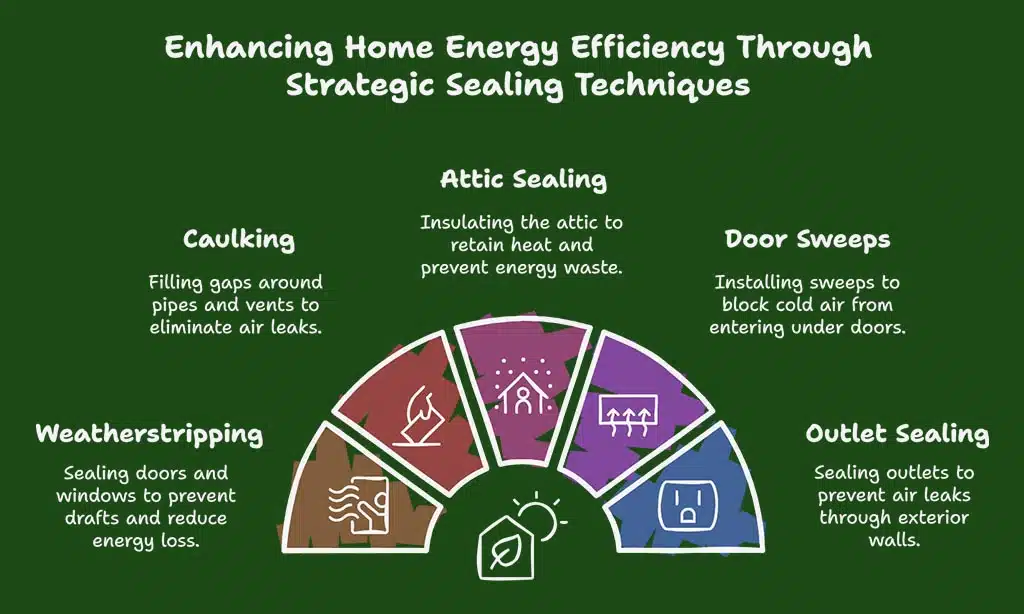
- Use weatherstripping on doors and windows to block drafts. This step alone can cut heating and cooling loss by up to 30%.
- Apply caulk around pipes, vents, or any openings in walls. These tiny gaps cause big energy waste.
- Inspect your attic for holes or cracks. Seal them with foam spray to keep heat in during winter.
- Install door sweeps at the base of exterior doors. They stop cold air from seeping inside.
- Check outlets on exterior walls for gaps; seal them with foam gaskets.
- Pay attention to the basement or crawl spaces where air sneaks in through rim joists; use rigid foam boards there.
- Look at old windows carefully for leaks, even small ones, and fix those with caulk or film.
Following these steps keeps your home sealed tight all year round!
Maximize Natural Light and Ventilation
Bright rooms feel bigger and more inviting, right? Smart design choices can fill your home with fresh air and sunlight.
Install energy-efficient windows and doors
Energy-efficient windows and doors save money and reduce heat loss. Double or triple-pane glass with gas fills provides better insulation. Low-emissivity coatings block harmful solar heat gain while letting natural light in.
This lowers cooling costs during summer.
Choose frames made of vinyl, wood, or composite materials for less air leakage. Sealing gaps around new windows and doors also improves energy efficiency. South-facing windows can increase passive heating in winter months, cutting heating bills further.
Design for passive cooling and heating
Design your home to work with nature. South-facing windows let sunlight warm your space in winter, cutting heating costs. Overhangs or shades block the summer sun to keep rooms cool without extra energy use.
Properly placed trees act as natural air conditioners, providing shade and reducing indoor temperatures.
Use materials that hold heat in cold months and release it slowly, like concrete or brick walls. Cross-ventilation helps too—place windows across from one another to create airflow.
Ceiling fans aid circulation, making you feel cooler without cranking up the AC. Simple adjustments like these can lead to major savings over time!
Choose Energy-Efficient Systems and Appliances

Pick gadgets that sip, not guzzle, energy. Smart choices like LED lights and efficient heating systems can lighten both your bill and the planet’s load.
Select high-efficiency HVAC systems
Use energy-saving HVAC systems to lower power bills. Heat pumps can cut heating costs by up to 50%. High-efficiency units also reduce emissions, helping the environment. Smart thermostats work with these systems for better temperature control.
Energy-efficient HVAC systems suit all climates. In colder areas, consider a heat recovery ventilation (HRV) system or geothermal heating. Warm regions benefit from advanced cooling tech like passive solar home designs.
Always check its SEER rating; higher means more savings!
Invest in energy-saving lighting and electronics
Incorporate Renewable Energy Solutions
Switching to green energy makes a big difference. Solar power or other clean sources can cut bills and save resources.
Use solar panels or solar water heaters
Solar panels can turn sunlight into clean electricity for your home. They lower energy bills and help conserve energy. A rooftop system can last over 25 years, offering long-term savings.
Many homeowners qualify for tax credits under the Inflation Reduction Act, making this upgrade more affordable.
Solar water heaters use the sun to heat water for showers and cleaning. These systems cut down on traditional heating costs by up to 50%. Unlike tankless water heaters, they rely on renewable energy sources like solar power, supporting a greener lifestyle while saving money.
Explore geothermal heating and cooling systems
Geothermal systems use the Earth’s heat to manage home temperatures. They pull warmth in winter and release it in summer. These systems cut energy use by up to 70%. Pipes, called loops, go underground where temperatures stay steady all year.
Installing a geothermal heating and cooling system can lower energy bills over time. It works well with zero-energy homes. Though setup costs are high, savings on utilities add up fast.
This sustainable solution is quiet and eco-friendly, making it a smart choice for green design lovers.
Takeaways
Making your home energy-efficient is smart and simple. Start with the design, from insulation to smart layouts. Use natural light and air to cut costs. Choose systems, like LED lights or solar panels, that save energy daily.
Small changes, like sealing gaps or picking better appliances, add up fast. You’ll lower bills while helping the planet stay green!
FAQs
1. What are some basic steps to make a home more energy-efficient?
Start with an energy audit to find where your home loses power. Use energy-efficient lighting like LED lights, install solar panels, and upgrade to energy-efficient appliances.
2. How can passive solar design help save energy?
Passive solar heating uses the sun’s warmth through south-facing windows in winter. Passive cooling techniques block heat during summer using window coverings or proper ventilation systems.
3. Are there specific updates for water heating that save energy?
Yes! Solar water heating systems and efficient hot water heaters reduce costs while saving power.
4. What is sustainable landscaping, and how does it improve efficiency?
Sustainable landscaping uses plants suited to your local climate, reducing the need for extra watering or maintenance while lowering overall energy use.
5. Can I combine clean energy with other designs for a zero-energy home?
Absolutely! Pairing solar electricity from photovoltaic panels with good insulation, passive house principles, and efficient construction creates net-zero homes.
6. Do electric vehicles tie into an efficient home design plan?
Yes! Adding electric vehicle charging stations powered by clean sources like solar electricity supports sustainable living while cutting transportation costs over time.