
Crypto is changing fast, but keeping up can feel tricky. New technologies are shaping the way cryptocurrencies work and how we use them. Many wonder which trends will matter most in the future.
Artificial intelligence and blockchain technology now connect more than ever. They improve security, speed, and new ways to use crypto daily. In this blog, you’ll uncover 5 emerging tech trends that will shape the future of crypto—and why they matter to you.
Keep reading!
AI Enhancements in Crypto Technologies
AI is making crypto smarter and faster. It helps predict market trends and improves decision-making with better tools.
Boosting transaction efficiency
Crypto transactions are becoming faster with AI and blockchain integration. Machine learning models analyze networks, predicting the best paths for quick transaction speeds. This reduces delays and improves efficiency.
Emerging technologies like optimistic rollups help scale blockchain networks. These solutions process data off-chain, cutting costs while ensuring security. Efficiency is key to crypto’s future success,” experts say.
Advanced analytics for market predictions
AI improves how crypto markets are studied. Predictive analytics can spot trends using large datasets. Machine learning tools analyze price changes, news, and market behavior faster than humans.
This boosts accuracy in predicting bull or bear markets. For example, funding spikes or regulatory updates impact prices—predictive models detect these patterns early.
Generative AI helps create advanced strategies for traders. It evaluates risks while suggesting the best moves based on real-time data. Quantum computing may soon enhance this by processing complex blockchain information quickly.
Businesses adopting such insights stay ahead with smarter decisions and fewer losses in cryptocurrency trading systems.
Advancements in Decentralized Finance [DeFi]
DeFi is reshaping access to financial tools with groundbreaking ideas. Its growth continues to transform payments, lending, and investments worldwide.
Innovations in smart contracts
Smart contracts are getting smarter with AI. They can now process complex rules faster, boosting transaction speeds. With predictive analytics, these contracts can adjust terms based on market trends or user behavior.
This makes them more flexible for decentralized finance [DeFi] services.
Energy-efficient designs are also reducing their environmental impact. Some systems use green energy to power transactions, aligning with climate goals. By integrating blockchain technology and machine learning, smart contract platforms become safer and easier to scale across industries like healthcare and transportation.
Extending financial services through DeFi
DeFi opens doors for millions without bank access. Peer-to-peer lending and borrowing replace traditional banks. Over $50 billion is locked in DeFi platforms, enabling faster funding options.
People can trade digital assets, earn interest, or invest directly through smart contracts. These solutions reduce fees and cut out middlemen entirely.
DeFi transforms financial systems into global services accessible to everyone.
Cross-border transactions become easier with decentralized finance tools. Blockchain technology removes delays in international payments while enhancing security with cryptographic methods.
Crypto-backed savings accounts emerge as safe alternatives for wealth building. As cryptocurrency adoption spreads, more businesses accept crypto payments daily—including giants like Tesla and Shopify—bringing DeFi closer to everyday use cases worldwide.
Broadening Applications of NFTs and Asset Tokenization
NFTs are finding new uses in industries like real estate and logistics. Asset tokenization is making it easier to trade items securely through blockchain systems.
Diversifying uses outside digital art
NFTs now help more industries grow. They bring value to gaming, music, and education. In gaming, NFTs give players real ownership of virtual items like weapons or skins. Musicians sell limited-edition albums as digital tokens directly to fans.
Schools use NFTs for issuing secure digital diplomas or certificates.
Healthcare and supply chain management see benefits too. Medical records stored as tokenized assets ensure privacy using blockchain encryption. Meanwhile, the logistics industry tracks shipments in real time with NFT-based tracking systems.
These new uses show how non-fungible tokens go far beyond art collections alone!
Tokenizing physical assets in real estate and logistics
Tokenization turns real estate and logistics assets into digital representations on blockchains. Buildings, land, or even warehouse spaces can become tokenized. This unlocks new opportunities for fractional ownership and easier trading of these assets.
It lowers entry barriers, allowing more investors to participate.
In logistics, tokenizing supply chain items improves tracking and transparency. Each item gets a unique digital identity on the blockchain. Companies gain better control over inventory while reducing fraud risks.
Blockchain adoption here enhances speed and accuracy in global trade processes too.
Enhancing Blockchain Interoperability and Cross-Chain Technologies
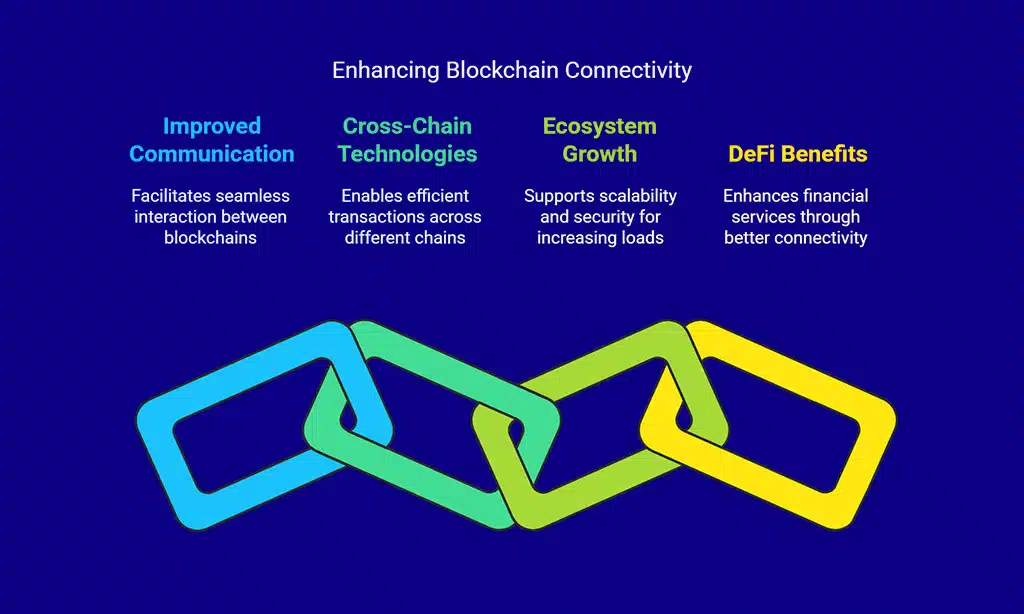
Blockchains need to connect better to handle more transactions and users. Improved communication between networks will make crypto faster and easier for everyone.
Facilitating smoother blockchain communication
Improving blockchain communication helps connect different networks easily. Interoperability allows blockchains to share data and work together without issues. For example, cross-chain technologies like optimistic rollups speed up transaction times and reduce costs.
These tools ensure users can move digital assets between networks quickly.
Ecosystems are growing to handle scaling needs better. This helps manage higher transaction loads while keeping the systems secure. Businesses adopting decentralized finance [DeFi] benefit from smoother communication across platforms, boosting financial services worldwide.
With technology advancing fast, seamless blockchain interactions will only expand further.
Developing ecosystems for better scalability
Scalability in blockchain technology depends on strong ecosystems. Emerging scaling solutions like optimistic rollups help networks handle more transactions at faster speeds. These tools reduce costs and energy consumption, making cryptocurrency adoption easier for businesses.
Interoperability plays a key role here too. Linking different blockchains allows smoother communication and data exchange across systems. This integration helps industries like supply chain management and smart cities grow with blockchain adoption.
Exploring the Cryptocurrency Dynamics in the Metaverse
Cryptocurrency is reshaping how people interact in virtual spaces. It powers digital economies, creating new ways to trade and connect in immersive worlds.
Supporting virtual economies with crypto
Crypto powers virtual economies in the metaverse. People use digital assets like cryptocurrencies and non-fungible tokens [NFTs] to buy, sell, or trade goods. Virtual reality platforms integrate these tools for smooth transactions.
Businesses create digital stores where users shop with crypto. This builds stronger online communities.
Major companies now accept cryptocurrency payments. Crypto also encourages efficient virtual marketplaces by cutting middlemen and lowering costs. Decentralized finance [DeFi] solutions boost security and speed for transactions there.
These technologies support growing immersive ecosystems while transforming global digital economies step by step!
Crypto integration in immersive environments
Virtual reality [VR] and augmented reality [AR] spaces are growing fast. Cryptocurrencies power these digital worlds with secure payments. Virtual economies in the metaverse use blockchain technology for trading virtual goods.
Players buy, sell, or rent digital assets like land, clothing, and tools using cryptocurrency. These transactions happen instantly with low fees.
Blockchain adoption also boosts trust in AR and VR environments. Smart contracts create transparent deals between users without middlemen. As 5G expands globally by 2025, more people can access immersive platforms seamlessly on their devices or headsets.
This growth will push the demand for crypto-friendly systems even higher.
Takeaways
Crypto is growing fast. AI, DeFi, NFTs, and blockchain tools are changing how we use digital money. Experts agree that these changes will shape the future.
Dr. Ethan Cole, a blockchain expert with 15 years of experience, shared insights on these trends. He holds a Ph.D. in Computer Science and has led projects in crypto innovation and security.
He explained that AI improves transaction speeds and market predictions. Smart contracts make DeFi more reliable for global users. NFTs now go beyond art by tokenizing real-world assets like homes or goods.
Dr. Cole stressed the importance of safety and transparency in crypto’s growth. Clear rules help build trust between users and developers.
He suggested using decentralized apps to explore new ways to invest or manage money through crypto tools simply.
The pros include better speed, lower costs, and wider access for all users worldwide. The downside lies in risks like hacking or unclear regulations.
Dr. Cole supports adopting these tech trends carefully while staying alert to risks—ensuring they bring value safely into daily life.
FAQs
1. What are the key tech trends shaping the future of cryptocurrency?
Emerging trends include blockchain technology, artificial intelligence [AI], renewable energy, edge computing, and Internet of Things [IoT] devices.
2. How is AI impacting blockchain and cryptocurrencies?
AI improves transaction speeds, enhances problem-solving in decentralized finance [DeFi], and supports predictive analytics for better decision-making.
3. Can renewable energy reduce the environmental impact of cryptocurrencies?
Yes, green technologies like clean energy sources can help lower energy consumption during crypto mining and support sustainable technology practices.
4. What role does IoT play in cryptocurrency’s future?
IoT devices enable smart contracts to interact with real-world data while improving supply chain management through blockchain integration.
5. How will quantum computing affect digital assets like NFTs or DeFi systems?
Quantum computing could increase processing power but may also pose risks to current encryption methods used in digital identity and transactions.
6. Is edge computing important for cryptocurrency adoption?
Yes, edge computing reduces latency by processing data closer to users—this boosts efficiency in applications like smart cities and autonomous vehicles linked to blockchain networks.