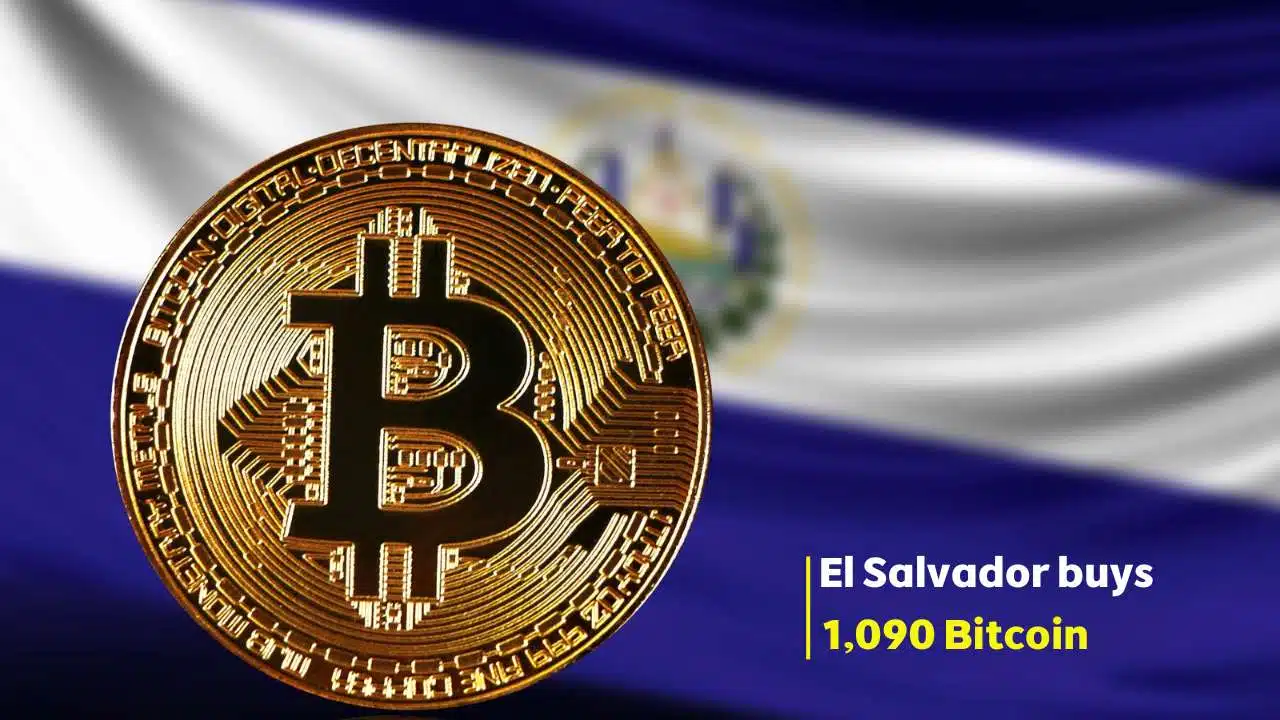
In a brazen move that tests the limits of international financial diplomacy, El Salvador has acquired approximately 1,090 Bitcoin (BTC) valued at nearly $100 million, just months after agreeing to limit such purchases under a $1.4 billion International Monetary Fund (IMF) deal. The acquisition, executed between November 17 and 18 as global crypto markets dipped, signals President Nayib Bukele’s refusal to bow to external pressure regarding his nation’s digital asset strategy.
The purchase marks a significant escalation in the “crypto-state” experiment, moving beyond the daily dollar-cost averaging (DCA) strategy into aggressive market timing, despite warnings from multilateral lenders that such volatility poses a systemic risk to the nation’s fragile economy.
Quick Take: By The Numbers
-
-
The Purchase: ~1,090 BTC acquired around Nov 17–18, 2025.
-
Cost Basis: Approx. $100 million (purchased during a dip below $90,000).
-
Total National Stash: Now stands at roughly 7,474 BTC (Value: ~$688M).
-
The Friction: Directly contradicts the spirit of the Feb 2025 IMF loan agreement limiting public sector crypto exposure.
-
The Loophole: Officials claim these are “consolidations” or mining rewards, not direct market buys.
-
Unrealized P/L: The nation remains in profit largely due to earlier purchases in the $20k–$40k range, despite this high-cost addition.
-
The “Buy the Dip” Offensive
As Bitcoin prices slid below $90,000 earlier this week—a sharp correction from the October peak of over $126,000—President Bukele’s administration mobilized. Data tracked by the country’s “Bitcoin Office” and on-chain monitoring confirms the addition of the massive tranche of coins, marking one of the largest single-day accumulations since the country adopted the cryptocurrency as legal tender in 2021.
This move effectively doubles down on the “1 Bitcoin a Day” program announced in late 2022. While the daily program was a slow drip, this $100 million injection is a flood. “We are buying the dip,” a government source hinted, framing the volatility as a strategic entry point rather than a risk.
Market analysts note that this purchase acts as a “floor” for the market. When a sovereign nation steps in to buy $100 million during a correction, it signals immense confidence to retail investors, potentially halting further price slides.
The $1.4 Billion IMF Standoff: A Diplomatic crisis?
The timing of this acquisition is politically explosive. In February 2025, the IMF Executive Board approved a $1.4 billion Extended Fund Facility (EFF) for El Salvador. The terms were explicit: to unlock these funds, El Salvador agreed to “confine public sector engagement in Bitcoin-related economic activities.”
Specifically, the agreement was designed to protect the national treasury from volatility. The IMF’s conditionality implies that tax dollars should not be gambled on speculative assets.
By transferring $100 million into Bitcoin assets this week, Bukele appears to be openly flouting this condition. This raises the question: Will the IMF freeze the next disbursement of funds?
The “Consolidation” Loophole: How They Justify It
How does a country buy $100 million in crypto while under a ban? It plays a shell game with legal definitions.
In July 2025, Finance Minister Jerson Posada and Central Bank officials assured the IMF that no new Bitcoin had been bought from the open market using the General Fund. They argued that increases in the public wallet addresses were merely “internal consolidations.”
The Government’s Defense likely relies on three technicalities:
-
Source of Funds: They may argue the money came from the profit of previous Bitcoin trades or passport sales (The “Freedom Visa” program), rather than tax revenue.
-
Mining Rewards: They claim coins are from “Volcano Energy” mining.
-
Wallet Transfers: Moving coins from the Chivo wallet infrastructure (used by citizens) to the “Cold Storage” vault, which looks like a buy on-chain but is technically a transfer.
However, analysts refute the “mining” claim for this specific batch.
-
Mining Output: El Salvador’s geothermal mining produces roughly 0.5 to 1 BTC per day.
-
The Acquisition: 1,090 BTC appeared in roughly 48 hours.
-
Conclusion: Mathematics dictates this was a purchase, not a mining yield.
The “Piggy Bank” Strategy: Security and Transparency
Earlier this year, President Bukele announced the transfer of the “majority” of the country’s Bitcoin to a cold wallet stored in a physical vault within the national territory—dubbed the “Piggy Bank.”
This week’s 1,090 BTC were immediately routed to this address. This transparency is a double-edged sword: it proves the government is holding the assets (proving solvency), but it also provides irrefutable proof to the IMF that the hoard is growing, despite promises to cap it.
Market Impact & Official Data
The purchase comes as El Salvador’s debt situation shows signs of stabilization, ironically aided by the very bond buybacks the IMF supported. The government’s strategy seems to be: satisfy bondholders with cash, satisfy the future with Bitcoin.
El Salvador Bitcoin Holdings Growth (2024–2025)
| Date | Total Holdings (BTC) | Event Context |
| Feb 2024 | ~2,800 | Pre-Halving Accumulation |
| Feb 2025 | ~5,800 | IMF Deal Signed ($1.4B Loan) |
| July 2025 | ~6,200 | “Consolidation” Explanation given to IMF |
| Nov 18, 2025 | 7,474 | Current Status (+1,090 BTC jump) |
The Citizen’s Perspective: Adoption vs. Treasury
While the government stacks 1,090 BTC, what is happening on the streets of San Salvador?
-
Remittances: Usage of Bitcoin for remittances (sending money home from the US) remains low, hovering under 2% of total transfers according to the Central Reserve Bank. Most Salvadorans still prefer Western Union or traditional banks due to volatility fears.
-
Daily Usage: While accepted by major chains (McDonald’s, Super Selectos), small vendor adoption has plateaued.
This creates a dichotomy: The State is a Bitcoin maximalist, but the Citizenry remains largely dollar-dependent. The $100 million spent on Bitcoin is money not spent on hospitals, schools, or road infrastructure—a point frequently raised by the opposition parties.
What to Watch Next
-
IMF Retaliation: The Fund could withhold the next tranche of the $1.4 billion loan if they determine this purchase violates the “continuous performance criteria” of the EFF arrangement.
-
Credit Ratings: Agencies like Moody’s, which have previously upgraded El Salvador due to its debt buybacks, will be watching to see if this spending spree threatens liquidity.
-
Bitcoin City: The administration continues to promise tax-free crypto zones, but construction remains minimal. This new capital injection could be intended to jumpstart these stalled infrastructure projects.
Conclusion
President Bukele is betting that the long-term appreciation of Bitcoin will outpace the short-term cost of alienating the IMF. By framing a $100 million acquisition as a routine “consolidation,” El Salvador is walking a diplomatic tightrope—one where the safety net is secured by a volatile digital asset. If Bitcoin rallies to $150,000, Bukele looks like a genius who outsmarted the bankers. If it crashes, the IMF may be the only one left to bail them out.