


In a world that’s rapidly transforming through technological innovation, socio-political shifts, and environmental demands, cultivating a new generation of thinkers is no longer optional—it’s essential. The future belongs to individuals who are not only subject-matter experts but who can also think critically across boundaries. Developing visionaries is about empowering minds to transcend traditional silos of thought, combining knowledge from multiple disciplines to form holistic perspectives. These are the individuals capable of driving change, influencing systems, and shaping societies.
Interdisciplinary studies serve as a breeding ground for such transformative leaders. They equip individuals with tools to address complex challenges from multiple angles, allowing for adaptable, nuanced, and visionary thinking. This dynamic educational model blends various fields—ranging from science and technology to the humanities and social sciences—into a cohesive framework that mirrors the interconnected reality of the modern world.
Leadership Shaped by Cross-Functional Understanding
As organizations grapple with uncertainty and evolving markets, leadership demands have evolved. It’s no longer enough to manage resources or processes efficiently. Leaders must inspire innovation, foster collaboration, and lead through complexity. This is where programs like an online masters in organizational leadership come into play. Designed for aspiring leaders, this kind of program leverages interdisciplinary methods to develop strategic thinkers who understand people, systems, and outcomes as an integrated whole.
Students enrolled in such programs are not confined to a singular disciplinary viewpoint. Instead, they delve into psychology, ethics, communication, business strategy, and data analysis—developing an enriched understanding of how different domains influence organizational success. This broader vision shapes individuals who are not only equipped to lead but also to evolve leadership itself, adapting it to diverse and rapidly shifting landscapes.
Why Interdisciplinary Thinking Breeds Innovation
At the heart of visionary development lies innovation, and innovation thrives at the crossroads of ideas. When diverse disciplines intersect, new perspectives emerge, often resulting in breakthrough solutions that a single-discipline mindset would not produce. Interdisciplinary studies foster this fusion by encouraging students to explore beyond conventional boundaries.
Imagine a thinker who understands environmental science, data analytics, and public policy. Such an individual is well-equipped to design sustainable solutions that are both practical and scalable. Interdisciplinary learning doesn’t just allow for a broader knowledge base—it rewires how one approaches problems, emphasizing flexibility, integration, and creativity.
Systems Thinking as a Core Competency
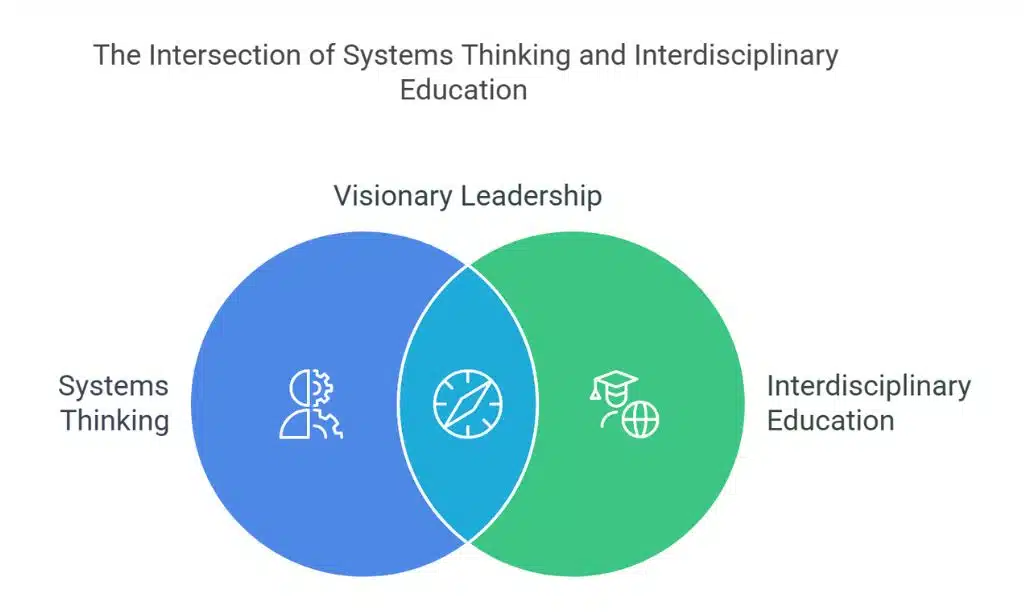
Developing visionaries also requires instilling systems thinking—a method that focuses on the interrelationships between components rather than isolated parts. Interdisciplinary education inherently fosters this approach by pushing learners to connect the dots across various knowledge areas.
When students learn to think in systems, they begin to see ripple effects. For instance, a policy decision isn’t viewed only in political terms but also through economic, cultural, and ecological lenses. Systems thinkers can anticipate unintended consequences, mitigate risk more effectively, and design solutions that are sustainable in the long term.
This way of thinking is indispensable for leadership and decision-making in complex environments. It nurtures the capacity to deal with ambiguity, navigate change, and recognize patterns that others may miss—attributes that define true visionaries.
Fostering Empathy and Ethical Intelligence
While technical proficiency and analytical acumen are vital, visionaries also require emotional depth and ethical awareness. Interdisciplinary studies enrich these qualities by exposing learners to a diversity of human experiences and philosophical frameworks. Studying literature alongside sociology or ethics alongside economics fosters empathy and a nuanced understanding of human behavior.
Visionaries don’t operate in a vacuum—they work with people, impact communities, and shape futures. A broad-based education provides them with the moral compass to weigh decisions against broader human and environmental consequences. This ethical grounding is what separates a visionary from a merely successful individual. It ensures that influence is wielded responsibly and with a long-term view of societal well-being.
Collaboration Across Disciplinary Borders
True innovation seldom occurs in isolation. It emerges from collaboration—often between people with vastly different skills and perspectives. Interdisciplinary education prepares individuals to engage in such collaboration effectively. Students learn how to communicate across fields, translate technical jargon into universal concepts, and appreciate differing viewpoints.
This kind of collaborative fluency is a powerful leadership asset. It allows visionaries to build bridges—between engineers and designers, policymakers and citizens, data scientists, and community organizers. By facilitating this synthesis, interdisciplinary education doesn’t just develop individual brilliance; it lays the groundwork for collective advancement.
Lifelong Learning as a Visionary Trait
In today’s fast-moving world, the ability to continuously learn and evolve is more important than ever. Interdisciplinary studies nurture this trait by promoting intellectual curiosity. Students are not only taught what to learn but how to learn, how to question, and how to seek knowledge beyond their comfort zones.
This adaptability ensures that visionaries remain relevant, even as industries and technologies shift. They don’t fear change—they lead it. They are always a few steps ahead, not because they predict the future with certainty, but because they are prepared for its ambiguity.
Reimagining Education for Future Impact
If the goal of education is to prepare individuals for real-world challenges, then it must evolve to reflect real-world complexity. Interdisciplinary programs are at the forefront of this evolution. They don’t simply transfer knowledge—they transform mindsets.
By encouraging students to synthesize diverse viewpoints, tackle multifaceted problems, and operate across conceptual boundaries, interdisciplinary education fosters the kind of thinking that the future demands. These programs don’t just graduate students—they cultivate visionaries.
Educational institutions that embrace this approach play a pivotal role in shaping a more interconnected, just, and forward-thinking society. As global challenges grow more intricate, the need for integrated knowledge and ethical insight becomes increasingly urgent. Interdisciplinary studies answer that need with clarity and purpose.
Visionaries are not born—they are developed. They emerge through experiences that challenge assumptions, expand perspectives, and deepen understanding. Interdisciplinary studies offer a dynamic and powerful pathway toward that development, equipping individuals with the tools to think broadly, act ethically, and lead with purpose.
In a world marked by complexity and constant change, the ability to draw from multiple disciplines isn’t just a luxury—it’s a necessity. Those who embrace this model of learning will not only thrive but will lead others toward meaningful progress. Through interdisciplinary studies, we don’t just educate minds—we shape the architects of tomorrow.






















