
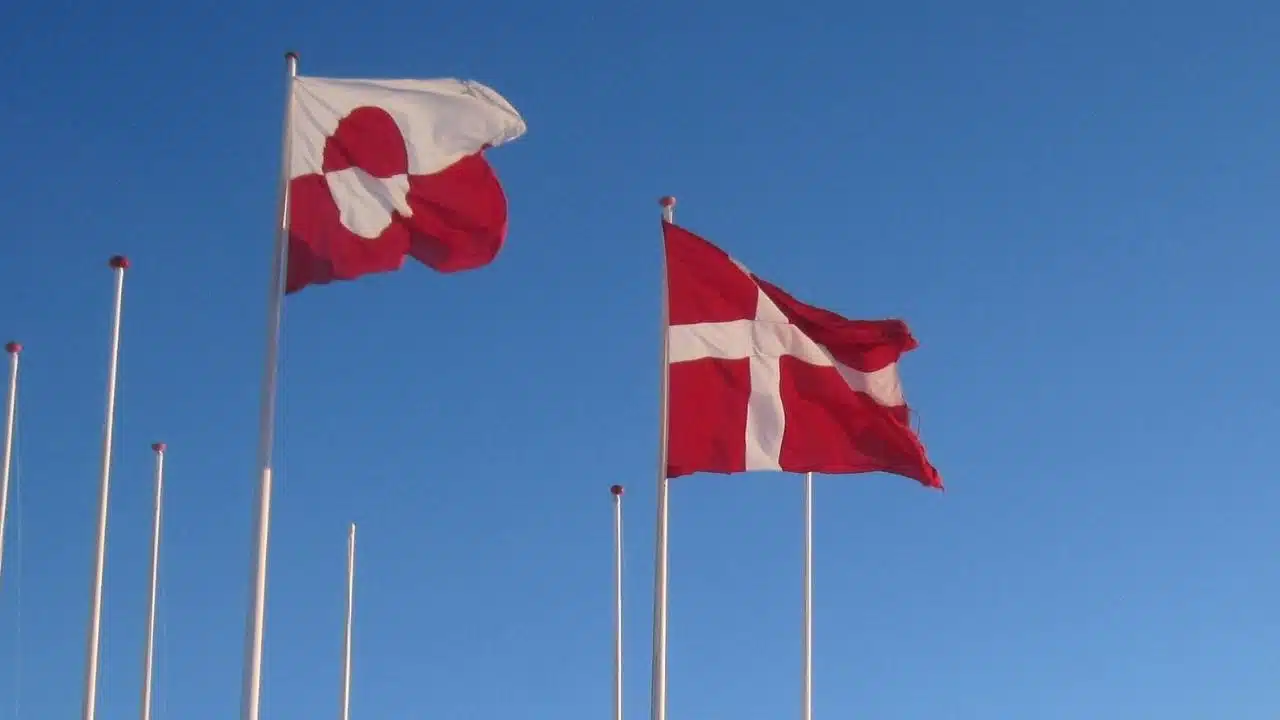
Denmark demanded the United States respect Greenland sovereignty after President Donald Trump named Louisiana Governor Jeff Landry as a special envoy for Greenland, reopening a sensitive dispute over the Arctic territory’s status.
What Trump announced and how Denmark reacted?
President Donald Trump said he is appointing Louisiana Governor Jeff Landry as a “special envoy” focused on Greenland, a vast Arctic island that is part of the Kingdom of Denmark but governs most of its own domestic affairs. Trump has argued the island is strategically vital to the United States, citing Arctic security, geography, and access to minerals.
Jeff Landry, who became Louisiana’s governor in January 2024, publicly accepted the role and described it as a volunteer position. He said it would not interfere with his work as governor. The appointment is unusual because envoys are typically drawn from federal diplomatic or national security circles, not sitting state executives with their own constitutional duties at home.
Denmark’s response was swift and firm. Danish officials emphasized that the territorial integrity of the Kingdom of Denmark must be respected and that Greenland’s status is not something another country can redefine through rhetoric or political appointments. Danish leaders signaled they would raise the issue directly with Washington through diplomatic channels, including summoning the US ambassador in Copenhagen to seek clarity on the purpose and scope of the envoy role.
Greenland’s leaders also rejected any notion that the island could be absorbed by another state. They reiterated that Greenland’s future must be decided by Greenlanders themselves. While Greenland has pursued stronger international partnerships and welcomes investment, officials have stressed that cooperation must happen on Greenland’s terms and within the constitutional framework that governs the relationship between Greenland and Denmark.
The dispute has drawn wider attention in Europe. European officials voiced support for Denmark’s sovereignty and territorial integrity, reflecting concern that even rhetorical challenges to borders and self-government arrangements can create instability among allies—especially when security tensions are already high in the Arctic and across Europe.
Greenland’s status, sovereignty, and what the law says?
Greenland is a self-governing territory within the Kingdom of Denmark. In practice, that means Greenland controls most domestic policy areas—such as education, health, fisheries, many aspects of taxation and regulation, and a wide range of public services—while Denmark retains authority over matters like defense, security policy, and much of foreign affairs. This division is central to why outside political pressure triggers strong pushback from both Copenhagen and Nuuk.
Greenland’s modern autonomy is rooted in a gradual constitutional evolution:
- Home Rule began in 1979, expanding local control after decades of direct administration.
- Self-Government took effect in 2009, widening Greenland’s powers and formally recognizing Greenlanders as a people with the right to self-determination under international law.
A key point often misunderstood in international debate is this: Greenland’s right to choose its future is not the same as a right for another country to claim it. Greenland’s Self-Government framework includes a pathway by which Greenland could move toward independence if Greenlanders decide to do so, followed by negotiations between Greenland and Denmark about how independence would be implemented.
Denmark’s argument, echoed by Greenlandic leaders, is that sovereignty questions must be handled through lawful, consent-based processes. That includes respecting the Kingdom of Denmark’s constitutional order and the principle that borders and territories cannot be altered by pressure or threats.
Greenland at a glance (recent official statistics and commonly cited public data)
| Category | Snapshot | Why it matters |
| Population | About 57,000 | Small electorate; external pressure can feel outsized |
| Capital | Nuuk (about 20,000 residents) | Political and administrative center |
| Land area | About 2.16–2.2 million km² | One of the world’s largest islands |
| Ice coverage | Over 80% | Limits infrastructure and mining access |
| Economic base | Fishing dominates exports | Diversification is a major policy goal |
| Public finances | Large annual grant from Denmark | Independence debate is tied to fiscal capacity |
These fundamentals help explain why debates about Greenland quickly become debates about security, economics, and self-determination at the same time.
Why Greenland is central to US security and Arctic strategy?
Greenland matters to the United States for geography first. The island sits between North America and Europe, near the routes used for transatlantic aviation and historically important defense lines in the North Atlantic and Arctic. In a world where early warning, missile defense, and space surveillance are increasingly important, location can be strategic infrastructure.
The United States already maintains a significant defense presence in Greenland through Pituffik Space Base (formerly known as Thule Air Base). The base is often described as a crucial node for Arctic defense and space-related missions, including radar capabilities linked to missile warning and space domain awareness. In recent years, US military messaging has emphasized the base’s role in protecting the homeland and supporting allied security in the High North.
This point is important in the current dispute: Washington does not need to “own” Greenland to operate there. US defense activity is grounded in longstanding agreements with Denmark that govern access and responsibilities. Those agreements were designed precisely to allow cooperation while respecting Danish sovereignty and Greenland’s local governance.
The Arctic security environment has also changed. Russia has expanded and modernized Arctic military infrastructure over many years, and China has sought greater economic and scientific engagement in the region, fueling concern among NATO members about long-term strategic competition. Meanwhile, climate-driven changes—especially shrinking sea ice—are affecting navigation patterns, military planning, and the feasibility of new routes and projects. That does not automatically translate into new “ownership” claims, but it does raise the geopolitical value of stable, rules-based cooperation with Arctic partners.
Denmark has its own Arctic defense responsibilities, including through the Kingdom’s structures and regional commands, and has repeatedly framed cooperation with the United States as vital. The political problem arises when cooperation is paired with rhetoric that suggests control could change hands. For Denmark and Greenland, that crosses from defense partnership into a sovereignty challenge.
Economics, minerals, and Greenland’s push for a stronger future
The renewed political spotlight is not only about defense. Greenland sits atop mineral potential that is attractive in a world racing to secure supply chains for clean energy technology, electronics, and strategic industries. Public discussions frequently mention rare earth elements, as well as deposits associated with critical minerals. Greenland also has hydropower potential and a growing interest in developing sectors beyond fishing.
Yet Greenland’s leaders often emphasize a practical reality: building an economy that can sustain full independence is difficult for a small population spread across vast distances with limited transport links and high costs. Fishing remains the backbone of the economy and exports, while the public sector is a major employer. This is one reason infrastructure has become a priority.
In recent years, Greenland has invested heavily in upgrading airports and connectivity, with Nuuk’s international airport seen as a major milestone. Increased flight options and new routes have made the island more accessible, and tourism has grown as curiosity about Greenland rises globally. Tourism growth is often framed locally as both an opportunity and a challenge: it can bring revenue and jobs, but it can also strain limited housing, services, and transport capacity.
At the center of Greenland’s public finances is the annual block grant from Denmark, which supports a large share of government spending. The Self-Government framework includes mechanisms that link deeper fiscal independence to long-term political options. This is why Greenland’s economic agenda—diversifying exports, developing infrastructure, and expanding private-sector activity—is closely tied to the broader debate about sovereignty and self-determination.
For many Greenlanders, the preferred future is not being “sold” or absorbed by another state. Instead, it is greater autonomy and, for some, eventual independence—achieved through democratic choices and sustainable economic development. That context helps explain why external pressure can produce a unifying effect across political lines in Greenland: it turns a domestic debate about pace and strategy into a defensive stance about national dignity and political rights.
Timeline of key moments shaping today’s dispute
| Year/Date | Event | Significance |
| 1979 | Home Rule established | Major step toward self-government |
| 2009 | Self-Government takes effect | Expanded powers; formal pathway toward independence |
| 1951–2004 and beyond | Defense frameworks and updates | Structured US access while preserving Danish sovereignty |
| 2023 | Thule renamed Pituffik Space Base | Reflected evolving Space Force mission and local heritage |
| Dec. 2025 | Trump names Jeff Landry Greenland envoy | Triggered Denmark’s sovereignty warning and diplomatic protest |
What happens next and what to watch?
The next steps are likely to unfold on three tracks: diplomacy, messaging, and practical cooperation.
1) Diplomacy and formal protests
Denmark’s decision to summon the US ambassador signals the issue is being treated as more than a media flare-up. Denmark will likely seek assurances that the envoy role does not imply any change in US policy toward the Kingdom’s territorial integrity. Greenland’s leaders, meanwhile, will likely continue pressing for respectful dialogue that recognizes Greenland’s self-government and Denmark’s sovereignty.
2) Clarifying the envoy’s mandate
A central question is what the envoy is actually empowered to do. If the role is framed around expanding investment, scientific cooperation, tourism, education ties, or structured dialogue on Arctic issues, it could be presented as diplomacy within existing legal frameworks. If the role is framed publicly as a step toward changing sovereignty, it will almost certainly deepen political resistance in Denmark and Greenland and complicate allied cooperation.
3) Security cooperation without sovereignty confrontation
Even amid political tension, the strategic logic for cooperation remains: the US already relies on Greenland-based infrastructure for Arctic and space-related missions, and Denmark remains a NATO ally with shared interests in stability and deterrence. The practical challenge is avoiding language and political moves that make cooperation feel coercive.
4) Greenland’s internal debate continues—on Greenland’s terms
Greenland’s long-term trajectory is still shaped by domestic politics, economic capacity, and public opinion. Infrastructure upgrades, responsible resource development, and tourism growth can strengthen Greenland’s options over time. But Greenlandic leaders have consistently stressed that the island’s future is not a bargaining chip in great-power politics.
In the near term, the most important signal to watch is whether Washington moderates its rhetoric and emphasizes partnership rather than ownership—and whether Copenhagen and Nuuk receive credible assurances that sovereignty and self-determination will be respected. If that happens, tensions could cool while cooperation continues. If not, the dispute could become a recurring flashpoint in transatlantic relations, with broader implications for Arctic governance and allied unity.