


In today’s digital age, businesses in India face an increasing number of cyber threats, ranging from data breaches to ransomware attacks. With the rise of cybercrime, it has become imperative for companies to safeguard themselves against potential financial and reputational damage.
One effective way to mitigate these risks is through cyber insurance for businesses in India. Cyber insurance policies help businesses protect sensitive data, ensure business continuity, and recover from unexpected cyber incidents.
This article answers the 10 most frequently asked questions about cyber insurance for businesses in India, providing you with a comprehensive understanding of its importance, benefits, and coverage.
What is Cyber Insurance for Businesses?
Cyber insurance, also known as cyber liability insurance, is a policy designed to help businesses mitigate the financial impact of cyberattacks and data breaches. It provides coverage for costs related to data recovery, legal liabilities, and other expenses incurred due to cyber incidents.
For businesses in India, this is particularly important as the digital landscape expands and cyber risks become more prevalent. Choosing the right cyber insurance for businesses in India ensures robust protection against unforeseen threats.
1. Why Is Cyber Insurance Crucial for Businesses in India?
India ranks among the top countries experiencing cyber threats, with industries like e-commerce, banking, and healthcare being prime targets. Cyber insurance for businesses in India acts as a safety net, ensuring businesses can recover quickly from attacks without suffering significant financial losses. A report by the Data Security Council of India (DSCI) highlights that cybercrime in India increased by 22% in 2024, emphasizing the need for protective measures like cyber insurance.
| Cyber Insurance in Numbers (India, 2024) | Details |
| Cybercrime Growth Rate | 22% increase year-over-year |
| Average Cost of Data Breach (India) | ₹5.5 crores |
| SMEs Targeted in Cyber Attacks | 43% |
2. What Are the Benefits of Cyber Insurance?
Protection Against Cyber Threats
Cyber insurance for businesses in India covers various cyber risks, including:
- Data breaches: Costs associated with investigating, notifying affected parties, and managing the aftermath.
- Ransomware attacks: Assistance in negotiating and paying ransoms (if legally permitted).
- Phishing schemes: Recovery from financial losses caused by fraudulent emails or scams.
These threats have become more frequent, with reports showing that ransomware attacks in India increased by 40% in 2024 alone. Cyber insurance ensures that businesses can resume operations quickly without bearing the full brunt of financial losses.
Financial and Legal Coverage
Cyber insurance also helps businesses in India manage financial and legal challenges, such as:
- Legal fees and fines: Coverage for legal costs arising from lawsuits or regulatory penalties.
- Business interruption losses: Compensation for income lost during downtime caused by cyber incidents.
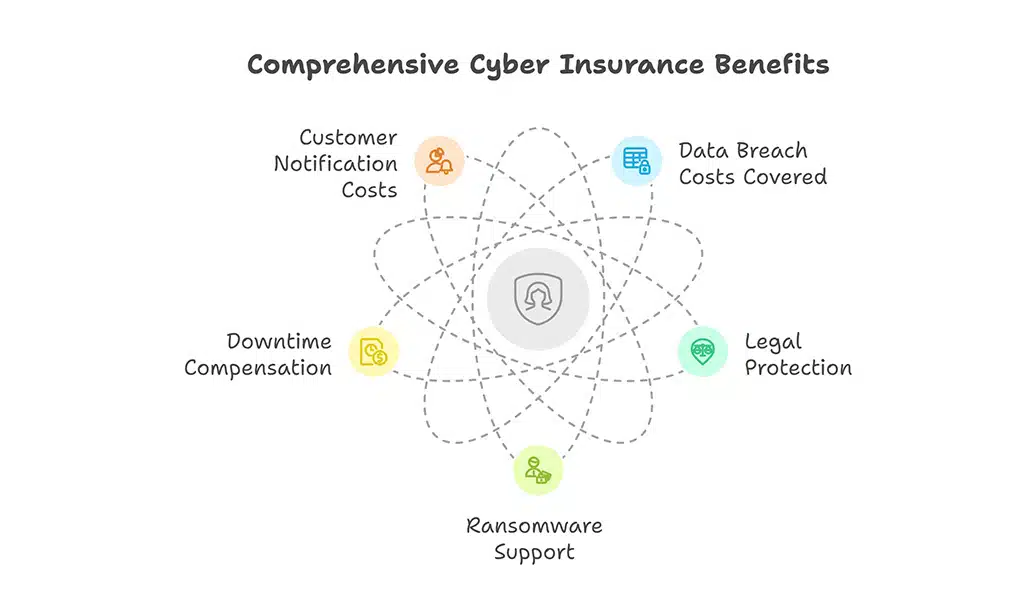
| Cyber Insurance Benefits Overview | Details |
| Data Breach Costs Covered | Notification, PR crisis management |
| Legal Protection | Lawsuits, regulatory penalties |
| Ransomware Support | Negotiation, ransom payment assistance |
| Downtime Compensation | Financial support for lost income |
| Customer Notification Costs | Informing affected parties about breaches |
Case Study: In 2023, a mid-sized e-commerce business in Bengaluru suffered a ransomware attack that encrypted customer data. With a cyber insurance policy, they recovered ₹20 lakhs to cover ransom negotiations, forensic investigations, and business downtime losses, ensuring a swift recovery.
3. What Does a Typical Cyber Insurance Policy Cover?
Key Inclusions in Cyber Insurance Policies
Most cyber insurance policies for businesses in India include coverage for:
- Data breach response: Costs for notifying customers and managing PR crises.
- Loss of business income: Compensation for operational disruptions caused by attacks.
- Third-party liability: Protection against claims made by clients or customers affected by a breach.
| Common Policy Inclusions | Examples |
| Data Breaches | Investigation, notification costs |
| Ransomware and Extortion | Negotiation support, ransom coverage |
| Business Interruption | Revenue loss during downtime |
| Cyber Forensics | Costs for identifying vulnerabilities |
What’s Not Covered?
While cyber insurance for businesses in India offers comprehensive coverage, there are certain exclusions, such as:
- Incidents caused by employee negligence.
- Losses from outdated or unpatched systems.
- Pre-existing vulnerabilities.
Pro Tip: Regularly update your systems and train employees to minimize exclusions and ensure smooth claim processing.
| Policy Inclusions and Exclusions | Details |
| Inclusions | Data breaches, ransomware, phishing |
| Exclusions | Negligence, outdated systems |
| Coverage Period | Typically 1 year, renewable |
4. Who Needs Cyber Insurance in India?
Targeted Businesses and Industries
Any business that relies on digital infrastructure or stores sensitive customer data can benefit from cyber insurance for businesses in India. High-risk industries include:
- Fintech: Due to high volumes of financial transactions.
- Healthcare: Storing confidential patient data.
- E-commerce: Managing payment information and customer details.
| Industries Needing Cyber Insurance | Risk Factors |
| Fintech | High transaction volumes |
| Healthcare | Confidential patient records |
| E-commerce | Payment and customer data |
| IT Services | Dependency on cloud systems |
Cyber Insurance for SMEs in India
Small and medium-sized enterprises (SMEs) are increasingly becoming targets of cyberattacks due to their limited cybersecurity budgets. Affordable cyber insurance policies tailored for SMEs in India provide them with much-needed protection. For example, an SME in Mumbai faced a phishing attack that cost them ₹10 lakhs; a cyber insurance policy covered 80% of the loss, allowing the business to recover quickly.
Additional Insight: A study revealed that 43% of cyberattacks in India targeted SMEs in 2024, highlighting their vulnerability due to lack of robust security measures.
5. How to Choose the Right Cyber Insurance Policy?

Factors to Consider
When selecting a cyber insurance policy, keep the following in mind:
- Policy limits: Ensure the coverage amount aligns with your business’s potential risk exposure.
- Customization: Opt for policies tailored to your industry’s unique needs.
- Reputation of the insurer: Choose an insurer with a proven track record in handling claims efficiently.
Comparing Cyber Insurance Providers in India
| Provider | Key Features | Premium Range |
| Insurer A | Comprehensive coverage | ₹50,000 – ₹2,00,000/year |
| Insurer B | Industry-specific policies | ₹60,000 – ₹1,50,000/year |
| Insurer C | SME-focused solutions | ₹30,000 – ₹1,00,000/year |
| Insurer D | Cloud and IoT coverage | ₹70,000 – ₹2,50,000/year |
Checklist for Choosing the Right Policy:
- Assess your industry’s risk profile.
- Evaluate the insurer’s claim settlement ratio.
- Compare policy premiums and benefits.
- Opt for policies offering end-to-end incident response support.
6. How Much Does Cyber Insurance Cost in India?
Factors Affecting Policy Premiums
The cost of cyber insurance for businesses in India depends on various factors, such as:
- Business size: Larger businesses with more data and systems face higher premiums.
- Industry type: High-risk industries like banking and healthcare may have higher costs.
- Claims history: Businesses with a history of cyber incidents may be charged more.
Affordable Options for Indian Businesses
To keep costs manageable:
- Choose policies with essential coverage.
- Bundle cyber insurance with other business insurance products.
| Cost Determinants | Impact on Premiums |
| Business Size | Larger businesses pay higher premiums |
| Claims History | Higher risk leads to increased costs |
| Industry Risk Level | Banking and IT sectors face higher costs |
7. How to File a Cyber Insurance Claim?
Step-by-Step Process
- Report the incident: Notify your insurer immediately after detecting a cyberattack.
- Document evidence: Provide all necessary documentation, such as incident reports and financial losses.
- Follow insurer guidelines: Cooperate with the insurer’s investigation and submit required information.
Common Challenges in Claim Processing
- Delays due to incomplete documentation.
- Claim rejection for excluded incidents.
| Claim Filing Checklist | Details |
| Incident Report | Describe the cyber incident |
| Financial Records | Evidence of financial losses |
| Insurer’s Guidelines | Follow specific steps provided |
| Contact Details | Ensure updated contacts with the insurer |
8. Are Cyber Insurance Policies Mandatory in India?
Current Regulations
While cyber insurance is not mandatory in India, regulatory bodies like the Reserve Bank of India (RBI) encourage financial institutions to adopt robust cybersecurity measures, including insurance. Cyber insurance for businesses in India ensures compliance and acts as a strong safeguard against escalating cyber risks.
Industry-Specific Requirements
Certain sectors, such as banking and IT services, are adopting cyber insurance as a standard practice to comply with data protection laws and customer trust expectations.
9. What Are the Trends in Cyber Insurance in India?
Growing Demand for Cyber Protection
As cyber threats rise, the demand for cyber insurance for businesses in India is surging. SMEs, in particular, are recognizing its importance. A Nasscom study projects that the Indian cybersecurity insurance market will grow at a CAGR of 24% through 2028.
Innovations in Cyber Insurance Policies
- Use of AI and machine learning for risk assessment and premium calculation.
- Policies tailored for emerging threats like cloud security breaches and IoT vulnerabilities.
| Emerging Trends | Details |
| AI-Driven Risk Assessment | Enhanced accuracy in premium pricing |
| Cloud Security Coverage | Protection for cloud-based platforms |
| IoT Vulnerabilities | Inclusion of IoT-specific risks |
10. How Can Indian Businesses Improve Cybersecurity?
Best Practices for Preventing Cyber Threats
- Regularly update software and systems.
- Train employees to recognize phishing attempts.
- Use multi-factor authentication and strong passwords.
- Conduct regular cybersecurity audits.
The Role of Cyber Insurance in a Comprehensive Cybersecurity Plan
While preventive measures reduce risks, cyber insurance for businesses in India acts as a safety net, providing financial and legal support when incidents occur. Together, they create a robust defense against cyber threats.
| Cybersecurity Tips | Description |
| Software Updates | Patch vulnerabilities regularly |
| Employee Training | Conduct awareness programs |
| Multi-Factor Authentication | Enhance login security |
Takeaways
To sum up, cyber insurance for businesses in India is an essential tool in mitigating the risks posed by an increasingly digital world. It provides financial security, protects reputations, and ensures compliance with evolving regulations.
By addressing these 10 FAQs, we hope to empower Indian businesses to make informed decisions about their cybersecurity strategies.






















