Online shoppers feel stuck when their orders arrive late or get lost. They crave fast delivery, clear updates, and easy returns. Fact: live tracking now appears in 90% of ecommerce logistics to boost customer satisfaction.
This post will guide you through seven trends that reshape your online shopping. We will cover hyper-personalization, AI and machine learning, and 3PL solutions to speed up last-mile delivery.
We will show how green trucks, AR and VR, robot pickers in distribution centers, and demand forecasting help your order arrive fast. Keep reading.
Key Takeaways
- 90% of ecommerce logistics now use live tracking to give shoppers real-time updates and speed last-mile delivery.
- 71% of consumers expect hyper-personalized offers, and brands that deliver see a 39% lift in average order value (McKinsey & Company).
- AI chatbots cut support wait times by 50% and lower costs by 40% (Talkdesk); H&M’s Ada bot boosted chat use 200% and revenue 70%.
- Voice-powered logistics will hit $50 billion by 2029, and 40% of US internet users use voice helpers monthly for order tracking.
- AR users will grow from 1.5 billion in 2021 to 4.3 billion by 2025, and AR previews help shoppers try products and cut returns.
Rise of Hyper-Personalization in Logistics
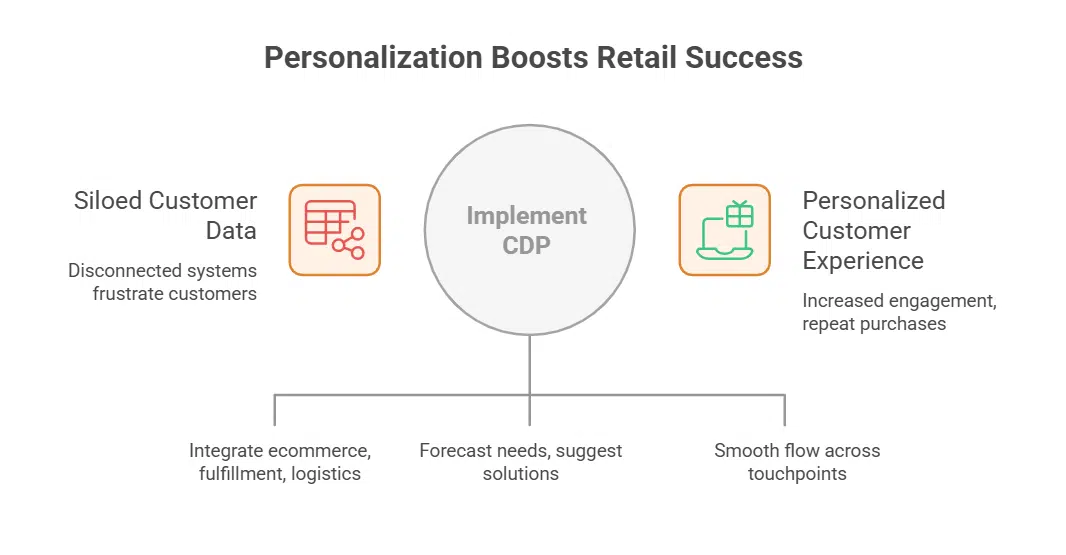
Retailers tap Customer Data Platforms to join dots across ecommerce platforms, fulfillment centers and third-party logistics providers. They link order history, inventory tracking and real-time tracking, boosting customer experience.
That data power gives them very specific delivery slots, product bundles and packing options. Seventy-one percent of consumers expect personalization; seventy-six percent feel frustrated without it.
Brands that hit the mark enjoy a 39 percent lift in average order value, per McKinsey & Company.
Supply chains add predictive analytics and artificial intelligence in their logistics support. They forecast what a shopper might want next, sending smart suggestions before carts sit idle.
Seventy-three percent of customers expect brands to know their needs and recommend solutions. Sixty-one percent of CMOs put personalization at the top of loyalty tactics. Teams break down silos so all touchpoints flow smoothly.
That shift boosts customer engagement and raises repeat purchase odds by 68 percent, even as third-party cookies fade.
Seamless Omnichannel Experiences for Shoppers
Shoppers hop from mobile apps to online stores to physical branches, and they want a single, smooth path. 75% of buyers mix channels to compare and shop. Integrated omnichannel logistics unify inventory and fulfillment, and they keep products in stock across all purchase methods.
This inventory tracking hub, paired with a centralized order management system, cuts stockouts and links ecommerce logistics with supply chain lanes. Happy multichannel buyers spend 13% more in shops than single channel shoppers, and they pile on items at the checkout like kids grabbing candy.
Digital commerce portals, mobile application interfaces, and brick and mortar outlets share data via a storage management hub. This system links checkout, returns, and last-mile delivery.
Target saw 10% revenue growth after it added Pinterest Lens to its app, and it taps third-party shipping partners and robotic picking systems to speed order flow. Brands that sync supply chain steps, from packaging and labeling to delivery speed, boost customer satisfaction.
Satisfied omnichannel shoppers prove 3.6x more likely to buy extra services or products. B2B buyers enjoy the same perks, and they lean on this smooth flow when they reorder stock.
Adoption of AI and Machine Learning in Customer Service
Smart bots powered by machine learning speed up the buyer journey in ecommerce logistics. Brands that add AI agents cut wait times by half. Talkdesk data shows 50% faster support and 40% lower costs.
Seventy percent of shoppers feel closer to brands that stay online 24/7. About 73.5% of buyers trust bots on social media channels. Generative AI powers emails and ads in nearly 60% of firms.
It feels like having a tireless helper that never takes a coffee break. This tool gives real-time tracking updates and clear answers in a flash.
Predictive analytics tools like Microsoft BI, Tableau, and Qilk pull in order data and delivery updates. Qilk helps teams spot trends in last mile and supply chain flows. H&M’s Ada bot uses these insights to boost chat use by 200% and lift revenue by 70%.
Sixty-two percent of customers pick chatbots over human help if it saves time. This shift drives higher customer satisfaction scores. It makes each support chat a chance to build loyalty.
Proactive Customer Engagement for Anticipating Needs
Gartner found only 13% of 6,000 customers got proactive service. A 73% majority wants brands to read their needs and offer solutions. Brands use feedback and behavior data to predict issues.
They fix them fast and lift NPS and customer satisfaction by one point. Many 3PL providers gather massive customer behavior data but skip trend analysis. That gap trips up ecommerce logistics and online shopping journeys.
Predictive planning and real-time visibility help a transport system forecast demand. It lets teams manage inventory and speed last-mile delivery. Igor Iakovlev at Elogic says analytics can boost revenue by up to 50x.
Retail logistics teams link warehouse solution data, shipment records, and inventory tracking in a simple dashboard. They map customer journeys to spot issues early and cut supply chain risk.
Fast delivery and real-time tracking keep customers happy and ease international shipping headaches.
Integration of Voice Technology in Logistics Processes
Voice tech grabs attention in ecommerce logistics. It tops fifty billion dollars in global sales by 2029. Forty percent of US internet users speak to a voice helper each month. Smart speaker platforms link to a cloud computing platform, using an API to sync with warehouse management software.
A speech recognition system answers order tracking requests in seconds. Real-time tracking feeds speed up last-mile delivery and lift customer satisfaction. Shoppers book same-day delivery slots by voice.
Commands trim load on a contact center and ease supply chain issues.
Mercedes me connect shows voice control in vehicle logistics. Shippers order electric delivery vehicles and hybrid delivery vehicles via speech. Drivers alert hubs to location and inventory tracking with voice prompts.
Third-party logistics outfits gain an edge in a crowded supply chain market. Voice input links to robotic picking systems on the warehouse floor. That cut picking errors and boost inventory management.
Customer engagement jumps when online shoppers track parcels by voice. Brands even tweak website development and packing materials for voice queries.
Leveraging AR and VR for Enhanced Customer Interaction

AR users will grow from 1.5 billion in 2021 to 4.3 billion by 2025, fueling new ecommerce logistics tools. Apple released Vision Pro in 2024 and added spatial commerce to digital shopping.
Malfy Gin let drinkers swim around the Amalfi Coast with AR on their phones. This immersive interactive demo improved product storytelling, boosted customer engagement, and raised conversion rates.
Retailers let shoppers try on clothes or place a sofa in a room with a tablet. This type of preview cuts returns and uplifts customer satisfaction in online shopping. Logistics systems link AR previews to real time tracking, so buyers see order status just after they test a product.
Third party logistics teams and warehouses use VR training simulations in aisles, cutting errors and speeding up inventory management. Fast delivery and robotic picking systems keep pace with this immersive shift.
Focus on Sustainable and Green Logistics Practices
Retailers shift to recyclable or compostable packaging, cutting waste in online shopping. They optimize routes with a route planner tool, trimming emissions in the supply chain. This move boosts brand values and cements customer loyalty among eco-minded segments.
A 3PL partner uses carbon counters and real-time tracking to curb fuel use and speed up inventory management.
Larger carriers roll out electric trucks and hybrid vans for parcel delivery in e commerce logistics. Shoppers spot an eco-friendly choice at checkout, aligning purchases with green values.
This step drives cost savings and lifts customer experience (cx). A voice-operated app updates inventory tracking and supports industrial automation in retail logistics.
Takeaways
These seven shifts show how new logistics tools can change your shopping world. They push firms to use AI and forecast scheduling for better stock control. Live status updates and hybrid fulfillment make fast delivery a breeze.
Automated picker arms and contactless drop-offs cut mistakes and speed orders. Battery-powered vans and solar box wraps help cut waste. Voice assistants chat with you when you have a question.
3D view tools give shoppers a fun peek at goods. Trends like these boost ecommerce logistics and spark repeat orders.
FAQs on Customer Experience Trends in Logistics
1. What drives customer experience trends in online shopping logistics?
Online retail saw a boom in the pandemic. Shoppers now want fast delivery and real time tracking. They also look for sustainable practices with e trucks and hybrid trucks. Global supply chain adapts to consumer preferences.
2. How do fast delivery and last mile delivery boost customer satisfaction?
Fast delivery means happy shoppers. A smooth last mile cuts worry and brings smiles. High delivery speed wins repeat orders. It lifts customer satisfaction every time.
3. Why is real time tracking key to customer engagement?
Shoppers like to watch a moving map after they click buy. It feels like a live show. Real time tracking trims support calls. It builds customer engagement and trust.
4. How do AI and robotic arms improve inventory management in ecommerce logistics?
AI spots low stock before it runs out. Robotic arms pick items in seconds. This cuts errors, saves time, and speeds up inventory tracking. It brings better supply chain optimisation.
5. What role do 3PL and outsourcing play in retail logistics?
3PL firms help brands scale fast. They handle warehousing, inventory management, and shipping. Outsourcing eases risk management across a global supply chain. It frees retailers to study consumer behavior.
6. How do sustainable practices and e trucks shape the future of supply chain?
Brands add solar panels on warehouses for power. They run e trucks in last mile delivery. Hybrid trucks cut diesel use too. These green moves draw eco minded customer segments.