Listen to the Podcast:
In recent times, Software as a Service (SaaS) has become a favored choice for organizations looking to modernize their operations and enhance their performance and productivity. However, developing a SaaS platform can be an expensive and complex process that needs careful budgeting and planning.
In this article, we will explore the various factors that impact the cost of building a SaaS platform, from development and hosting to ongoing maintenance and support. By understanding the different components involved in building a SaaS platform, you can make more informed decisions about your budget and ensure that your project is set up for success from the outset. Moreover, choosing the right partner for SaaS development can make the software development procedure quicker and hassle-free.
What is a SaaS application?
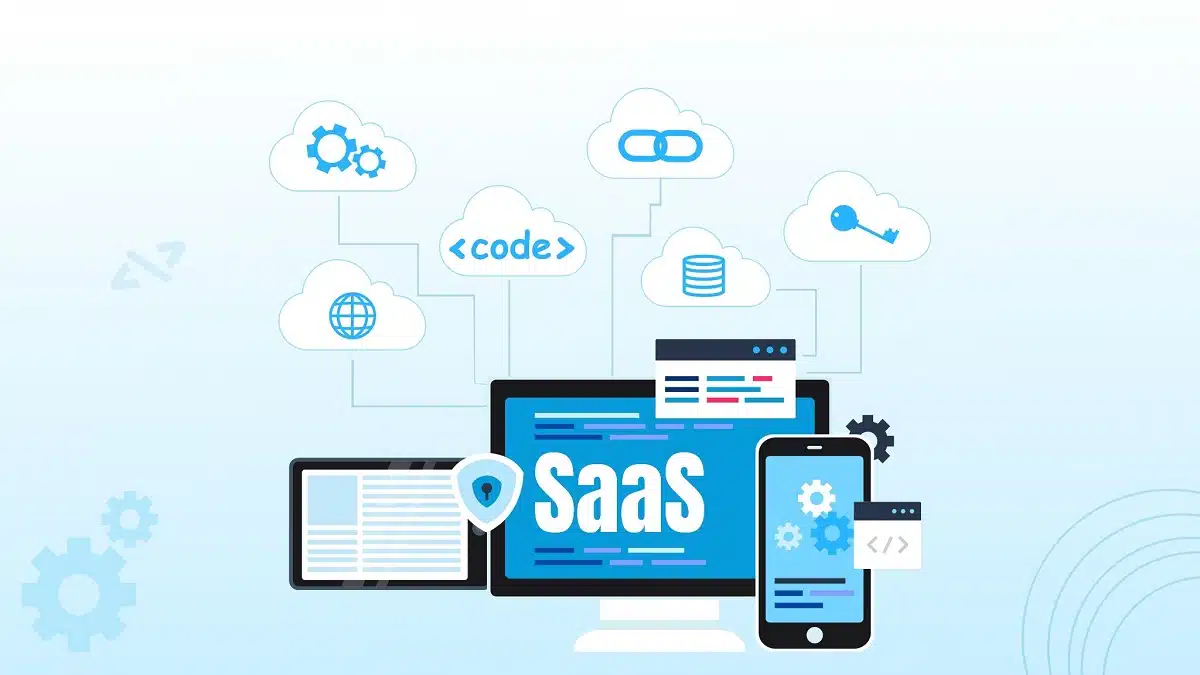
A SaaS app, also known as Software as a Service app, is a type of project that is provided and hosted by a third-party provider and used by end-users over the internet. Instead of installing the software on their own systems or servers, the users can gain access to the app through a web browser or a simple dedicated app.
SaaS apps are subscription-based, where users pay a monthly or yearly fee to use the software and the features. Some well-known examples of SaaS apps are the customer relationship management (CRM) app, various project management tools, and also email marketing platforms. One of the key benefits of SaaS apps is that they can be quickly scaled up or down to fulfill quickly changing business needs; which makes them an admired choice for firms of different sizes.
Why is SaaS development useful?
The era of SaaS app development is evolving constantly, with fair new trends appearing all the time. Here is the list of the latest SaaS development trends:
Serverless Computing
Serverless computing or function-as-a-service (FaaS), is nothing but a cloud computing structure where cloud providers manage the fundamental infrastructure and automize provisions, and manage resources as needed to run the code. In this architecture, developers can concentrate on writing code to generate specific tasks, without worrying about managing the infrastructure of the server or capitalizing on resources that aren’t used.
In this technical trend, the code is split into smaller functions that are independent and each of them performs a unique task. When any event makes a function work like a user request, the cloud provider will dynamically allocate the required resources for running the function, and then cancel those resources when the function completes. This means that businesses only pay for the time that their code is actually running, rather than for the resources that are provisioned 24/7.
Serverless computing has many benefits improved scalability and flexibility, reduced costs, faster time-to-market for apps, etc. It is particularly a good alternative for apps that have undecided workloads or occasional usage patterns, as it allows resources to be allocated on an as-needed basis.
AI and Machine Learning
AI or Artificial Intelligence is the ability of computer systems or machines to execute any tasks that normally need human intelligence like problem-solving, learning, and decision-making. Machine learning or ML is a subset of AI that includes using statistical models and algorithms to enable machines to know more from data and enhance their performance over time.
In ML, computer systems are trained to know the patterns in data and predict or decide things based on those patterns. This includes feeding a large set of data into the ML algorithm, which allows it to automatically find correlations and make predictions based on that data. The more information that is fed within the algorithm, the more suitable its predictions become, as it can identify more correlations and patterns.
One of the key advantages of AI and machine learning (ML) is their ability to make the processes automatic and reduce the requirement for human presence. This can lead to good productivity and efficiency, and the ability to analyze huge amounts of data in real time. However, it’s essential to note that AI and ML are not perfect and can make errors, which is why it’s essential to have humans at your side to monitor and correct errors.
Microservices Architecture
This trend is a modern approach to the app or s/w development that includes splitting a large app into smaller and independent services that can be deployed, developed, and updated independently of each other. Each service is made to execute required business characteristics and communicates with various services using APIs (Application Programming Interfaces).
In a microservices architecture, each service is tested, deployed, developed, etc., independently; and has greater resilience, flexibility, and scalability according to Vishal Shah, a software development expert from TatvaSoft. This means that updating any one service does not affect any other service, and new services can be removed or added without changing the entire application.
This feature also allows developers for good fault isolation; if one service fails or has a performance issue, it will not essentially affect the entire app. This makes it quicker to find and troubleshoot errors, as well as to make changes or updates more efficiently and quickly.
Remote Collaboration made possible with SaaS tools
A popular SaaS tool- Slack is a good alternative for remote collaboration. It is a professional messaging tool that helps team members to communicate in real time. Slack helps people to organize their communications into channels, also send DMs (direct messages), and add it with other tools and apps.
Another popular name is Zoom, which is an online video conference platform that helps people to meet virtually and also communicate in real time. Zoom has features like recording, screen sharing, and different virtual backgrounds, and is commonly used for remote team webinars and meetings.
Other platforms are Trello, Google Drive, Harvest, Dropbox, etc. These tools have their own pros and cons and are used for different functions.
Cost of Building a SaaS Application
The SaaS App development cost can be different depending on various factors like the complexity of the app, the characteristics and functionality needed, the hourly rate of the development team, and the approach and platform used for development.
For instance, a basic SaaS app with primary and basic features like user management, basic analytics, and data storage can cost approx $10,000 – $50,000.
However, if your app needs advanced features like machine learning or various complex integrations, the cost can go high up to $50,000 – $150,000 or more.
In addition, to the beginning development costs, there are also certain expenses to monitor like maintenance and support costs, server and hosting costs, regular updates, etc. These expenses can add up with the passing of time and should be counted into the whole budget for the SaaS app.
It’s essential to note that the development cost of developing a SaaS app can also depend on the developers’ location and hourly rate. For instance, a team based in the US or Europe may be more costly than a team based in India or Eastern Europe.
Final Words
In conclusion, developing a SaaS app can be an expensive process, but it can also be a rewarding endeavor if done correctly. The SaaS application development cost can vary based on different features like the development team’s hourly rate, and the project-making approach used. It’s essential to consider these facts and the business budget before deciding on SaaS app development. However, the quality rewards of any successfully running SaaS app include scalability and recurring revenue, which can make the initial investment worth it. Ultimately, it’s essential to approach SaaS app-making with a realistic budget, a clear plan, and also a future-proof vision to make sure that it gets successful.