
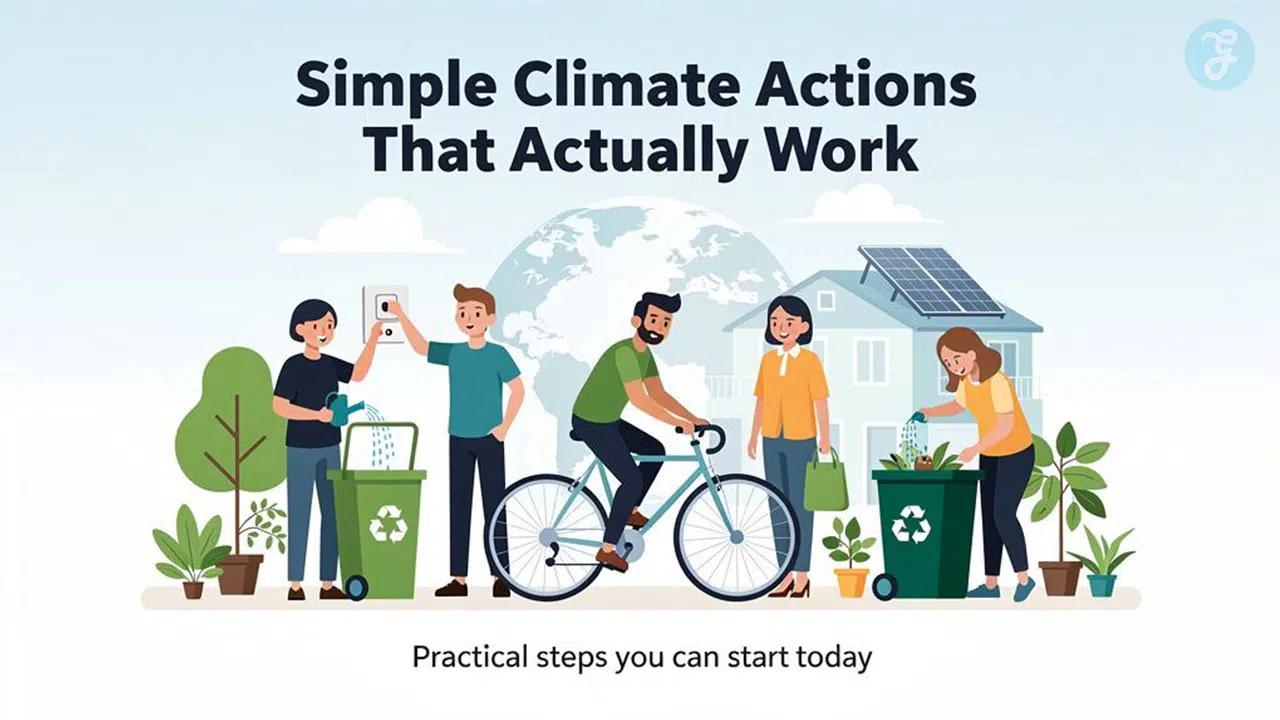
Are you tired of feeling like your efforts to help the environment don’t matter? You recycle, use less plastic, and maybe even take shorter showers. Still, climate change often feels too big for any one person to handle. Here is a fact that might surprise you: simple changes in how we live can cut global carbon emissions by significant amounts. In fact, a 2024 study suggests that shifting to a plant-rich diet alone can drop your personal food-related emissions by nearly 46%.
This guide will walk you through six Climate Actions anyone can start today. We are going to look at smart ways to save energy, pick better transportation, and eat with the planet in mind.
Why Taking Climate Action Matters
Rising temperatures are melting ice in places like Greenland and Antarctica, and sea levels are growing higher each year. This puts homes at risk from floods and changes weather patterns right in our own backyards.
Burning fossil fuels pumps carbon emissions into the air, which warms our planet and harms animals, plants, and people. NASA confirmed that 2023 was the hottest year on record, and 2024 continued that alarming trend.
Acting now helps protect clean water, safe food, and healthy air for future generations. Small changes add up fast when millions of us work together for conservation.
Kids want to play outside without breathing smog. Grandparents look forward to seasons as they once were. As climate change speeds up, your choices about renewable energy or waste reduction create a real impact.
“The greatest threat to our planet is the belief that someone else will save it.” – Robert Swan
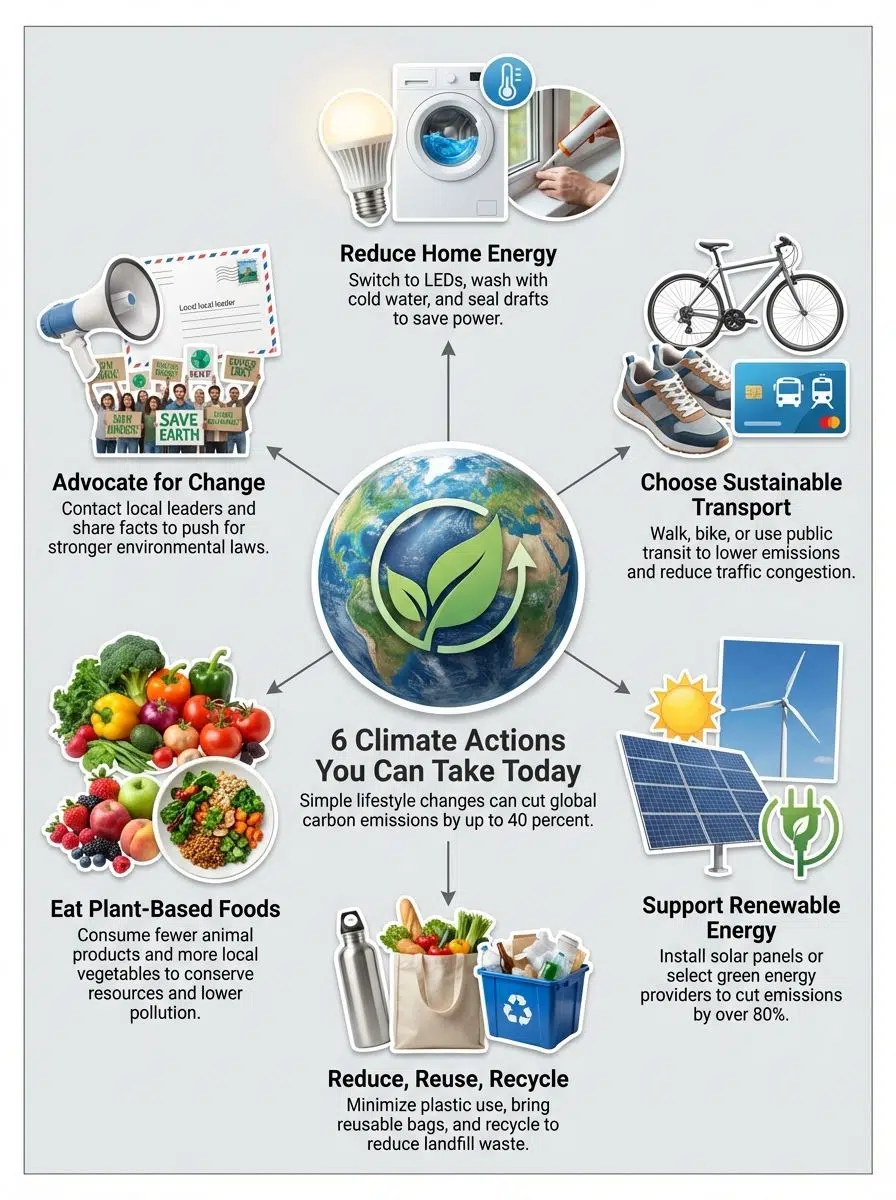
Here are six ways you can start helping right away.
6 Climate Actions You Can Take Today
Small steps can make a real splash in the world around us. You might be surprised how much power you hold to spark change, right from where you stand.
1. Reduce Energy Consumption at Home
Most of us pay for electricity we aren’t even using. This is often called “vampire power”, energy drained by devices like TVs, game consoles, and coffee makers, even when they are turned off.
According to the Department of Energy, these silent leaks account for 5-10% of residential energy use. That costs the average U.S. household roughly $100 to $200 every year.
Simple Swaps for Big Savings:
- Attack Vampire Power: Plug your entertainment center or home office setup into a smart power strip. These cut power to all devices at once when you turn off the main switch.
- Switch to LEDs: If you haven’t yet, swap older bulbs for LED ones. They use up to 75% less energy and last 25 times longer than incandescent lighting.
- Wash with Cold Water: Heating water takes up about 90% of the energy your washing machine uses. Switching to cold water cleans just as well for most loads and saves you money instantly.
- Upgrade Your Thermostat: Smart thermostats like Google Nest or Ecobee learn your schedule. They can lower your heating and cooling bills by about 8-12% annually without you lifting a finger.
These changes shrink your carbon footprint while keeping money safe in your pocket, literally saving both the planet and pennies at once!
2. Opt for Sustainable Transportation
Getting from point A to point B is one of the biggest opportunities to lower emissions. While we often think we need to drive everywhere, other options are often cheaper and healthier.
Ride a bike or walk to places nearby. Use buses, subways, or carpool with friends. Fewer cars on the road means fewer emissions and cleaner air for everyone.
The Financial Upside:
Public transportation helps save money and reduces traffic jams. According to the American Public Transportation Association, a household can save around $13,000 a year by taking transit and living with one less car.
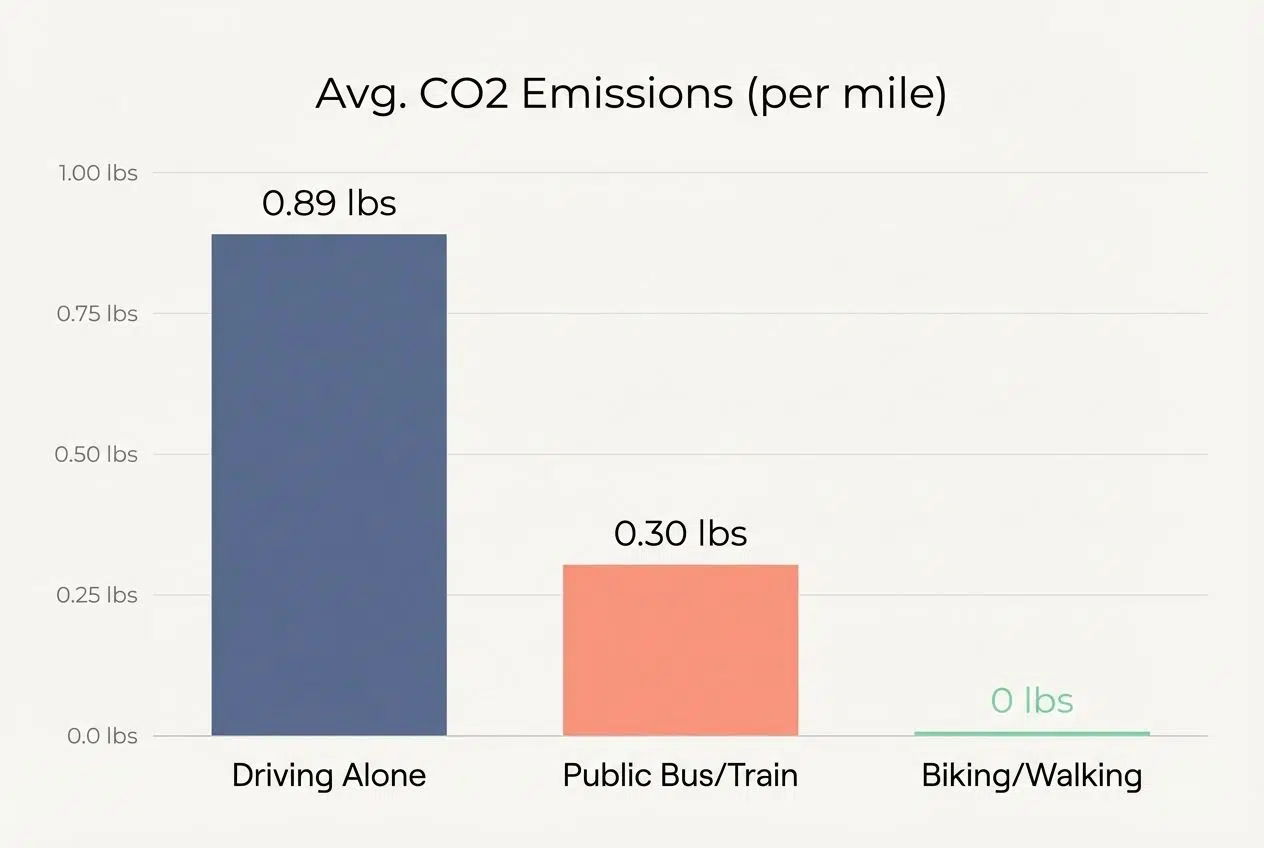
| Transport Method | Avg. CO2 Emissions (per mile) | Estimated Monthly Cost |
|---|---|---|
| Driving Alone (Gas Car) | 0.89 lbs | $900+ (Ownership & Gas) |
| Public Bus/Train | 0.30 lbs | $50 – $150 (Passes) |
| Biking/Walking | 0 lbs | $0 |
If you must drive, consider an electric vehicle (EV). Thanks to the Inflation Reduction Act, you may qualify for a federal tax credit of up to $7,500 for a new EV or $4,000 for a used one.
3. Support Renewable Energy Initiatives
Switching to renewable energy makes a big difference for the environment. Solar panels or wind power at home can cut carbon emissions drastically.
For homeowners, the federal government offers the Residential Clean Energy Credit. This allows you to subtract 30% of the cost of installing solar panels, wind turbines, or battery storage from your federal taxes.
Options for Renters:
If you rent or can’t install panels, look into Community Solar. This model lets you subscribe to a local solar farm. You get credits on your electric bill for the power produced, often saving you 5-15% on electricity costs without installing a single panel.
Even small changes add up fast, like choosing a supplier who invests in renewable energy rather than fossil fuels. Every choice helps shrink your carbon footprint and pushes for more eco-friendly solutions across your local economy.
4. Reduce, Reuse, and Recycle Correctly
Most trash ends up in landfills, filling them fast and harming our environment. Each year, Americans throw away over 292 million tons of garbage.

Cutting down on what you toss out really helps reduce carbon emissions, but you have to do it right. A common mistake is “wish-cycling”, tossing greasy pizza boxes or plastic bags into the bin, hoping they get recycled.
This actually contaminates the whole load, sending it all to the landfill. Check your local sanitation rules to be sure.
Modern Tools to Reduce Waste:
- Fight Food Waste: Apps like Too Good To Go let you buy unsold food from local restaurants at a huge discount. You save money and keep perfectly good food out of the trash.
- Join the Circular Economy: Before buying new, check your local “Buy Nothing” group on Facebook. It’s a great way to find free items or pass along things you no longer need.
- Ditch Single-Use: Bring your own bags to stores or carry a reusable water bottle. These simple swaps save money and space in our bins.
Old clothes can become rags or go to someone who needs them. Every little bit counts when protecting nature for everyone.
5. Adopt a Plant-Based or Sustainable Diet
Eating less meat and dairy is one of the most powerful personal changes you can make. Livestock farming makes up nearly 15 percent of global greenhouse gas emissions, according to the United Nations.
You don’t have to go fully vegan to help. A 2024 study published in Nature Food found that even small reductions in meat consumption can lower your dietary carbon footprint significantly.
Try plant-based foods like beans, lentils, tofu, and whole grains. These choices use fewer resources and create less pollution than beef or lamb.
Easy Ways to Start:
- Meatless Mondays: Commit to one day a week without meat. It forces you to try new recipes and cuts your impact by 1/7th instantly.
- Shop Local: Local fruits and veggies do not have to travel far, so they cut down on transportation emissions too. Check apps like Farmish to find local growers near you.
- Look for Labels: Choose foods labeled organic or sustainable when you can for extra climate care.
Even small changes add up quickly if we all chip in!
6. Advocate for Climate Policies and Awareness
Speak up for the environment. Call or write your leaders about climate action. Support groups that push for change, like Fridays For Future or The Nature Conservancy.
One highly effective organization is the Citizens’ Climate Lobby (CCL). They train regular people to build relationships with their members of Congress to pass bipartisan climate legislation.
Talk with family and friends about carbon emissions, clean energy, or simple steps at home to help the planet. Join community events, town halls, or workshops focused on sustainability.
Ask schools to teach more about conservation and renewable energy in class projects. Every voice can spark interest and push for laws that protect air, water, and land.
How to Stay Informed and Involved
Curious about keeping your finger on the pulse and finding new ways to get involved, even from your living room? Stick around, fresh ideas are just ahead.
Follow Reliable Climate News Sources
Follow news from sources that check their facts. Good choices include NASA Climate, National Geographic, and EPA.gov. These sites give updates on climate change, conservation tips, and green initiatives in real time.
Social media can spread stories fast, but not always true ones. Pick scientists or respected organizations to follow for accurate reports about energy efficiency and carbon emissions. Staying up-to-date helps you act smarter for the environment every day.
Join Local Environmental Groups
Local environmental groups bring people together to protect nature. These clubs often plant trees, clean up parks, and fight pollution in the community. Volunteers share tips about reducing waste and saving energy. You meet others who care about climate change, too, which makes action easier and more fun.
Some groups work on renewable energy projects or help with recycling drives. Joining lets you use your voice for laws that support sustainability and cut carbon emissions. Many neighborhoods have monthly meetings or events so everyone can stay active without feeling rushed or overwhelmed.
Getting involved leads right into other chances to participate in climate action events nearby.
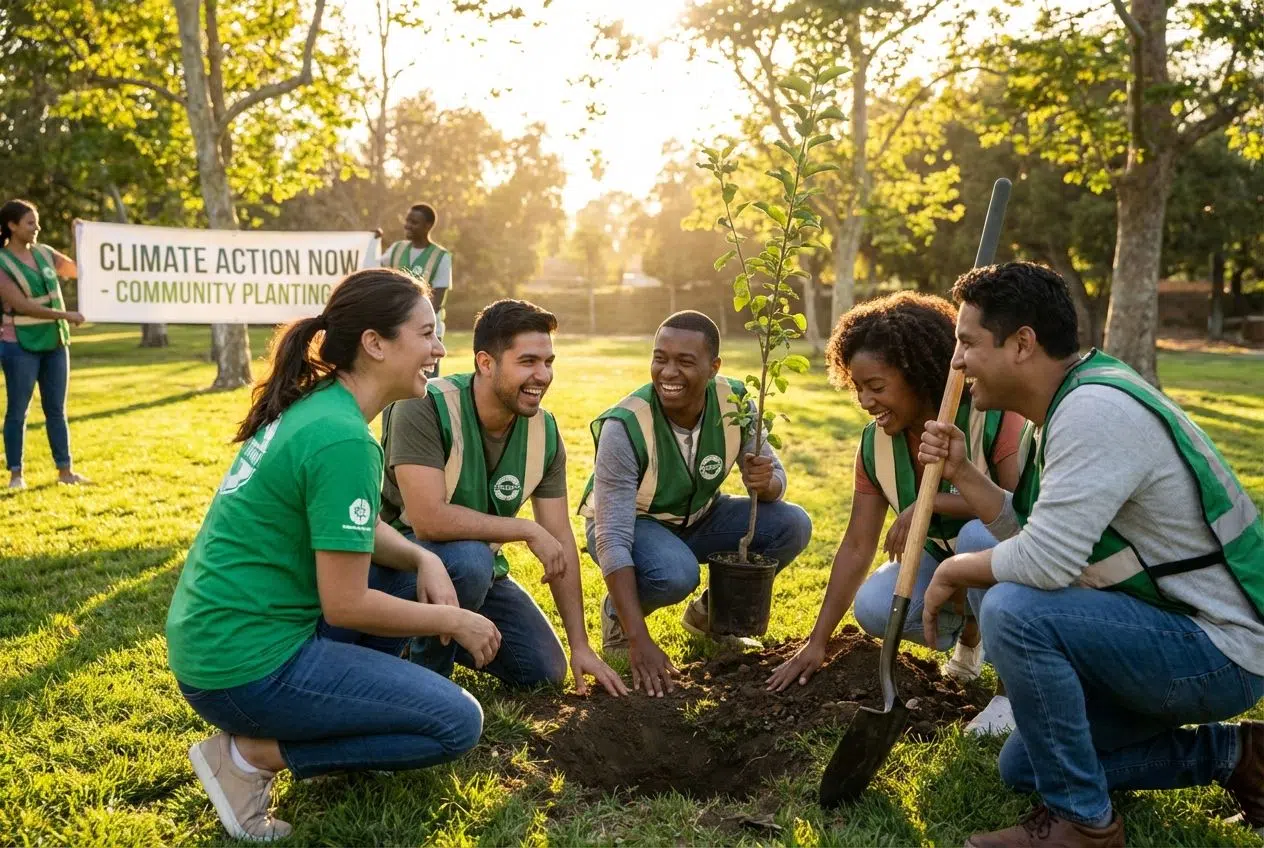
Participate in Climate Action Events
Go to marches, tree plantings, or clean-up drives. These activities show your support for sustainability and help protect the environment in hands-on ways. Many groups plan events for Earth Day each April or during Climate Week every September.
Bring a friend along; the more people join, the bigger the push for real change. Events often raise awareness about climate change and offer easy steps you can take next. Some even connect you with local leaders working on green initiatives like renewable energy projects or cutting carbon emissions.
Joining these actions helps build new friendships, too, all while making a positive impact in your community.
The Broader Impact of Individual Actions
Tiny steps lead to big changes. One person using less energy at home cuts down on their carbon footprint, but it also inspires others. Imagine a whole community switching off lights or choosing eco-friendly transportation. That creates real change, right on your street.
Each plastic bottle recycled saves resources and keeps waste out of landfills; it adds up fast. People often think small acts do not matter, yet history shows ripple effects work wonders.
Social scientists call this a “social tipping point.” Research suggests that when just 25% of a group adopts a new social norm, like installing solar panels or carrying reusable cups, the rest of the group often follows.
Greta Thunberg started with solo school strikes for climate action in 2018; soon, millions joined her in cities worldwide. Your choices send a strong message to leaders and businesses, too. Change starts at home, but its echo spreads far beyond one doorstep, right into the heart of global sustainability efforts.
Expand Climate Knowledge
Keep an eye out for new research and smart ideas about climate solutions, as curiosity is your best friend here. Spark conversations with neighbors or friends, sharing what you learn can kindle real change faster than wildfire.
Keep Up-to-Date on Climate Topics
Climate change news changes fast. Top scientists reported record-high global temperatures in 2023, and that impacts us all. New rules about carbon emissions and renewable energy pop up each year, so staying informed helps you make better choices. Try checking trusted sources like NASA’s climate site or the EPA’s updates once a week.
Kids can even learn from fun sites designed for their age group. Online newsletters or podcasts break down hard topics into bite-sized bits.
Local news sometimes shares stories about your area’s environment, too, like recycling programs or ways to cut waste at schools. Quick updates help you spot which climate actions work best right now.
Spread Awareness and Motivate Others
Share easy facts about sustainability with your friends and family. Start a chat at the dinner table or post quick tips online, like how recycling one ton of paper can save 17 trees.
Use stories to connect; talk about how small steps, such as using less plastic, lower carbon emissions over time. People listen when you show passion. Cheer on others for eco-friendly choices. Bring up green initiatives in group talks or neighborhood meetings.
Share news articles about renewable energy growth or local conservation events to spark interest and action. Your words can plant seeds for lasting change wherever you go.
Wrapping Up
Each small step matters. Plant a tree, talk to your friends about climate change, or switch off one extra light today. Every action lowers your carbon footprint and helps our planet breathe a bit easier. You do not have to be a scientist or an activist to make change happen.
Think of it as tending a garden; little efforts add up over time. Big changes start with simple choices, like using less energy at home or picking public transportation for short trips.
Helping the environment is not something only governments can do; each person has the power in their hands every day. Stay curious, keep learning new ways to protect Earth, and inspire others by showing what you can do right now for sustainability and conservation.