

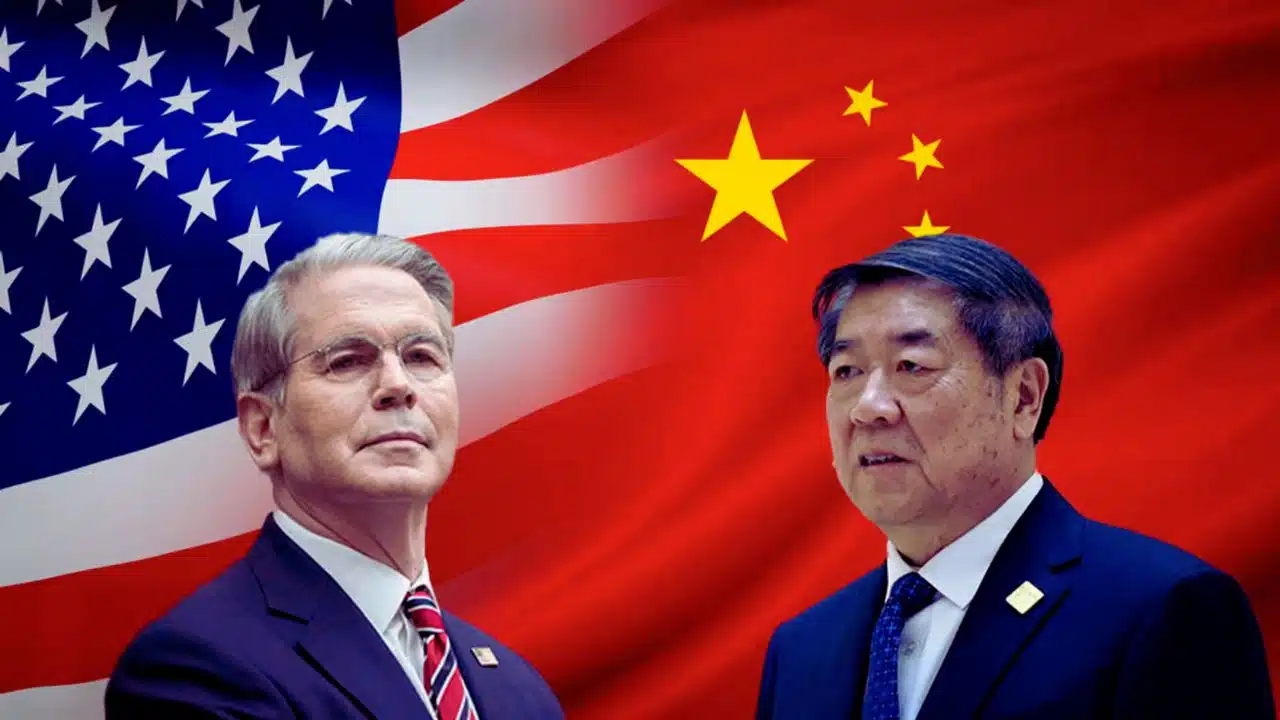
In a significant pivot for global supply chains, China has announced the suspension of stringent export controls on rare-earth minerals, a move that analysts say could defuse escalating trade frictions with the United States and stabilize prices for critical tech components .
The decision, effective immediately, reverses months of tightened regulations that had rattled industries from electric vehicles to defense manufacturing, signaling Beijing’s willingness to de-escalate amid broader economic pressures.
This development comes at a critical juncture, as rare-earth elements—vital for everything from smartphone magnets to wind turbines—remain dominated by China’s near-monopoly, controlling over 80% of global production and processing . US officials have cautiously welcomed the step, viewing it as a potential olive branch in ongoing tariff disputes, though questions linger about the permanence of the policy shift.
Background on the Export Controls
Rare-earth exports have been a flashpoint in US-China relations since the early 2010s, when Beijing’s dominance first sparked Western fears of supply weaponization . In recent years, China imposed tighter quotas and environmental compliance rules, citing domestic resource preservation and ecological concerns, which effectively halved exports to the US in 2024 alone . These measures exacerbated shortages, driving up costs for American manufacturers and prompting the Biden administration to accelerate domestic mining initiatives like the Mountain Pass facility in California.
The suspension, detailed in a statement from China’s Ministry of Commerce, lifts immediate restrictions on key elements such as neodymium, dysprosium, and praseodymium, allowing shipments to resume at pre-2024 levels under standard licensing . Industry experts attribute the reversal to China’s own economic slowdown, including sluggish manufacturing demand and retaliatory US tariffs on Chinese EVs and solar panels.
Implications for US-China Trade Dynamics
The policy change arrives amid tentative progress in trade talks, following high-level meetings in October 2025 that aimed to prevent a full-blown tech decoupling . For the US, it offers short-term relief: prices for rare-earth oxides have already dipped 15% in pre-market trading on Asian exchanges, benefiting firms like Tesla and General Electric . However, skeptics warn that without a formal trade agreement, Beijing could reinstate controls, underscoring the fragility of the truce.
On the Chinese side, the move may bolster export revenues, which dropped 20% year-over-year due to prior restrictions, while appeasing international partners wary of supply chain vulnerabilities . It also aligns with China’s “dual circulation” strategy, emphasizing domestic tech self-sufficiency while selectively opening markets to ease foreign investment inflows.
Global Supply Chain Ripple Effects
Beyond bilateral ties, the suspension reverberates through global industries. In the renewable energy sector, where rare earths power magnets in turbines and EV motors, European automakers like Volkswagen stand to gain from stabilized supplies, potentially lowering production costs by 10-15% . Defense contractors, including Lockheed Martin, which rely on these materials for missile guidance systems, have reported immediate inventory reassessments to capitalize on the easing .
Environmental advocates, however, express mixed views: while reduced export hurdles might slow China’s push for greener domestic processing, it could inadvertently prolong reliance on less-regulated mining abroad . Looking ahead, this could accelerate diversification efforts, with Australia and Vietnam ramping up their own rare-earth projects to challenge China’s grip.
Broader Economic and Geopolitical Context
China’s decision reflects mounting domestic challenges, including a property market slump and youth unemployment hovering at 15%, prompting Beijing to prioritize export-driven growth . Geopolitically, it softens tensions ahead of the US presidential transition in January 2026, where incoming policies could either build on the détente or escalate restrictions . Analysts predict a modest boost to global GDP, estimating 0.2-0.5% growth in affected sectors over the next year .
As markets digest the news, stakeholders from Washington to Shenzhen are monitoring for follow-up measures, such as WTO compliance reviews or joint investment pacts . This suspension marks not just an economic adjustment, but a calculated step in the intricate dance of superpower rivalry, where rare earths continue to unearth deeper strategic layers.





















