
Austria, known for its stunning landscapes, rich cultural heritage, and high quality of life, has become an attractive destination for foreign buyers looking to invest in property. However, buying property in Austria as a foreigner involves navigating a unique set of legal requirements. Understanding these requirements is crucial to ensure a smooth and lawful property transaction.
This article provides a comprehensive guide to the legal requirements for buying property in Austria as a foreigner, covering everything from eligibility criteria to the final stages of property registration. By the end, you’ll be well-equipped with the knowledge needed to embark on your property journey in Austria with confidence.
1. Eligibility to Purchase Property in Austria as a Foreigner
Before you begin your property search in Austria, it’s crucial to understand the eligibility rules for foreigners wishing to buy real estate. The rules differ for EU/EEA citizens and non-EU nationals.
General Eligibility Rules
Austria has specific regulations regarding who is allowed to buy property. The regulations vary for EU/EEA citizens versus non-EU nationals. Let’s break down the basic eligibility criteria for both groups:
| Buyer Type | Eligibility to Buy Property | Requirements |
| EU/EEA Citizens | Allowed with few restrictions | EU/EEA citizens do not require special permits to purchase property in Austria. The process is similar to Austrian nationals. |
| Non-EU Citizens | Allowed, but with more restrictions | Non-EU nationals may need to prove economic ties to Austria or apply for special permits. There may be additional limitations based on the property type or its location. |
- EU/EEA Citizens: Citizens from EU and EEA countries are generally allowed to purchase property in Austria with few restrictions. As an EU/EEA citizen, you don’t need special permits, and the process is nearly identical to that of Austrian citizens.
- Non-EU Citizens: Non-EU nationals may also purchase property in Austria, but the process is slightly more complicated. Certain restrictions apply, particularly concerning the location of the property and the type of property being purchased.
Residency Requirements
For non-EU citizens, purchasing property often comes with additional requirements, such as proving economic ties to Austria or demonstrating a genuine intention to reside in the country. This could include obtaining a residency permit or demonstrating that the purchase will contribute to the local economy, such as through business investment.
- Non-EU nationals must prove that they have a valid reason for staying in Austria, such as long-term employment, family ties, or other residency rights.
2. Understanding Austrian Property Ownership Laws

Austrian property ownership laws are designed to maintain balance and protect the local economy. The legal framework is structured to prevent foreign buyers from purchasing too much land or engaging in activities that could affect the country’s resources.
Types of Property You Can Buy as a Foreigner
As a foreigner, you can generally purchase two types of property: residential and commercial. However, the process may differ based on the property’s location and intended use.
| Property Type | Eligibility for Foreigners | Details |
| Residential Properties | Freely allowed for foreign buyers | Foreigners can purchase residential properties, from apartments in urban areas to country homes. |
| Commercial Properties | Generally allowed, with fewer restrictions | Commercial properties are available for purchase, but certain restrictions may apply in rural areas. |
| Agricultural Land | Restricted for foreigners | Agricultural land requires permission from local authorities or the Ministry of Agriculture. |
- Residential Properties: Foreigners are allowed to purchase residential property in Austria. Whether you’re looking for a small apartment in Vienna or a country home in the Alps, you can freely purchase residential real estate.
- Commercial Properties: The process for purchasing commercial properties is usually straightforward, especially for those purchasing for business purposes. However, there may be certain restrictions for non-EU nationals in specific areas.
Restrictions on Foreign Ownership of Land
A notable legal requirement for buying property in Austria as a foreigner is the restriction on purchasing agricultural land and forests. In some cases, foreign buyers must obtain approval from the local government or the Ministry of Agriculture to purchase agricultural land.
- Certain rural areas may impose strict regulations on non-Austrian citizens to prevent excessive foreign ownership of agricultural or forested land
3. Financial Requirements and Funding
One of the most important aspects of buying property in Austria is understanding the financial implications. Foreign buyers must be aware of the financing options available, as well as the regulations surrounding currency usage and taxation.
Financing Your Property Purchase
Foreigners can obtain financing to purchase property in Austria, but the process may be different compared to what you’re used to in your home country. Local banks generally require foreign buyers to provide substantial down payments—usually between 20% and 40%—depending on the property’s value and your financial situation.
Obtaining financing in Austria can be more complicated for non-residents, especially non-EU nationals. Below are the primary financial aspects:
| Financial Factor | Details |
| Mortgage Loans for Foreigners | EU nationals generally find it easier to secure financing. Non-EU nationals must often provide more documentation and a higher down payment. |
| Down Payment | Typically ranges between 20% and 40%, depending on the property’s value and the buyer’s financial situation. |
| Loan Interest Rates | Interest rates for mortgages range from 1.5% to 3.5%, depending on market conditions and your credit history. |
- Mortgage Loans for Foreign Buyers: Foreigners may apply for mortgage loans from Austrian banks, though it can be more challenging for non-residents. It’s often easier for EU nationals to secure financing, while non-EU nationals may need to demonstrate more substantial financial backing.
- Required Down Payments: Down payment requirements for foreign buyers can vary depending on the lender, the property value, and the buyer’s financial situation. Expect to put down at least 20-30% of the property’s purchase price.
Currency Regulations
Austria’s official currency is the Euro, and all transactions must be conducted in Euros. If you’re coming from a non-Eurozone country, you will need to account for currency exchange fees and potential fluctuations in the exchange rate.
4. The Notary and Legal Procedures in Austria
In Austria, a notary plays a significant role in the property transaction process. Understanding the role of the notary and the legal documentation required is crucial when navigating legal requirements for buying property in Austria as a foreigner.
Role of the Notary in Property Transactions
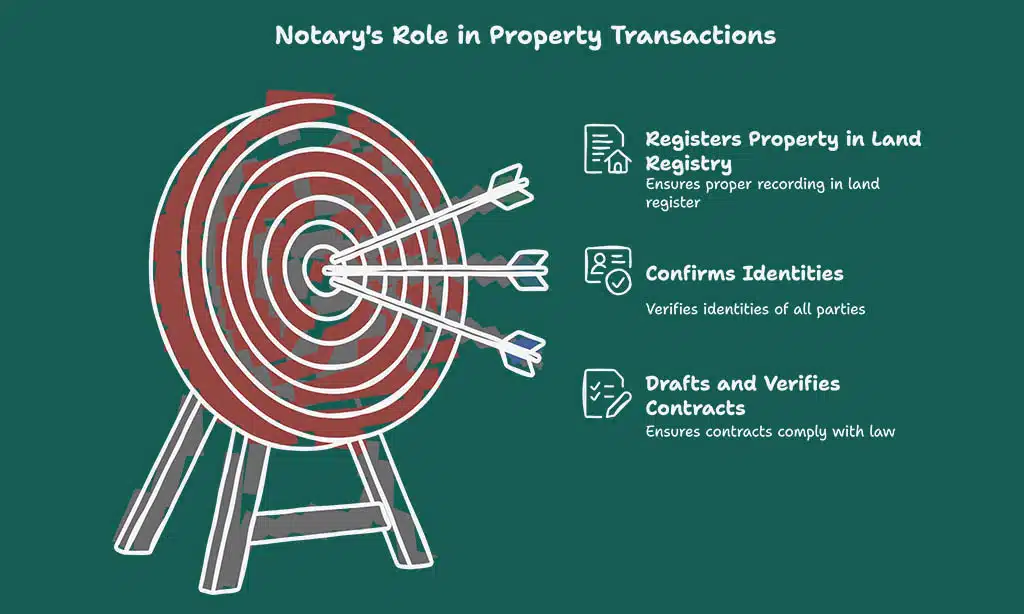
A notary in Austria is a public official who ensures the legality and fairness of property transactions. The notary is responsible for drafting and verifying contracts, ensuring that all parties comply with Austrian property law, and that the transaction is properly recorded in the land registry.
| Notary’s Responsibilities | Details |
| Drafts and Verifies Contracts | The notary ensures that the property contract complies with Austrian law. |
| Confirms Identities | The notary verifies the identities of all parties involved in the transaction. |
| Registers Property in Land Registry | The notary ensures that the transaction is properly recorded in Austria’s land register (Grundbuch). |
- The notary will also confirm the identities of all parties involved, ensure all conditions are met, and provide a secure platform for contract signing.
Contractual Obligations and Legal Documentation
Once you’ve found a property and agreed on a price, the next step is signing a property contract. In Austria, property contracts must be notarized and adhere to certain legal standards.
Key documents typically include:
- A purchase agreement
- Proof of funding
- Proof of identity
- Documentation confirming your eligibility to buy property (especially for non-EU nationals)
5. Tax Considerations for Foreign Property Buyers
Before purchasing property in Austria, it’s important to understand the tax implications, both for the transaction and for ongoing ownership.
Property Taxes and Fees
Austria levies several taxes and fees on property transactions, which foreign buyers must factor into their purchase decisions.
| Tax/Fee | Rate | Description |
| Grunderwerbsteuer | 3.5% of the property value | A property transfer tax that applies to all property transactions. |
| Notary Fees | 1-2% of the property value | Fees paid to the notary for legal services in drafting and notarizing contracts. |
| Registration Fees | 1% of the property value | Required to register the property in the Grundbuch (land registry). |
- Grunderwerbsteuer (Property Transfer Tax): This tax is typically 3.5% of the property’s purchase price.
- Notary Fees: These fees are typically 1-2% of the property value.
- Registration Fees: You’ll need to register the property in the Grundbuch (land registry), which costs around 1% of the property’s value.
Ongoing Property Taxes
As a property owner in Austria, you’ll be responsible for annual property taxes, which vary by municipality. These taxes are calculated based on the value of the property.
6. Obtaining the Necessary Permits
In certain cases, foreigners must obtain specific permits to purchase property in Austria, especially if the property is located in a protected area or if it involves agricultural or forest land.
Permit Requirements for Foreigners
For most residential properties, no special permits are needed. However, if you’re a non-EU national or purchasing agricultural land, you may need to apply for a permit from the local authorities.
Foreign buyers might need to apply for specific permits depending on the property type and location.
| Property Type | Permit Requirement | Details |
| Residential Properties | No permit needed | EU/EEA citizens have free access to purchase residential properties. |
| Agricultural Land | Government approval required | Non-EU nationals must obtain special permission to purchase agricultural land. |
- Agricultural land: The purchase of agricultural land requires government approval, particularly if the buyer is a non-Austrian citizen.
Permission from Austrian Authorities
Local authorities or the Ministry of Agriculture may impose restrictions on foreign ownership of certain types of land. If you are purchasing property in specific regions (such as border areas or areas with natural reserves), it’s crucial to consult local authorities.
7. Real Estate Agent and Lawyer Involvement
Navigating the legal complexities of property purchase in Austria is much easier with professional assistance. Working with a real estate agent and lawyer ensures that you adhere to all legal requirements for buying property in Austria as a foreigner.
Finding a Reliable Real Estate Agent
A professional, experienced real estate agent can help you find the right property, negotiate prices, and guide you through the buying process.
Choosing the right real estate agent is crucial for understanding the local market and legal requirements.
| Agent Type | Benefits | Considerations |
| Experienced Real Estate Agent | Guides you through the property market and the legal process. | Look for agents with experience working with foreign buyers, especially non-EU nationals. |
- Look for agents with experience working with foreign buyers, particularly those familiar with the regulations affecting non-EU nationals.
Legal Representation and Advice
Hiring a lawyer is highly recommended when purchasing property in Austria. Lawyers can provide legal advice, review contracts, and ensure that all documentation is properly prepared and signed.
8. Finalizing the Purchase and Registering the Property
Once you’ve completed all necessary legal steps, you will need to finalize the purchase and register your property.
Closing the Deal: Steps to Finalize Your Purchase
The final steps in purchasing property in Austria include signing the contract in the presence of a notary, transferring funds, and receiving the keys to your new property.
The process of closing involves signing the contract in the presence of a notary and transferring funds.
| Final Step | Details |
| Sign the Contract | The contract is signed by all parties and notarized. |
| Transfer Funds | Funds are transferred to the seller. |
| Receive the Keys | Once all legal steps are completed, you receive the keys to your property. |
Property Registration
After the transaction is complete, the property must be registered in the Austrian land register (Grundbuch). This ensures your legal ownership of the property and prevents future disputes.
Wrap Up
Purchasing property in Austria as a foreigner is an exciting opportunity, but it requires a solid understanding of the legal requirements for buying property in Austria as a foreigner.
By understanding the eligibility criteria, financial obligations, and necessary legal procedures, you can ensure a smooth and successful transaction.
Whether you’re buying a vacation home, an investment property, or planning to move to Austria permanently, adhering to Austrian property laws is essential. With proper planning, professional assistance, and a clear understanding of the legal landscape, you can make your Austrian property purchase with confidence.