Your agency wastes money on software that sits unused. I see this problem everywhere I look in government offices. The Department of Housing and Urban Development paid for 11,020 Adobe Acrobat licenses. Nobody used a single one.
Every month, agencies spend thousands on software they don’t need. These programs just sit there. They collect dust while your budget shrinks. The money goes straight from taxpayers to software companies for nothing.
I’ve studied this problem across many federal agencies. The pattern stays the same. The General Services Administration found the same issue. They deleted 114,163 unused software licenses. That single action saved them $9.6 million each year.
Why does this keep happening? Most agencies can’t see what software they actually use. They buy licenses, then forget about them. Nobody tracks who logs in or what programs run. The spending keeps going up while the waste gets worse.
I’ll show you the Doge Software Licenses Audit HUD system in this post. This tool stops the waste before it starts. I’ll explain how it tracks licenses every second of the day. You’ll see how it catches problems early. The dashboard shows exactly where your money goes.
I’ll also cover the best ways to check your software inventory. You’ll learn how to create rules that people actually follow. After reading this, you’ll know how to save money and fix your compliance process.
Time to stop the waste.
Key Features of the Doge Software Licenses Audit HUD
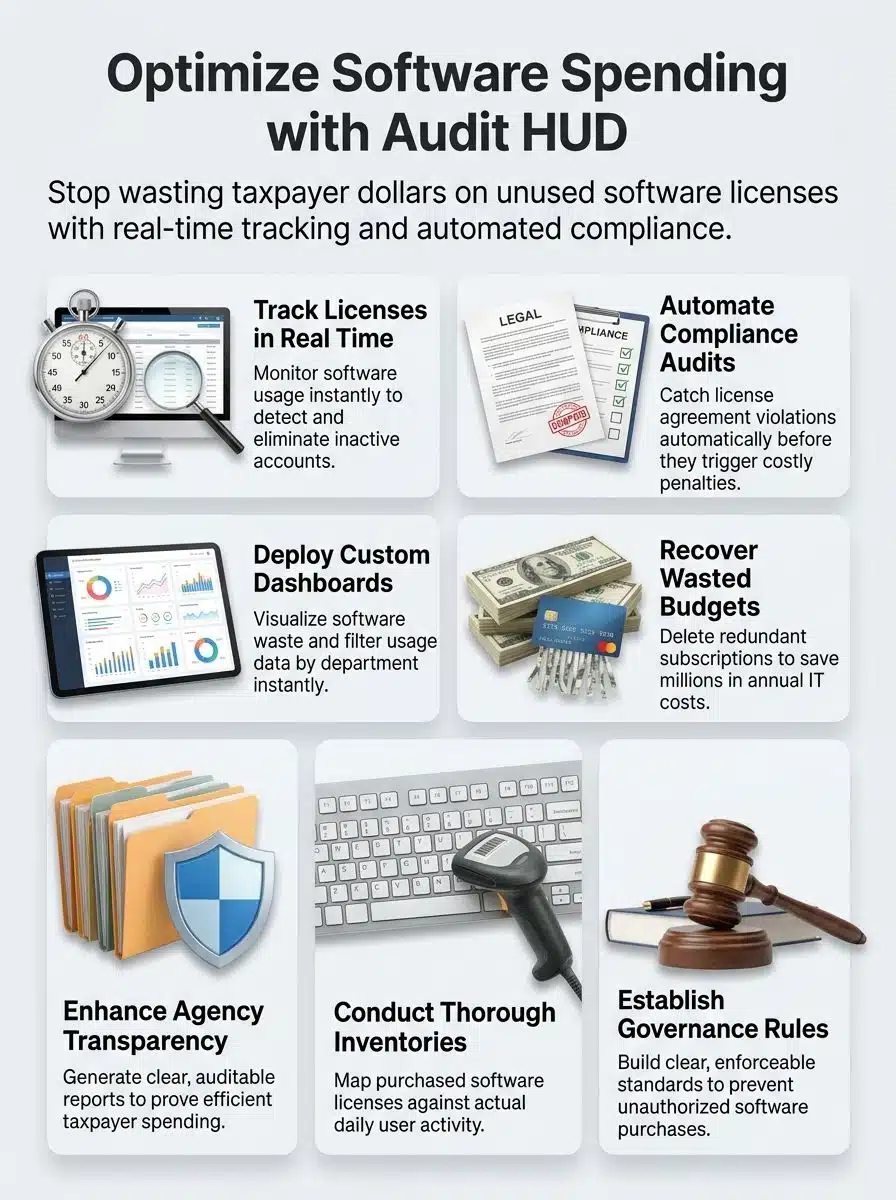
I created this system to watch your software licenses every second. The dashboard catches waste before it drains your budget. I can see which programs nobody touches across my whole organization. This stops me from paying for thousands of licenses that just sit there.
How does real-time license tracking work?
Real-time tracking works like a camera that watches your software all day long. I learned that agencies waste money because they can’t see what they own. They buy thousands of licenses, then forget about them.
The Doge Software Licenses Audit HUD plugs right into your computer systems. It connects to your databases and ServiceNow platforms. The system watches every login and tracks every click. HUD’s case shows why this matters. They paid for 11,020 Adobe Acrobat licenses, but zero people used them.
The tracking shows me who logs in and when. I can see how often people use each program. Some software just sits there doing nothing. GSA had 37,000 WinZip licenses for only 13,000 workers. The dashboard caught this right away.
This display lets me act fast. Problems appear on my screen immediately. I don’t wait for yearly reports anymore. The audit found more waste at HUD. They had 1,776 Cognos licenses but only used 325. ServiceNow told the same story. DOGE found 35,855 licenses for three products. Only 84 were actually being used.
The system watches every purchase and flags strange patterns. My procurement team gets alerts after thirty days of no activity. It compares what we use against what we bought. This shows me where to save money right away.
Agencies save huge amounts just by watching this data. Real-time tracking changes everything. License audits used to be painful yearly tasks. Now I check my dashboard every morning. It’s like having a conversation with my software instead of fighting with spreadsheets.
What is automated compliance monitoring?
Automated monitoring is like having a guard who never takes a break. I’ve watched it catch license problems before they cost real money. The system tracks software use across your whole organization all the time. It tells you when something goes wrong with your agreements.
DOGE’s audit showed how much this matters. GSA bought 19,000 training software subscriptions. That was way more than their employee count. Nobody noticed until the audit started. The automated system would have caught this immediately.
I’ve seen how fast this monitoring finds gaps. The software counts your actual licenses against what you paid for. When the numbers don’t match, you get an alert right away. ServiceNow products, Adobe tools, and Westlaw Classic subscriptions—they all slip through without this watching.
This monitoring changes how government works. GSA saw DOGE’s findings and acted within three hours. They cut IT spending by $5.5 million that same day. The system helped them delete 114,163 unused licenses and 15 extra products. That saved $9.6 million every year.
Now oversight groups can see what agencies really use. The government accountability office gets clear reports. They know what we pay for versus what we actually need. My work proves that constant monitoring stops waste. Taxpayer money doesn’t disappear on unused licenses anymore.
The review process got much faster too. Machines do the tracking now. People don’t scramble through spreadsheets for hours. Everything becomes clearer and more honest when computers handle the boring work.
How can customizable dashboards provide insights?
I open my dashboard and problems jump out at me. The screen shows which licenses nobody uses across my agency. Thousands of Acrobat licenses have zero users. Westlaw Classic licenses gather dust. I spot all this in seconds, not hours.
These visual displays save me from digging through spreadsheets. The dashboard shows waste, fraud, and abuse instantly. I filter by department, cost, or usage. This new approach gives me answers fast. Business as usual is over.
The DOGE Task Force meets often to discuss what these dashboards reveal. I get reports that actually matter now. HUD Secretary Scott Turner sees direct summaries from the data. The numbers tell the truth.
Customizable reports help me find savings I would have missed. The dashboard changed how I manage software across government agencies. Instead of guessing where money goes, I see real numbers and percentages.
My team works better because the data is clear. This new method brings more accountability to government. We make smarter spending choices based on facts, not assumptions.
What are the benefits of using the Audit HUD?

I saved thousands of dollars when I started tracking licenses in real time. My agency stopped paying for Adobe tools nobody used. I found Westlaw Classic licenses just sitting there. That money now goes to programs that actually help people.
How can you save costs through license optimization?
I found that most organizations waste money on software they never touch. The GSA case proves my point. After DOGE did their audit, GSA deleted 114,163 unused licenses. They also removed 15 products they didn’t need. This one action saved $9.6 million every year.
HUD had the same problem. They owned 11,020 Adobe Acrobat licenses with zero users. Pure waste. A good license review shows what software your team really needs. Nothing more, nothing less.
Tracking your inventory stops duplicate spending. Real-time monitoring shows who uses what. Automated compliance catches forgotten licenses. The dashboard gives you clear pictures of your spending. You see patterns you missed before.
Cost savings happen faster than you think. GSA cut IT spending by $5.5 million within hours of seeing DOGE’s report. Secretary Scott Turner at HUD found over $260 million in possible savings through similar audits.
The secret starts with a complete software inventory. My experience shows that government waste comes from bad tracking. Nobody watches what they buy. Customizable dashboards show which products drain your budget. Buying software without checking current use creates waste.
A GSA spokesperson said they’re actively fixing these problems. Your organization can do the same thing. Use the same methods to remove extra products. License optimization changes how departments handle technology spending. Waste becomes savings that matter to taxpayers.
How does it enhance transparency and accountability?
I found that real-time tracking shows exactly what my agency owns. The Doge Software Licenses Audit HUD dashboard reveals every unused license. They’re not hidden anymore. Secretary Turner said the DOGE Task Force helps find and remove waste at HUD. I saw this when the system flagged 800 Westlaw Classic licenses with zero users.
My team can finally answer hard questions about spending. A HUD spokesperson confirmed there’s a task force working to fix wasteful spending. That transparency started when we could see everything. I don’t guess about software purchases anymore. I don’t wonder where money goes.
Every license shows up on the dashboard. Every dollar gets tracked. Government spending becomes open instead of hidden in files. Anyone can check what we’re doing.
Accountability comes naturally when I see everything. The task force meets and shares findings regularly. This creates transparency across the agency. I join those talks with real data. My reports go to cabinet secretaries. The president told them to work on improvements together. My reports help make those changes.
Departments across the United States copy this model now. My agency stopped wasting money on unused licenses. The audit HUD made waste impossible to hide. I share results with everyone involved. I explain my choices. I take responsibility for making things better.
This software changed how my organization handles compliance. Taxpayers deserve to know their money gets spent wisely. Now I can prove it with real numbers.
What are the best practices for implementing the Audit HUD?
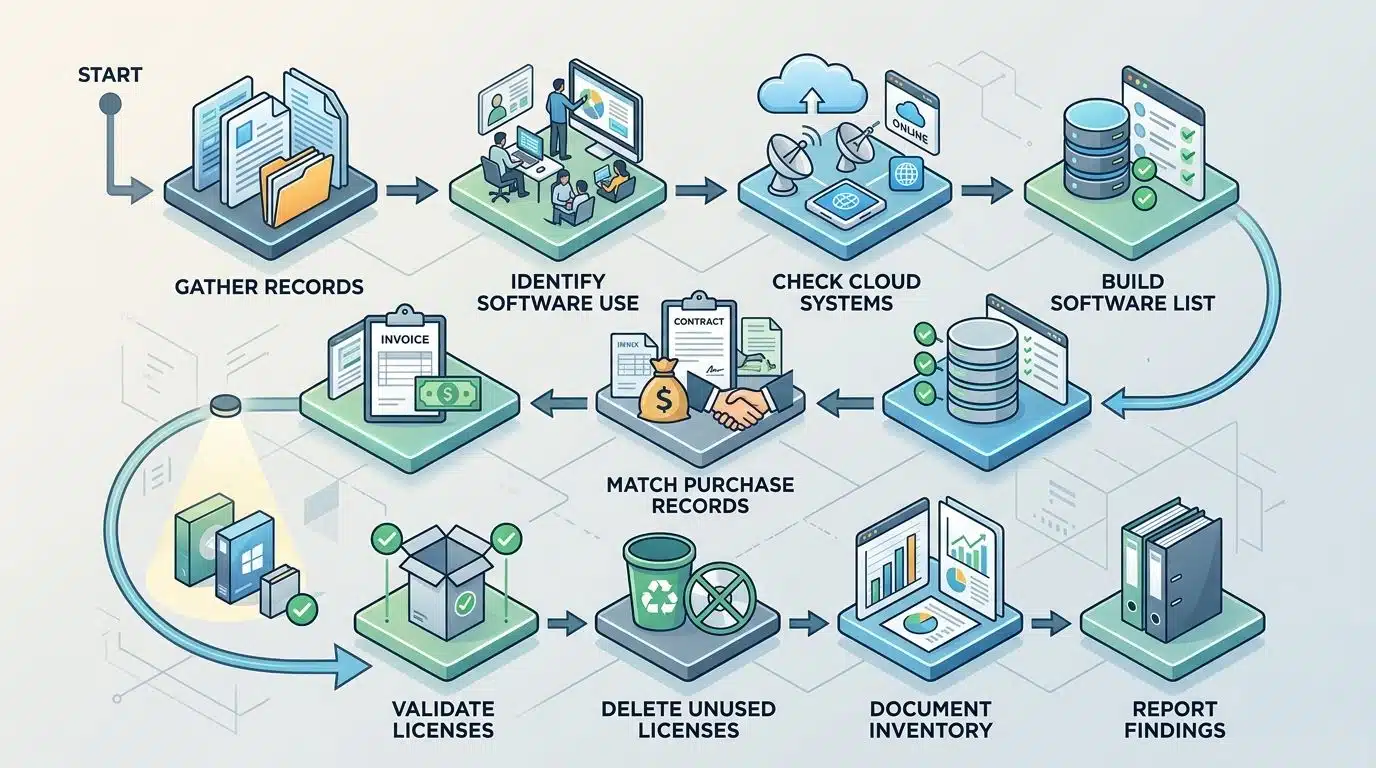
I always start by getting my software list right. I can’t fix problems I can’t see. Then I create clear rules that my team will actually follow. Not rules that sit in a drawer collecting dust.
How do you conduct a thorough software inventory?
I begin my software inventory by collecting all purchase records. Then I compare them to what people actually use. This shows the gap between buying and using.
- I gather every software document, contract, and receipt from my files. This creates one master list of everything we bought.
- I check our cloud systems and GitHub repositories. This shows which programs my team uses daily.
- I match purchase records against real users by checking login records and access logs.
- I find duplicate systems, like GSA’s three ticketing systems. I list all tools that do the same job.
- I write down each software’s purchase date, license count, renewal terms, and cost per seat. This gives me baseline data.
- I talk with department heads and team members. They tell me which programs they need for work.
- I review what we’re paying for by looking at usage data. This shows which licenses sit unused.
- I mark licenses with zero users, like those Acrobat licenses. These subscriptions waste the budget without giving value.
- I build a dashboard showing all software, active users, and costs. Everyone can see the full picture.
- I create rules requiring approval before buying new software or renewing old licenses.
- I check my results against compliance standards and GSA guidelines. This ensures I meet government requirements.
- I work with IT teams to delete unused licenses. We remove unnecessary software from the system.
How do you establish clear governance policies?
I write governance policies that match the Department of Government Efficiency’s mission. We need to remove waste from federal agencies. My approach creates clear rules that cabinet secretaries and their teams understand.
- I review President Trump’s executive order first. It tells cabinet secretaries to work with DOGE on staffing decisions. I turn those orders into real policies my agency can use.
- My team writes standards for tracking and managing software licenses. Everyone knows what to do.
- I create a reporting structure going straight to the HUD secretary. Task force recommendations flow upward and affect big decisions.
- My framework includes regular meetings where department heads share their compliance status. Accountability stays front and center.
- I build consequences into the policy. Staff members know what happens if they ignore licensing rules or audit findings.
- My policies require all software data to feed into the Audit HUD dashboard. This creates transparency everyone can see.
- I set clear deadlines for fixing problems. Teams know exactly when to resolve licensing issues the audit finds.
- My approach includes training where I teach staff to use the dashboard and understand the policies.
- I document every policy decision and share records with stakeholders. Open communication builds trust.
- My governance structure moves us away from old habits. We follow the disciplined approach the DOGE Task Force shows us.
Final Words
My work with software license audits taught me that waste builds up fast. Federal agencies like HUD bought 11,020 Adobe Acrobat licenses that nobody used. ServiceNow licenses sat unused at a rate of 99.8 percent. Money disappeared into software nobody needed.
The Doge Software Licenses Audit HUD dashboard fixes this mess with real data. No more guessing. Secretary Turner’s task force discovered over $260 million in savings. GSA deleted 114,163 unused licenses in one sweep. These aren’t small numbers.
Start fixing your compliance process today. The money you save belongs to taxpayers. Software vendors have collected enough already. Use the tools I’ve shown you. Track your licenses. Watch your spending. Make the waste stop.
Frequently Asked Questions (FAQs) on Doge Software Licenses Audit Hud
1. What is the Doge Software License Audit HUD, and how does it help with compliance?
The Doge Software License Audit HUD acts like a dashboard for tracking open-source software licenses across your company. It brings transparency to your process, much like the United States Department of Housing and Urban Development aims for in its own audits. You see risks right away, so you can act fast.
2. How does this tool handle risk and innovation together?
Doge noted that balancing risk with innovation is key; their audit HUD lets teams spot problems early while still using new tech. If Elon Musk were running an audit, he’d want speed and clarity too.
3. Can government departments use this system as well?
Yes, many examples of government use exist; even departments in France have looked at similar dashboards for license checks. A GSA spokesperson said they are actively working to remedy gaps as part of a long-term contract.
4. Who benefits most from using the Doge Software License Audit HUD?
Anyone managing lots of open source or open-source software gets value here—think IT leaders or legal teams who need attention on every HUD case or HUD audit without missing details.
5. What happens if there’s a problem found during an audit according to Doge?
If issues pop up during review, Doge alleges quick fixes are possible since everything shows up clearly on the dashboard; users can address them before they grow into bigger headaches down the road.