

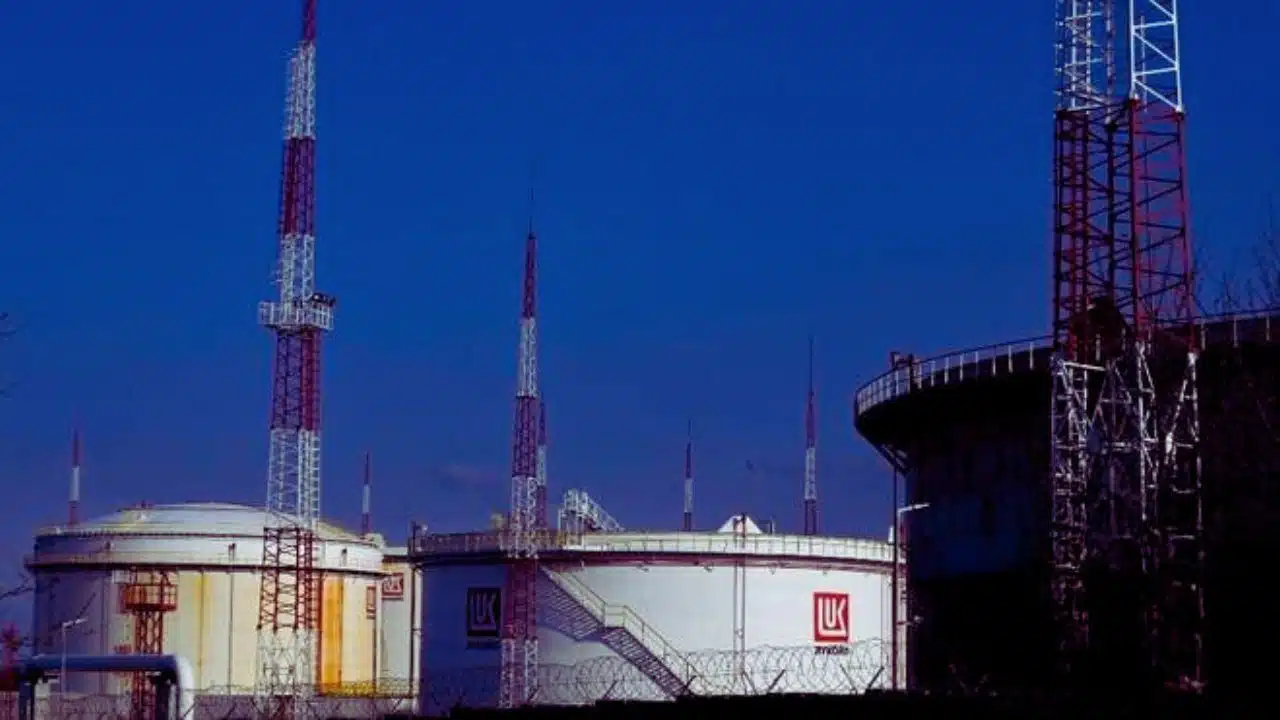
In a high-stakes move to safeguard its energy security, Bulgaria’s parliament has swiftly approved emergency legislation empowering the government to take greater control of the country’s sole oil refinery, just days before U.S. sanctions on its Russian owner, Lukoil, are set to take effect.
The Burgas facility, a critical lifeline for the nation’s fuel supplies, faces potential shutdown if the sanctions disrupt operations, prompting Sofia to act decisively amid escalating geopolitical tensions over Russia’s war in Ukraine. This development underscores Bulgaria’s precarious balancing act between Western alliances and its heavy reliance on Russian energy infrastructure.
The Urgency Behind the Sanctions
The U.S. Treasury Department expanded sanctions on October 22, 2025, targeting Russia’s two largest oil companies, Lukoil and Rosneft, as part of a broader strategy to pressure Moscow into agreeing to a ceasefire in Ukraine. These measures freeze the firms’ U.S.-based assets and threaten secondary penalties for any foreign entities engaging in transactions with them, effectively isolating Lukoil from global financial systems. For Bulgaria, the timing is dire: the sanctions are scheduled to fully impact operations by November 21, leaving little room for maneuvering.
Lukoil, which has owned the Burgas refinery since 1999, announced plans to sell its international assets in direct response to these pressures, including stakes in oil and gas projects across 11 countries and numerous gas stations worldwide. However, negotiations hit a snag when a major international commodities trader backed out of a potential deal to acquire Lukoil’s global holdings, citing the company’s rejection of U.S. allegations that it serves as a “puppet of the Kremlin.” This collapse has heightened fears of an imminent operational halt at the refinery, which processes around 190,000 to 240,000 barrels of crude oil per day.
Empowering State Intervention
Bulgaria’s parliament in Sofia passed amendments to the law on oil and oil products operations on November 7, 2025, granting a government-appointed administrator unprecedented authority over the Lukoil Neftochim Burgas refinery. This special manager now holds significant operational control, including the power to sell shares in the facility without interference from Lukoil, stripping the Russian owner of voting rights or the ability to contest decisions. Prime Minister Boyko Borissov, leader of the ruling GERB party, defended the legislation as a logical step to prevent disruption, emphasizing that it builds on provisions introduced in 2023 for managing strategic assets.
The refinery, located on the Black Sea coast and recognized as the largest in the Balkans, has been under scrutiny since Bulgaria halted Russian crude imports in March 2024, shifting to alternative suppliers while still relying on Lukoil for processing. To mitigate immediate risks, Sofia temporarily suspended diesel and aviation fuel exports on October 31, prioritizing domestic needs and averting potential shortages in EU and non-EU markets. Energy Minister Zhecho Stankov has assured the public that fuel reserves are secure through the end of the year, but officials are in ongoing talks with the U.S. Office of Foreign Assets Control (OFAC) to secure exemptions or clarifications that could allow continued operations.
Economic Stakes and Energy Security
The Burgas refinery supplies more than two-thirds of Bulgaria’s domestic fuel, making it indispensable for the economy and everyday life. A shutdown could plunge the country into an “extremely difficult situation,” as warned by Vice President Iliana Iotova, potentially spiking fuel prices, disrupting transportation, and hampering industries from agriculture to manufacturing. Pavela Mitova, Chair of the Parliamentary Committee on Energy, highlighted the facility’s role as critical infrastructure, noting that while current stockpiles provide a buffer for months, a long-term resolution is essential to maintain stability.
Broader implications ripple across the region, as the refinery’s closure could affect fuel supplies to neighboring EU countries and exacerbate Europe’s energy vulnerabilities amid the Ukraine conflict. Bulgaria’s actions also reflect a coordinated effort with allies; similar concerns have arisen in Romania, where another Lukoil-linked refinery faces parallel risks, prompting joint measures to protect operations. Economically, Lukoil had valued the Burgas asset at around $2 billion, but the sanctions have complicated any sale, forcing Sofia to explore state-led solutions.
Opposition Backlash and Legal Risks
The legislation has sparked fierce debate in parliament, with opposition lawmakers decrying it as a risky overreach that could invite international lawsuits. Ivaylo Mirchev, leader of the Democratic Bulgaria alliance, argued that empowering the administrator with “extraordinary powers” might lead Lukoil to sue the Bulgarian state, potentially funneling compensation back to Russia and undermining the sanctions‘ intent. Critics also point to the irony of Bulgaria, an EU and NATO member, intervening to prop up a Russian-owned asset, questioning whether it aligns with Western goals of isolating Moscow’s energy sector.
Despite the pushback, the ruling coalition maintains that the sanctions would inevitably shutter the refinery without intervention, as counterparties refuse payments to Lukoil entities. Security measures have been bolstered at the site, with the interior ministry and intelligence services ensuring operational safety amid the heightened tensions. As the November 21 deadline looms, Bulgaria’s gamble on state control could either secure its energy independence or entangle it in prolonged legal and diplomatic battles.





















