Have you ever tried to read a crucial study, only to hit a wall demanding thirty dollars or more for a single PDF? I know how frustrating those expensive paywalls can be. Research papers cost a lot of money, and many people simply cannot afford these steep prices. Here is a secret that changes everything. Over 50 percent of academic research papers are now available for free online.
You just need to know where to look. The Best Open-Access Academic Databases For Free Research offer a clear path past those paywalls. You can access millions of scholarly articles without spending a single penny. Medical research, physics, education, and social sciences are all at your fingertips.
I am going to walk you through the exact tools I use to find free studies. Grab a cup of coffee, and let’s go through it together.
The Best Open-Access Academic Databases For Free Research Across All Disciplines
You can search across multiple fields without paying a subscription fee. These platforms cast a wide net across science, history, and business.
Explore Google Scholar
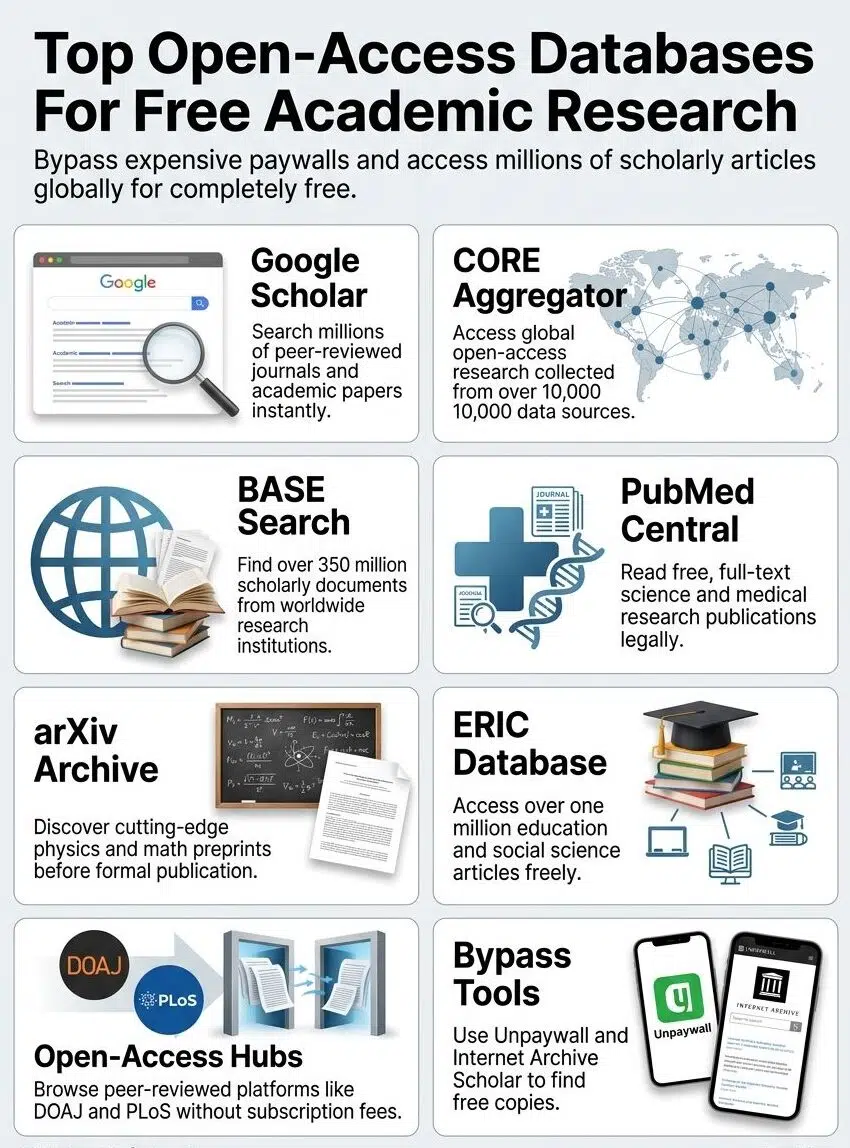
Google Scholar serves as a free, powerful search engine for academic research. This platform indexes scholarly articles, theses, and conference papers from across the internet.
Researchers access an estimated 389 million records without paying fees. The search bar works just like a standard search engine, but it filters results to show only academic content.
Google Scholar pulls information from university libraries and open-access repositories. Students and professionals use this tool to find research papers on nearly any topic imaginable.
The platform displays citation counts, which help readers quickly identify influential work. You will spot a “Cite” button under each result to generate proper citations instantly.
As of late 2025, Google also introduced “Scholar Labs,” an AI-powered search feature to make finding specific papers even faster. Here are a few quick tips for using Google Scholar effectively:
- Click “All versions” under a result to find free PDFs hosted on university servers.
- Set up email alerts for your specific keywords to get the newest studies.
- Look for the PDF links on the right side of the search results page.
Discover CORE
Google Scholar opens many doors, but CORE takes research access to another massive level. CORE functions as a massive aggregator that pulls together open-access research articles from repositories globally. This platform collects scholarly articles from over 10,000 data sources. As of 2026, CORE provides access to over 431 million metadata records.
It also hosts over 323 million free-to-read links, making it a true powerhouse for finding peer-reviewed journals. You search CORE and find papers that other digital libraries might miss.
The search results show you exactly which versions are free to download, saving you time and frustration.
CORE prioritizes direct access, meaning you spend less time clicking through publisher websites and more time reading the actual research.
You can filter results by subject, publication date, or document type to narrow down your findings fast. Start exploring CORE today to discover how many papers sit waiting for you.
Utilize BASE (Bielefeld Academic Search Engine)
BASE gives you access to a massive trove of documents from research institutions worldwide. This powerful search tool pulls from thousands of digital libraries and repositories.
You do not need special permission to use it. The database covers nearly every subject, from science to education and social sciences.
As of late 2025, BASE indexes over 450 million documents from more than 7,000 sources. What makes BASE stand out is that about 60 percent of those indexed documents offer full-text open access.
You can filter your search results by subject, document type, or language to narrow things down fast. Many researchers use BASE because it strictly vets its content providers, filtering out non-scholarly junk.
Here is a quick look at how these three multi-disciplinary giants compare:
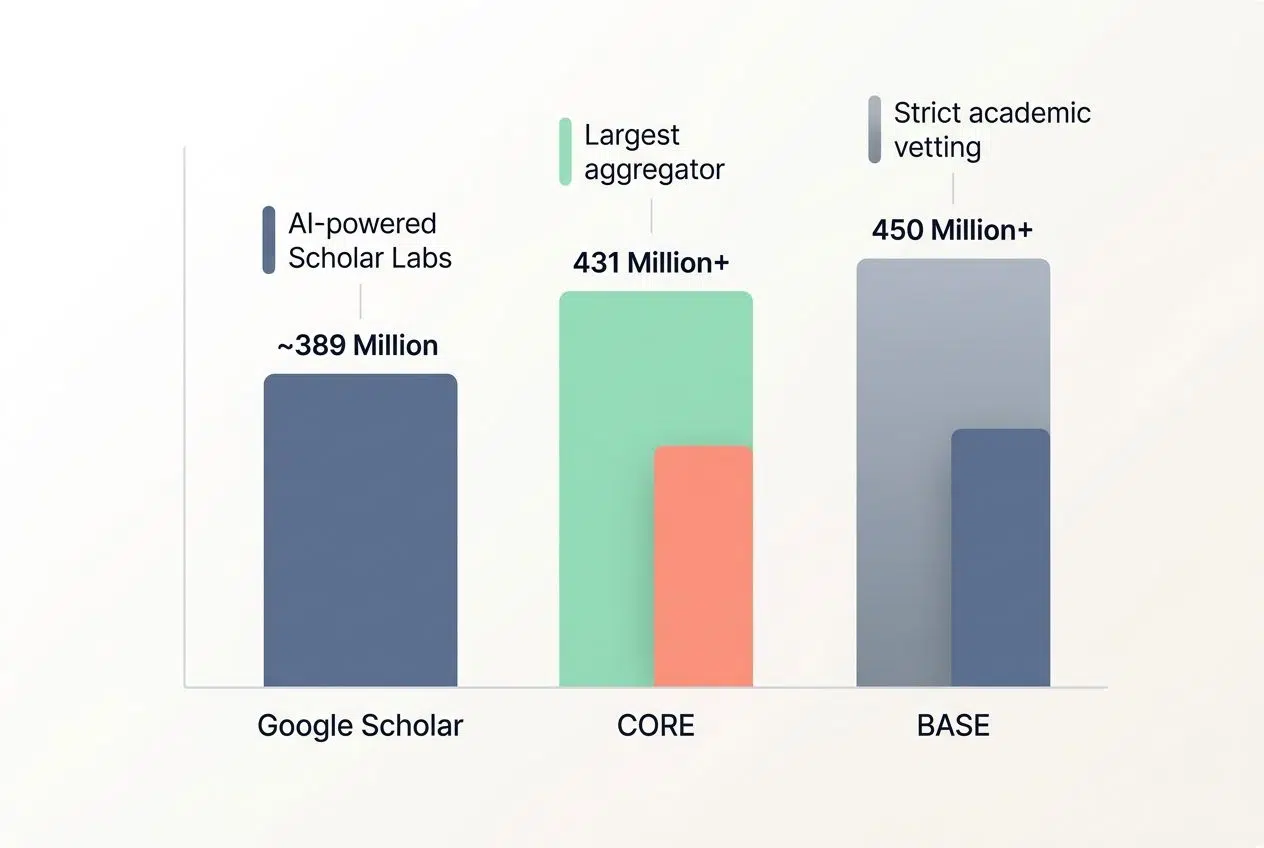
| Database | Estimated Index Size | Best Feature |
|---|---|---|
| Google Scholar | ~389 Million | AI-powered Scholar Labs and citation tracking |
| CORE | 431 Million+ | Largest dedicated open-access aggregator |
| BASE | 450 Million+ | Strict academic vetting of 7,000+ sources |
Specialized Resources for Distinct Academic Fields
Different academic fields need specific research tools. You will find specialized databases that serve scientists, mathematicians, and educators with incredible precision.
PubMed Central stands as the free research powerhouse for anyone hunting down science and medicine articles. Run by the United States National Institutes of Health, this digital library is incredibly reliable.
It houses over 10 million full-text article records that you can access without paying a single dime. Scientists and students use PubMed Central to find the latest discoveries in biology, chemistry, and medicine.
The database lets you search by topic, author, or publication date. You will find complete, full-text research articles here, not just brief summaries.
Researchers love PubMed Central because it breaks down barriers to critical health knowledge. Your search results pop up fast, and you can filter by publication type or study design.
Explore arXiv.org for Physics, Mathematics, and Technology
Physicists and mathematicians need different tools, and arXiv.org fills that gap perfectly. Originally started by Cornell University, this platform hit a massive milestone of 3 million submissions in early 2026.
In July 2026, it even transitioned to an independent nonprofit organization to support its rapid growth. Researchers post their work here before formal publication, giving you access to cutting-edge findings fast. The site costs nothing to use. You can search by topic, author, or date.
Many scientists consider arXiv.org essential for staying current. The platform organizes papers into categories, making it simple to find what you need. Here are the primary fields covered extensively on arXiv:
- Physics and Quantum Mechanics
- Mathematics and Statistics
- Computer Science and Artificial Intelligence
- Quantitative Biology and Finance
Access ERIC for Education and Social Sciences
ERIC gives you free access to over 1.6 million education and social science items. Sponsored by the US Department of Education, this database holds peer-reviewed journals, reports, and research tools.
You can search for topics on curriculum design, learning methods, and social research without paying a dollar. The platform makes it simple to find scholarly articles that matter to your work. You get full-text access to many items in this digital library, which saves you time and money.
A quick tip for users is that federal funding cuts in April 2025 reduced ERIC’s active cataloging by about 45 percent. This makes ERIC a fantastic historical archive, but you might want to cross-reference with Google Scholar for the absolute newest 2026 papers.
Leading Open-Access Platforms for Academic Journals
Platforms dedicated to open access put powerful research right into your hands. Let us look at the top hubs for finding verified, peer-reviewed journals.

Directory of Open Access Journals (DOAJ) Overview
DOAJ stands as a massive hub for open-access journals. As of early 2026, it lists over 21,480 peer-reviewed publications across every field you can think of. Researchers find over 11 million free scholarly articles here, all without paying a dime. The platform makes it simple to search for research resources by subject, language, or country.
You get access to quality information retrieval tools that help you track down exactly what you need. DOAJ checks every single journal before adding it, which is the perfect defense against predatory publishers.
You know the publications meet real, strict ethical standards. Here is why DOAJ is such a valuable resource:
- It lists over 21,480 peer-reviewed publications.
- It provides access to over 11 million free scholarly articles.
- It strictly vets every journal to block predatory publishers.
Insights into the Public Library of Science (PLoS)
PLoS stands out as a massive game-changer in open access research. Founded as a nonprofit organization, PLoS publishes peer-reviewed journals across multiple scientific fields.
PLoS makes research articles freely available to anyone, completely breaking down traditional paywalls. Their flagship journal, PLoS ONE, accepts thousands of papers each year.
Readers gain immediate access to cutting-edge scholarly articles without spending a dime. The platform operates several specialized journals, including PLoS Biology and PLoS Medicine.
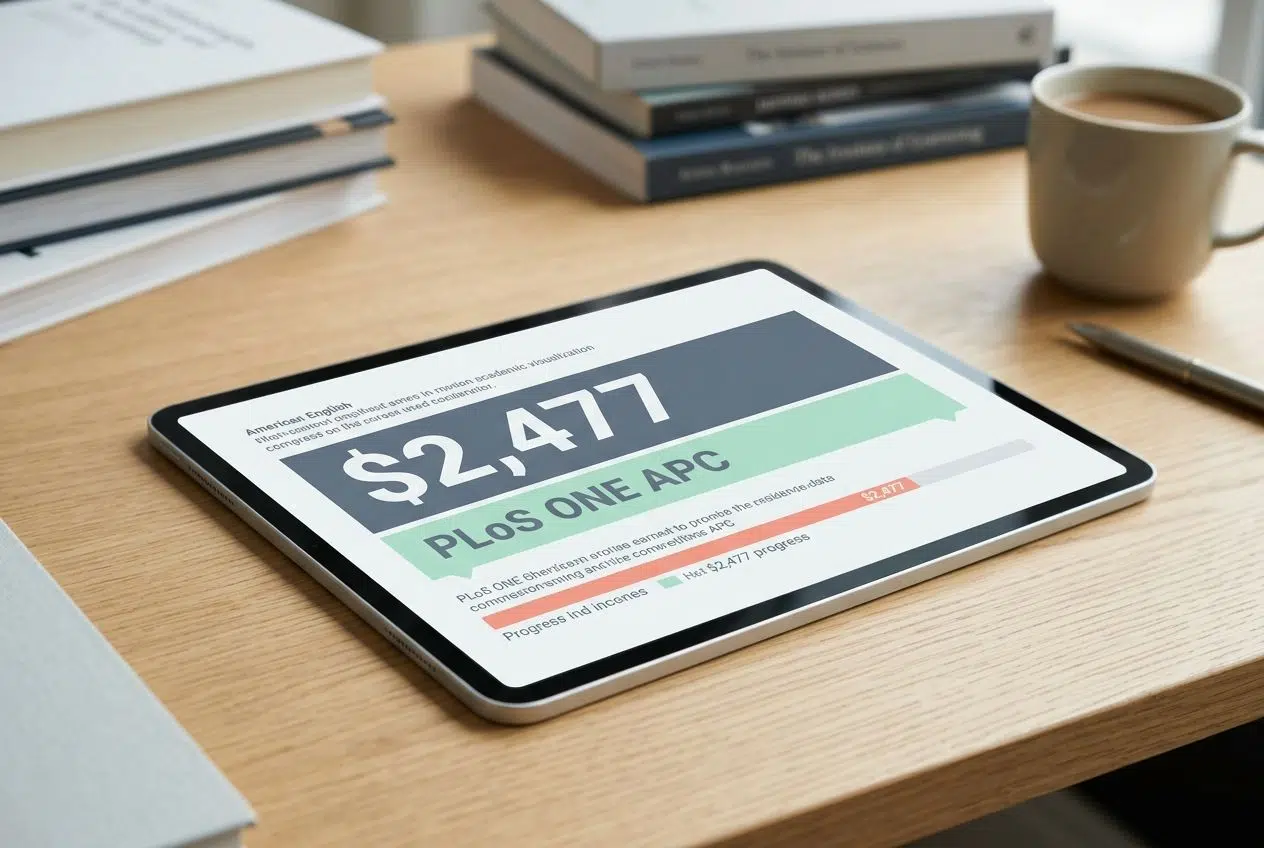
Authors generally pay a publication fee, known as an APC, which sits around $2,477 for PLoS ONE. A helpful insider tip is that many major US universities have agreements with PLoS that cover this cost completely for their researchers.
This approach ensures that groundbreaking discoveries reach classrooms, hospitals, and laboratories worldwide, rather than sitting behind expensive subscriptions.
Essential Tools for Enhancing Research Accessibility
You will find powerful tools that make finding and accessing research papers much simpler. These specific extensions and archives do the heavy lifting for you.
Find Articles with Unpaywall
Unpaywall acts as your personal research assistant. This browser extension hunts down free versions of scholarly articles across the internet. It searches an open database of over 55 million free scholarly articles to find legal, open-access copies. Instead of hitting paywalls, you get instant access to research materials.
The tool works with most academic databases, so you can grab articles while browsing your university library page. Over 800,000 monthly active users rely on the Unpaywall extension.
The extension finds legal copies from author repositories and open-access journals in seconds. Your research workflow becomes faster and cheaper when you install this simple tool. Here is how Unpaywall simplifies the process:
- Install the free extension on Chrome or Firefox.
- Browse academic sites normally.
- Look for the green padlock icon on the side of your screen.
- Click the icon to instantly download the free PDF.
Search Internet Archive Scholar
Internet Archive Scholar takes your research in a different direction. This tool searches through millions of digitized texts and historical documents housed in the Internet Archive.
Its full-text search index includes over 25 million research articles and other scholarly documents. You get access to research materials that span decades, making it perfect for tracking down older papers.
The platform indexes billions of pages from books, journals, and publications that libraries have preserved. You can hunt for specific scholarly articles and discover publications that other databases miss.
Internet Archive Scholar serves as a digital time machine, preserving at-risk academic knowledge for future generations.
The search function lets you filter results by date, making it simple to find exactly what you need. This free resource opens doors to tools that would otherwise cost money.
Wrapping Up
Free research tools exist everywhere, and you now have the power to access them. Google Scholar, CORE, and BASE give you multi-disciplinary options for finding scholarly articles. PubMed Central serves medical researchers with precision, and arXiv.org connects you to physics and mathematics papers. ERIC opens doors for education professionals.
These platforms cost nothing, yet they deliver serious value to your research journey. Your next step is simple. Pick one of the best open-access academic databases for free research and start searching today.
Unpaywall and Internet Archive Scholar act as your backup helpers when stubborn paywalls block your path. Open-access journals through DOAJ and PLoS publish peer-reviewed work that anyone can read.
Digital libraries and institutional repositories hold mountains of information waiting for you. The best part is that you control your research timeline and spending. Start exploring these free resources right now, and watch your access to scholarly publications expand instantly.
Frequently Asked Questions (FAQs) on The Best Open-Access Academic Databases
1. What are open-access academic databases, and why should I use them for free research?
Open-access academic databases are online collections where you can find scholarly articles, journals, and books without paying subscription fees. They help students, researchers, or anyone curious to explore peer-reviewed studies instantly. According to a 2025 report by the Directory of Open Access Journals, over 19,000 journals now offer free access to verified research worldwide.
2. Which open-access database is best for finding science papers?
If you want science papers, try PubMed Central, which hosts over 10 million free full-text articles in medicine and life sciences. You can filter by publication date and research type to zero in on exactly what you need.
3. Can I trust information from these free research sources?
Most open-access academic databases only include work that goes through peer review, where multiple experts check the research before publication. That means what you read is usually reliable and meets the same quality standards as paid journals.
4. How do I search smarter on these sites to get better results?
Use specific keywords related to your topic when searching in JSTOR Open Content or the Directory of Open Access Journals. Try putting phrases in quotation marks to find exact matches, and use filters for date ranges or subject areas to narrow down your results quickly.