

The landscape of backend development is constantly evolving, and choosing the best backend frameworks for web development is crucial for building secure, scalable, and high-performance applications.
The backend of a web application serves as the foundation, managing databases, server logic, and application performance. With technology advancing rapidly, developers must select frameworks that align with modern needs, ensuring speed, security, and seamless integration with front-end systems.
Whether you’re developing a high-traffic enterprise solution, a real-time application, or an API-driven system, selecting the right framework can make or break your project.
This article explores the best backend frameworks for web development in 2025, analyzing their key features, benefits, and ideal use cases.
Criteria for Selecting the Best Backend Frameworks
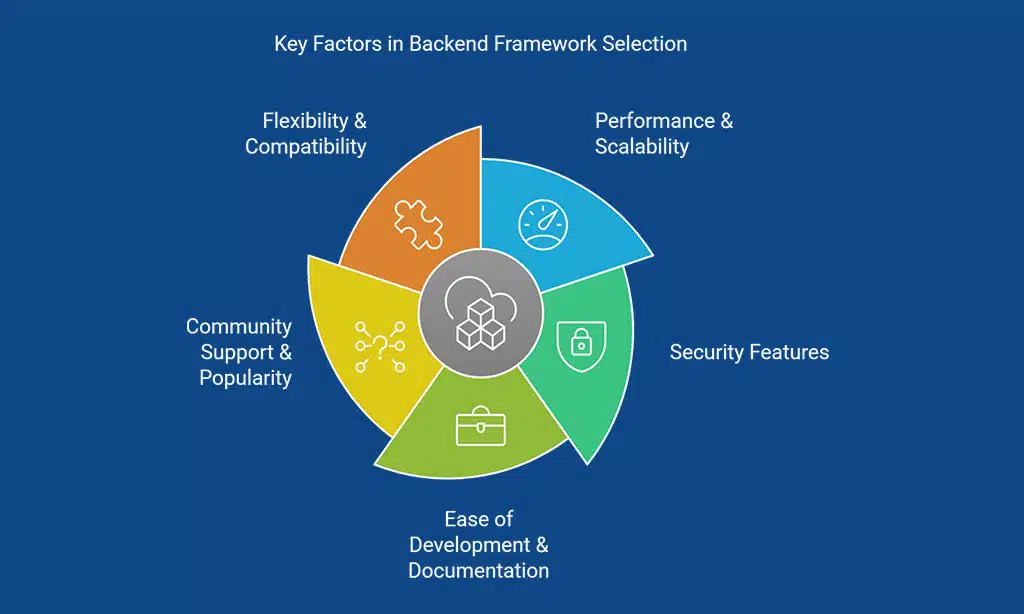
Before diving into the list of top frameworks, it’s essential to understand the factors that make a backend framework ideal for web development. Here are the key aspects to consider:
Performance & Scalability
A great backend framework should offer high-speed performance and seamless scalability to handle increasing user demands. It should support asynchronous processing, caching mechanisms, and horizontal scaling.
Security Features
Robust security features such as authentication, authorization, and protection against cyber threats like SQL injection, CSRF, and XSS attacks are crucial for any backend framework.
Ease of Development & Documentation
Developer-friendly frameworks with extensive documentation, built-in features, and easy-to-follow syntax reduce the learning curve and development time, ensuring smooth project execution.
Community Support & Popularity
A strong developer community ensures continuous updates, troubleshooting support, and the availability of third-party tools and plugins.
Flexibility & Compatibility with Frontend Technologies
The ability to integrate easily with frontend frameworks, mobile applications, and third-party services enhances the overall development process.
10 Best Backend Frameworks for Web Development in 2025

Choosing the best backend frameworks for web development is critical for building secure, scalable, and high-performance web applications. These frameworks serve as the backbone of modern digital solutions, handling everything from database management to server logic and application security.
With the increasing demand for faster development and robust architectures, selecting the right backend framework can streamline workflows and improve overall efficiency.
1. Node.js
Language: JavaScript
Best For: Real-time applications, microservices, scalable network applications
Companies Using Node.js: Netflix, PayPal, LinkedIn
Node.js is an open-source runtime environment that allows developers to run JavaScript on the server side. With its non-blocking, event-driven architecture, it excels in building highly scalable network applications. Node.js is widely used for microservices and real-time applications, such as chat applications and online gaming.
| Feature | Details |
| Performance | High-speed, event-driven architecture |
| Scalability | Easily handles multiple connections |
| Best For | Real-time apps, API development |
2. Django
Language: Python
Best For: Data-driven applications, machine learning, rapid development
Companies Using Django: Instagram, Spotify, Mozilla
Django is a high-level Python framework that follows the DRY (Don’t Repeat Yourself) principle, enabling rapid development with clean and reusable code. It comes with built-in security features and supports ORM for efficient database handling. It is widely used in data-intensive applications, analytics, and AI-driven platforms.
| Feature | Details |
| Security | Built-in protection against SQL injection and CSRF attacks |
| Scalability | Medium (Best for large datasets) |
| Best For | AI, ML, and data-driven apps |
3. Ruby on Rails
Language: Ruby
Best For: Rapid prototyping, startups, MVP development
Companies Using Ruby on Rails: Shopify, Airbnb, GitHub
Ruby on Rails is known for its convention over configuration approach, making it one of the fastest frameworks for building web applications. It has a strong ecosystem with built-in tools that simplify common development tasks, such as database migrations and testing.
| Feature | Details |
| Performance | Moderate |
| Scalability | Best suited for startups |
| Best For | MVPs, startups, e-commerce platforms |
4. Laravel
Language: PHP
Best For: Web applications, e-commerce platforms, enterprise solutions
Companies Using Laravel: Deltanet, Alison, Invoice Ninja
Laravel is a powerful PHP framework known for its elegant syntax and developer-friendly tools. It offers a robust templating engine (Blade) and built-in authentication, making it a top choice for building scalable web applications.
| Feature | Details |
| Authentication | Built-in user authentication features |
| Performance | Moderate (Depends on hosting environment) |
| Best For | Web apps, e-commerce, API development |
5. Spring Boot
Language: Java
Best For: Enterprise applications, cloud-based microservices
Companies Using Spring Boot: Amazon, Google, Microsoft
Spring Boot simplifies Java-based applications with its microservices architecture. It provides production-ready features, making it a top choice for large-scale applications.
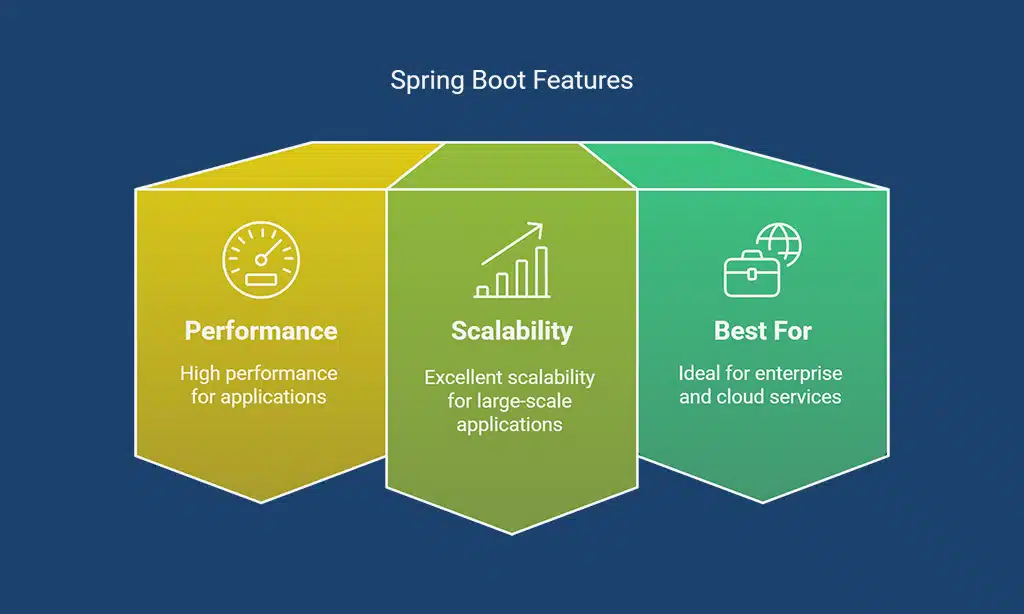
| Feature | Details |
| Performance | High |
| Scalability | Excellent for large-scale applications |
| Best For | Enterprise applications, cloud services |
6. Express.js
Language: JavaScript
Best For: Lightweight web applications, APIs, microservices
Companies Using Express.js: Uber, Accenture, IBM
Express.js is a fast and minimalist Node.js framework for building scalable APIs and applications. It offers a flexible middleware system that allows developers to extend its capabilities efficiently.
| Feature | Details |
| Performance | High |
| Scalability | Suitable for microservices and APIs |
| Best For | APIs, real-time applications |
7. Flask
Language: Python
Best For: Small-scale applications, APIs, lightweight services
Companies Using Flask: Pinterest, Reddit, LinkedIn
Flask is a lightweight micro-framework for Python that provides flexibility and simplicity. It is widely used for building APIs and small to medium-sized applications.
| Feature | Details |
| Performance | Medium |
| Scalability | Best for small to mid-sized applications |
| Best For | APIs, prototyping, microservices |
8. FastAPI
Language: Python
Best For: High-performance APIs, real-time applications
Companies Using FastAPI: Microsoft, Uber, Netflix
FastAPI is designed for building high-performance, asynchronous APIs. It is one of the fastest Python frameworks and is particularly useful for data-heavy applications.
| Feature | Details |
| Performance | High-speed, asynchronous processing |
| Scalability | Excellent for high-performance APIs |
| Best For | AI, ML, real-time applications |
9. ASP.NET Core
Language: C#
Best For: Enterprise applications, cloud-based solutions, high-performance web applications
Companies Using ASP.NET Core: Intel, Cisco, Stack Overflow
ASP.NET Core is a cross-platform, high-performance backend framework developed by Microsoft. It is widely used in enterprise applications due to its security, modularity, and scalability. With built-in support for dependency injection and middleware, ASP.NET Core enables developers to create robust applications efficiently.
| Feature | Details |
| Performance | High-performance and optimized for cloud |
| Scalability | Excellent for large-scale enterprise apps |
| Best For | Cloud services, enterprise applications |
10. Koa.js
Language: JavaScript
Best For: Scalable web applications, middleware-based architectures
Companies Using Koa.js: Alibaba, Tencent, ZenDesk
Koa.js is a lightweight and modern Node.js framework that offers a more flexible alternative to Express.js. It is designed to be minimal and modular, allowing developers to structure applications using middleware functions. Koa.js provides better control over error handling and asynchronous operations compared to other frameworks.
| Feature | Details |
| Performance | High-speed and lightweight |
| Scalability | Suitable for scalable web applications |
| Best For | APIs, middleware-driven applications |
Takeaways
Choosing the best backend frameworks for web development in 2025 is more than just a technical decision—it’s a strategic move that impacts the scalability, performance, and security of web applications.
Whether you’re building a small startup project or a large enterprise system, selecting the right framework will determine how efficiently your application runs, how easily it can scale, and how secure it remains in an increasingly complex digital landscape.
Each framework listed here offers unique advantages tailored to different development needs. Node.js and Express.js shine in real-time applications, while Django and Flask offer robust security and rapid development for data-driven projects. Spring Boot and ASP.NET Core provide enterprise-grade performance, whereas Koa.js offers a more flexible alternative to traditional middleware-based frameworks.
Laravel and Ruby on Rails remain popular for web applications due to their ease of use and rich ecosystems, and FastAPI is making waves with its exceptional API performance.
As technology continues to evolve, developers must stay up to date with industry trends, security advancements, and performance optimizations. The best backend framework is the one that aligns with your project’s goals, team expertise, and long-term business needs.
By carefully evaluating these frameworks based on the criteria discussed, you can make an informed decision and build applications that stand the test of time.






















