In today’s competitive landscape, it’s more important than ever for manufacturers to optimize their performance.
There are a number of ways to do this, but perhaps the most effective is through the use of manufacturing ERP software.
This software can help manufacturers streamline their operations, improve communication and collaboration, and make better use of data. Let’s take a closer look at how manufacturing ERP software can help optimize manufacturing performance.
Manufacturing ERP software is designed to help manufacturers streamline their operations, improve communication and collaboration, and make better use of data.
By consolidating all of these functions into one system, manufacturing ERP software can provide a number of benefits that can help optimize manufacturing performance.
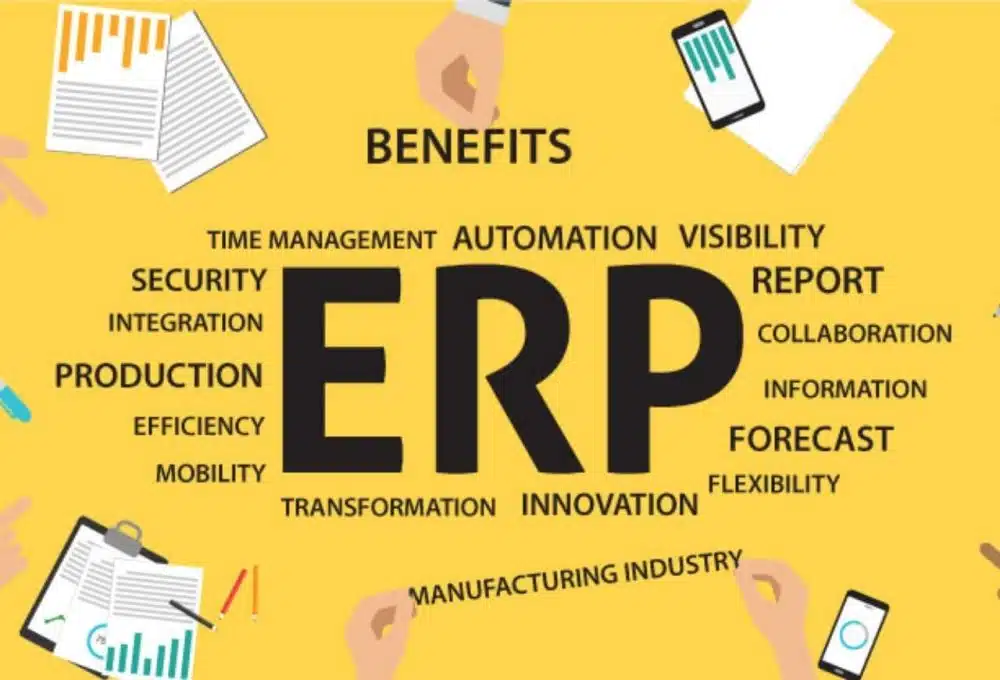
These benefits include:
- Manufacturing ERP software can help improve communication and collaboration between departments, which can lead to increased efficiency and customer satisfaction.
- Manufacturing ERP software often includes features such as workflow management and task tracking, which can further improve communication and collaboration between departments.
- Improved communication and collaboration between departments can lead to other benefits, such as reduced costs and increased customer satisfaction.
- Manufacturing ERP software can help optimize manufacturing performance by streamlining operations and making better use of data.
- In order to optimize manufacturing performance, it is important to have a clear overview of tasks and deadlines. Manufacturing ERP software can provide this overview with its built-in task-tracking features.
- Finally, studies have shown that companies with effective communication and collaboration strategies are 3 times more likely to outperform their competitors. Manufacturing ERP software can help organizations achieve this goal.
We will discuss these benefits in detail below:
Improved Communication and Collaboration:
In order to optimize manufacturing performance, it is important to improve communication and collaboration between departments. One way to do this is by using manufacturing ERP software. This software allows all departments to share information in real time, which can help to reduce errors and increase efficiency.
Another benefit of using manufacturing ERP software is that it often includes features such as workflow management and task tracking. These features can further improve communication and collaboration between departments by providing a clear overview of tasks and deadlines.
Improved communication and collaboration between departments can also lead to other benefits, such as increased customer satisfaction and reduced costs. In fact, studies have shown that companies with effective communication and collaboration strategies are 3 times more likely to outperform their competitors.
There are a variety of ways to improve communication and collaboration within a manufacturing organization. However, one of the most effective methods is by using the ERP manufacturing module. This software provides a number of benefits that can help to optimize manufacturing performance.
Better Use of Data:
Data is becoming increasingly important in all industries, and manufacturing is no exception. In fact, data-driven manufacturing is essential for optimizing performance and staying competitive. There are a number of ways to make better use of data in manufacturing, but one of the most important is to use Manufacturing Enterprise Resource Planning (ERP) software.
Manufacturing ERP software gives organizations the ability to store all data related to the manufacturing process in one central location. This data can then be used to inform decision-making, identify areas for improvement, and track progress over time. In addition, many manufacturing ERP systems include reporting and analytics tools that make it easier to make sense of data and act on it accordingly.
One of the key benefits of using ERP software is that it can help organizations move from a reactive to a proactive approach to data. Instead of waiting for problems to arise and then trying to find the root cause after the fact, manufacturers can use data to anticipate potential issues and take preventive action.
This helps to avoid disruptions in the supply chain, reduce costs, and improve customer satisfaction.
ERP software also enables manufacturers to take a more holistic view of their operations. By integrating data from all aspects of the manufacturing process, ERP creates a single source of truth that can be used to gain insights that would otherwise be hidden.
This allows manufacturers to identify patterns and trends that would otherwise go unnoticed, and make decisions that improve overall efficiency.
Despite the many benefits of using ERP software, some organizations are hesitant to invest in these solutions due to concerns about cost and complexity. However, there are a number of cloud-based ERP solutions that are both affordable and easy to implement.
In addition, many ERP vendors offer services that can help organizations with planning, implementation, and training. As a result, there is no excuse for not making better use of data in manufacturing.
Cloud-based ERP solutions are particularly well suited for small and medium-sized businesses that don’t have the resources or expertise to implement on-premises solutions.
These solutions are typically much less expensive than on-premises solutions, and they can be deployed quickly and easily without any IT infrastructure required.
In order to stay competitive in today’s rapidly changing business environment, manufacturers must make better use of data.
Cloud-based Manufacturing ERP software provides an affordable and easy way for organizations of all sizes to take advantage of data-driven decision-making. By integrating data from all aspects of the manufacturing process, these solutions create a single source of truth that can be used to gain insights into all aspects of operations.
As a result, ERP helps manufacturers improve overall efficiency, avoid disruptions in the supply chain, reduce costs, and improve customer satisfaction.
Increased Efficiency:
One of the most important goals of any manufacturer is to increase efficiency. There are many ways to increase efficiency in a manufacturing setting, and one of the most effective is to implement a manufacturing ERP system.
ERP stands for Enterprise Resource Planning, and it is a type of software that helps businesses manage their resources more effectively.
In a manufacturing setting, ERP software can help to automate tasks, reduce errors, and improve communication and collaboration between departments.
In addition, many manufacturing ERP systems include tools that make it easier to monitor production in real time.
This allows managers to identify bottlenecks and other issues that may be causing delays or poor-quality products. By addressing these problems quickly, manufacturers can further increase their efficiency.
Implementing a manufacturing ERP system is a major investment, but it can pay off in increased efficiency and improved quality control. For manufacturers who are looking to increase their competitive edge, an ERP system is essential.
Conclusion:
There are a number of ways to optimize manufacturing performance, but perhaps the most effective is through the use of manufacturing ERP software.
This software can help manufacturers streamline their operations, improve communication and collaboration, and make better use of data.
By taking advantage of these benefits, manufacturers can gain a significant competitive advantage in today’s marketplace.