

Many warehouse teams run slow, paper-based training. New hires stare at thick manuals, they still make errors when they pick and pack. You feel the pain of missed orders and lost hours.
A recent study finds AR can cut picking errors by up to 30%. Trainers can use AR glasses like HoloLens or mobile apps for interactive simulations in inventory management. We will show five use cases that boost operational efficiency, improve safety drills, and ease onboarding.
Keep reading.
Key Takeaways
- A recent study shows AR can cut picking errors by up to 30% by using smart glasses (HoloLens) and handheld apps that track hand moves, show bin codes, and correct mistakes in real time.
- In a DHL trial, AR glasses cut mis-picks from 3% to 1.5% with live WMS data on a heads-up display; at BMW packing stations, AR cut mistakes by 30% with item flags and voice commands.
- Real-time AR data visualization taps IoT sensors and analytics to cut warehouse decision time by 30%, streams live metrics to supervisors, and displays order heat maps on the floor.
- Interactive AR safety drills with HoloLens and sensor gloves help staff practice forklift moves and gear checks, cutting accident rates by about 30% under OSHA-style scenarios.
- Mixed reality onboarding using Unity-based apps and tablet dashboards drops training time in half by overlaying holographic cues on racks, tracking moves live, and building skills from day one.
How can augmented reality improve training efficiency in warehouses?
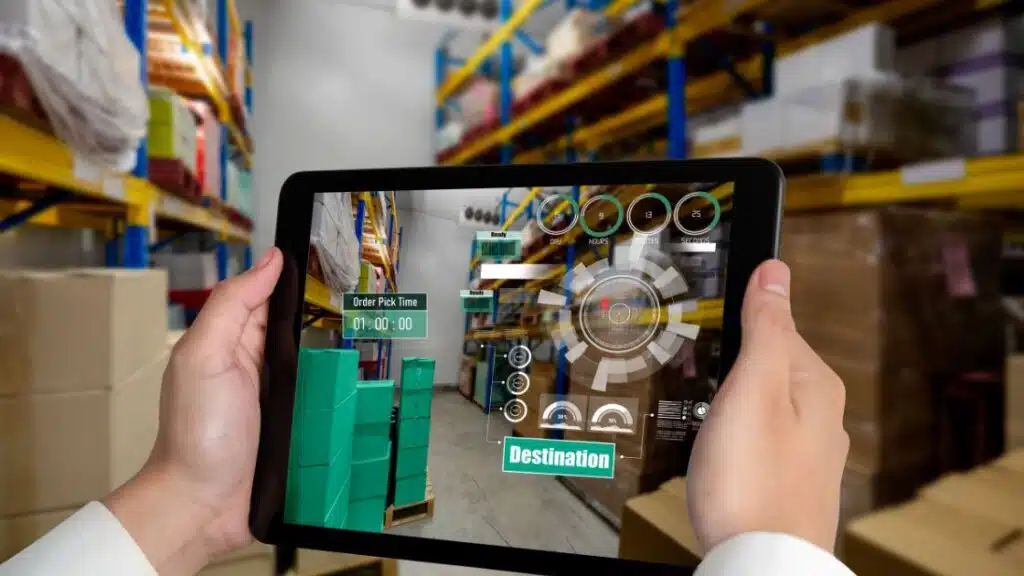
Smart glasses overlay step by step guides on shelves, letting new staff pick orders faster. System tracks hand moves and logs mistakes in real time, so trainers can correct errors on the spot.
Spatial computing tech points out bin codes and sends alerts if a trainee veers off path. Motion tracking picks up wrong grips and shows clear corrections on wearable displays. This mix boosts operational efficiency and cuts errors in inventory management.
Handheld devices host interactive simulations that mimic busy docks. Trainees scan virtual labels, handle pretend packages, and learn safe lifts before hitting the floor. This immersive learning cuts class time and speeds up workforce development.
Logistics firms see faster on the job readiness, and bosses spot skill gaps in real time, tying training to actual tasks.
How does augmented reality increase accuracy in picking and packing?
AR glasses place guides over each warehouse bin. A heads-up display shows item codes. The display pulls live data from inventory management. Workers scan each box in WMS. That cuts mis-picks by half.
A DHL trial saw errors fall from 3% to 1.5%. Real-time location tools track items in the zone. They light up the right shelf. Staff move with confidence. Sarah said it feels like a video game, minus the joystick.
Packing stations also use AR. The system flags wrong items fast. It shows the next box to fill. A study at BMW cut packing mistakes by 30%. Voice commands confirm each choice. A list floats on the lens.
Staff joke they never miss a line. This step shrinks returns.
How does real-time data visualization enhance warehouse decision-making?
Real-time data visualization slashes decision time by up to 30 percent. It taps Internet of Things detectors and a data analytics platform. Control panels stream live metrics to supervisors.
Managers watch Inventory Management charts, catch delays, and stop stockouts. This tool moves teams from guesswork to swift action.
Workers don immersive goggles to see order heat maps on the floor. A supervisor quips, No more playing hide and seek with pallets. Logistics teams hook the view to a Warehouse Management System.
The live feed sparks quick route changes, boosts picking speed, and fuels workforce growth. Smart Warehousing goes from buzzword to daily win, sparking better Operational Efficiency and solid Technology Integration.
What are the benefits of interactive safety and equipment handling training?
AR headsets, like Microsoft HoloLens, help staff practice forklift drills and spot spilled loads in a virtual aisle. Interactive simulations guide each move, so workers correct mistakes before they hit the warehouse floor.
OSHA rules feel less like a list of must-dos and more like a game quest. Studies show hands-on gear checks cut accident rates by about 30 percent.
Companies shave weeks off training with sensor gloves and conveyor belt scenarios. Learners get instant feedback on grip strength and hand placement. Immersive Learning in AR turns a noisy dock into a safe lab.
Teams crack jokes as they race to lock out a mock engine. They stay alert and master protocols fast.
How does augmented reality streamline onboarding for new warehouse employees?
The headset drops holographic cues onto real warehouse racks, pointing out correct stock shelves and order zones. These prompts guide each move, cutting guesswork. Employees scan items with a mixed reality headset, using 3D models to learn fast.
A Unity based app runs secure interactive simulations that build skills on day one.
A tablet dashboard mirrors a digital twin and shows inventory management stats. Trainers track each move in real time, spotting gaps. This cuts errors and boosts operational efficiency in smart warehousing.
It fuels immersive learning. Interactive employee training now fits every pace. It speeds onboarding and lifts confidence.
Takeaways
Augmented reality makes training fun. New hires pick items with smart glasses, like a chef slicing veggies. Hands-on simulations boost accuracy in inventory management and bring immersive learning into daily tasks.
Tablet apps guide workers step by step, cutting onboarding time in half. Real-time data appears in view, so teams make fast, confident calls.
FAQs
1. What are the main use cases of augmented reality in warehouse training?
Augmented reality can guide new staff through stock checks, teach safe vehicle operation, light the way for order picking with a picking signal system, run hands-on safety drills, and coach on simple equipment fixes. It feels like having a coach right in your sight.
2. How does augmented reality speed up order picking training?
AR pops up arrows on real shelves, like a lighthouse in fog. It points to the exact bin, maps the shortest path, and cuts down walking time. Trainees learn the layout fast, and they find orders in a flash.
3. Can augmented reality make safety drills more real?
Yes, AR can mimic spills, alarms, or falling boxes with no risk. It highlights hazards in bright red so learners dodge them on cue. This live practice sticks in their mind, and they handle real dangers with confidence.
4. Is augmented reality worth the cost for warehouse training?
AR gear can cost money up front, but it slashes training time by half. New hires learn fast and make fewer mistakes. You save on damage, lost items, and work delays. In the long run, it pays off.
























