A major restructuring is underway at Apple as the company grapples with setbacks in launching its next-generation AI capabilities for Siri. The tech giant is replacing the head of Siri, John Giannandrea, following internal struggles and missed timelines for key generative AI features that were expected to debut in 2024.
Mike Rockwell Takes Over Siri Development After Executive Shuffle
According to a report from Bloomberg, Apple has appointed Mike Rockwell, the executive who led the development of the Vision Pro mixed-reality headset, to now oversee Siri and related AI products. This leadership change comes after Apple CEO Tim Cook reportedly lost faith in John Giannandrea’s ability to push forward on generative AI features.
Giannandrea, a former Google executive hired in 2018 to lead Apple’s AI efforts, has played a key role in shaping the company’s machine learning and AI strategies. Despite remaining at Apple to oversee broader AI initiatives, he will no longer manage Siri directly.
This marks a rare and bold executive shake-up for Apple, signaling how seriously the company views its lagging position in the AI race compared to rivals like OpenAI, Google, and Microsoft.
Apple Delays Siri’s Generative AI Rollout to 2025 or Later
Earlier this month, Apple quietly confirmed that its previously announced AI enhancements for Siri—unveiled at WWDC 2024 under the “Apple Intelligence” brand—will not arrive as scheduled. Instead, the company says the features will now launch “in the coming year.”
These Siri upgrades were expected to enable users to perform complex commands, access context-aware information from apps, and communicate more naturally with the voice assistant. For example, users could ask Siri to summarize emails, draft text messages, or find a specific photo based on spoken criteria.
However, Apple has acknowledged that these improvements are still not ready for release, with internal sources suggesting they may not ship until late 2025 or even 2026. In a statement to Daring Fireball, Apple admitted development was “taking longer than we thought.”
Internal Tensions Highlight Deeper Issues with Siri and AI Strategy
Behind the scenes, Apple employees working on Siri have expressed frustration and disappointment over the setbacks. In a particularly tense all-hands meeting, Robby Walker, Apple’s Senior Director of AI and Siri, reportedly described the situation as “ugly and embarrassing.”
According to Bloomberg, during the meeting, Walker admitted that internal testing of new Siri models showed they were delivering incorrect responses nearly one-third of the time. Such error rates made it impossible to move forward with a public launch, especially given Apple’s strict quality and privacy standards.
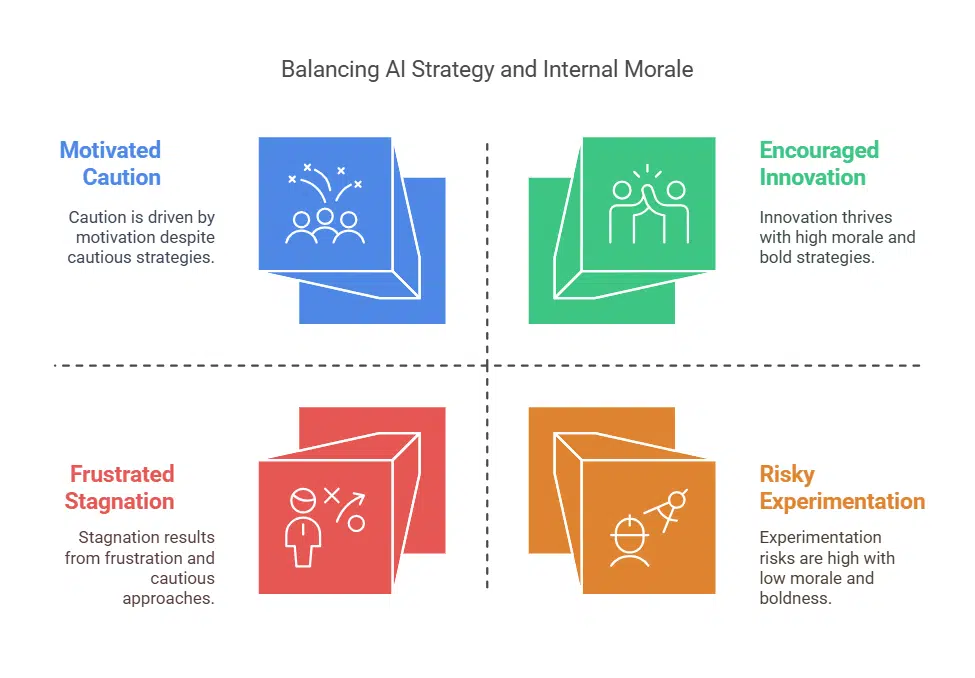
This internal chaos has reportedly lowered morale on the Siri team, with some engineers questioning whether Apple’s AI strategy is too cautious in an industry that now rewards bold experimentation.
Privacy vs Progress: Apple’s Unique AI Challenge
One of Apple’s biggest selling points—its commitment to user privacy—may also be a major reason why its AI development is falling behind. Unlike competitors that rely heavily on cloud-based data processing and extensive user data collection, Apple insists on on-device intelligence for most of its features.
While this approach aligns with Apple’s privacy-first philosophy, it significantly complicates the development of large language models (LLMs) and real-time personalization, which often require vast computational resources and data access.
As a result, Siri has remained less capable compared to Amazon Alexa or Google Assistant in many real-world use cases. Although privacy-conscious users appreciate Apple’s stance, tech analysts now warn that the company must find a balance between privacy and innovation if it wants to stay competitive in the AI race.
Mike Rockwell’s New Role Signals a Shift in Strategy
Mike Rockwell is best known for leading the development of Apple Vision Pro—a high-stakes project combining hardware, software, and immersive mixed reality experiences. While the Vision Pro has had a mixed commercial reception, Rockwell’s ability to manage complex, long-term product development is well-regarded internally.
With Rockwell now taking over Siri, Apple appears to be placing a bet on more unified leadership between its hardware and AI teams. Paule Meade, previously Rockwell’s top hardware executive on the Vision Pro team, will now take over the Vision Pro group.
This new leadership structure suggests Apple is aiming to tightly integrate its AI features across devices, rather than treating Siri as a standalone assistant. Apple may be planning to embed advanced generative AI throughout its ecosystem—from iPhones and iPads to MacBooks and Vision Pro—under Rockwell’s guidance.
Apple’s AI Race: Catching Up or Falling Behind?
Apple’s move comes at a time when its competitors are making aggressive strides in generative AI:
- Google has integrated Gemini across its services, including Android and Google Assistant.
- OpenAI and Microsoft continue to expand ChatGPT and Copilot across devices and enterprise tools.
- Amazon is revamping Alexa with new AI models and developer tools.
Meanwhile, Apple has yet to release any large language model publicly or provide developers with access to generative AI APIs.
While Apple does have powerful AI research capabilities behind the scenes—publishing respected academic papers and experimenting with models like “Ajax”—the company has not shared a clear, cohesive vision for AI beyond occasional product demos.
This leaves Apple at risk of falling behind in public perception, even if it is quietly making breakthroughs in the background.
A Critical Moment for Apple and Siri
The reshuffling of Apple’s AI leadership is more than just a personnel change—it’s a pivotal moment for the future of Siri, Apple’s entire AI ecosystem, and possibly the company’s long-term competitiveness.
As the global tech industry shifts toward AI-first design, Apple can no longer afford delays. The company must now deliver on its AI promises, regain internal momentum, and match the speed of innovation shown by its peers.
Now that Mike Rockwell is in charge of Siri and AI product development, everyone is eagerly awaiting Apple’s next move. Will this leadership shake-up mark a turning point for Siri? Or will Apple continue to trail its competitors in the new AI-driven era?