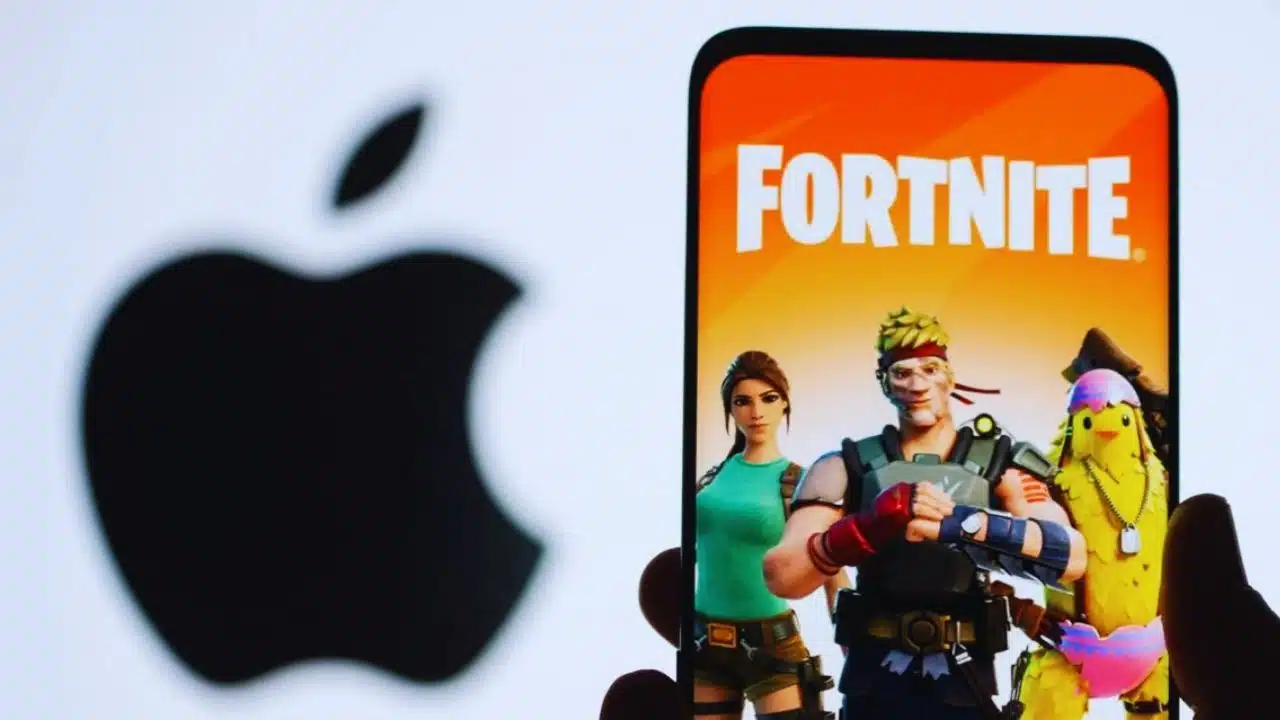
Fortnite, one of the world’s most popular video games, has been blocked from running on iOS devices globally, according to a statement from developer Epic Games. This latest fallout comes just weeks after Epic secured a partial courtroom win against Apple — reigniting a nearly five-year legal battle that has raised fundamental questions about competition, fairness, and control in the app economy.
Epic announced the global block on Friday, May 17, stating that Apple had rejected its latest submission of Fortnite to the App Store. “Now, sadly, Fortnite on iOS will be offline worldwide until Apple unblocks it,” Epic said in a post on X (formerly Twitter).
The move has sparked widespread outrage among the gaming community and rekindled debates around Apple’s App Store policies and alleged anticompetitive practices.
How It Started: 2020 Clash Over Commissions and Control
The roots of the dispute stretch back to August 2020, when Epic Games bypassed Apple’s 30% commission policy by offering Fortnite players a direct-payment option for “V-Bucks,” the in-game currency. This move violated Apple’s strict App Store guidelines, prompting the company to remove Fortnite entirely from its marketplace.
In response, Epic Games filed a landmark antitrust lawsuit against Apple, alleging that the tech giant abused its monopoly power to stifle competition and suppress innovation in mobile gaming.
The legal battle quickly escalated into one of the most significant tech antitrust cases in years, drawing the attention of regulators, developers, and lawmakers across the globe.
The 2021 Court Decision: A Mixed Ruling with One Big Win for Epic
In September 2021, U.S. District Judge Yvonne Gonzalez Rogers ruled in favor of Apple on nine out of ten counts. She concluded that Apple’s dominance did not constitute a monopoly under federal or California antitrust law.
However, the judge did grant Epic a critical victory: she issued a nationwide injunction that required Apple to allow developers to inform users about alternative payment options — even outside the App Store.
“Success is not illegal,” Gonzalez Rogers wrote in her decision. But she also acknowledged that Apple’s anti-steering rules unfairly restricted consumer choice.
Apple’s Controversial Response: 27% Fee and “Scare Screens”
Instead of complying in full, Apple implemented a new policy: it allowed external links but imposed a 27% commission on any purchases made through them — only slightly below the original 30%.
Judge Gonzalez Rogers was not impressed. In April 2025, she ruled that Apple had violated the spirit and letter of her original injunction, calling its compliance “illusory” and noting that Apple engaged in tactics designed to discourage users from using external links.
She cited full-screen warnings — dubbed “scare screens” — that raised privacy fears, and noted that users were required to log in multiple times to complete purchases outside the App Store.
“The court finds that Apple knew exactly what it was doing,” Gonzalez Rogers wrote in a blistering opinion.
Referral to Prosecutors: A Potential Criminal Contempt Case
Perhaps the most explosive part of the ruling was the judge’s decision to refer Apple to federal prosecutors. She asked for an investigation into whether Apple and its Vice President of Finance, Alex Roman, should face criminal contempt charges.
Roman allegedly lied under oath, according to the judge. She cited evidence that contradicted Roman’s testimony and criticized Apple’s internal decision-making — particularly pointing out that App Store head Phil Schiller initially urged compliance, but was overruled by former CFO Luca Maestri and CEO Tim Cook.
“Cook chose poorly,” Gonzalez Rogers concluded.
Fortnite’s Re-Submission and Latest Block
In early May 2025, Epic Games attempted to resubmit Fortnite to the App Store, and also to the Epic Games Store in the European Union.
However, Apple rejected the submission, citing concerns over Epic’s inclusion of the U.S. storefront in the update. According to Apple, it asked that Epic Sweden resubmit the update without including the U.S. version to avoid affecting other regions.
Epic refused. As a result, Fortnite became unavailable to iOS users globally — even in places where it had been accessible through Apple’s new Digital Markets Act (DMA)-compliant Epic Games Store in the EU.
Epic’s Response: Legal Motion to Force Apple’s Hand
Epic CEO Tim Sweeney accused Apple of using its review process as a weapon. “Apple has weaponized its app review process to punish Epic,” Sweeney said, warning that users are now exposed to fake versions of Fortnite on third-party sites.
Epic filed an emergency legal motion, asking the U.S. District Court to compel Apple to approve Fortnite for the App Store. The motion argues that Apple is in direct violation of the court’s injunction and is undermining fair competition.
“The time has come to enforce compliance,” Epic’s filing reads.
Apple’s Position: “Not Our Fault”
Apple, for its part, insists it did not remove the live version of Fortnite from alternative marketplaces. A spokesperson claimed the rejection was simply an effort to prevent the U.S. submission from interfering with global distribution.
“90% of app submissions are reviewed in less than 24 hours,” Apple said. “We asked Epic to resubmit the update excluding the U.S. storefront. We took no action to remove Fortnite from alternative stores.”
Still, the move contradicts the recent European Commission pressure for Apple to comply with the Digital Markets Act (DMA), which requires Apple to allow third-party app stores and payment systems.
Implications: What This Means for Gamers and Developers
For now, iOS users around the world cannot download or play Fortnite on their devices, cutting off access to a game that previously boasted over 116 million installs on iPhones and iPads.
Gamers are left frustrated, and developers are watching closely. The outcome of this legal feud could reshape how app platforms operate and who controls payment systems and app availability in the future.
What’s Next: Appeals and a Long Road Ahead
Apple has indicated that it will appeal Judge Gonzalez Rogers’ contempt ruling, seeking to pause enforcement of the injunction. According to reports, Apple could face billions of dollars in financial losses if forced to comply with unfiltered external payment access.
Experts like attorney Danny Karon, who teaches antitrust law at Ohio State and the University of Michigan, say the conflict is far from over.
“This is just the beginning,” Karon told Fortune. “There’s still a lot of legal runway left.”
Meanwhile, other companies like Spotify have joined Epic in praising the court’s enforcement push — suggesting that Apple’s business model may face even more regulatory scrutiny in the years ahead.
Apple vs Epic — The Legal Saga Continues
The war between Epic Games and Apple has escalated once again, with millions of Fortnite players caught in the crossfire. What began as a disagreement over commissions has evolved into a battle over the future of app ecosystems, user choice, and tech accountability.
As the case continues through appeals, investigations, and international regulatory scrutiny, the broader implications for the digital economy — from gaming to e-commerce — are enormous.
For now, the message from Epic is clear: Fortnite won’t return to iOS until Apple complies. And based on history, that could take a while.
The Information is Collected from CNBC and MSN.