When it comes to anti-aging skincare, there’s a lot of noise and even more confusion. One scroll through beauty forums or skincare TikTok, and you’ll find bold claims, contradicting advice, and some downright myths about what works and what doesn’t.
Let’s hit pause on the hype and clear up the seven most common misconceptions around anti-aging ingredients and treatments. Because smart skincare starts with the truth.
1. “If it burns, it’s working.”
Oof, big myth. While some active ingredients—like retinol or exfoliating acids—might cause a little tingling at first, pain or burning is never a sign that something is helping. In fact, it’s more likely a red flag.
Healthy skincare shouldn’t hurt. Irritation can compromise your skin barrier, leading to inflammation, dryness, or breakouts. If your routine feels like a battle, it’s time to reassess.
2. “You don’t need anti-aging products until your 40s.”
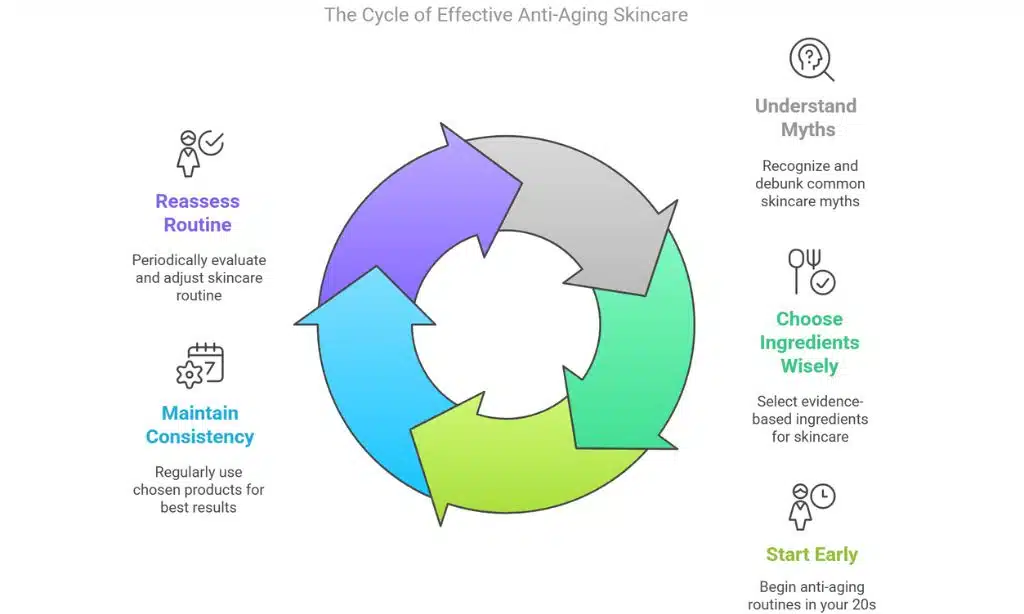
This one’s outdated. Aging begins in our 20s when collagen production starts to slow, and external stressors like UV rays and pollution begin taking their toll. That doesn’t mean you need a heavy-duty routine early on—but incorporating antioxidants, SPF, and gentle ingredients like peptides or hyaluronic acid in your 20s and 30s can help prevent deeper signs of aging later.
3. “Natural ingredients are always better.”
We get it—”natural” sounds safe and wholesome. But in skincare, it’s not that simple. Natural doesn’t always mean effective [or gentle], and synthetic doesn’t always mean harmful.
Case in point? Poison ivy is natural. So is lemon juice—which can seriously disrupt your skin’s pH and cause irritation. On the flip side, lab-created ingredients like peptides or ceramides are designed to mimic what your skin naturally produces, offering targeted results with safety in mind.
4. “Moisturizing alone can prevent wrinkles.”
Moisturizer is a must! It helps maintain hydration, plumpness, and overall skin health. But it’s not a silver bullet. Fine lines and wrinkles are caused by deeper structural changes in the skin, like collagen loss and reduced elasticity.
To address those concerns, you’ll need more than a basic cream. Look for serums or creams that include actives like retinol, antioxidants, and peptides to help support those underlying processes—like this peptide cream, which works to replenish and smooth skin over time.
5. “All retinol products are the same.”
Retinol comes in many forms and strengths, from over-the-counter retinyl palmitate to prescription-grade tretinoin. Just because a product contains “retinol” doesn’t mean it’s high-strength or even effective.
Start low and slow, especially if you’re new to it. And remember: consistency matters more than strength. Using a gentle retinol 3–4 nights a week is more effective [and sustainable] than blasting your skin with a high-strength version that leaves you flaky and red.
6. “Lasers are too harsh for home use.”
While professional lasers are still the gold standard for deeper resurfacing, newer at-home technologies have come a long way. Many devices are now FDA-cleared and designed specifically for safe, daily use without downtime.
The key? Look for non-ablative or non-fractional tech, which stimulates collagen below the surface without damaging the top layer of skin. Safe, gentle, and totally doable from your bathroom mirror.
7. “Once you see results, you can stop using the product.”
Think of anti-aging skincare like going to the gym. You don’t hit your goal and stop exercising, right? Same goes here.
Skincare is about maintenance. Collagen continues to break down with age, and UV exposure, stress, and diet all play a role in how our skin looks and feels. Once you find a routine that works, keep it up. Your future self will thank you.
Time to Ditch the Myths For Good
When it comes to anti-aging skincare, knowledge is your most powerful tool. Don’t let viral myths or outdated advice steer your routine off course. Instead, focus on evidence-based ingredients, listen to your skin, and commit to long-term habits that support your skin’s health—inside and out.
Looking for smart, skin-friendly ingredients to support your anti-aging journey? Start simple, stay consistent, and don’t fall for the hype.