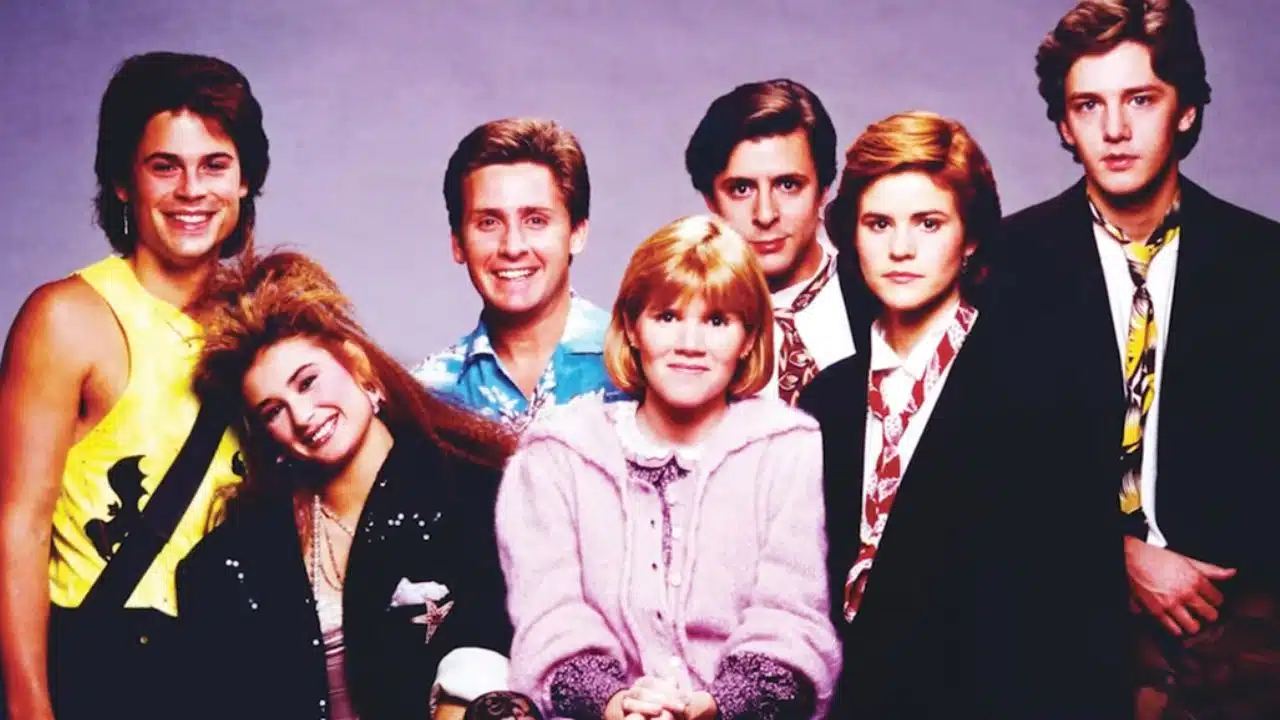
Andrew McCarthy, renowned actor and director, explores the legacy of the 1980s Brat Pack in his new documentary, “Brats.” This insightful film features interviews with Rob Lowe, Demi Moore, and other prominent figures from the era, unpacking what it meant to be part of Hollywood’s most exclusive club—a club they never sought to join.
The documentary provides a fascinating look into the complexities and lasting impact of this unique group.
The High School Reunion Vibes of “Brats”
Watching “Brats” feels akin to attending a high school reunion, but instead of typical high school halls, the setting is the Sunset Strip of the 1980s, and the theatre teacher is none other than John Hughes.
In this documentary, McCarthy brings together members of the Brat Pack to reflect on their experiences, offering moments of embarrassment, humility, and catharsis. Apologies are made, and new perspectives are gained, revealing the deep emotional impact of being part of this iconic group.
The Origin of the Brat Pack
The term “Brat Pack” was coined by journalist David Blum in a 1985 New York Magazine profile of Emilio Estevez. This profile placed Estevez and his peers, including Judd Nelson and Rob Lowe, within the context of Hollywood evolving to cater to younger audiences.
The article portrayed the actors as undertrained and overestimated, often seen enjoying perks like free movie tickets and socializing at the Hard Rock Cafe.
Although the original classification did not include names like Molly Ringwald, who was central to ’80s coming-of-age cinema, the term has since expanded to include a broader group of actors associated with films by John Hughes.
Reflecting on the Brat Pack Label
In “Brats,” McCarthy speaks with fellow Brat Pack members like Estevez, Moore, Ally Sheedy, and Lowe. They discuss how the label led to typecasting by a media obsessed with competition, resulting in missed roles and potential projects.
Over time, however, distance and full careers have brought about an appreciation for their inclusion in the Brat Pack. McCarthy now views it as “perhaps the biggest professional blessing of my life.”
Why Now? The Motivation Behind “Brats”
McCarthy explains that the inspiration for the documentary stemmed from his book, “Brat,” which explored his experiences and feelings about the Brat Pack. He wanted to understand how his peers felt about their shared past and how their perceptions had evolved over time.
He notes, “I feel 180 degrees different about the Brat Pack now than I did 30-odd years ago. I hated it then. Now, I look at it as perhaps the biggest professional blessing of my life.”
A Personal and Communal Exploration
While McCarthy’s book was a solitary exploration, making “Brats” became a communal experience. He realized the importance of connecting with others and sharing these memories, which helped him feel less isolated.
This connection, he believes, is why movies are so powerful—they make people feel seen and understood.
The Challenges of Filmmaking
Making the documentary was a humbling experience for McCarthy. Scheduling interviews took over a year, with many last-minute cancellations. Despite these challenges, McCarthy persevered, often calling on friends like St. Elmo’s Fire producer Lauren Shuler to participate.
Rereading the New York Magazine article for the film, McCarthy found it less scathing than he initially remembered. He recognized that the journalist’s agenda was to make an impression rather than provide a fair portrayal of the actors.
Addressing Absences
Notably, “Brats” does not feature interviews with Brat Pack members Molly Ringwald and Judd Nelson. McCarthy addresses their absence gracefully, acknowledging their decisions while including their perspectives in a sensitive manner. Nelson, who initially agreed to participate, later decided against it, which McCarthy found insightful regarding the Brat Pack’s nature.
The Brat Pack Phenomenon: A Product of Its Time
McCarthy reflects on the unique cultural conditions that led to the Brat Pack phenomenon. In the 1980s, Hollywood shifted its focus to young audiences, and youth culture was highly unified.
The Brat Pack members were the right actors at the right time, fitting into this new cultural landscape. However, McCarthy believes such a phenomenon could never happen today due to the fragmented nature of modern culture and the pervasive influence of social media.
Reliving the Past
The archival footage in “Brats,” including McCarthy’s uncomfortable interview with Charlie Rose, highlights the innocence and naivety of the time.
McCarthy feels tender towards his younger self and his peers, recognizing how unsophisticated yet genuine their experiences were compared to the savvy, media-trained stars of today.
A Journey Through Time
McCarthy hopes that audiences will see their own journeys reflected in the Brat Pack’s story. He believes that our perceptions of significant events in our lives can change over time, leading to positive outcomes.
“Brats” encourages viewers to consider how they interpret and make sense of their own pasts, just as McCarthy and his peers have done with their experiences in the Brat Pack.
“Brats” premieres on June 13 on Hulu, offering an intimate and insightful look at a group of actors who left a lasting mark on Hollywood and popular culture.
The information is taken from The Hollywood Reporter and Yahoo News