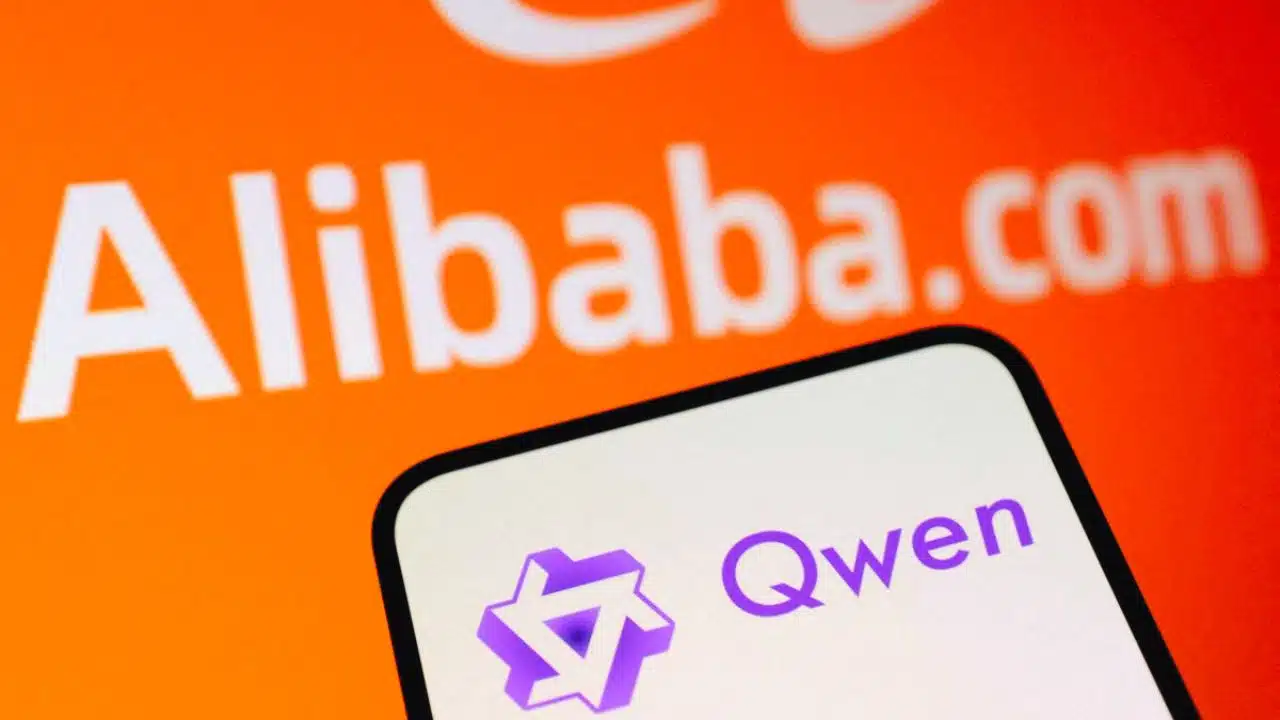
Alibaba is overhauling and renaming its flagship mobile AI app to “Qwen”, in a direct bid to challenge OpenAI’s ChatGPT and regain ground in the global AI race.
The move rebrands the existing “Tongyi” apps on iOS and Android and turns them into a more powerful, agent‑like assistant tightly integrated with Alibaba’s vast e‑commerce and cloud ecosystem.
From Tongyi To Qwen: A Strategic Rebrand
Alibaba will rename its current “Tongyi” AI apps on mobile to “Qwen,” aligning the consumer product with its well‑known large language model family of the same name. The redesign aims to make the interface and experience closer to ChatGPT, signaling that Alibaba wants Qwen to be seen as a full, standalone AI assistant rather than just a feature inside other apps.
The rebrand is part of a broader push by CEO Eddie Wu to put AI back at the center of Alibaba’s growth strategy after years of pressure from both Chinese rivals and Western platforms. By unifying the model and app under the Qwen name, Alibaba hopes to build a clearer consumer brand in AI, similar to how OpenAI did with ChatGPT.
A ChatGPT‑Style Experience With Chinese Characteristics
Qwen is being redesigned to resemble ChatGPT in look and core functionality, with a conversational interface that can generate text, answer questions, and assist with everyday tasks. But Alibaba also wants Qwen to stand out through deep integration with its shopping, payments, and local services, effectively turning it into a super‑assistant for the Alibaba ecosystem.
The company’s ambition is to evolve Qwen into a “fully functioning AI agent,” capable of reasoning, planning, using tools, and handling multi‑step tasks rather than simply responding to individual prompts. This approach mirrors a broader shift in global AI from passive chatbots to agentic systems that can act on behalf of users across apps and services.
Shopping, Services And Super‑App Ambitions
One of Qwen’s key differentiators will be its role as an AI shopping and services companion across Alibaba platforms such as Taobao and other marketplaces. Users will be able to ask Qwen for product recommendations, compare items, manage orders, and potentially even negotiate deals or track deliveries inside a single AI interface.
Over time, Alibaba plans to gradually add more intelligent features, from personalized suggestions and price monitoring to integration with logistics, travel, and local services, turning Qwen into an AI front door for the group’s digital empire. This strategy leverages Alibaba’s strength in transactional data and e‑commerce, areas where a deeply integrated AI agent could offer value that general‑purpose chatbots cannot easily replicate.
Powered By The Qwen 2.5 Model Family
Under the hood, the app will be backed by Alibaba Cloud’s Qwen model series, including the latest Qwen 2.5 generation and its derivatives. Qwen 2.5 is a multimodal AI capable of processing text, images, audio and video, allowing the app to handle tasks like reading documents, analyzing charts, understanding pictures and even parsing long videos.
The Qwen family spans both open‑source and proprietary models, with some variants—like Qwen2.5‑Max—positioned as high‑end systems that Alibaba claims can outperform leading international models on certain benchmarks. This layered approach lets developers and enterprises choose between fully managed cloud access and downloadable open models, potentially helping Qwen gain traction beyond China’s borders.
Free For Now, Monetized Later
Alibaba plans to keep the revamped Qwen app free at launch to accelerate user growth and close the gap with more popular AI apps from rivals like ByteDance and Tencent. The company currently trails Doubao (ByteDance) and Yuanbao (Tencent) in China’s consumer AI rankings, making rapid adoption a priority.
Monetization is expected to come later through value‑added consumer services, premium features, and enterprise integrations, once Qwen has built a sizable and engaged user base. This mirrors the playbook used by many consumer internet platforms in their early stages, with AI‑powered shopping assistance and productivity tools likely to be early revenue drivers.
Massive Engineering Push Behind Qwen
Alibaba has reportedly assigned more than 100 developers to the Qwen overhaul, underscoring the importance of the project inside the group. These teams are working on everything from the user interface and recommendation systems to the agent framework that will let Qwen plan and execute complex tasks.
The company has also been investing heavily in its cloud AI infrastructure, with AI‑related products showing triple‑digit growth and the cloud division emerging as Alibaba’s fastest‑growing unit in recent quarters. Qwen sits at the center of this transformation, intended both as a consumer product and as a flagship model for developers and corporate clients using Alibaba Cloud.
Competitive Landscape: ChatGPT, Doubao And Yuanbao
Alibaba’s move puts Qwen in direct competition not only with ChatGPT globally but also with domestic heavyweights ByteDance and Tencent at home. While ChatGPT enjoys a vast global user base and a strong ecosystem of third‑party apps, Qwen aims to compete through its mix of multimodal capabilities, open‑source variants, and native integration with commerce and cloud services.
Analysts see Qwen as part of a broader wave of Chinese AI models—including DeepSeek and others—seeking to close the performance and adoption gap with Western leaders. For Alibaba, success is not only about matching ChatGPT on benchmarks but about embedding Qwen so deeply into daily shopping, work, and services that it becomes indispensable to users inside and beyond China.
What The Rebrand Means For Alibaba’s AI Future
Renaming the app to Qwen and rebuilding it around a more powerful agentic core marks one of Alibaba’s most decisive steps yet to reclaim relevance in the AI era. If the strategy works, Qwen could become both a consumer‑facing super‑assistant and a showcase of Alibaba Cloud’s AI strength for global businesses and developers.
However, the company faces a crowded field, with ChatGPT, Gemini, DeepSeek and local Chinese rivals all moving fast in model development and product innovation. The success of Qwen will depend on whether Alibaba can translate its technical advances and data advantages into a compelling, everyday AI experience that users choose over entrenched competitors.