


Alibaba Group, the parent company of AliExpress, has announced a remarkable 333% increase in net income for the quarter ending December 31, 2024, reaching $6.36 billion. The Chinese e-commerce giant reported an 8% rise in total revenue, amounting to $38.4 billion, attributing its growth to steady performance in e-commerce and significant operational efficiencies.
The company also witnessed an 83% jump in operating income, totaling $5.65 billion. This surge was driven by improved profitability and lower impairment charges on intangible assets, marking a strong rebound for Alibaba amid increasing global competition in the digital commerce and cloud computing sectors.
Strategic Focus: AI and Cloud Computing as Growth Engines
Alibaba is gearing up for a massive investment push in artificial intelligence (AI) and cloud computing, viewing these sectors as essential pillars for long-term growth. The company aims to leverage AI to enhance customer experience and drive innovation across its business units. CEO Eddie Wu emphasized the company’s commitment to a “user-first, AI-driven” strategy, stating that AI technologies will play a transformative role in Alibaba’s future.
Wu highlighted that Alibaba’s cloud computing division experienced a 13% growth in revenue, marking a strong double-digit increase. The company has also achieved triple-digit growth in AI-related product revenues for the sixth consecutive quarter, indicating a significant shift toward AI-driven solutions. Moving forward, Alibaba’s Cloud Intelligence Group will focus on expanding AI-driven services, further accelerating growth in this sector.
E-Commerce Strength: Taobao and Tmall Drive Revenue Growth
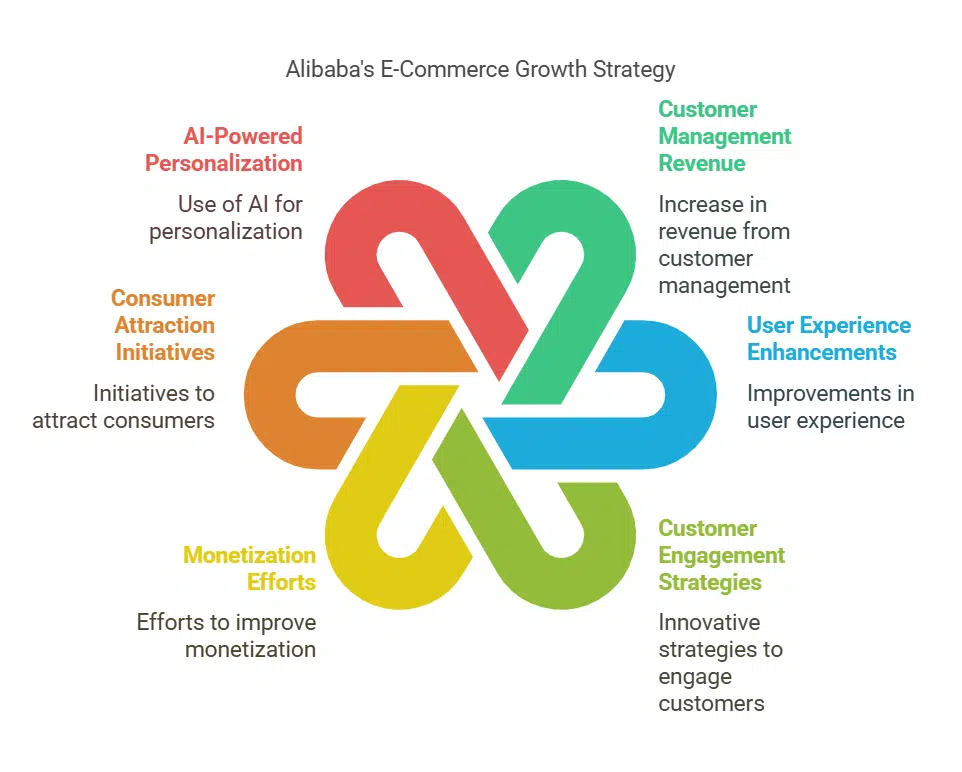
Alibaba’s core e-commerce platforms, Taobao and Tmall Group, reported a 9% increase in customer management revenue, a key indicator of business health in the digital retail space. This growth was primarily driven by enhanced user experiences, innovative customer engagement strategies, and improved monetization efforts.
The company introduced several initiatives to attract and retain consumers, including a stronger focus on competitively priced products and membership-driven benefits. These strategies resulted in a significant rise in new users and increased transaction volumes across Alibaba’s online shopping platforms.
Wu emphasized that Taobao and Tmall continue to be central to Alibaba’s business model, contributing substantially to the company’s overall financial performance. As the e-commerce industry faces challenges from emerging platforms and shifting consumer behaviors, Alibaba is doubling down on AI-powered personalization and customer engagement to strengthen its competitive edge.
Alibaba Cloud: A Key Driver for Future Growth
The Alibaba Cloud business saw a robust 13% year-over-year revenue growth, generating $4.35 billion for the quarter. This growth was fueled by increasing demand for AI-driven cloud solutions, digital transformation among enterprises, and the rising adoption of cloud-based technologies across various industries.
Alibaba Cloud remains the largest cloud service provider in China and a key player globally, competing with major tech giants like Amazon Web Services (AWS) and Microsoft Azure. The company’s investment in AI-driven cloud computing solutions has positioned it as a leading force in the cloud industry, particularly in sectors such as e-commerce, fintech, and enterprise solutions.
With the rapid expansion of AI applications, Alibaba Cloud is set to play a crucial role in supporting businesses through scalable and innovative cloud services. The company is making long-term commitments to AI and cloud infrastructure to strengthen its leadership position and cater to evolving business needs.
Financial Discipline and Strategic Business Management
Despite making substantial investments in AI and cloud computing, Alibaba has maintained strong financial discipline and operational efficiency. The company’s Chief Financial Officer, Toby Xu, emphasized that Alibaba continues to optimize its resources while ensuring sustainable growth.
Xu highlighted that Alibaba has been actively managing its balance sheet by executing strategic asset sales, share buybacks, and extending debt maturities at favorable rates. These measures have contributed to a stable financial outlook and enhanced Alibaba’s ability to reinvest in its core business areas.
Adjusted EBITA (Earnings Before Interest, Taxes, and Amortization), a key profitability measure, rose by 4% year-over-year to $7.52 billion, reflecting Alibaba’s commitment to maintaining financial stability while driving growth.
Future Outlook: Alibaba’s Long-Term Vision
Alibaba is setting its sights on a future dominated by AI-driven services and cloud computing expansion. With the growing adoption of AI across industries, the company is well-positioned to capitalize on this technological shift and strengthen its global footprint.
The company’s focus remains on innovation, user engagement, and strategic investments to drive long-term growth in e-commerce and cloud computing. By investing aggressively in AI and cloud infrastructure, Alibaba is not only securing its competitive edge but also paving the way for the next phase of digital transformation.
Moving forward, Alibaba aims to enhance its global presence, expand its AI-driven offerings, and further solidify its leadership in e-commerce and cloud computing. As competition intensifies, the company’s ability to innovate and adapt will be crucial in maintaining its market dominance and achieving sustained success in the digital economy.
























