

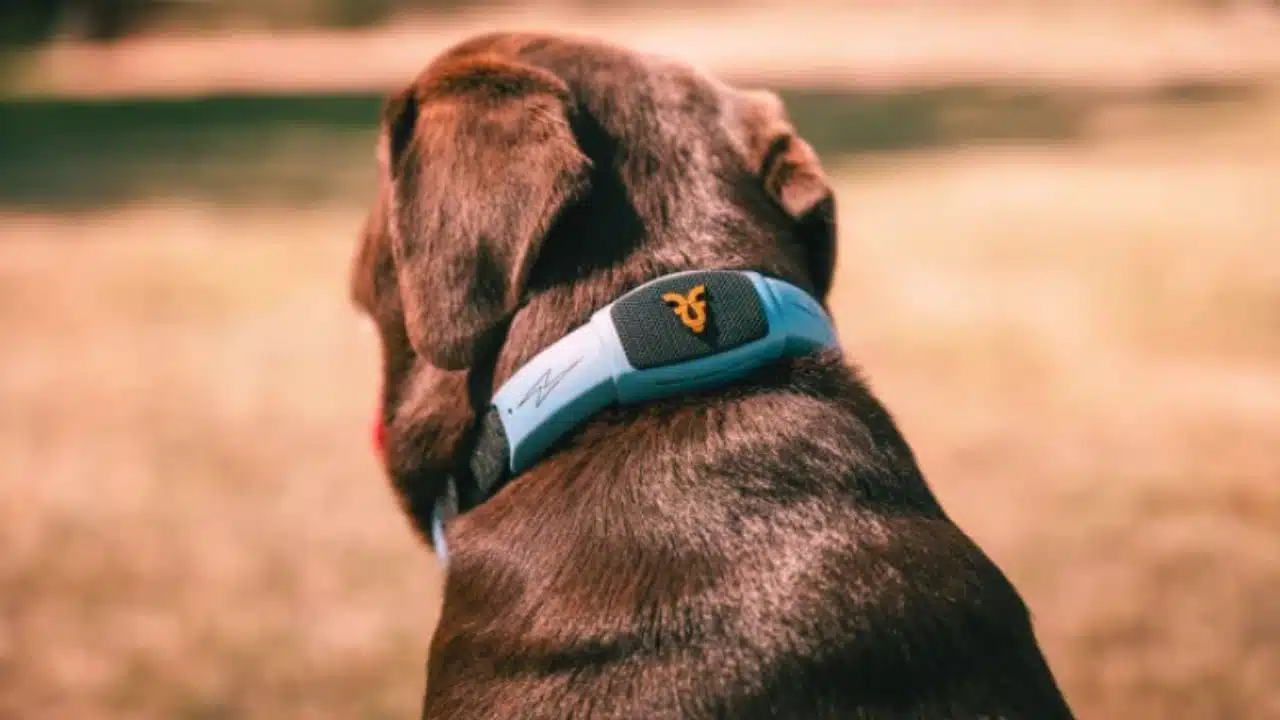
Humans have always longed for the ability to communicate with animals. Since ancient times, we’ve imagined what it would be like to understand the thoughts and feelings of our pets. Fast forward to modern-day technology, where we’re trying to turn that fantasy into reality—whether by using devices like talking buttons for dogs or advanced artificial intelligence (AI) to decipher the language of whales. Now, one startup claims to have taken the next big step in the quest for human-animal communication: a voice-activated collar that not only allows us to talk to our pets but gives them a way to “talk” back.
While the idea is certainly intriguing, the question remains—can AI really enable our pets to speak to us, or is this just another clever tech gimmick?
The Ambitious Idea Behind the Talking Collar
The inspiration behind this latest innovation comes from John McHale, an Austin-based tech entrepreneur who founded Personifi AI. McHale, a self-proclaimed “tech guy,” has set an ambitious goal for his company: to “personify everything” with AI, giving inanimate objects and animals the ability to interact in a more human-like way. His first foray into this ambitious vision is through pet technology, specifically with a new AI-powered collar designed for cats and dogs.
This collar, called Shazam—no, it’s not related to the superhero movie or the music discovery app of the same name—comes equipped with a speaker that allows it to “talk back” to pet owners. But the pet isn’t really speaking. Instead, prerecorded human voices respond based on what the collar “hears” from the pet’s owner. This creates the illusion that your pet is conversing with you in a way that mirrors human language and personality. Essentially, Shazam is a highly advanced chatbot wrapped around your pet’s neck, offering a unique, tech-driven way to personify their behavior.
However, McHale’s journey toward this idea wasn’t just born out of curiosity or a desire to innovate. His inspiration came from a more personal experience. His dog, Roscoe, was bitten by a rattlesnake, and McHale didn’t realize it until hours later when Roscoe’s condition deteriorated. Roscoe eventually recovered after a lengthy stay in the animal hospital, but the incident left a lasting impression on McHale. He couldn’t help but wonder: If Roscoe could have communicated what had happened right after the snakebite, would it have made a difference? Could he have sought treatment sooner and potentially saved his dog from a longer recovery?
It was this harrowing experience that led McHale to develop Shazam. In his mind, giving pets the ability to “speak” could prevent situations like Roscoe’s from escalating by helping owners better understand what’s happening to their animals in real-time.
How Does the Shazam Collar Work?
At its core, Shazam is a wearable AI device for pets. It has a speaker that allows it to “talk back” to you when you speak to it. The collar contains a combination of microphones and sensors, which gather data about your pet’s activity, environment, and physical state. When you speak to your pet, the collar analyzes the input and selects a prerecorded response that best matches the context. This creates the illusion of a conversation between you and your pet.
For example, you might ask your dog, “How are you feeling today?” and the collar will respond with something like, “I feel great! Let’s go for a walk!” The technology behind Shazam uses machine learning and large data sets to mimic the kinds of responses we might expect from our pets, even though, of course, your dog isn’t really the one speaking—it’s the AI chatbot embedded in the collar.
McHale explained that Shazam’s responses are based on “states of being” rather than simple commands. The collar constantly measures various inputs about the pet, its owner, and the environment to create a more personalized, context-aware experience. These variables are fed into what McHale calls the collar’s “cognitive cortex,” which is powered by machine learning algorithms. This system is designed to produce responses that feel more dynamic and personalized, based on everything happening around the pet at that moment.
A Pricey Tech Gadget for Pet Lovers
While the concept of Shazam may sound fun and futuristic, it doesn’t come cheap. For pet owners interested in giving their furry friends a voice, the collars start at $495 for cats and $595 for dogs. And that’s just the beginning. The company offers different subscription tiers to enhance the collar’s functionality. For instance, the $195 per year subscription gives you access to the “feline” and “ultra” versions of the collar, while the $295 per year “BrainBoost” subscription promises to provide more advanced features like empathy, reasoning, social awareness, and even self-awareness.
These subscription fees are waived for the first year, but after that, they will automatically renew unless canceled. Without the BrainBoost subscription, the collar defaults to a generic voice with less dynamic capabilities. In other words, if you want your pet’s “personality” to remain sophisticated and lifelike, you’ll have to pay for it.
The collars are currently available for pre-order, with shipping expected to begin in February 2025. So, if you’re eager to have your pet “talk” to you, you’ll have to wait a bit longer before you can actually try it out.
Safety Features Beyond “Talking”
While Shazam’s main draw is the promise of conversations with your pet, the collar also includes several practical features designed to enhance pet safety. The collar’s sensors and microphones can detect specific sounds and signals, such as the distinctive rattle of a rattlesnake. This could potentially alert owners to a dangerous situation before it escalates. Additionally, the collar has built-in tracking features that can send alerts if your pet goes missing or is stolen.
The collar can also monitor your pet’s routine and detect any abnormalities. For example, if your dog usually eats breakfast at 7 AM and the collar detects that they haven’t eaten by that time, it can trigger a reminder to you through the voice bot. This function is designed to help owners stay on top of their pet’s needs and routines, especially in busy households where it’s easy to lose track of details like feeding schedules.
Customizing Your Pet’s Voice and Personality
Perhaps one of the most entertaining aspects of Shazam is its customization options. When you set up the collar, you can choose from 27 different characters, each with a distinct personality. These characters are voiced by real actors, not AI-generated voices, which adds a layer of authenticity to the experience. For instance, you could choose “Bella,” a sweet and cuddly little girl, or “Dr. Gates,” a Nobel Prize-winning scientist with a soft spot for kids.
Each character comes with about 8,000 lines of prerecorded dialogue, and McHale says the company plans to expand the library over time. The personalities range from silly and playful to serious and wise, allowing pet owners to select a persona that best aligns with the type of relationship they have with their pet. If you ever want to switch to a new character, it’ll cost you $99, though.
There’s also an app that lets you further fine-tune your pet’s personality. You can adjust how talkative they are or even tweak their sense of humor. Want a pet with deep existential thoughts? The app allows you to choose your pet’s “values,” such as compassion, justice, and courage, as well as their beliefs on topics like religion, freedom, and politics. You can even set their opinions on global issues like fate and destiny. While it’s unclear how much these adjustments will actually affect what your pet “says,” it offers a dizzying array of customization options for owners who really want to give their pets a unique voice.
Demoing the Collar in Action
During a Zoom call, McHale demonstrated the Shazam collar with his dog, Roscoe, the original inspiration for the product. Roscoe, a chocolate lab and snakebite survivor, was wearing the collar while a handler interacted with him. When asked, “Roscoe, how are you feeling?” the collar responded in the voice of Bobby Johnson, aka “The RxckStxr,” saying, “Like I could drink a whole gallon of water.”
Roscoe didn’t appear to be thirsty in the moment, though. Instead, he was focused on a treat being held out by the handler. In reality, Roscoe likely would have “said” something more like, “I see you have a treat. Please give it to me now.” This highlights one of the limitations of the collar—while it may sound like your pet is talking, the dialogue doesn’t always align with what they’re actually thinking or doing.
Talking Cat Collars—A Bigger Challenge?
While the Shazam collar might work reasonably well for dogs, its usefulness for cats is less certain. Cats are notoriously independent and often harder to read than dogs, which makes the idea of giving them a voice even more complex.
Daniel “DQ” Quagliozzi, a cat behavior specialist and the owner of Go Cat Go, a consultation service in San Francisco, expressed skepticism about the collar’s effectiveness for felines. He pointed out that people often misinterpret what their cats want, and a talking collar might not help bridge that communication gap. In fact, Quagliozzi joked that if cats could talk, their main message would likely be, “Get this damn collar off me.”
Cats are less likely to wear a collar comfortably for long periods, and even if they do, the dialogue generated by the collar may not reflect their true desires or needs.
The Limits of “Talking” Technology
The rise of pet tech has introduced gadgets like talking buttons, which allow dogs to press buttons to “speak” simple phrases like “treat,” “outside,” or “play.” Shazam takes this concept to another level by giving pets full sentences to say. However, both methods run into the same issue—pets don’t truly understand human language in the way we do. Instead, they respond to cues, commands, and routines.
McHale acknowledges that the real benefit of the Shazam collar is more for the human than the pet. The collar gives pet owners the feeling that their pet is more communicative and understood, even though the pet is merely interacting with a chatbot. While it’s a fun and innovative concept, it doesn’t necessarily deepen the human-animal bond in the way that face-to-face interaction or mutual understanding might.
A Tool for Safety and Fun, but Not True Communication
Ultimately, Shazam offers a blend of practical safety features and lighthearted fun. The ability to detect threats like rattlesnakes or to monitor feeding routines is certainly useful for any pet owner. And if a voice bot telling you it’s time to feed your dog or take them for a walk helps you stay on top of pet care, then it could be a worthwhile investment.
But in terms of real communication, the collar is more of a novelty. While it might be fun to hear your pet “talk,” it’s important to remember that pets don’t need a voice to communicate. They already do so in their own ways, through body language, behavior, and the unique bond they share with their owners.
In the end, the Shazam collar might be more about satisfying our own human desires for connection and understanding rather than truly bridging the gap between species. As McHale said, “This is all about the human.”






















