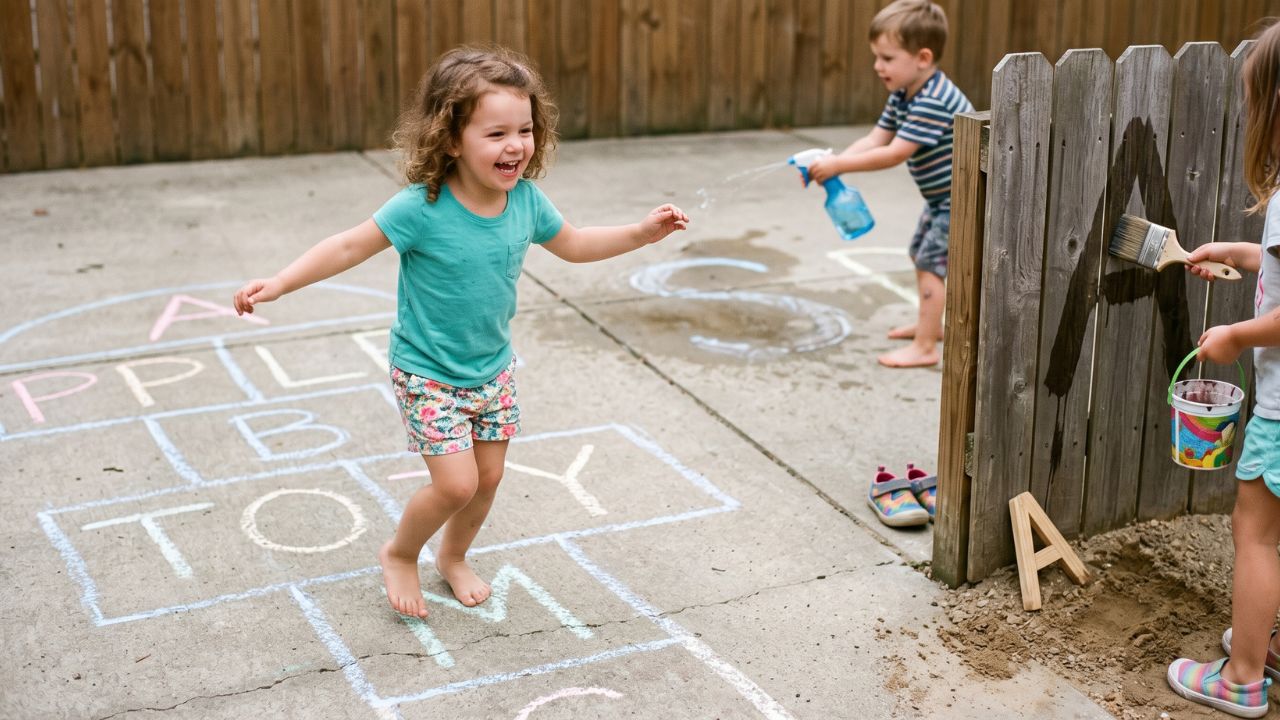
If you have ever tried to bargain with a wiggly preschooler to sit at the kitchen table and trace the letter “B” just one more time, you already know it is a losing battle. Young kids aren’t wired to sit still; they are wired to move.
When you take literacy outside and attach it to gross motor skills, like running, jumping, splashing, and digging, a kind of magic happens. Their defensive barriers drop. Suddenly, they aren’t “doing schoolwork.” They are just playing.
Educators call this kinesthetic learning. It removes the pressure of the pencil and engages multiple senses at once, helping to cement critical reading pathways in the brain.
If you want to build your child’s reading skills without the tears, here are eight highly engaging, low-prep outdoor alphabet games that turn phonics into pure playtime.
1. Squirt the Letter [The Disappearing Alphabet]
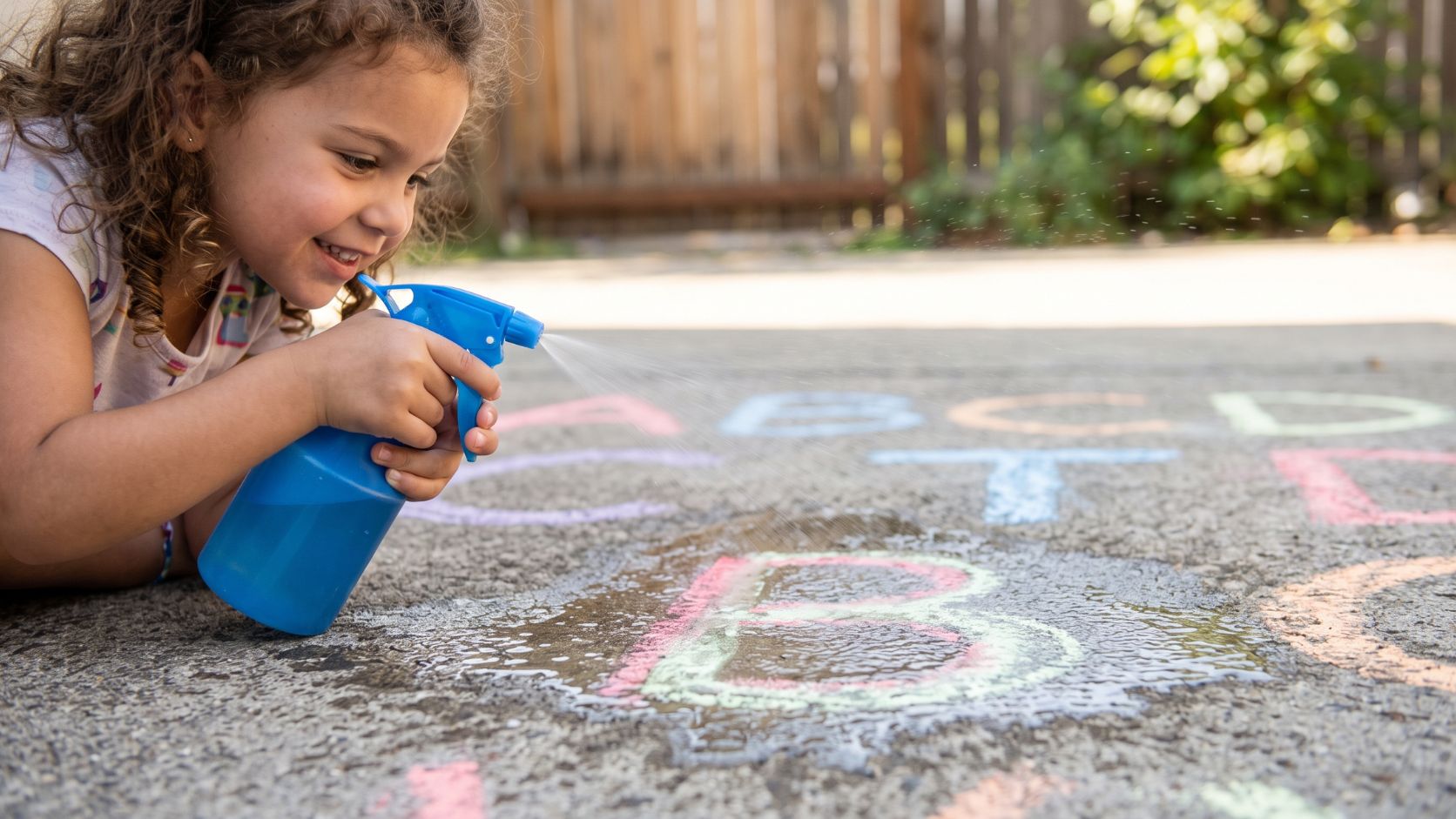
There is something immensely satisfying for a kid about erasing things. This game turns traditional writing practice into a high-energy demolition derby.
The Setup: Write a handful of letters randomly on your driveway using sidewalk chalk. (Start with 6 to 8 letters so it isn’t overwhelming). Hand your child a spray bottle filled with water.
How to Play: Call out a letter sound (like “buh” for B). Your child races to find the corresponding letter and squirts it until it completely disappears.
The Sneaky Skill: Aside from letter recognition, squeezing a spray bottle is a classic occupational therapy exercise. It builds the exact fine-motor hand strength required for a proper pencil grip later on.
2. Alphabet Grid Hopscotch
This game merges gross motor coordination with rapid letter recall, making it perfect for kids who can’t stop jumping.
The Setup: Instead of a traditional number line, draw a large 4×4 grid on the concrete and fill the squares with random letters.
How to Play: Give your child a sequence to jump to (e.g., “Hop to the letters that spell your name!”). For beginners, simply call out a letter sound and watch them leap to the correct square.
The Sneaky Skill: Phonics mapping. Associating a physical leap with a vocalized letter sound connects the sound to the visual symbol much faster than sitting with flashcards.
3. The Duplo Yard Hunt
A scavenger hunt makes the alphabet tangible. Using plastic building blocks ensures that morning dew or damp grass won’t ruin your game pieces.
The Setup: Write one letter on 26 different Duplo or Mega Bloks using a permanent marker. (Pro tip: You can easily remove it later by scribbling over it with a dry-erase marker and wiping it off). Hide them around the yard.
How to Play: Hand over a bucket and send them hunting. Every time they find a block, they have to shout out the letter.
The Sneaky Skill: Alphabetical ordering. Once all blocks are collected, challenge them to click the pieces together in alphabetical order to build a massive “Alphabet Tower.”
4. Invisible Water Painting
If you want your child to practice letter formation without the frustration of holding a pencil perfectly, hand them a paintbrush.
The Setup: Grab a bucket of water and a wide, clean house-painting brush. Find a warm concrete surface, a brick wall, or a wooden fence.
How to Play: Have them “paint” giant letters using the water. The surface will turn dark, displaying the letter for a few minutes before evaporating like magic.
The Sneaky Skill: Gross motor writing. Painting on a vertical surface (like a fence) forces kids to cross their midline and engages the shoulder and core muscles, which form the physical foundation for handwriting.
5. Catch & Call Beach Ball
This is a staple in early elementary physical education because it requires zero prep and can be played anywhere—from the backyard to the beach.
The Setup: Take a cheap, inflated beach ball and write random letters all over the colored panels with a Sharpie.
How to Play: Toss the ball back and forth. Wherever the catcher’s right thumb lands, they must identify that letter and shout a word that starts with it (e.g., “M for Mouse!”).
The Sneaky Skill: Hand-eye coordination and spatial awareness, combined with quick-thinking phonemic awareness.
6. Alphabet Ice Rescue
Perfect for sweltering summer days, this is a brilliant multi-sensory science and literacy crossover.
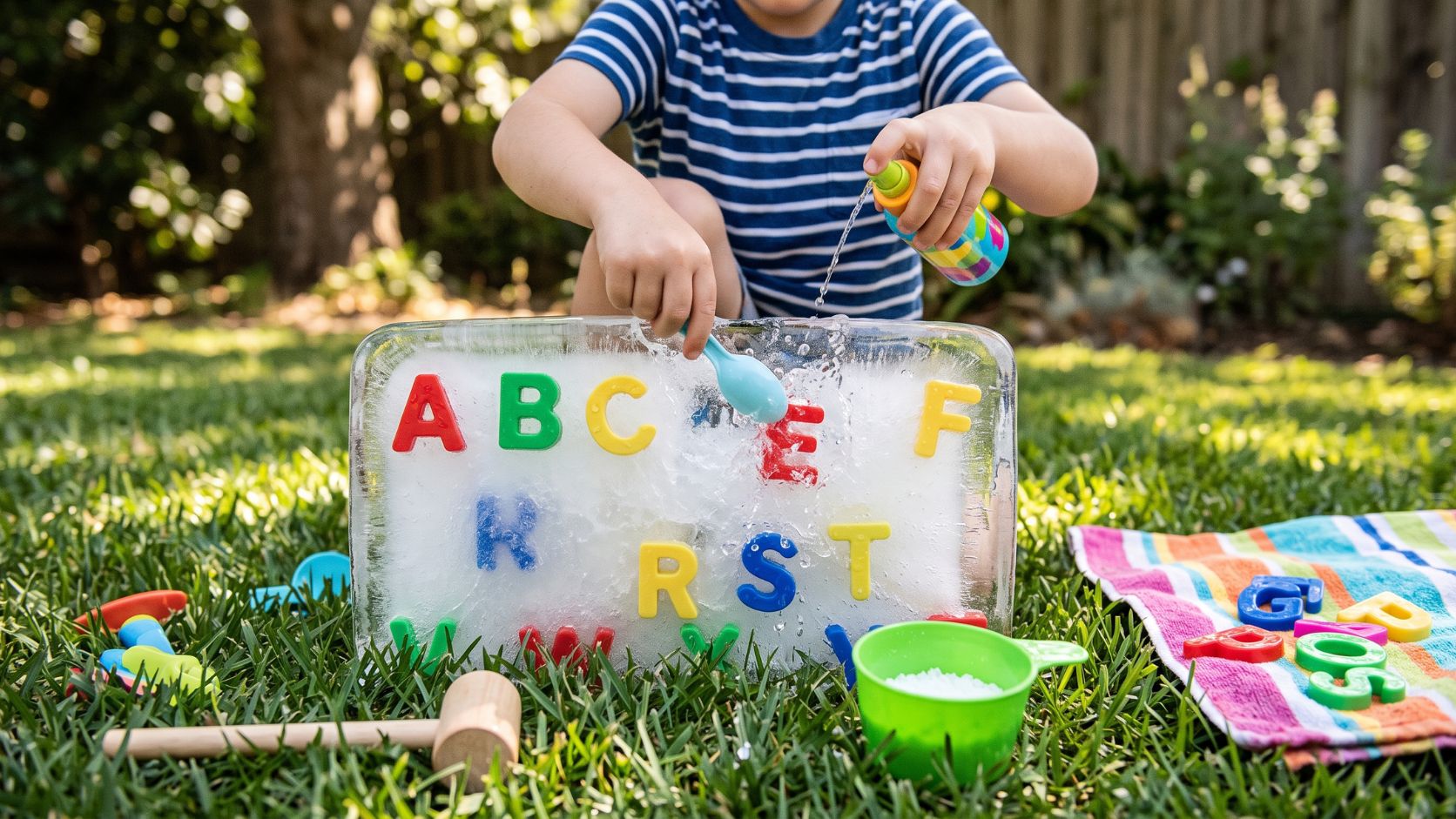
The Setup: Toss foam bath letters or plastic magnetic letters into a large plastic bin, fill it with water, and freeze it overnight.
How to Play: Turn the giant ice block out onto the grass. Give your kids warm water, spoons, salt, or toy hammers, and tell them to “rescue” the frozen alphabet. As they free each letter, they claim it by shouting its sound.
The Sneaky Skill: Sensory exploration and tactile memory. Kids are highly likely to remember a letter they had to physically chip out of a block of ice.
7. The Sandbox Letter Dig
Children who love sensory bins and getting dirty will be highly motivated by this backyard archaeological dig.
The Setup: Bury plastic puzzle letters or wooden ABC blocks in a sandbox or a designated dirt patch.
How to Play: Provide shovels and a sifter. When a child excavates a letter, they dust it off, trace its shape with their finger, and say its sound before dropping it into their collection bucket.
The Sneaky Skill: Tactile learning. Research shows that tracing a physical, 3D letter while speaking its sound aloud activates the brain’s reading circuitry much more effectively than pointing at an iPad screen.
8. The Action-Phonics Obstacle Course
Turn your backyard into an obstacle course with a literacy twist.
The Setup: Use pool noodles, lawn chairs, jump ropes, and hula hoops to create a quick course. Place an alphabet flashcard at every obstacle.
How to Play: To pass the obstacle, the child must perform an action that starts with that letter. For example: J = Jump over the pool noodle; C = Crawl under the chair; S = Spin inside the hula hoop.
The Sneaky Skill: Vocabulary expansion and gross motor planning. Linking an action verb to a letter cements the beginning sound in a highly memorable way.
Making Literacy Fun Again
Taking literacy out of the classroom and into the backyard changes the entire dynamic of learning. It stops being a chore and starts being an adventure. By incorporating water, chalk, dirt, and movement, you are doing more than just teaching your child the alphabet, you are showing them that learning is genuinely fun. Grab some chalk and a spray bottle, and go enjoy the sunshine.
Frequently Asked Questions on Outdoor Alphabet Games
1. Should I teach my child letter names or letter sounds first?
Focus heavily on letter sounds! Cognitive psychology shows that reading is about decoding speech sounds, not naming visual symbols. Knowing that the letter “C” is called “see” doesn’t help a child read the word “cat”, but knowing it makes a hard /k/ sound does.
2. What if my kid hates learning the alphabet?
Back away from the worksheets. When a child resists learning, it usually means the method is causing anxiety or boredom. Switch entirely to play-based, low-pressure games like the ones above. Let them lead, and don’t force it if they are having an off day.
3. What should I do if they guess the wrong letter during a game?
Keep it light and avoid harsh corrections. If they guess the name instead of the sound, you can gently say, “That’s its name! Now, what sound does it make?” You can also give them a hint by pairing sounds with physical gestures (like pretending to munch an apple for the short “A” sound).
4. Are these games suitable for total beginners?
Absolutely. Just modify the scale. For beginners, do not use the entire 26-letter alphabet at once. Introduce just 3 to 5 letters at a time. Start with the letters in their own first name; children have a high emotional attachment to their name and learn those letters rapidly.
5. Can I adapt these outdoor games for older kids who already know their letters?
Yes, every single one of these games scales up. Instead of hunting for single letters, older children can hunt for sight words, squirt out the answers to math equations on the driveway, or use the excavated sandbox letters to spell out their weekly spelling words.